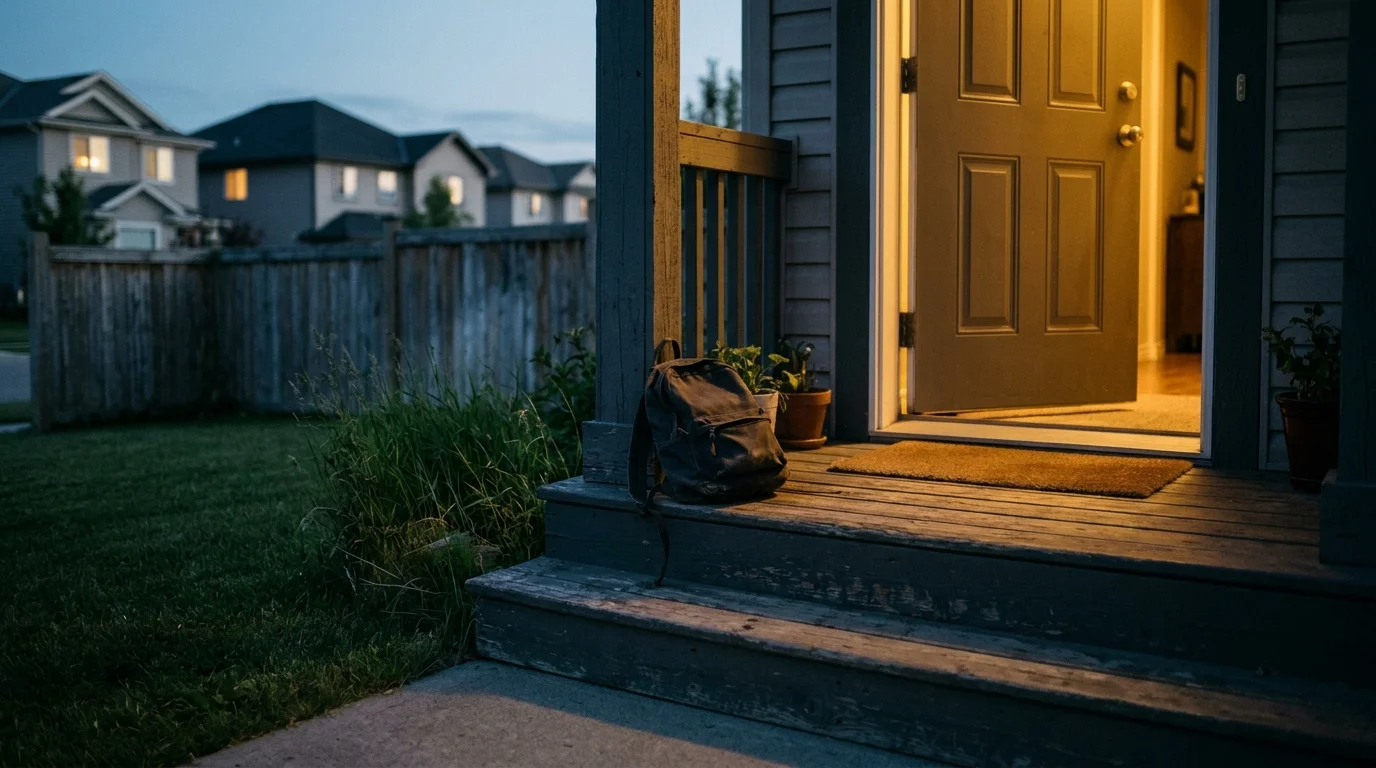
The next day he walked the block and got talking with a neighbor, who said the whole street knew about that house. Jess’s mom was rarely home, the boyfriend was usually drunk and aggressive, and police had been called twice in a year. Another neighbor said Jess left for school in the same clothes several days running. Everything Jess had told Tina was true, and he’d been treating a dangerous situation like a girl who just needed a nice place to hang out.
He and his wife argued it out past midnight. She feared a report might push the boyfriend, Victor, to take it out on Jess, or get her thrown out. He asked what would happen if doing nothing left her in danger. They agreed her safety mattered more than whether she liked them, and he called the next morning before he could talk himself out of it. The intake worker, Georgiana Stevenson, took down everything: the hunger, the old clothes, the flinching, the long sleeves in warm weather.
A few days later Georgiana sat in their living room and asked uncomfortable questions. Why had they let it go on so long? Had their open door actually kept Jess from reaching proper help sooner? He had no good answers.
Jess found out during third period, and by late morning he had twelve texts from her. She couldn’t believe he’d done this. He’d ruined everything. Her mom was furious, Victor was threatening to throw her out, and he was just like every other adult who pretended to care. He couldn’t answer, because Georgiana had told him not to.
That evening Tina came downstairs angry. The whole school seemed to know, and kids were calling her father either a hero or a creep, depending on who she asked. He should have warned her first, she said. The next morning he apologized at the kitchen table, and Tina admitted she’d known for months how bad Jess’s home was. Jess had made her promise not to tell any adult, and she’d been carrying the guilt ever since. They all cried together, and for the first time in weeks nobody was pretending.
What Came After
Then came a week of nothing. On the eighth day Georgiana called with the results, and he pulled over to listen. The investigation had found clear neglect. Victor had two prior assault charges, and Jess’s mother, Laura, admitted she often left Jess alone overnight, sometimes for days. There was no heat in Jess’s bedroom and almost no food in the fridge.
CPS opened a formal case but built a safety plan that kept Jess at home. A caseworker would check in, Laura would take parenting classes and substance-abuse counseling, Jess would have therapy twice a week, and Victor would get no overnight stays or unsupervised contact. He wanted to argue that Jess should just move in with them. Georgiana seemed to hear the doubt in his silence and reminded him that one family couldn’t be Jess’s only support.
Things improved slowly. Victor moved out. Laura got sober and found steady work at a grocery store. A case coordinator named Holden Garrison matched Jess with a mentor, a former foster kid who now teaches middle school, and signed her up for an after-school program. Three weeks after the report, Jess sent a short, careful text apologizing for the angry messages and saying she didn’t hate him. He typed and deleted five replies before sending a simple one: he’d be there whenever she was ready.
At home, he and his wife started therapy with Ingred Kirk, who helped him see how his fear of turning into his parents had pushed him to overcorrect, saying yes to everyone and holding no limits. His wife cried when she heard it, because it was exactly what she’d been trying to say for months. They had been coasting for years, mistaking the absence of fighting for a healthy marriage.
Thirty-two days after the call, Jess asked to come over and talk to both of them. She looked different, with color in her cheeks, clean clothes that fit, and a steady look in her eyes. She told them her therapist had helped her see she’d been building a fantasy family instead of facing her real life, and that the report turned out to be the best thing that could have happened. He apologized too, for handing her an escape when she needed a way forward. It was the most honest conversation the three of them had ever had.
The friendship with Tina rebuilt slowly, with group hangouts and no more sleepovers. At a family dinner weeks later, Jess laughed at the twins’ jokes, talked about her photography class, and called him “mister” instead of Dad. He felt a small pang of loss, then understood it was exactly right. Over the following months she joined the debate team, raised her grades, and carefully reconnected with her father, Jack, who had been sober for two years and showed up to every supervised visit.
Eventually she stood in their living room holding a big envelope, practically bouncing: accepted to a state university with a partial scholarship, planning to major in social work. Laura waited in the driveway with a proud smile. Jess had even nominated him for a community appreciation award, which he insisted he hadn’t earned, since he’d made mistake after mistake before the professionals fixed what he’d broken. The school’s principal disagreed. He had gotten involved, she said, and then asked for the right help when he realized he was out of his depth.
Reflection: Being the warm door a kid keeps running to can feel like love while quietly keeping her from the help she needs. I think a lot of good people confuse stopping someone’s tears with caring for them, and the two often pull in opposite directions. The most loving thing this dad did was admit he was out of his depth and bring in people who weren’t.