
A few weeks before he told this story, Jess informed Tina that she wished he were her real dad and that Tina was lucky and didn’t appreciate it. Tina called that a weird thing to say, they fought, and Jess stormed out crying. He hoped that would end the friendship. Instead Jess came around more, always when Tina was out, finding reasons to be alone with him. She asked about his life and his marriage, and told him he was the best dad she’d ever seen.
That was where his wife drew the line. She told him Jess’s behavior had become inappropriate and that his niceness was feeding it. That night, after the twins quit arguing and Tina’s music went quiet behind her door, the two of them sat at the kitchen table with a notebook. No showing up without texting first. No visits when Tina wasn’t home. No more calling him Dad. His hand shook as he wrote it down, because he knew it would hurt.
The next afternoon Jess let herself in while Tina was at soccer practice. He asked her to sit on the couch, and she froze in the kitchen doorway, went stiff, and then perched on the edge of a cushion with her eyes already filling. He took the chair across from her instead of sitting beside her, and laid out the rules as gently as he could.
She was crying before he finished the first sentence. What did she do wrong? Was he kicking her out? By the end she was sobbing too hard to breathe, telling him her mom’s boyfriend hated her and that his house was the only thing that made life okay. Every instinct told him to take it back. He thought of his wife’s face the night before and kept going. Jess ran out and left the front door hanging open.
Three Days of Silence
He texted his wife that he’d done it and that Jess had run out in tears. She came home an hour later, found him in the same chair, and told him he’d done the right thing. It didn’t feel that way. That evening Tina asked where Jess was, found that her texts weren’t being answered, and wanted to know what her father had said.
Two days passed without a word. He called the school and learned Jess had been in class both days, though a teacher said she seemed upset. At dinner the twins asked why she hadn’t been around and said they missed her. It showed him something he hadn’t fully taken in: in a few months, she’d become part of the family’s routine.
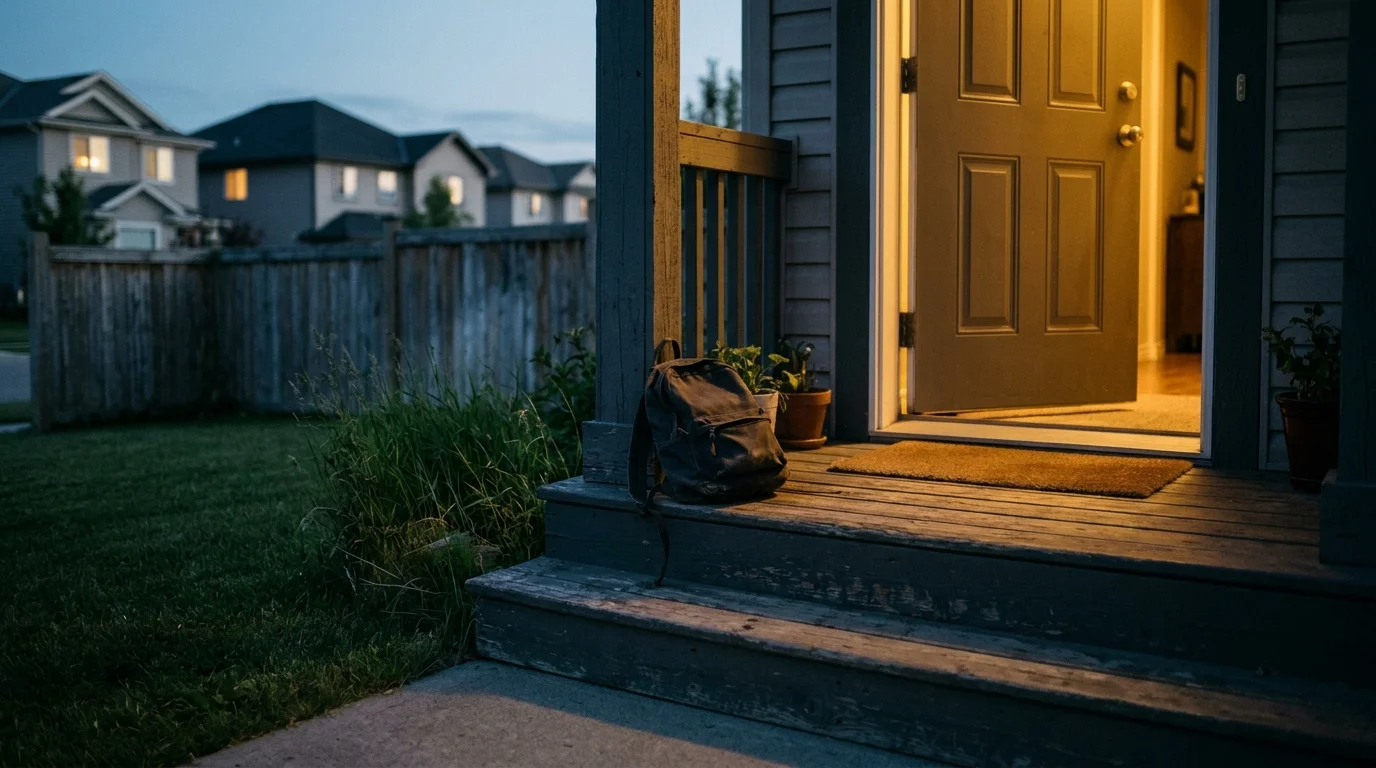
On the third morning, at seven, someone knocked. Jess stood on the porch in her school uniform with red, puffy eyes, apologizing for running out and promising to follow every rule. Could she still come over sometimes, she asked, because she had nowhere else to go. He felt himself wavering, but held the line: visits with Tina, a text first, nothing when Tina was out. She nodded so fast and said okay so many times that he knew she’d agree to anything to keep her access.
The following week proved him right. She texted before every visit, as asked, but the texts never stopped. Should she join the debate club? What should she eat for lunch? Could she stay for dinner? Should she do homework before or after TV? She’d quit calling him Dad, yet every small decision in her life now seemed to need his sign-off. The boundary hadn’t fixed the attachment. It had only changed its shape.
Then Tina pulled him aside, frustrated and tired. At school, Jess followed her between classes, got upset when Tina sat with other friends, and texted during lessons to ask where she was. Tina said she felt like she couldn’t breathe. He sat down on the stairs with his head in his hands and admitted he was in over his head. His wife found him there and said what he’d been avoiding: they needed professional help.
The House Three Blocks Away
The school counselor, Randolph Stevenson, listened to all of it, from the first “Dad” at the dinner table to the endless texts. He said it sounded like reactive attachment disorder, which can develop when kids grow up around neglect and never learn to bond safely with caregivers. Some pull away from everyone, while others cling hard to the first kind adult they find. Without meaning to, the family had become a stand-in for everything missing at Jess’s house, and by encouraging that dependence, he’d made it worse.
Then Randolph asked a question that made his stomach drop: had they considered reporting Jess’s home life to child protective services? He had thought about it and pushed the idea away. Neglect is a form of abuse, Randolph said, and sometimes the most helpful thing is to connect a kid with proper systems instead of trying to rescue her yourself.
That night he drove the three blocks to Jess’s address. The houses were smaller and packed tighter. Weeds grew knee-high, a downstairs window was patched with cardboard and duct tape, and the porch sagged in the middle. From the car he could hear a man and a woman screaming at each other, and then something crashed. He didn’t knock. He drove home ashamed that in eight months of making Jess welcome at his house, he’d never once looked at what she went home to.