
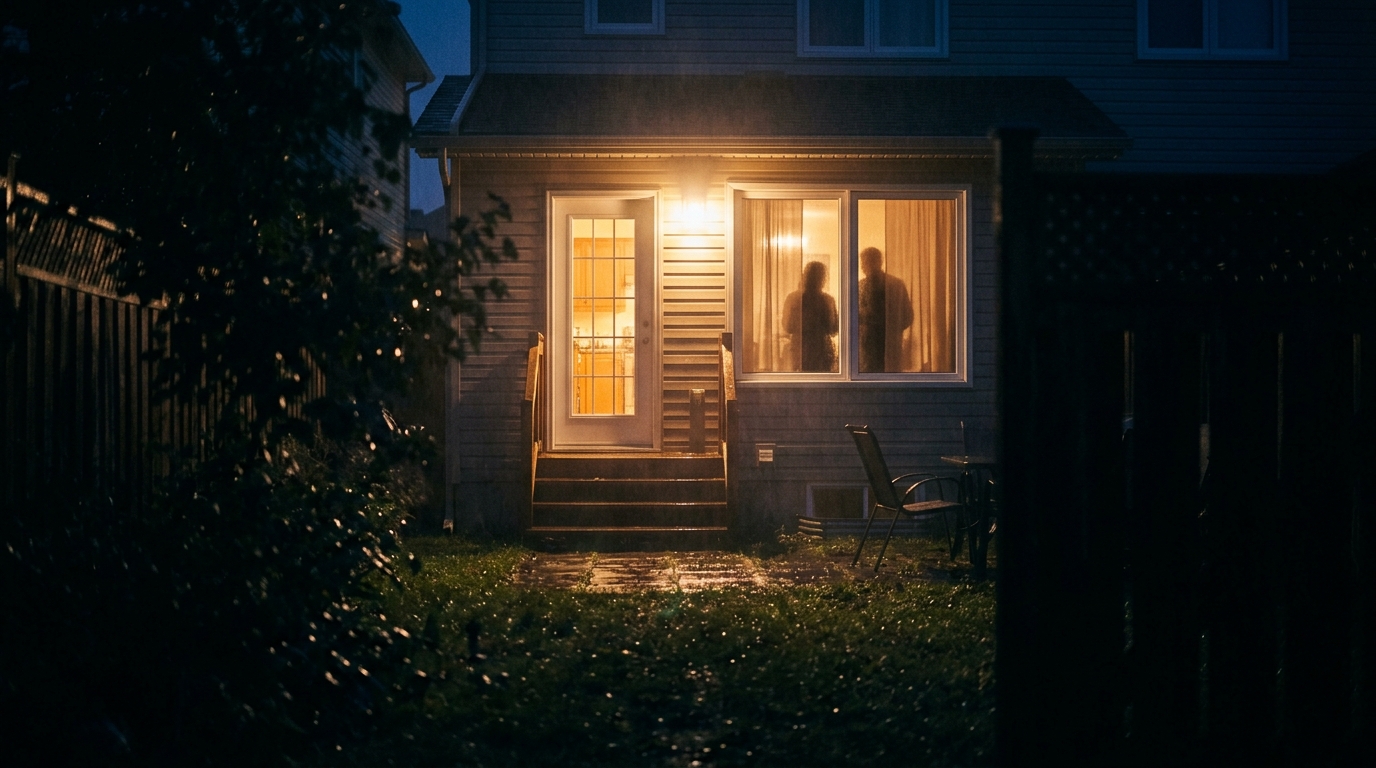
That night something sharper replaced the despair. If they saw him as a resource, he could stop being one. He kept quietly collecting proof, recording the insults and demands, saving screenshots, and keeping copies of the transfers that had moved his savings into their account. He didn’t know yet what he’d use it for.
The Last Night in the House
He stopped handing over his paychecks and told his dad his hours had been cut when asked about Ethan’s tournament fees. Ethan noticed and demanded rides, and Noah just said he was working later now. When Ethan shoved him against the wall, Noah stared back calmly, and it rattled Ethan more than any fight would have.
Then one Saturday the coach called to say Ethan could lose his spot, and the kitchen turned tense. His dad told Noah to cover $800 for an extra training camp, and when Noah said he didn’t have it, his dad accused him of lying and asked where the money was going. “Rent,” Noah said evenly. His mom froze with the spatula in her hand, and Noah told them he was moving out at the end of the month.
Ethan laughed and asked with what money. Noah slid the scholarship letter across the table and said tuition was covered and he’d handle the rest through work and freelancing. His mom’s hand shook as she read it, his dad’s face went pale, and Ethan’s smirk finally faltered.
When Ethan stammered about who would pay for his soccer now, Noah answered, “Not me. Not anymore.” His dad slammed a fist on the table and said he was abandoning his family. “No, you abandoned me a long time ago,” Noah said. “I’m just finally walking away.”
The night before he left, he was taping up his last box when Ethan barged in, red-faced, announcing that Noah wasn’t going anywhere. He tore the box open and scattered the clothes across the floor, and when Noah said Ethan didn’t need his help to look like an idiot, Ethan shoved him hard against the wall. Noah’s head hit the plaster. When his vision cleared, his parents were standing in the doorway watching, exactly as they had that night in the yard.
This time he didn’t crawl. He pushed Ethan off and told him that if he touched him again, he’d regret it. Ethan laughed unsteadily and asked what Noah would do, call the cops? They’d believe him, they always did. “No,” Noah said, “because I already recorded everything.” He had weeks of audio, screenshots and bank transfers, and he dialed.
Twenty minutes later red and blue lights moved across the curtains while neighbors watched from porches. Ethan tried to twist the story until Noah played the recordings and his own mocking voice filled the living room. When the parents tried to talk over it, one officer asked how they could stand by while their son was assaulted. Their silence, for once, wasn’t protecting anyone.
Ethan was handcuffed in front of the whole street. As he was led out he spat that Noah had ruined him, and Noah answered calmly that he’d ruined himself and Noah had just stopped covering for him. One officer told Noah he’d done the right thing, and for the first time in his life he believed it.
He picked up his last box, walked past his parents’ stunned faces and out into the cool night, and slid into his friend’s car. Looking back, he saw them on the porch, small in the flashing lights, watching their golden son driven away in a squad car. The house he grew up in glowed in those colors like it was on fire, and Noah felt only lighter. He was free.
Reflection: Favoritism rarely announces itself. It shows up as a thousand small decisions about whose effort counts, until a kid learns to expect nothing. What stands out here is that Noah never needed his parents to change. He needed them to stop being able to use him. I’d say they lost him long before the police arrived.