
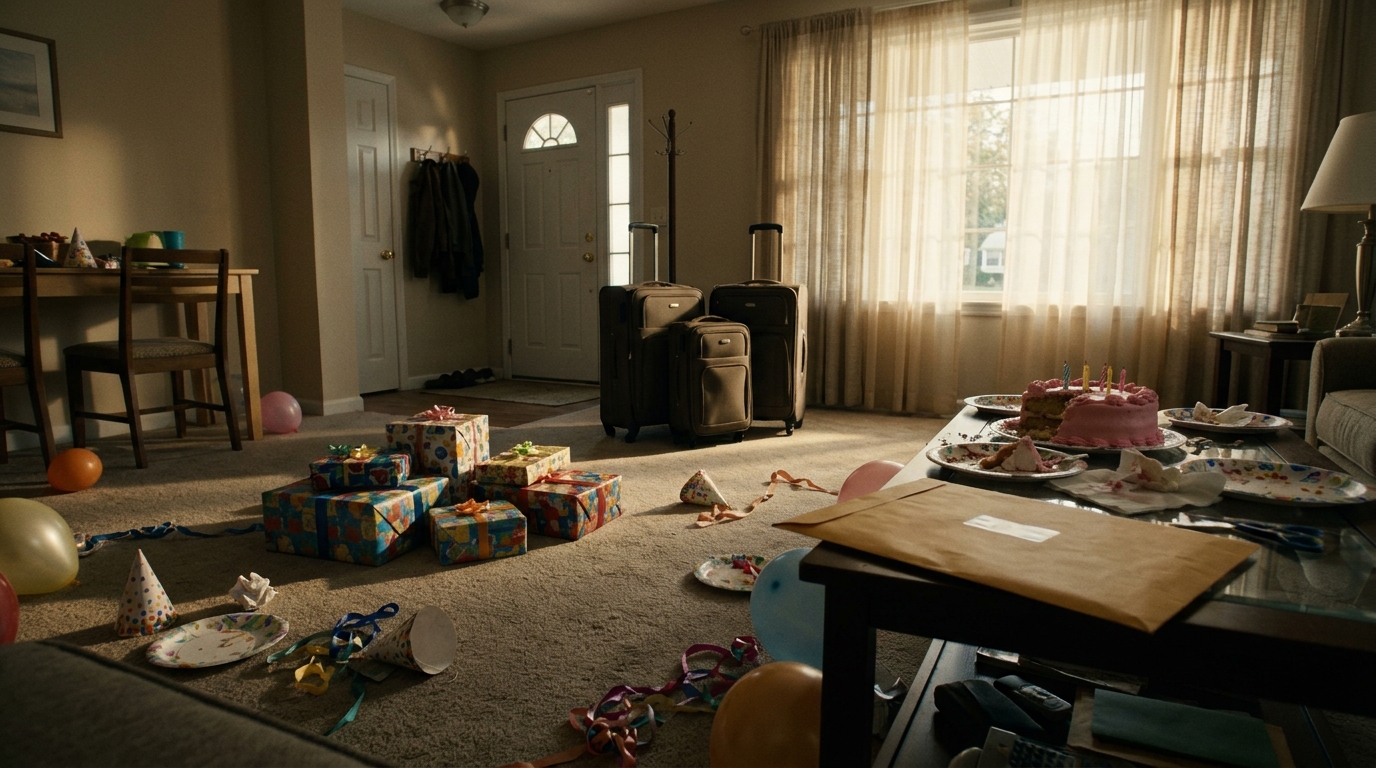
The next morning Lauren’s phone filled with notifications. Her husband’s parents had posted on Facebook that she was cruelly keeping their granddaughter from them, and friends of theirs piled on with comments about grandparents’ rights. None of those people had been at the party. Kate and Rachel spent an hour replying with facts, news links about the arrest and screenshots of the restraining order, and by afternoon the comments had turned on the in-laws, who deleted the post.
Two weeks after the party, Lauren’s cousin Sarah called in tears. Investigators had shown up at the hospital pharmacy asking whether she’d sold Lauren pills, because her husband had named her as the source. Victoria told Sarah to bring three years of pharmacy records, which showed she’d never filled a suspicious prescription, and the investigators said they’d close that part of the case within a week.
Days later Detective Walton questioned the brother and sister-in-law behind the “concerned neighbor” statements, and under questioning they admitted Lauren’s husband had asked them to say they’d seen her passed out, though they never had. Facing charges for false statements, they backpedaled and agreed to write corrections. That same week Mia began waking up screaming from nightmares about police taking her away, and she followed Lauren from room to room, waiting outside the bathroom door to make sure she was still there.
Victoria recommended a child therapist named Lorraine Burke, and the first appointment was just Lauren talking while Mia played in the corner. Lorraine explained that a three-year-old can’t follow legal details but absolutely feels it when adults are scared and routines break. Weekly play sessions with dolls began, and slowly Mia started acting like herself again, though some nights were still bad.
What the Lawyer Finally Said Out Loud
Two weeks later, Lauren watched Pearson walk to the witness stand. The prosecutor had traded him a lighter sentence for his testimony, and he kept his eyes down through the oath. He said her husband had come to his office four months before the party asking about emergency custody and how to get it without the other parent knowing. Printed emails confirmed it, including one that listed drug abuse and neglect as possible grounds and another that laid out the plan to move Mia to Florida the moment an order came through.
Pearson admitted he’d told her husband that a legitimate emergency order needed real evidence and hearings, and that her husband pushed for something faster. The forgery, he said, was her husband’s idea first, and he went along because he was offered $50,000. The defense objected repeatedly and the judge overruled every time, since the testimony was part of Pearson’s plea deal. Emails showing the two men discussing what the fake order should say, and how to make it look real, left little room to argue.
The jury came back in under three hours on a Friday and found Lauren’s husband guilty of conspiracy to commit kidnapping, forgery, and fraud. He was taken back into custody as a flight risk. Two weeks later the judge, unmoved by the argument that he was a first-time offender who’d acted out of desperation, sentenced him to three years, with parole possible after eighteen months. She also ordered restitution for Lauren’s legal fees and recommended supervised visitation with Mia even after his release.
Then his parents asked the family court for grandparent visitation, a surprise since they’d barely been part of Mia’s life before. Lauren wanted to refuse outright, but Victoria pointed out that Mia shouldn’t lose her entire father’s side of the family because of what he’d done. Rachel thought Lauren was being too generous, and Kate sided with Victoria. After several days of thinking it over, Lauren agreed to supervised visits twice a month, with strict conditions.
Five months after the party, a family court judge called it one of the clearest custody cases she’d seen and awarded Lauren full legal and physical custody, with supervised visitation for her husband only after his release. He was ordered to pay child support and her legal fees, though Victoria warned that collecting from a prison cell would be hard. The money problems were bigger than that: he had taken out a home equity loan Lauren never knew about and maxed out the credit cards, leaving close to $80,000 in debt. Her parents helped her refinance, and she picked up freelance graphic design work at night, sometimes past midnight.
Rachel and Kate kept showing up. They came to dinner twice a week, covered child care when Lauren worked late, and Kate started a college fund for Mia with money she’d saved for a vacation. Eight months after the party, Mia laughed at silly things again, still went to weekly therapy, and was learning to ride a tricycle in the driveway with her grandfather. She still asked about her father sometimes, and Lauren told her he was away and that he loved her, which felt like the right thing to say even though she wasn’t sure it was true.
Reflection: Most of what saved this family was ordinary: an uncle who read a document twice, a sister who kept her phone recording, a friend who knew exactly who to call. The plan only needed one thing to go right, which was that nobody in the room would check, and a calm voice and an official-looking envelope almost made sure of it. Lauren says the worst day showed her who really loves her, and I’d trust that over any signature.
More stories you may like
 My Mom Made My Darkest Day Her Punchline. Then I Showed Her What a Roast Really Looks Like.
 His Dad Called Him a Failure at Thanksgiving — Then Tried to Sabotage His Career
 He Planned His Wife’s 30th Birthday for Weeks. His Family Handed the Night to Emma.
 The Blind Piano Tuner Accused of Stealing the Marchetti Family Ring Had Seen Something Nobody Expected