
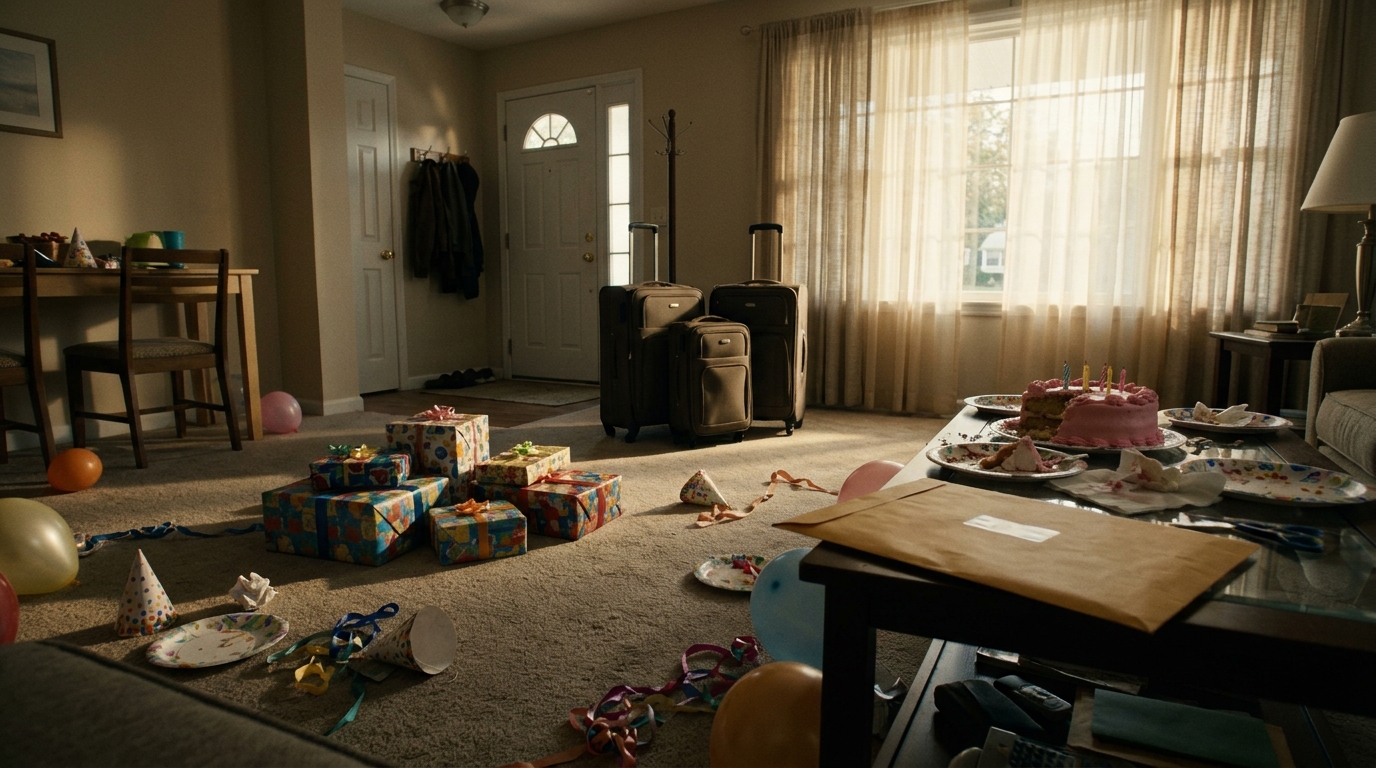
Lauren’s husband hesitated, then handed it over. Paul read it slowly, then read it again. The order carried that day’s date, he said, but it referred to a hearing held the day before, so where had that hearing taken place? Pearson answered quickly: Judge Harrison’s chambers, in an emergency session. Paul smiled, and told the room that Judge Harrison had been in the hospital for a week after a heart attack, and that he had visited him just yesterday.
The party went completely quiet. Pearson suggested a Judge Harrison Jr., but Paul shook his head: the judge’s son, Michael, was a dentist. Lauren’s husband set Mia down and said there had to be some confusion, that his lawyer had handled everything, while Pearson edged toward the door to make a call. Paul held up the papers and explained that they were forgeries, good ones, but forgeries: the seal was wrong, the case number didn’t match the county’s format, and the judge’s signature was dated while he lay unconscious in intensive care.
Rachel was already on the phone with the real police. Lauren’s father and three other men planted themselves in front of the door, and he told his son-in-law quietly that he wasn’t going anywhere with his granddaughter. “You said this would work,” her husband muttered at Pearson. “You said she’d never fight it.” Pearson, sweating by then, said they needed to leave immediately, but two officers walked in less than three minutes after Rachel’s call.
The officers kept the two men apart while Paul walked them through the forgeries, and one officer phoned to confirm that Judge Harrison had been in intensive care all week. About twenty minutes later Detective Jeremy Walton arrived in plain clothes, gray-haired, reading glasses hanging from a chain. He watched Kate’s footage more than once, made call after call to the courthouse and the hospital, and then stood both men up and had them handcuffed. He read them their rights in a flat, practiced voice and listed the charges: conspiracy to commit kidnapping, forgery of court documents, fraud, and attempted parental kidnapping across state lines.
Forty guests stood in silence and watched two men get arrested at a three-year-old’s birthday party. Mia looked up from her dollhouse, saw her father in handcuffs, and asked why the police were taking daddy away. Lauren picked her up and said daddy had to go talk to some people, and Mia started crying and asking if he was in trouble. Her husband glanced back once on the way out, and Lauren couldn’t read his face. Pearson didn’t look back at all.
One Weekend, Every Account
Before the police cars had left the curb, Rachel was on the phone with her boss, who found a family lawyer named Victoria. She arrived within the hour, about fifty, with short dark hair and a leather briefcase, and spent two hours at Lauren’s kitchen table taking notes. Her husband’s stunt had actually helped, she explained, because trying to take a child with forged papers showed poor judgment and a willingness to break the law. They would file for emergency custody and a restraining order on Monday, and that night Kate emailed her footage to both of them and saved three backup copies.
Over the weekend Lauren went through every financial record she could find while her parents took Mia to the park. Her husband had been draining their joint savings for three months, $500 here and $1,000 there at first, then thousands, until nearly $40,000 sat in accounts she couldn’t see. In his desk drawer she found a Miami condo lease signed six weeks earlier, starting the same Monday his supposed new job began, along with three one-way plane tickets to Miami for the following day. There was no new job, only a plan, and Victoria called the photographs Lauren sent her excellent evidence of premeditation.
Rachel spent that weekend digging into Pearson. He had represented fathers in three other custody cases built on drug accusations against the mothers, two of them later proven false, and in one the mother sued him for malpractice, a case that settled under a non-disclosure agreement. Former clients described a lawyer who bent rules, suggested inventing evidence, and coached one client to lie under oath. Rachel’s read was that he leaned on false drug claims because they were hard to disprove quickly, and that her husband had hired him for exactly that reason.
At Wednesday’s hearing, a new lawyer hired by her husband’s parents argued that Pearson had manipulated a worried father who never knew the papers were fake. Victoria took that apart in minutes with the Miami lease, the transfers, the suitcases, the plane tickets, Kate’s video, Lauren’s clean drug tests and a letter from her doctor. When the judge asked him directly why he’d signed a lease six weeks earlier if this was a sudden emergency, he had no good answer. She granted Lauren temporary full custody, with supervised visits for him, two hours a week, and set another review three months out.
The Pile That Kept Growing
Two days after that hearing, Detective Walton got a warrant to search Pearson’s office, and Lauren passed along everything Rachel had gathered. Officers found templates on his computer for fake custody orders, with blank spaces for names and dates, along with six other case files in which he had created false documents for clients who wanted to take children from their ex-wives. One file included notes about bribing a court clerk so the forgeries would carry real case numbers. Pearson tried to claim attorney-client privilege, but the detective explained that privilege doesn’t cover criminal conspiracy.