
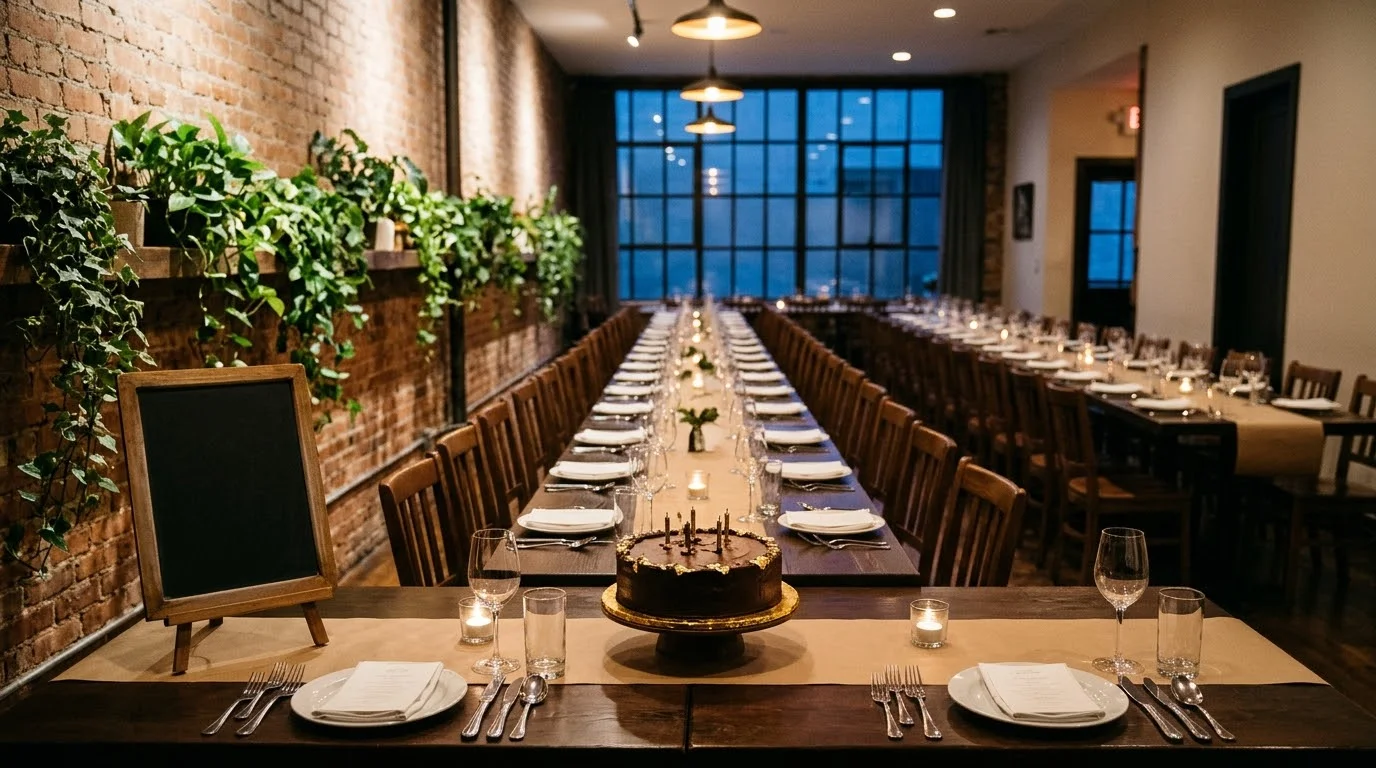
Mason asked the manager to shorten the evening and box up a share of the meals. Elias offered to move everyone to a smaller room so it wouldn’t feel so strange, but Mason didn’t want to flee his own party. A neighbor’s kid asked whether his parents were coming, and the boy’s mother shushed him with an embarrassed smile. They sang anyway, and Mason blew out the candles feeling thankful for the people who came and a dull ache for the ones who hadn’t.
By 9:30 the room had mostly emptied. He sat alone at the head of the table, listened to a server sweeping, and then paid. With tip, the total came to $3,812.46. He signed his name and underlined it, because he suddenly needed proof that he’d left a mark on something.
What He Posted at 2:47 A.M.
On the drive home his phone lit up with photos in the family chat: Austin beaming with a glass in his hand, a caption from his mom about how proud she was, a blurry selfie from his dad. Mason didn’t reply. He thought about the past year, with its weekends spent redesigning his dad’s company website and its nights fixing Austin’s resume after a missed deadline. He thought about the loan to his mom that had been repaid in promises. When he had appendicitis last winter, Austin dropped off a balloon bouquet and then asked him to look at a cover letter.
At home the cake box sat unopened on the counter, because sweetness felt wrong for the night. Mason opened a folder instead, one he’d been keeping for months without admitting what it was for. It held receipts, texts, invoices, and email threads, a neat log of every time he’d covered, fixed, or rescued something for his family. He’d started it after his dad scolded him in front of relatives for not helping enough during an aunt’s hospital stay, when Mason had actually slept in a chair in her room and sorted out her insurance paperwork.
That night he turned it into a video called “Running Tabs.” There was no commentary, only dates and amounts, ending on the dinner receipt and a single line: if love is presence, then count with me. At 2:47 a.m. he dropped the link in the family chat with a note telling them to watch it before sunrise.
By morning there were 37 messages. His mom wrote that it felt cold and that they should talk as a family. His dad said Mason had blindsided them. Austin asked why he was twisting things when Mason had always said he was happy to help. Later his dad listed vacations and Christmas gifts and attached a smiling photo from a Florida trip, the one where Mason had spent two days finding a mechanic after the rental car died. A smile, Mason noted, is easy to treat as proof.
Lunch, a Ledger, and a Knock at the Door
His aunt Nenah, the family’s quiet watcher, emailed to say she’d seen him at the hospital last winter and that if the others pretended otherwise, that was on them. It steadied him. When his dad invited him to lunch to talk like adults, Mason agreed, not because he expected the air to clear but because refusing would let them say he was the one keeping his distance. He printed a one-page ledger of the past 20 months and slid it into an envelope.
At the house, the roast chicken smelled like every Sunday he could remember. His mom met him at the door and said he’d made a movie about them, half joking. His dad stood by the mantle like a man about to give feedback at a staff meeting, and Austin lounged on the couch. They opened with how much they loved him, then moved to “context,” a word his dad kept repeating as though saying it would make it appear. When his mom pointed to the drone they’d given him for Christmas, Mason reminded her he’d returned it to cover her overdue Visa payment.
Mason laid out terms. No more charges on his cards without written consent. Loans would be documented with a repayment date. Any design or web work would be scoped and paid at market rate. His mom flinched at the word “written,” and his dad called it extreme before delivering a speech about the 30 years he’d spent carrying the family. Then Austin asked Mason to take the video down, because it made him look like he leaned on other people and could hurt him at work.
Mason didn’t answer. Midway through lunch his phone buzzed with a text from someone in HR at North Point, Austin’s company, saying they’d received a link he might want to discuss. Austin was chewing and didn’t notice. Back home, a voicemail from the same woman asked him to call about “a subsequent expense authorization,” and his banking app showed a pending hold of nearly $900 from an afterparty lounge he’d never visited, stamped 1 a.m., plus ride-share charges nearby. The card on file was his, the one his mom had photographed three years earlier in case a caterer needed it.