
The Woman Who Was Supposed to Be Gone
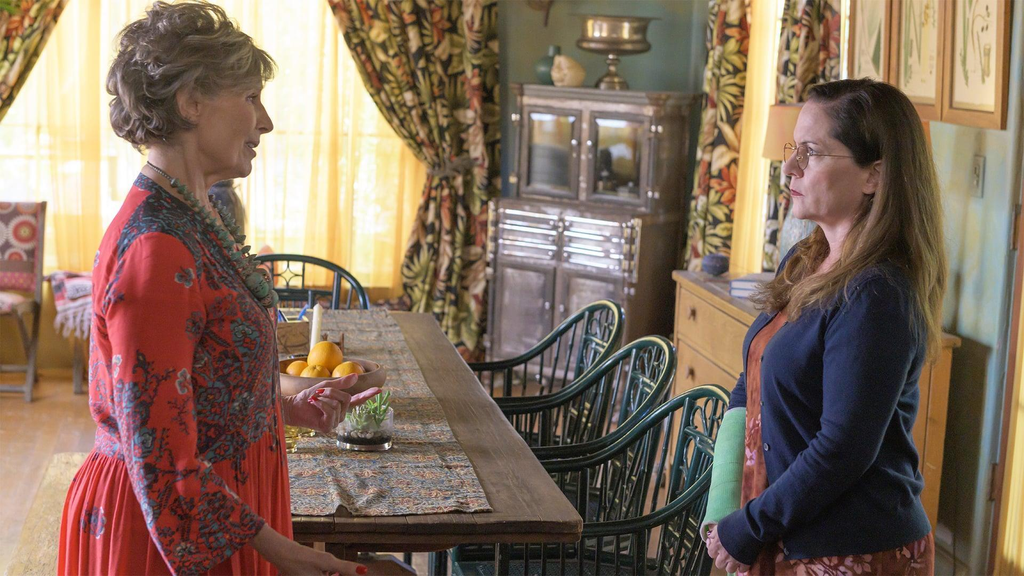
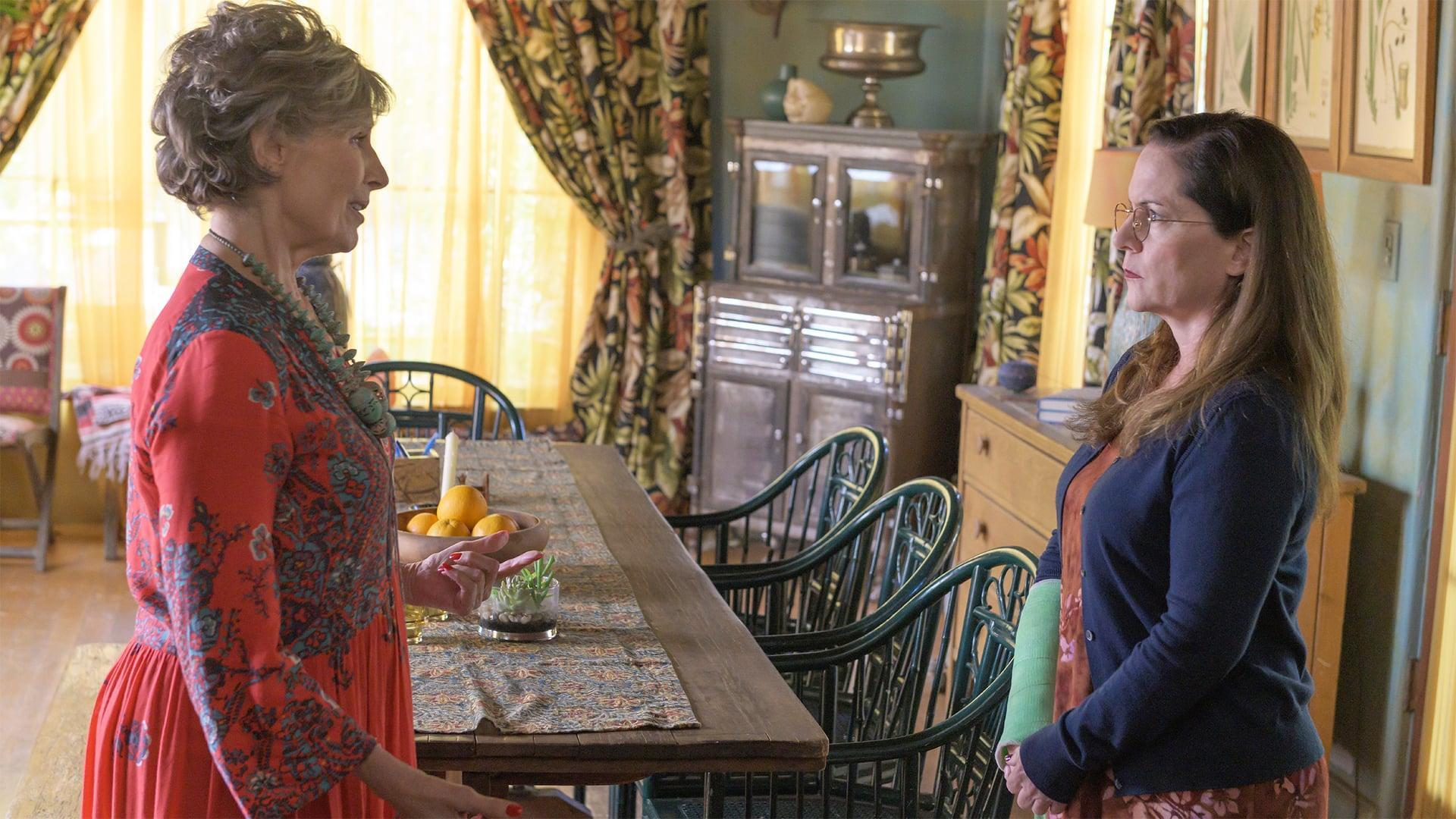
The chair scraped across the wooden floor just as Margaret Hale reached for its back.
Claire Bennett pulled it away with a sharp movement, sending it several feet behind her. Margaret stumbled forward, catching herself against the dining table. A few relatives gasped. Someone lowered a glass.
“You moved away. There’s no place for you here,” Claire said, adjusting the emerald-green dress she had chosen for the family reunion.
Margaret slowly straightened her burgundy cardigan.
“I live here, Claire. I never left.”
Claire gave a small laugh and turned toward the relatives gathered around the fireplace.
Forty relatives had come to the Hale family farmhouse that afternoon. Cousins, uncles, aunts, distant relatives and family friends filled the dining room and the adjoining sitting room. They had traveled from different states for what Claire had described as a special family reunion.
At 3:15 p.m., everyone had gathered for the traditional family photograph.
Except Claire had apparently decided that Margaret would not be included.
Margaret looked around the room. She recognized nearly every face, although some of the younger relatives had grown so much that she struggled to remember their names.
She had lived in that farmhouse for most of her adult life. She knew which floorboards creaked, which window needed extra pressure to close and which corner of the kitchen caught the afternoon sunlight.
More importantly, she had never moved away.
Yet Claire had spent months telling people otherwise.
“Forty relatives came. You can’t erase me,” Margaret said.
Claire’s smile tightened.
“Nobody is erasing you. We’re just trying to take a proper family picture. You don’t even live here anymore.”
“That’s an interesting thing to say in my kitchen.”
A cousin near the fireplace looked down at his shoes. Another relative pretended to adjust the camera.
Claire stepped closer.
“Please don’t start something today. Everyone knows you left after Dad died.”
Margaret studied her stepsister’s face.
There it was again. The same story Claire had been telling since their father passed away.
According to Claire, Margaret had become overwhelmed after Robert Hale’s death, abandoned the farmhouse and moved somewhere out of state. Claire, meanwhile, had supposedly remained behind to manage the property and protect the family’s interests.
It was a convincing story if someone had never visited the farm.
But it was completely false.
Margaret had never left.
She had arranged Robert’s medical appointments, managed his medication, prepared his meals and spent countless nights sitting beside him when his breathing became difficult.
She had been there through the final difficult months of his life.
Claire had visited occasionally, usually when she needed something or when other relatives were watching.
And now Claire was standing in front of forty relatives, pretending Margaret was a stranger.
“Let’s just finish the photograph,” Claire announced.
She pointed toward the empty space near the fireplace.
“Everyone, move closer.”
Margaret did not move.
She had no intention of begging for a place in a photograph taken inside the house where she lived.
Instead, she walked toward her brown handbag, which rested beside the dining table.
Claire watched her.
“What are you doing now?”
Margaret opened the handbag and removed a cream-colored envelope.
It was thick, carefully sealed and addressed in handwriting she recognized immediately.
Her father’s.
Robert Hale had written the envelope himself before his death. The handwriting leaned slightly to the right, with the capital letters carefully formed.
Margaret had recognized it the moment the attorney handed it to her.
She placed the envelope on the wooden table.
Claire’s expression changed.
“What is that?”
Margaret looked at her.
“Dad signed the farm over in 1978.”
The room became noticeably quieter.
Claire stared at the envelope.
“Then what’s inside that envelope?”
Margaret rested her hand on it.
For the first time that afternoon, Claire looked genuinely uncertain.
The envelope remained sealed.
And Margaret remembered the final conversation she had shared with her father.
The farm had originally been purchased by Robert Hale in 1978.
Back then, it was a modest property with an aging farmhouse, several acres of pasture and a weathered red barn. Robert had worked long hours repairing equipment and raising livestock, slowly turning the property into something the family could depend on.
He had married Margaret’s mother when Margaret was young.
Claire had entered the family later, after Robert married Claire’s mother, Eleanor, following Margaret’s mother’s death.
The girls had never been particularly close.
Margaret preferred quiet evenings, practical work and the familiar routine of the farm. Claire enjoyed social gatherings, attention and the kind of life that looked impressive from the outside.
For years, their differences had remained manageable.
But as Robert grew older, the question of the farm became increasingly important.
Claire believed the property should eventually be divided.
Margaret believed their father should decide.
Robert rarely discussed his estate openly. He disliked arguments about money and had watched enough families fall apart over inheritance to understand how dangerous those conversations could become.
When his health began declining, Margaret became his primary caregiver.
She never considered it a sacrifice.
It was her father.
She simply did what needed to be done.
Claire, however, began appearing more frequently whenever conversations involved property, insurance or financial decisions.
One afternoon, Margaret overheard her asking Robert whether the farm would be divided equally.
Robert had looked at her for several seconds.
“Why are you already dividing something I haven’t left?”
Claire laughed awkwardly.
“I’m only trying to understand what happens next.”
“Then wait until there’s something to understand.”
Margaret remembered the conversation because Robert had looked unusually tired afterward.
He never liked discussing death.
But he understood that avoiding difficult decisions would not make them disappear.
He contacted Thomas Reed, the attorney who had handled his affairs for years.
Margaret knew Thomas visited the farmhouse. She did not know exactly what documents Robert had prepared.
Her father had insisted that the decisions were private.
“I’ll tell you when it’s time,” he had said.
Margaret respected that.
Claire did not.
The afternoon of the reunion was supposed to be different.
Margaret had spent the previous evening preparing the farmhouse. She polished the dining table, cleaned the fireplace and arranged family photographs along the mantel.
She even placed Robert’s old chair near the window.
She expected relatives to arrive, eat together and remember the man who had spent most of his life building the farm.
Instead, Claire had arrived early and begun directing everything.
She chose the seating arrangements, moved photographs and instructed the younger cousins where to stand.
When Margaret asked why her father’s favorite photograph had been removed from the mantel, Claire shrugged.
“It looked old.”
“It is old. That’s why it belongs here.”
Claire rolled her eyes.
“You always make everything about Dad.”
Margaret said nothing.
She had learned that arguing with Claire rarely produced anything useful.
Now, with the cream envelope sitting on the table, she wondered whether her father’s final instructions would finally put an end to the lies.
Claire reached toward it.
Margaret placed her palm over the envelope.
“Don’t.”
The single word stopped her.
For a moment, the two women stood opposite each other while their relatives watched.
Then someone knocked at the front door.
Margaret recognized the sound of the old brass knocker.
Thomas Reed had arrived.
And he was carrying a leather document case.
The Letter Her Father Prepared
Thomas Reed entered the farmhouse carrying his leather document case.
He greeted several relatives before noticing the tension around the dining table.
His eyes moved from Claire to Margaret and then to the sealed envelope.
“Margaret,” he said, “I see you received the envelope.”
“Yes. Thank you for bringing it.”
Claire stepped forward.
“Why is he here?”
Thomas placed his case on the nearest chair.
“Because I was invited.”
“By whom?”
“Your father originally asked me to attend to a family matter. Margaret confirmed the arrangements.”
Claire folded her arms.
“This is a private family reunion. We don’t need attorneys turning it into a legal meeting.”
Thomas remained calm.
“Then perhaps we should discuss why you have been telling family members that Margaret abandoned the property.”
Several relatives exchanged glances.
Claire’s expression hardened.
“I never said that.”
Margaret looked at her.
“You told Aunt Linda I moved away. You told Michael I had no intention of returning. You told the cousins that you were managing the property because I had disappeared.”
“I was explaining the situation.”
“No. You were inventing one.”
Thomas opened his document case.
“Before anyone makes further accusations, I would like to clarify something.”
He removed a folder and placed it on the table.
“Robert Hale’s estate was handled according to the documents he signed. The original will was properly executed and admitted through probate. The property was specifically left to Margaret.”
Claire stared at him.
“That’s impossible.”
“Why?”
“Because Dad promised we would share everything.”
Thomas looked down at the document.
“Your father made several financial arrangements during his lifetime. But the farm was not one of the assets he promised to divide.”
Claire shook her head.
“He would never do that.”
Margaret remained quiet.
Thomas continued.
“The farm was acquired by Robert in 1978. He retained ownership until his death. His final will clearly identifies Margaret as the sole beneficiary of the property.”
One of the older relatives leaned forward.
“Does that mean Margaret owns the whole farm?”
“Yes,” Thomas replied. “Subject to the recorded estate transfer and the applicable legal requirements, she is the sole inheriting beneficiary.”
Claire stepped backward.
“But I helped him. I visited him. I was part of this family.”
Thomas nodded.
“Nobody is questioning your relationship with Robert. But family relationships and property ownership are different matters.”
Claire turned toward Margaret.
“You knew about this?”
“I knew Dad wanted his wishes respected. I didn’t know every detail until Thomas explained the documents.”
“Why didn’t you tell me?”
“Because you never asked me what happened. You simply told everyone what you wanted them to believe.”
Claire’s face flushed.
The relatives had stopped pretending not to listen.
Thomas opened another section of the folder.
“There is something else Robert specifically requested.”
He removed a smaller document and checked its contents.
“Along with the will, Robert left a personal letter for Margaret. He instructed me to deliver it directly to her and advised that she should read it when she felt ready.”
Margaret looked down at the envelope.
Her father’s handwriting suddenly seemed more important than the legal papers.
“Can I open it?” she asked.
“Of course. It’s yours.”
Margaret carefully broke the seal.
Inside were several folded pages.
The first contained the formal documentation. The second was a copy of the probate-related paperwork. The final page was a handwritten letter.
Margaret unfolded it.
The room seemed to disappear around her.
She recognized the first sentence.
My dear Margaret, if you are reading this, I hope you have found the strength to stand in the home you helped me preserve.
Her eyes filled with tears.
She continued.
I know you never asked for the farm. You never asked me to reward you for staying. You simply stayed because you loved me, and because this place meant something to both of us.
Margaret paused.
Claire watched her.
Thomas remained beside the table.
The letter continued.
I have made my decision carefully. I want the farm to belong to you. Not because you are more deserving of love, and not because anyone else matters less. I am leaving it to you because you understand what it takes to care for this land, and because I trust you to decide what happens to it next.
Margaret pressed her lips together.
She could almost hear her father’s voice.
He had never been a man who expressed affection through grand speeches.
He repaired broken things. He remembered small details. He brought her coffee when she worked late in the barn.
That was how Robert showed love.
The letter continued.
If Claire disagrees, let her disagree. But don’t allow anyone to convince you that you have to surrender your home to keep the family together.
Margaret lowered the paper.
For a moment, nobody spoke.
Then Claire reached for the letter.
“Let me see that.”
Margaret did not hand it over.
Thomas gently intervened.
“The document is private correspondence addressed to Margaret. She can decide whether she wants to share it.”
Claire turned toward the relatives.
“You’re all just going to believe this?”
An older cousin named David spoke from beside the fireplace.
“We heard the attorney. We saw the documents.”
“You don’t understand.”
“Then explain it,” David replied.
Claire opened her mouth but found no immediate answer.
Thomas placed the legal papers back into their folder.
“Robert’s instructions were not made at the last minute. They were documented, witnessed and handled through the proper legal process. This isn’t a casual promise or an informal conversation.”
Margaret looked at the letter again.
Then she noticed something tucked behind the final page.
It was a smaller folded note.
She opened it.
There were only a few handwritten lines.
The farmhouse is yours, Margaret. Keep the front porch light on. People who love you should never have to wonder whether they’re welcome home.
Margaret closed her eyes.
Her father had known exactly what he was leaving behind.
Not just land.
A home.
Claire was the first person to break the silence.
“So that’s it? She gets everything?”
Thomas answered carefully.
“She inherits the farm under the terms of Robert’s will. Other matters are handled according to the remaining estate documents.”
“But what about me?”
“Your father made separate provisions for other family matters. This document concerns the farm.”
Claire looked toward Margaret.
“You let me look after things, and now you’re going to throw me out?”
Margaret finally spoke.
“I never asked you to leave.”
“You don’t have to. You own the place.”
“I own the farm. That doesn’t mean I have to treat you like an enemy.”
Claire gave a bitter laugh.
“You think everyone will suddenly forget what I did?”
“No. But I won’t pretend it didn’t happen.”
Margaret folded her father’s letter and returned it to the envelope.
She placed the legal documents beside it.
Thomas offered to explain the formal paperwork to any relative who had questions. David asked whether there was a copy of the recorded ownership documentation.
Thomas confirmed that there was.
For the first time that afternoon, Claire had no control over the conversation.
And Margaret had not raised her voice once.
The Family Photograph
The relatives gradually moved away from the dining table.
Some returned to the kitchen. Others gathered around Thomas, asking practical questions about Robert’s estate.
Margaret remained beside the fireplace.
She looked at the photograph hanging above it.
It showed Robert standing outside the red barn, wearing his old brown tweed jacket. Margaret was beside him, holding a small basket. Claire stood on his other side, smiling toward the camera.
It had been taken years earlier.
Back when the differences between the two sisters seemed less important than the things they shared.
Claire approached quietly.
“Can we talk?”
Margaret turned.
“About what?”
“About today.”
Margaret waited.
Claire glanced toward the relatives.
“You embarrassed me.”
Margaret looked at her for a long moment.
“I didn’t pull your chair away.”
Claire’s expression changed.
“I was trying to keep things organized.”
“You told forty relatives I had moved away. You tried to exclude me from a family photograph in my own home. And you told people that you were responsible for the farm.”
“I was under pressure.”
“From whom?”
Claire looked down.
She had no answer.
Margaret continued.
“You could have asked me about Dad’s decision. You could have asked Thomas. You could have waited until the paperwork was completed. Instead, you created a story and repeated it until people believed it.”
Claire crossed her arms.
“I thought Dad would divide the property.”
“That was your assumption.”
“He always said we were both his daughters.”
“He did. And he loved us both.”
“Then why did he leave it to you?”
Margaret glanced at the old photograph.
“Because he made a decision about the farm. It wasn’t a measurement of how much he loved either of us.”
Claire looked away.
For the first time, her expression seemed less angry than frightened.
“What are you going to do with it?”
Margaret considered the question.
She had already thought about the future of the property. The farm needed repairs. The barn roof required attention, the fences needed replacing and the old machinery was becoming unreliable.
She could sell it.
She could divide the land.
She could move somewhere smaller.
But every possibility brought her back to the same thought.
Her father had wanted her to decide.
“I haven’t made every decision yet,” she said. “But I’m not selling it because somebody embarrassed me.”
Claire nodded slowly.
“Are you going to change the locks?”
“No.”
“Even after today?”
“Today doesn’t change who I am.”
Claire looked toward the envelope.
“Can I read Dad’s letter?”
Margaret hesitated.
The letter was personal. Robert had written it for her, not for the entire family.
But she also understood that Claire had spent months building her version of events around assumptions and incomplete information.
“I’ll let you read the parts I choose to share,” Margaret replied. “But the original stays with me.”
Claire nodded.
It wasn’t an apology.
Not yet.
But it was the first time she had accepted a boundary without arguing.
Thomas stayed until the relatives had finished asking questions.
Before leaving, he gave Margaret a copy of the relevant estate documents and explained the next administrative steps.
He also advised her to keep the original will and letter in a secure place.
“Your father was very particular about his paperwork,” he said.
Margaret smiled faintly.
“He kept every receipt.”
Thomas laughed.
“I remember.”
At the front door, he paused.
“There’s something else you should know. Robert asked me to remind you that the farm doesn’t have to become your entire life.”
Margaret looked at him.
“He said that?”
“Several times. He wanted you to have a choice. He didn’t want you to feel obligated to spend the rest of your life maintaining every fence and repairing every building.”
Margaret looked through the window toward the pasture.
Her father had spent years working to make the property secure.
She had spent years helping him.
Now she understood that his final gift was not an instruction to continue working.
It was the freedom to choose.
“Thank you, Thomas.”
He nodded and left.
The family photograph had still not been taken.
David approached Margaret with the camera.
“Should we try again?”
Margaret glanced toward Claire.
Claire was standing near the fireplace, looking at the old photograph of Robert.
For a moment, Margaret considered declining.
The afternoon had been exhausting.
But she remembered her father’s note.
People who love you should never have to wonder whether they’re welcome home.
“Yes,” she said. “Let’s take the picture.”
David began arranging everyone.
The younger cousins moved toward the back. The older relatives gathered near the fireplace. Someone brought another chair from the kitchen.
Margaret stood beside the table.
Claire walked over.
“Margaret?”
“Yes?”
“There’s room here.”
Claire pointed toward the space beside her.
Margaret looked at the chair.
It was the same kind of wooden chair Claire had pulled away earlier.
She approached it slowly.
Claire didn’t touch it.
Instead, she stepped aside.
Margaret sat down.
David adjusted the camera.
“Everyone ready?”
A few people laughed. Someone asked for another moment to fix their hair.
Then David looked toward Margaret.
“You’re in the middle. Is that okay?”
Margaret smiled.
“It’s fine.”
The camera timer began.
For the first time that afternoon, nobody questioned whether she belonged in the picture.
The shutter clicked.
After the relatives began leaving, Margaret returned to the dining room.
The cream-colored envelope remained on the table.
She placed her father’s letter inside and carefully secured the papers.
Then she carried the envelope upstairs to the small office where Robert had kept his records.
The room smelled faintly of old books and cedar.
His desk was still there.
So was the wooden chair he used when he reviewed farm accounts.
Margaret placed the envelope inside the locked document drawer.
She stood quietly for a moment.
There were still repairs to arrange, decisions to make and difficult conversations ahead.
Claire would have to accept that the farm was not hers to control. Margaret would have to establish clear boundaries and ensure the property’s legal records remained secure.
But those matters could wait until the following morning.
For now, she walked downstairs, switched on the porch light and opened the front door.
The evening air drifted into the farmhouse.
She looked across the property toward the red barn.
She remembered Robert teaching her how to repair a fence, showing her how to recognize rain clouds and explaining why a good farmer never ignored a broken gate.
She remembered the last time he had sat on the porch.
He had looked toward the pasture and said that the land would outlive all of them.
Margaret had laughed and told him not to talk like that.
He had smiled.
“Then make sure somebody keeps the light on.”
She closed the door gently.
The following morning, Margaret received a message from David.
He had sent her the family photograph.
She opened it at the kitchen table.
Everyone was visible. The older relatives stood near the fireplace, the younger cousins filled the back row, and the farmhouse looked exactly as she remembered it.
Margaret was seated in the center.
Claire stood beside her.
Neither woman was smiling broadly, but both were looking toward the camera.
Margaret studied the picture for a long time.
Then she noticed something in the background.
Robert’s photograph was hanging above the fireplace, directly behind them.
His familiar face looked down at the entire family.
Margaret saved the photograph.
She didn’t post an angry explanation. She didn’t write a message exposing Claire or demand that every relative apologize.
She simply sent the picture to the family group with a short message.
I’m glad we finally got everyone together.
David replied first.
Then Aunt Linda.
Then several cousins.
A few relatives apologized privately for believing the story that Margaret had moved away. Margaret accepted their apologies without demanding explanations.
Claire remained silent for most of the day.
Later, she sent a message.
I shouldn’t have said you left. I was angry about Dad’s decision, and I handled it badly.
Margaret read it twice.
She didn’t immediately respond.
An apology was a beginning, not a complete repair.
But she didn’t need to punish Claire to prove that she had been wronged.
She had the farmhouse.
She had her father’s letter.
And she had the truth.
A week later, Margaret stood on the front porch with a cup of coffee.
The farm was quiet.
She had arranged for the barn roof to be inspected and started making a list of repairs. Thomas had confirmed that the estate paperwork was properly documented, and she had placed copies in a secure location.
Claire had not returned to the farmhouse.
Margaret wasn’t sure when she would.
That decision belonged to Claire.
The important thing was that nobody could quietly rewrite the history of the property anymore.
Margaret looked at the porch light.
Her father had left her more than a farm. He had left her the right to decide what home meant.
She switched off the light as the morning sun rose over the pasture.
The house was hers.
The land was hers.
And this time, when the family gathered for a photograph, nobody would have to move her chair.
The End.