
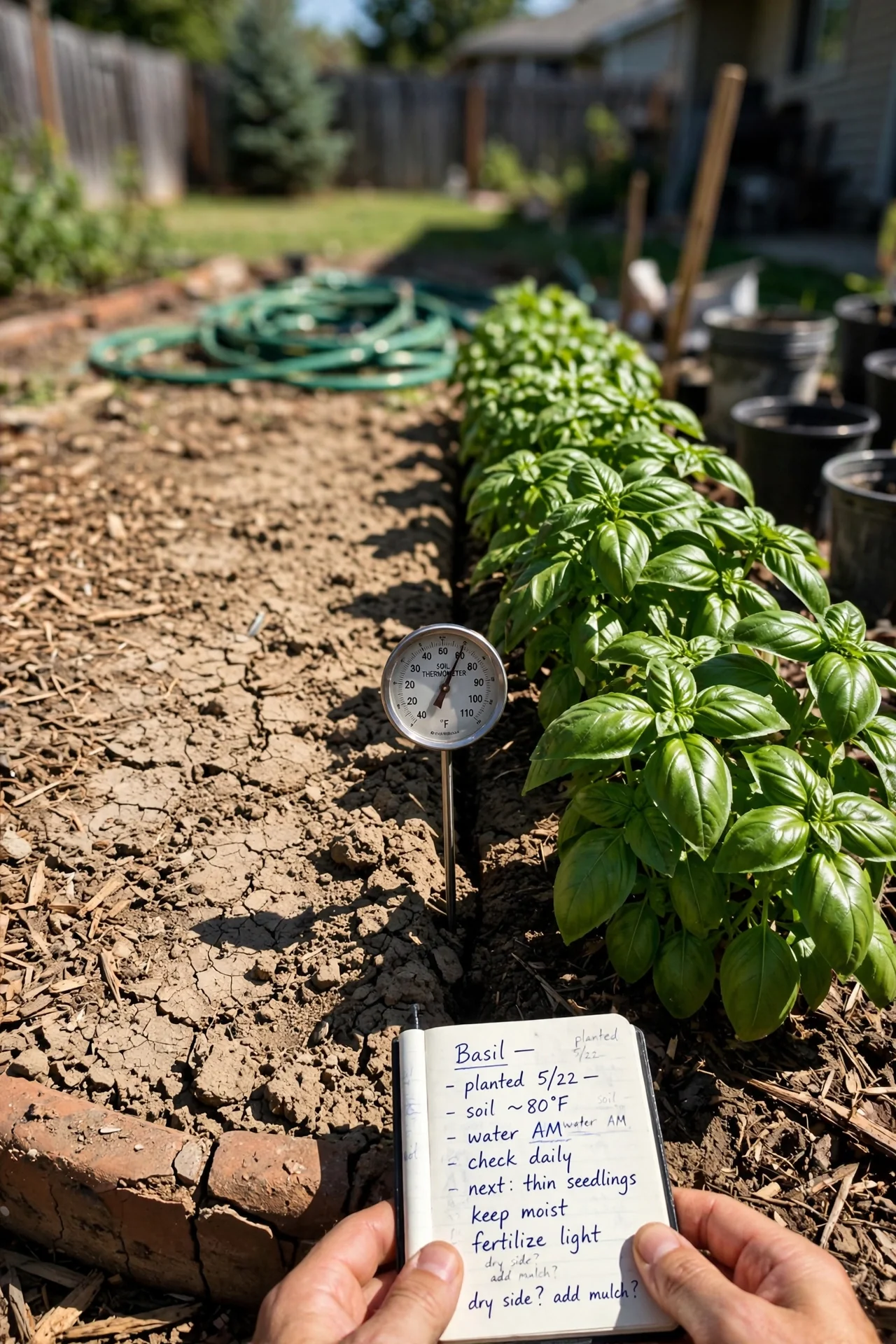
Most basil disease discussions place fusarium wilt in the “treat it” box alongside downy mildew or leaf spot. That framing wastes a gardener’s most valuable asset: time. Fusarium oxysporum f. sp. basilici is a vascular clogger. Once a plant shows the classic shepherd’s crook wilt and brown streaks inside the stem, the internal plumbing is already blocked. No spray, drench, or nutrient adjustment reverses that blockage.
This article does not offer a cure for an actively wilting basil plant. What it does offer is a decision framework that maps the three positions a grower can actually occupy: planting into clean ground and wanting to keep it that way (Prevention), planting into soil with a known history of the disease (Soil Management), or discovering wilted plants mid-season and needing to stop spread (Damage Containment). Each position has its own set of viable tools.
By the end, you will know which resistant variety matches your growing setup, which soil treatment fits your budget and timeline, how to confirm fusarium wilt rather than a nutrient issue or root rot, and what to do with infected soil so you are not repeating the same loss next season.
Bottom line: The correct choice depends not on what killed your basil last year but on whether the pathogen is already in your soil and how long you are willing to wait before planting again.
The Yield Grid Decision Grid
Branch 1: No Known Fusarium History (Prevention)
You are starting with clean soil, fresh potting mix, or a bed that has never hosted infected basil. Your priority is exclusion: keeping the pathogen out. This means sourcing seed that has been tested and confirmed free of F. oxysporum f. sp. basilici, or using a verified hot water seed treatment protocol (56-58°C for 20 minutes before sowing). Combine this with a resistant variety as insurance. Recommended: Items 1, 2, 4 below.
Branch 2: Confirmed or Suspected Infested Soil (Soil Management)
You have lost basil to fusarium wilt in this soil before, or a soil test has confirmed the pathogen’s presence. Your priority is reducing the pathogen load before the next crop. Options include solarization (soil temperatures at 5 cm depth reaching 48°C for multiple days), steam treatment for high-value beds, or suppressive compost incorporation. You must also swap to a resistant variety because no soil treatment eliminates every propagule. Recommended: Items 3, 5, 6, 8 below.
Branch 3: Mid-Season Wilt Appears (Damage Containment)
Plants are wilting now. Confirm diagnosis by cutting the lower stem lengthwise and looking for the telltale brown vascular discoloration. Remove infected plants immediately, bag them at the site, and dispose of them away from the garden. Do not compost them. Do not replant basil or any member of the mint family in that spot for a minimum of 2-3 years. Switch to a non-host herb for that location. Recommended: Items 7, 9, 10 below.
If you are also managing other basil diseases, our guide on basil downy mildew covers the other major threat that often overlaps with fusarium wilt in the same growing season.
Quick Comparison Table
| Option | Key Mechanism | Best For | Decision Grid Branch | Effort Score (1–5) |
|---|---|---|---|---|
| Resistant variety | Genetic tolerance to pathogen colonization | Any grower, all soil types | Branch 1, 2 | 1 |
| Clean tested seed | Exclusion; prevents introducing pathogen | New beds, clean soil | Branch 1 | 2 |
| Hot water seed treatment | Heat kills pathogen on or in seed coat | When tested seed is unavailable | Branch 1 | 3 |
| Soil solarization | Solar heat raises soil temperature to lethal range for pathogen | Full-sun beds, summer months | Branch 2 | 4 |
| Steam sterilization | Pressurized steam pasteurizes soil | High-value beds, greenhouse | Branch 2 | 5 |
| Suppressive compost | Beneficial microbes compete with or inhibit pathogen | Organic systems, container growing | Branch 2 | 3 |
| Biological drench | Antagonistic fungi or bacteria colonize root zone | Greenhouse, hydroponic | Branch 2 | 4 |
| Infected plant removal | Sanitation; removes inoculum source | Mid-season disease appearance | Branch 3 | 2 |
| Crop rotation away from mint family | Starvation; deprives pathogen of host | Field and raised bed growers | Branch 3 | 1 |
| Container growing with fresh mix | Physical isolation from infested soil | Small-space gardeners, patio | Branch 2, 3 | 2 |
| Non-host herb replacement | Switches to a crop pathogen cannot colonize | Growers abandoning basil in that spot | Branch 3 | 1 |
1. Plant a Resistant Basil Variety
Best for: Branch 1 and 2
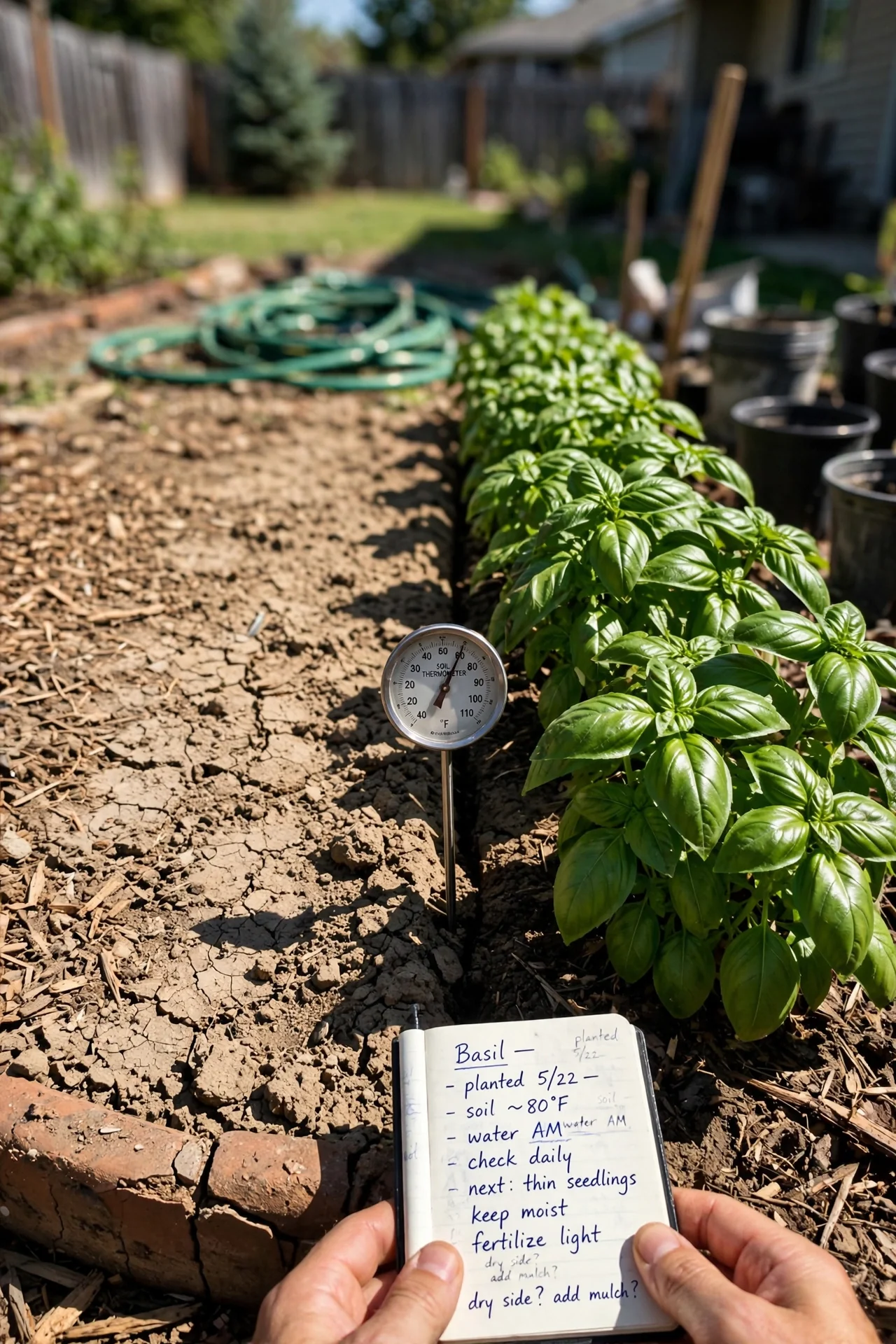
Blueprint: What: Replace susceptible sweet basil with a variety that carries genetic resistance or tolerance to Fusarium oxysporum f. sp. basilici. For: Any grower who has lost basil to the disease or wants to avoid it entirely. Steps: (a) Identify your growing system: field, greenhouse, hydroponic, or container. (b) Select a variety with confirmed resistance: Nufar F1 (the first resistant Genovese type, field-tested since the late 1990s), Aroma 2, or Rutgers Obsession. For dual resistance to both fusarium and downy mildew, choose Prospera F1 or Newton. (c) Source seed from a supplier that explicitly lists fusarium resistance on the packet, not just “disease resistant” generically. Mistake to avoid: Assuming all specialty basils are resistant. Lemon basil and purple basil show some tolerance but can still act as asymptomatic hosts, carrying the pathogen without wilting and contaminating soil for susceptible sweet basil planted later.
2. Source Clean, Pathogen-Tested Seed
Best for: Branch 1
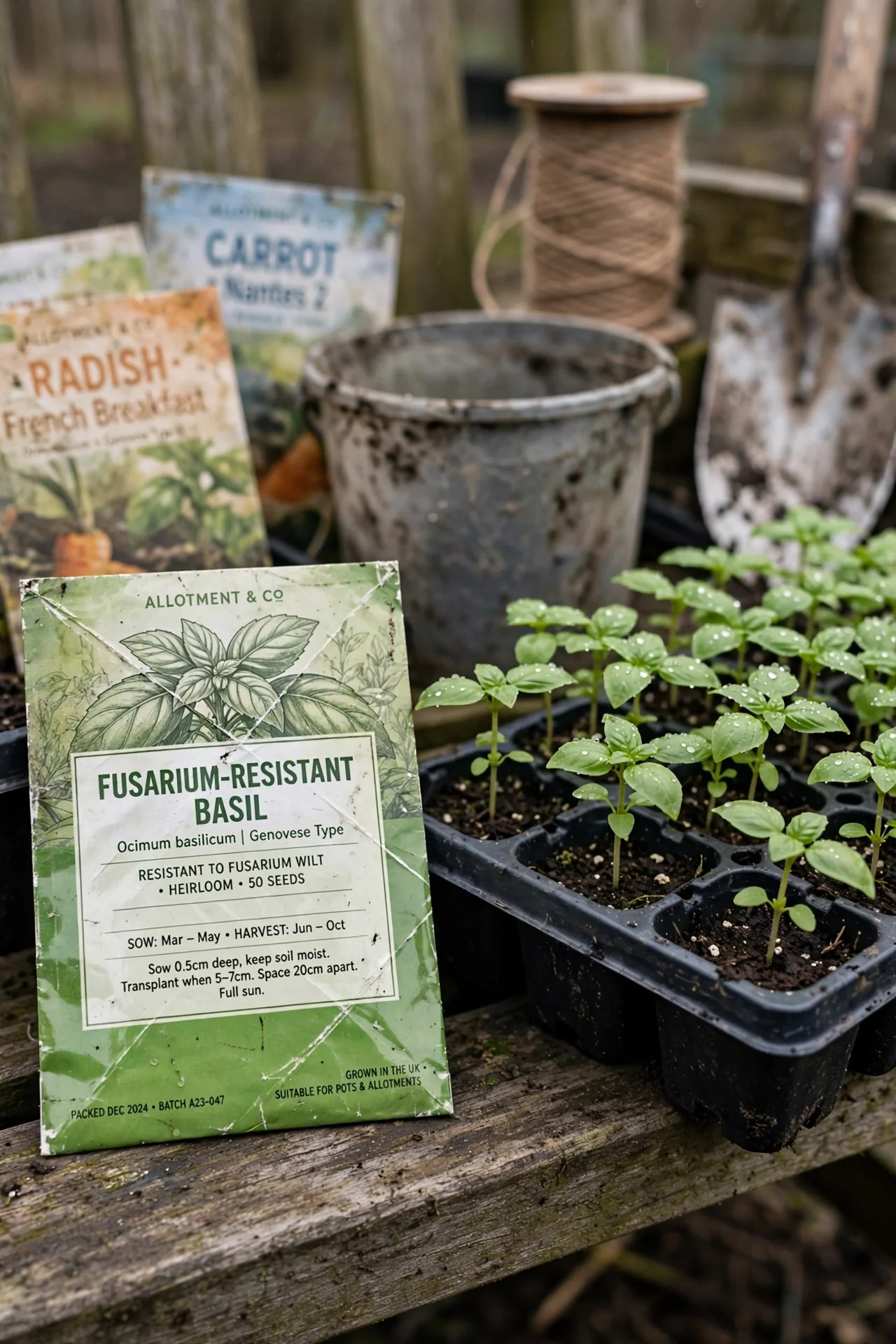
Use vs Skip: Use when planting into soil with no known fusarium history. Skip if you already have infested soil; even clean seed will produce susceptible plants that the resident pathogen will attack. A 1999 survey of 28 commercial seed lots from four countries found that 59% of lots exhibited some level of Fusarium contamination. Seed that is specifically labeled “Fusarium-tested” or “pathogen-free” closes this entry point. The edge case: seed can test clean at the lot level while individual seeds within the lot still carry the pathogen at very low rates.
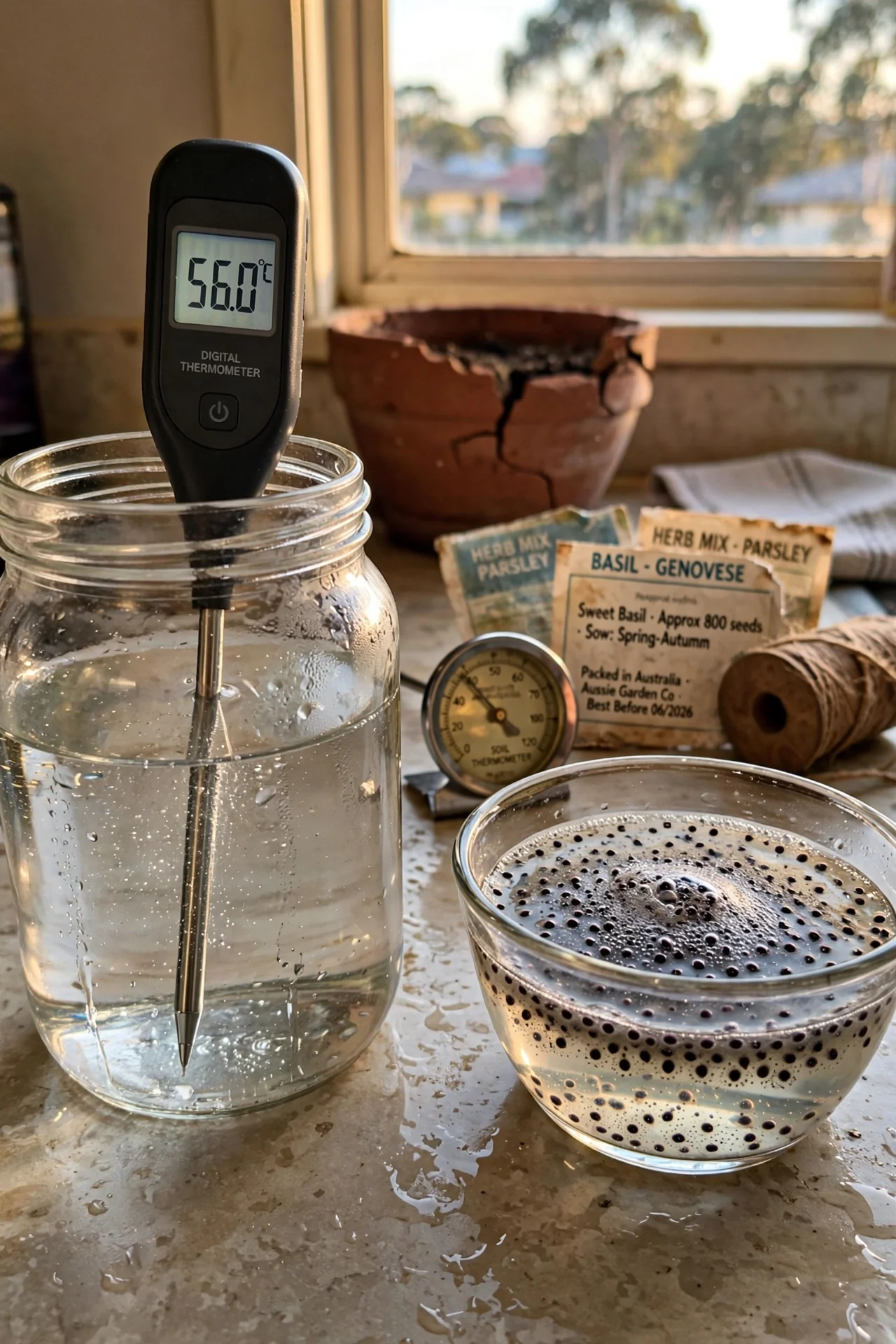
3. Apply Hot Water Seed Treatment
Best for: Branch 1
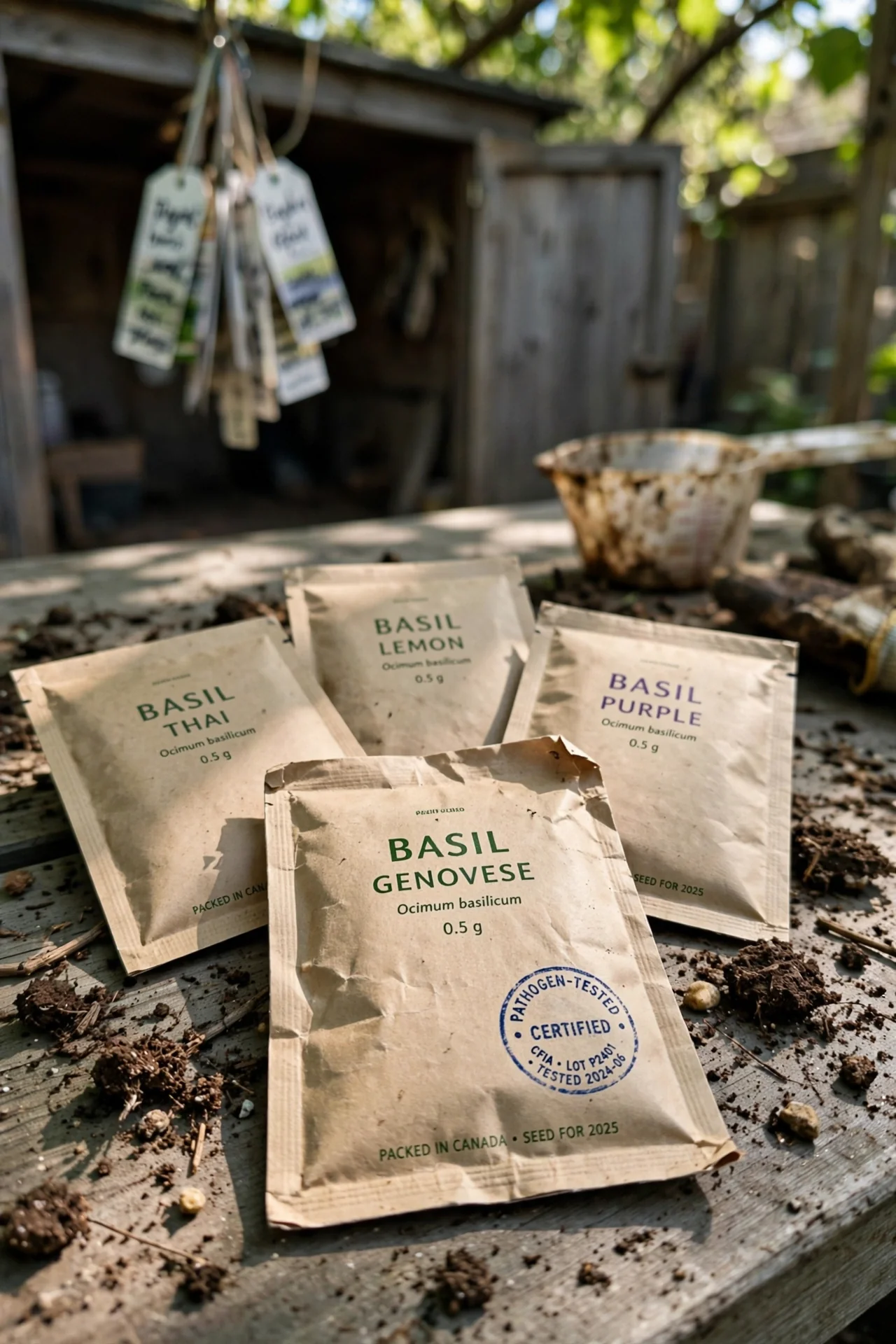
Threshold Rule: When tested seed is unavailable or you are saving your own seed from a previous crop, a hot water bath at 56-58°C (133-136°F) for 20 minutes reduces Fusarium contamination substantially without significantly affecting germination rates. Raising the temperature to 60°C eliminates the pathogen but cuts germination by roughly half. The protocol: soak seed in cold water for 4 hours first, then transfer to the precisely maintained hot water bath, then immediately cool and dry the seed. Use a reliable thermometer. Drifting even 2-3 degrees above 58°C risks seed damage. A sticky outer layer develops on the seed surface during treatment, making handling slippery; that is expected and does not indicate failure.
After handling infected plant material, thorough tool sanitation is critical. See our guide on how to sanitize garden tools for protocols that prevent spreading the pathogen to clean areas.
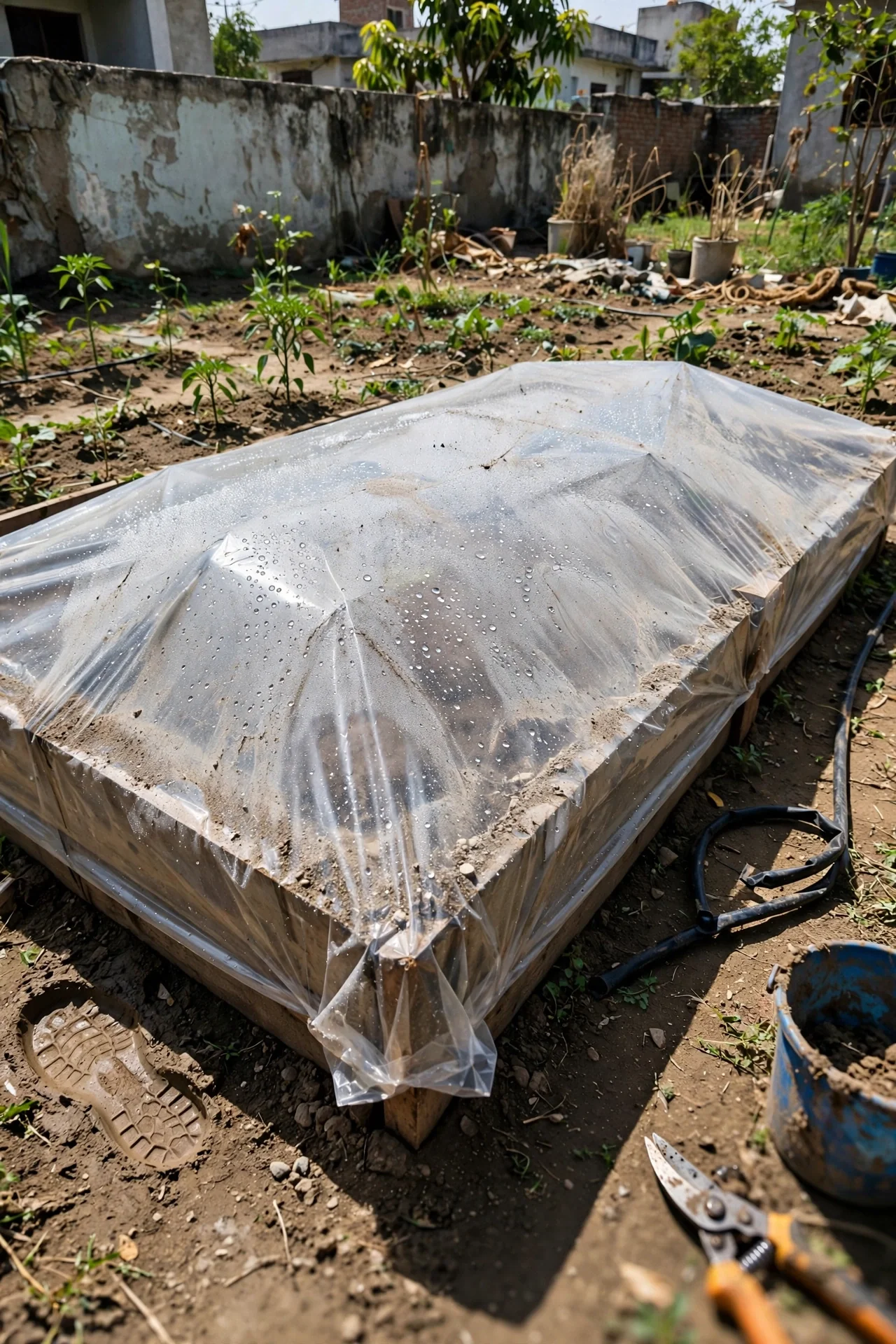
4. Solarize the Soil Before Planting
Best for: Branch 2
Blueprint: What: Use clear polyethylene sheeting to trap solar radiation and raise soil temperatures to lethal levels for Fusarium propagules. For: Gardeners with full-sun beds and a summer window of at least 4-6 weeks before the next basil planting. Steps: (a) Clear the bed of debris and level the surface. (b) Irrigate thoroughly; moist soil conducts heat better than dry soil. (c) Stretch clear 1-2 mil plastic tightly over the soil, sealing edges with soil or boards. (d) Leave in place for a minimum of 4 weeks during the hottest part of the year. Research on basil bench solarization recorded temperatures of 48°C at 5 cm depth and 45°C at 15 cm depth under mulch. Even sub-optimal temperature regimes applied for 7 days provided meaningful disease reduction in controlled trials. Mistake to avoid: Combining solarization with antagonistic Fusarium strains did not improve disease control over solarization alone in basil trials. Invest your effort in the solarization protocol rather than adding biological amendments during the heating period.
For managing soilborne pathogens that attack young plants, our article on damping-off in seedlings covers prevention strategies that overlap with fusarium management in the vulnerable early growth stage.
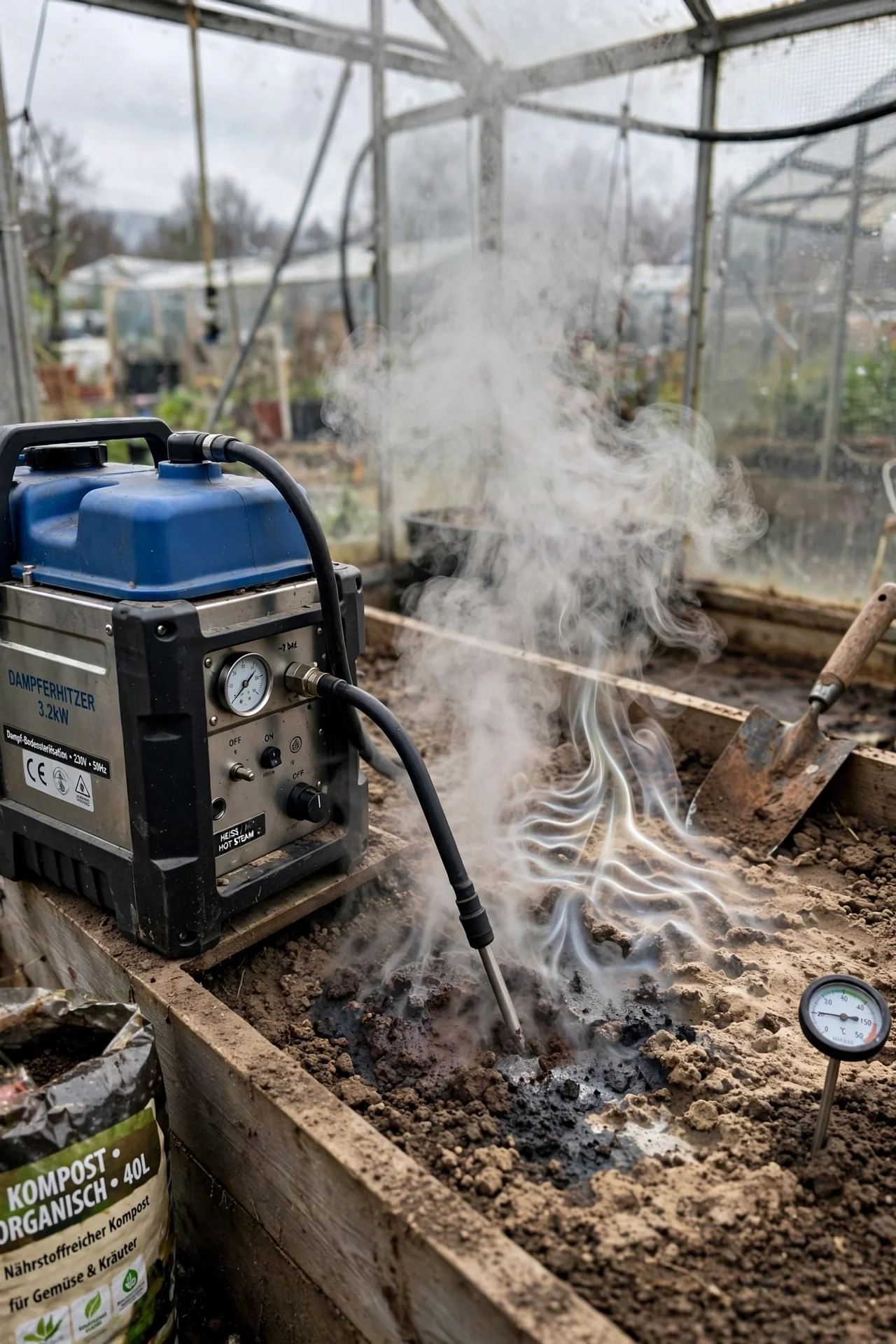
5. Steam-Sterilize High-Value Beds
Best for: Branch 2
Threshold Rule: Steam treatment combined with an exothermic reaction from incorporated potassium hydroxide reduced Fusarium wilt incidence more effectively than steam alone in open-field trials, though both methods were substantial improvements over untreated soil. Steam injection at the subsurface level is more efficient than surface sheet steaming for reducing chlamydospore counts in sandy-loam soil. This is a high-effort, high-cost method suited to greenhouse benches, raised beds with known severe infestation, or commercial herb production where basil is a primary crop.
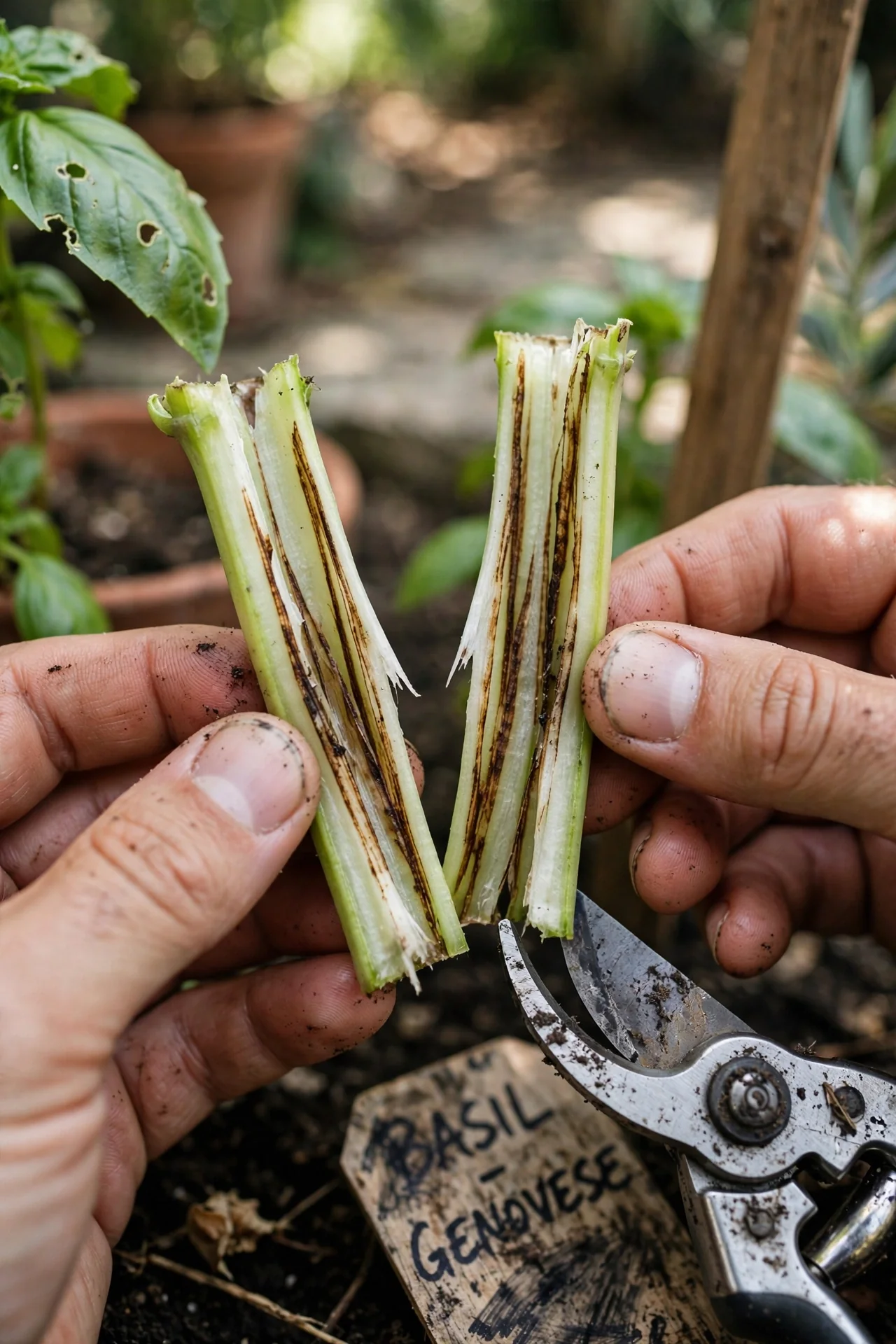
6. Distinguish Fusarium Wilt from Overwatering and Nutrient Deficiencies
Best for: Branch 3 (Diagnosis Step)
Use vs Skip: Use a cut-stem test before pulling any wilted basil. Split the lower stem lengthwise with a clean blade. Fusarium wilt produces unmistakable brown to dark-brown streaking inside the vascular tissue, while overwatered plants show soft, mushy stems at the soil line with no internal discoloration. Skip the “wait and see if it recovers overnight” approach. Fusarium wilt causes plants to wilt during the day and partially recover at night in early stages, exactly mimicking drought stress, but the vascular browning confirms the pathogen’s presence. Nitrogen deficiency yellows oldest leaves uniformly without the one-sided wilting pattern that fusarium often produces.
For more on distinguishing water-related plant stress from disease, see our guide on overwatering symptoms.
7. Remove and Bag Infected Plants Immediately
Best for: Branch 3
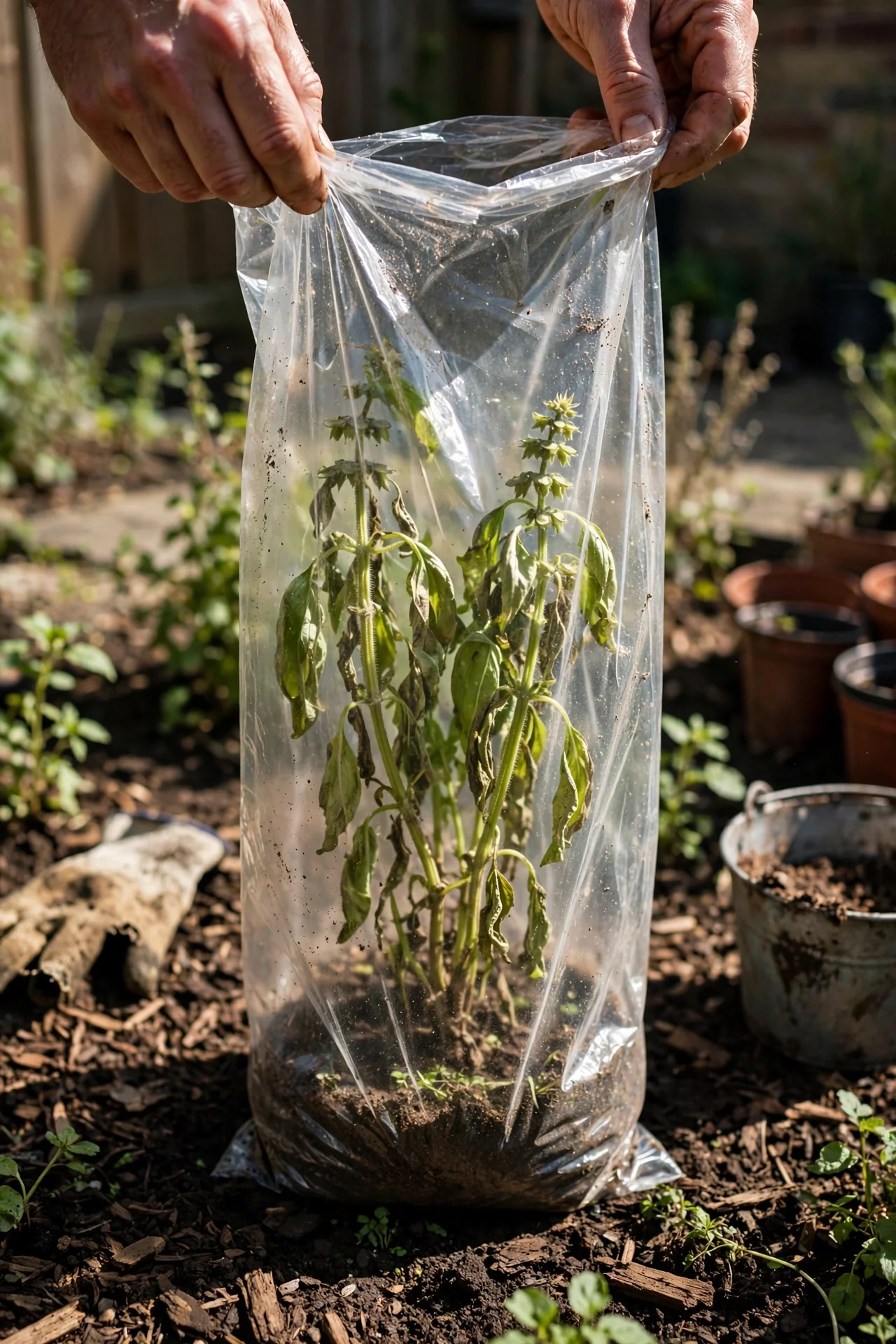
10-Minute Workflow: (1) Confirm diagnosis with the cut-stem test described in Item 6. (2) Slide a plastic bag over the entire above-ground portion of the plant before uprooting it. (3) Pull the plant, keeping as much of the root system inside the bag as possible. (4) Seal the bag at the site. (5) Dispose of it in household trash, never in compost or municipal green waste. (6) Wash hands and tools before touching healthy plants. Upgrade option: For greenhouse or high-density plantings, bag plants in situ before removal to minimize spore dispersal, as recommended in commercial herb production guides, and dispose of bagged material in covered bins outside the growing area.
8. Rotate Away from the Mint Family for 2-3 Years
Best for: Branch 3
Threshold Rule: After confirmed fusarium wilt in a bed or field, do not grow any sweet basil or other members of the Lamiaceae family (mint, rosemary, thyme, oregano) in that location for a minimum of 2-3 years. These plants can serve as asymptomatic hosts, maintaining the pathogen population in the soil without showing symptoms themselves. The pathogen’s chlamydospores survive in soil for 8-12 years, so a 2-3 year rotation is a minimum suppression strategy, not a guarantee of eradication. Plant a non-host crop such as a brassica, allium, or legume in the interim.
Nutrient imbalances can produce symptoms that resemble wilt diseases. Our guide on nitrogen deficiency in plants helps distinguish fertility issues from pathogenic wilting.
9. Switch to Container Growing with Fresh Sterile Mix
Best for: Branch 2 and 3
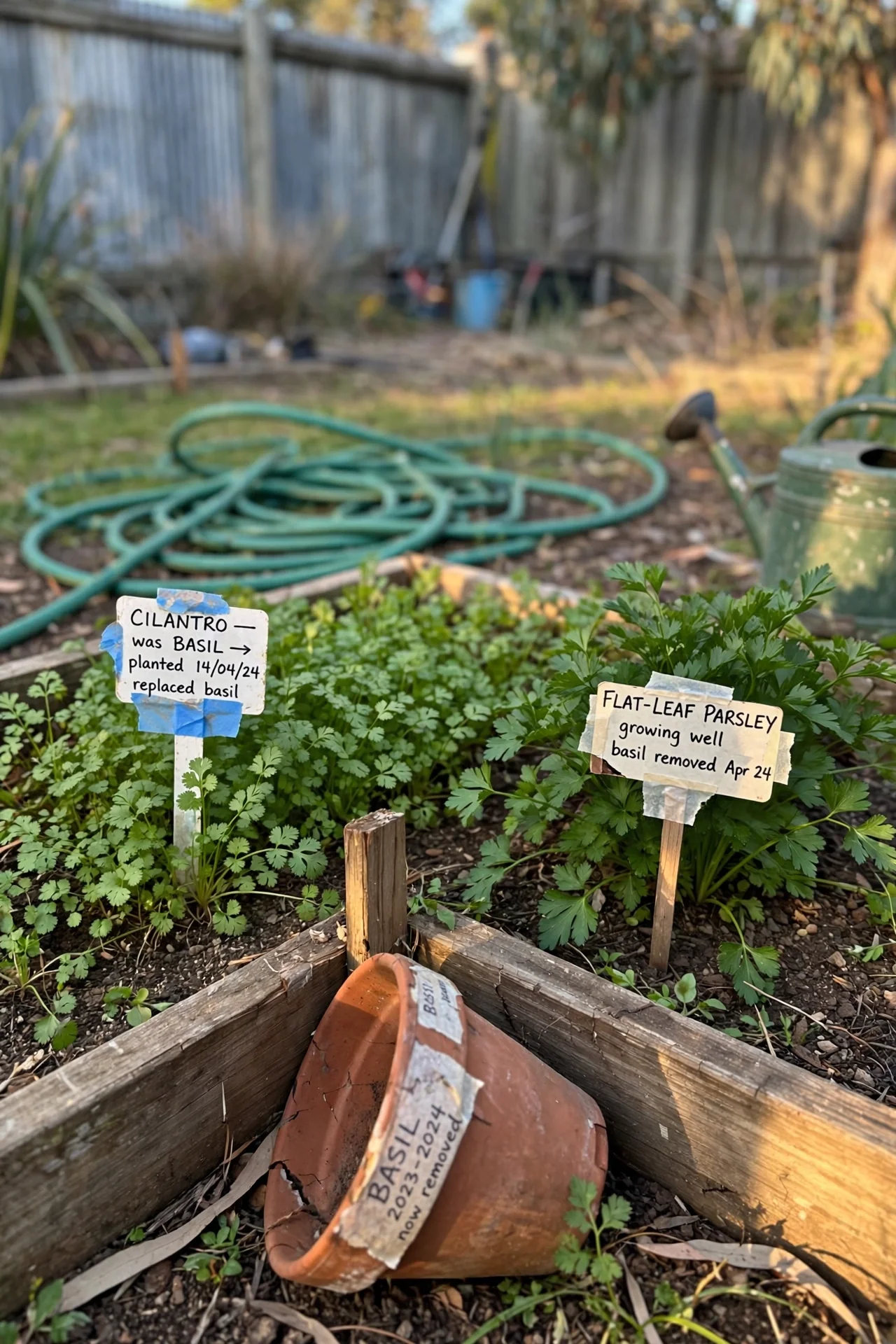
Use vs Skip: Use this approach when garden soil is known to be infested and you lack the time, space, or conditions for solarization or steam treatment. Fill clean containers with fresh, pathogen-free potting mix and grow basil above ground. Skip reusing last year’s potting mix if fusarium wilt was present; the pathogen survives in container media just as it does in field soil. Hydroponic growers have reported repeated crop infestations even when starting with fusarium-free seed, attributed to spores surviving equipment cleanup between cycles. The upgrade path is to combine container growing with a resistant variety for a two-layer defense.
10. Apply a Biological Control Drench at Planting
Best for: Branch 2
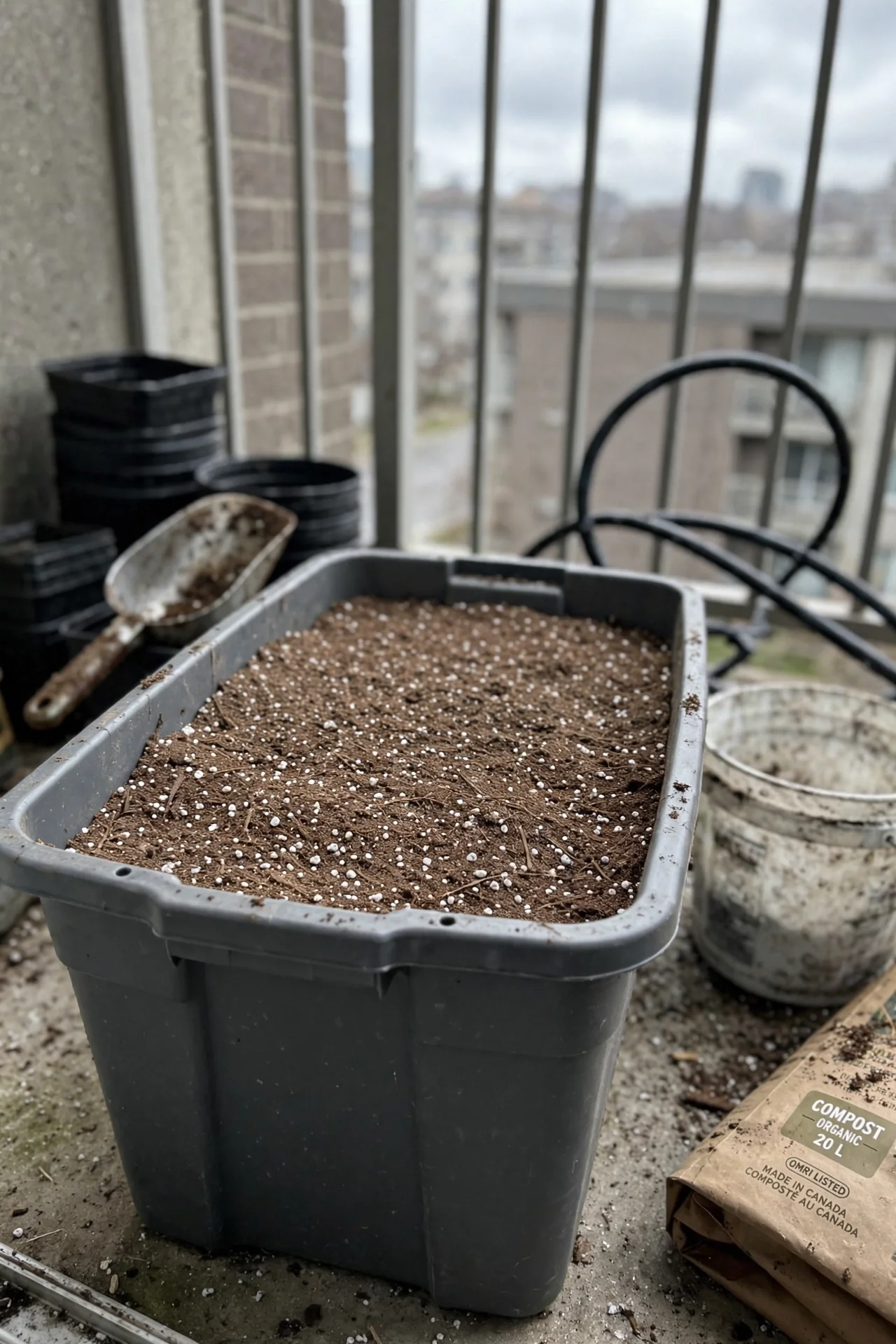
Blueprint: What: Introduce antagonistic microorganisms that compete with or parasitize Fusarium in the root zone. For: Greenhouse growers, hydroponic systems, and field growers seeking an additional suppression layer alongside resistant varieties. Steps: (a) Choose a registered biocontrol product containing Trichoderma harzianum (such as RootShield WP) or Streptomyces lydicus (Actinovate AG). (b) Apply as a soil drench at planting per label rates: RootShield WP at 3-5 oz per 100 gallons of water for greenhouse soil drench, or Actinovate AG at 3-12 oz per acre as a soil drench. (c) For hydroponic systems, non-pathogenic Fusarium oxysporum strain CS-20 applied as a seedling drench before transplanting into the system reduced dead stem counts compared to untreated controls in research trials. Mistake to avoid: Biologicals are preventative, not curative. They must be in place before the pathogen attacks. Applying them after symptoms appear offers no benefit.
For broader biological treatment approaches usable across multiple plant diseases, see our article on powdery mildew treatment, which covers beneficial microbe application principles.
11. Replace Basil with a Non-Host Herb
Best for: Branch 3
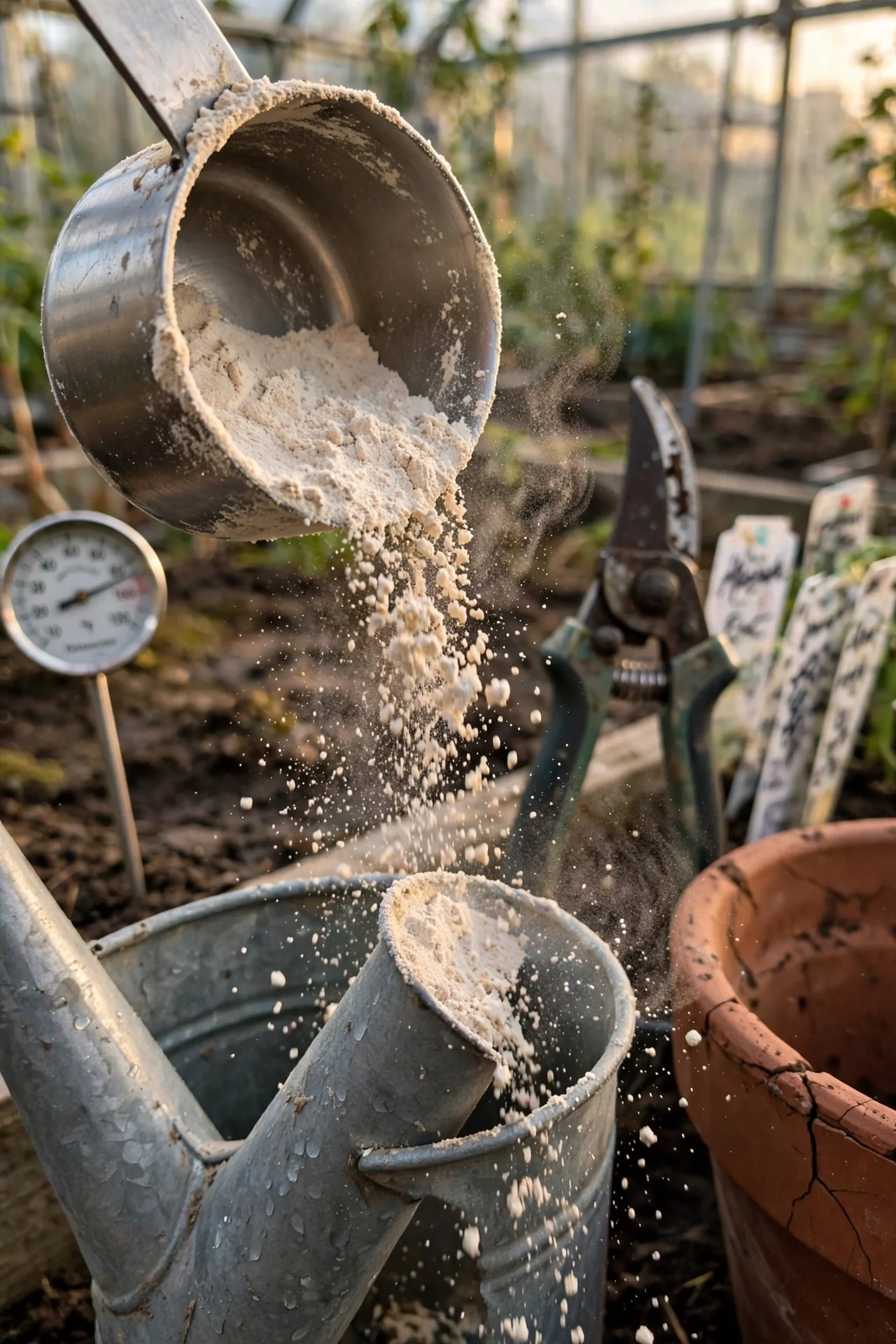
Threshold Rule: When the bed is infested and you are unwilling to go a full season without an herb crop while rotation runs its course, plant a species outside the Lamiaceae family. Cilantro (coriander), parsley, dill, and chives are not hosts for Fusarium oxysporum f. sp. basilici. This form of fusarium is highly host-specific, attacking only sweet basil (Ocimum basilicum) and capable of surviving asymptomatically in other mint-family members. Switching to a non-host eliminates the pathogen’s food source while still producing a usable culinary herb from the same space.
Starter Stack (What to Choose First)
Branch 1: Prevention-First Stack
Combine Resistant Variety (Item 1) with Clean Tested Seed (Item 2). The synergy is straightforward: a resistant variety tolerates the pathogen if it arrives, while tested seed prevents it from arriving in the first place. Together they form an exclusion-plus-tolerance defense that costs roughly $4-$7 per seed packet (USD) and requires no ongoing maintenance beyond normal basil care. Time investment is under 10 minutes spent verifying seed packet labeling at purchase.
Branch 2: Infested-Soil Stack
Pair Soil Solarization (Item 4) with Resistant Variety (Item 1). Solarization knocks down the existing pathogen population during the 4-6 week treatment window. The resistant variety handles any propagules that survive the heat treatment. This combination avoids the recurring cost of purchased biologicals while delivering both a population reduction and a genetic defense. Budget approximately $15-$30 for clear plastic sheeting (hardware store grade, 1-2 mil). The time commitment is front-loaded: one afternoon to install the plastic, then 4-6 weeks of waiting during peak summer heat.
Branch 3: Damage-Containment Stack
Deploy Infected Plant Removal (Item 7) followed immediately by Non-Host Herb Replacement (Item 11). Removal stops the current season’s inoculum production. Replanting with cilantro or parsley keeps the bed productive while enacting a de facto rotation. The combined effort is roughly 15-20 minutes for diagnosis, bagging, disposal, and replanting. This stack accepts that basil is lost for that location this year and focuses entirely on preventing a repeat loss next year.
When This Won’t Work
Failure Condition 1: The diagnosis is wrong. If the plant is wilting from root rot caused by Phytophthora or Pythium species, none of the fusarium-specific strategies above will help. Phytophthora is a water mold favored by saturated, poorly drained soil and requires an entirely different management approach focused on drainage improvement and targeted fungicides. If roots are brown, mushy, and lack the vascular streaking characteristic of fusarium, shift your investigation toward root rot pathogens.
Failure Condition 2: The soil pathogen load is extreme and the site cannot be rotated. In commercial settings or very small gardens where all available soil has hosted infected basil for multiple seasons, even resistant varieties may eventually succumb because the inoculum pressure overwhelms their tolerance mechanisms. In this scenario, the only viable path is to abandon in-ground basil production entirely and move to isolated container growing on a hard surface away from garden soil, using fresh sterile mix each season. No amount of solarization, biologicals, or varietal resistance can compensate for soil that has accumulated years of uninterrupted pathogen buildup.
If you are unsure whether the problem is fusarium wilt or a root rot pathogen, our guide on phytophthora root rot explains the key diagnostic differences.
Choosing the Right Option for Your Situation
Budget Threshold
If your budget is under $10 USD, the highest-impact choices are a resistant variety seed packet (Item 1) and clean tested seed (Item 2). Solarization plastic costs $15-$30, making it the next tier. Steam sterilization equipment rental or purchase puts that option into the commercial grower budget range. Biological control drenches (Item 10) carry recurring per-application costs that accumulate over a growing season.
Time Threshold
If you have less than 2 weeks before planting, your viable options narrow to resistant varieties (Item 1) and clean seed (Item 2). Solarization requires 4-6 weeks of summer heat. Crop rotation (Item 8) demands 2-3 years. Hot water seed treatment (Item 3) can be done the day before sowing but requires precise temperature control and adds a step.
Technical Constraint: Soil Type
Fusarium wilt is more severe in acidic, sandy soils and is promoted by excessive nitrogen fertilization and root-knot nematode infestations, which create entry wounds for the fungus. If your soil pH is below 5.5, raising it toward neutral (6.5-7.0) may reduce disease pressure, though this is a supplementary measure, not a replacement for the primary strategies above.
Yes/No Checklist:
- Did you confirm brown vascular streaking inside the lower stem? (Yes = fusarium wilt likely. No = investigate other causes first.)
- Have you grown basil in this exact soil before? (Yes = Branch 2 or 3. No = Branch 1.)
- Is it currently mid-summer with at least 4 weeks of hot sun ahead? (Yes = solarization is viable. No = skip to resistant varieties or container growing.)
- Can you source seed of a named resistant variety within your planting window? (Yes = do this regardless of which branch you are in. No = prioritize clean tested seed of any variety.)
Expert Q&A
Can a basil plant recover from fusarium wilt?
No. Once the xylem vessels are colonized and blocked, water transport cannot be restored. A plant showing classic wilt symptoms with internal vascular browning will not recover, even if moved to ideal conditions. Remove it immediately to reduce the pathogen load in the soil for future plantings.
Does fusarium wilt spread from basil to tomatoes or other vegetables?
The forma specialis basilici attacks only basil and can survive asymptomatically in other mint-family plants. It does not infect tomatoes, peppers, or other vegetables. However, those crops have their own Fusarium wilt forma speciales. The basil pathogen and tomato pathogen are distinct and do not cross-infect.
How long does fusarium wilt survive in soil without a host?
The pathogen produces thick-walled chlamydospores that persist in soil for 8 to 12 years, even without a host plant present. This is why rotation measured in single seasons is insufficient and why resistant varieties are essential for re-planting into previously infested ground.
What does fusarium wilt look like compared to basil downy mildew?
Downy mildew produces yellowing on the upper leaf surface with gray-purple fuzzy growth on the underside, primarily affecting foliage. Fusarium wilt causes one-sided wilting, brown vascular streaking inside the stem, and a characteristic pink-orange mold layer on the lower stem under humid conditions. The two diseases sometimes co-occur but have different entry points and management strategies.
Can I save seeds from a basil plant that survived in infested soil?
Not reliably. The plant may be an asymptomatic carrier if it is a resistant variety. Seeds from such plants can carry the pathogen internally or on the seed coat. A 1999 study found that 88.2% of Fusarium isolates recovered from basil seeds belonged to the pathogenic forma specialis basilici. Purchase fresh tested seed for the next planting.
Conclusion
The single decision that determines whether you grow basil successfully this year happens before a seed touches soil: choosing a resistant variety from a tested seed lot. Every other strategy discussed here supports that choice but cannot replace it. Gardeners lose basil to fusarium wilt not because the disease is unstoppable but because they plant susceptible seed into soil that has been quietly holding the pathogen since a previous season’s loss. The number one mistake is replanting the same susceptible Genovese basil in the same spot after a confirmed wilt event, expecting a different result.
If you grow tomatoes alongside basil, the same principle of prevention through resistance applies to that crop’s wilt diseases as well. See our guide on fusarium wilt in tomatoes for variety selection and soil management strategies that mirror the approach outlined here for basil.