
Every backyard lawn idea list assumes you already know what you want. But the choice that works for your neighbor can fail in your yard for one reason: the soil, the clock, and the water bill were never measured. Lists that skip measurement are design catalogs, not decision tools.
This article organizes 12 options into a decision grid built on three measurable conditions: your soil’s percolation rate (inches per hour), your weekly maintenance capacity (actual minutes, not intentions), and your peak-summer water cost (local rate per 1,000 gallons). Until you have those three numbers, do not pick an option. If you pick first and measure later, you are betting your weekends on a guess.
We cover traditional turfgrass selections, low-input alternatives including microclover and buffalo grass, hardscape-integrated designs, and activity-first layouts. Excluded: purely ornamental flower beds, vegetable gardens, and structures like pergolas. Every option below is a surface you can walk on, play on, or look at without needing a second mortgage in irrigation.
After reading, you will know which two or three options match your measurable reality, what each one costs in time and water, and which option to install first. You will also know the conditions under which none of these ideas will work, and what to do instead.
Bottom line: Measure your percolation rate, your real weekly maintenance minutes, and your local water cost before reading further; then use the Decision Grid below to eliminate options that do not match your numbers.
The Yield Grid Decision Grid
Select your branch by matching your measurements to the conditions below. Each branch leads to a specific subset of the 12 items that follow.
Branch 1: The Measured Traditionalist. Your soil drains at 1 to 3 inches per hour, you have at least 5 hours of direct sunlight daily, and you can commit 90 to 150 minutes per week to lawn care during the growing season. Your water cost is manageable and you want a turf surface that handles foot traffic, games, and pets. Recommended: Items 1, 2, 5, 8, 10, 12 below.
Branch 2: The Low-Input Realist. Your soil drains either faster than 4 inches per hour (sandy) or slower than 0.5 inches per hour (compacted clay). You have 2 to 5 hours of direct sun, and your realistic weekly maintenance budget is under 60 minutes. You are open to non-traditional turf species or mixed plantings that require less mowing, less fertilizer, and less water. Recommended: Items 1, 3, 4, 6, 9, 12 below.
Branch 3: The Functional Designer. You prioritize how the backyard is used over what grows in it. Your lawn is a surface for activities: dining, games, lounging, or entertaining. You are willing to hardscape a portion of the yard and keep turf only where it serves a clear function. Your water cost is high enough that irrigating a full traditional lawn would be noticeable on your quarterly bill. Recommended: Items 1, 7, 9, 11, 12 below.
If your soil percolation rate has not been measured, start there. A simple jar test or percolation test takes under an hour and eliminates half the options immediately. For detailed guidance on soil testing, see our soil test walkthrough for lawn decisions. For a broader look at reducing ongoing upkeep across any option, low-maintenance lawn strategies apply to all three branches.
Quick Comparison Table
| Option | Key Mechanism | Best For | Decision Grid Branch | Effort Score |
|---|---|---|---|---|
| 1. Soil Test & Site Assessment | Pre-decision measurement eliminates mismatches | Every scenario, before any installation | Branch 1, 2, 3 | 1 |
| 2. Kentucky Bluegrass Classic Lawn | Rhizomatous spreading fills gaps; high input requirement | Cool climates, full sun, high traffic | Branch 1 | 5 |
| 3. Microclover Lawn Conversion | Nitrogen fixation reduces fertilizer need to near zero | Partial sun, low-maintenance preference | Branch 2 | 2 |
| 4. Buffalo Grass Drought-Tolerant Lawn | Deep root system (up to 5 ft) accesses subsurface moisture | Hot, dry regions; water-restricted areas | Branch 2 | 2 |
| 5. Tall Fescue Tough-Traffic Lawn | Deep roots plus wear tolerance from coarse leaf texture | Transition zones, families with kids and dogs | Branch 1 | 4 |
| 6. No-Mow Fine Fescue Carpet | Slow vertical growth; mow 1-2 times per year | Shaded yards, absentee owners | Branch 2 | 1 |
| 7. Drip Irrigation Integration | Subsurface water delivery eliminates evaporation loss | High water-cost regions, irregularly shaped lawns | Branch 1, 3 | 3 |
| 8. Zoysia Grass Warm-Climate Lawn | Dense stolon mat suppresses weeds naturally | Warm climates, moderate traffic | Branch 1 | 4 |
| 9. Eco-Friendly Mixed Lawn | Grass plus low-growing groundcover share root zones | Transitional light, reduced chemical use | Branch 2, 3 | 3 |
| 10. Sod Installation for Instant Results | Pre-grown turf mat bypasses the 6-8 week establishment window | Immediate use needed, erosion-prone sites | Branch 1 | 4 |
| 11. Lawn Games Activity Zone | Dedicated flat turf area sized to specific activities | Entertainment-focused yards, families | Branch 3 | 2 |
| 12. Lawn Edging as Design Framework | Physical barrier defines turf boundary; reduces edge trimming | Every yard; foundational before any planting | Branch 1, 2, 3 | 2 |
1. Soil Test and Site Assessment: Measure Before You Move a Single Shovelful
Best for: Branch 1, 2, 3 (every scenario).
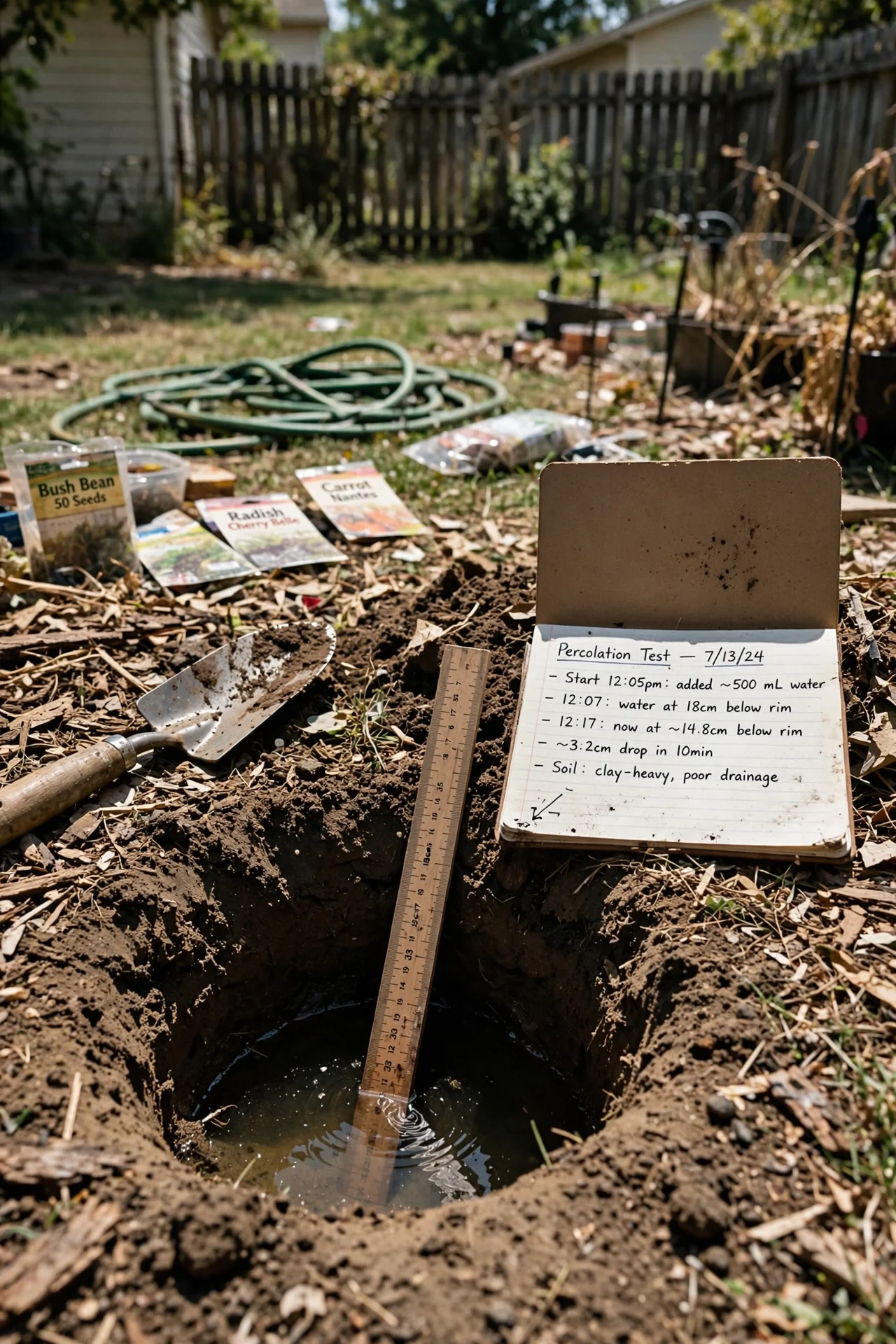
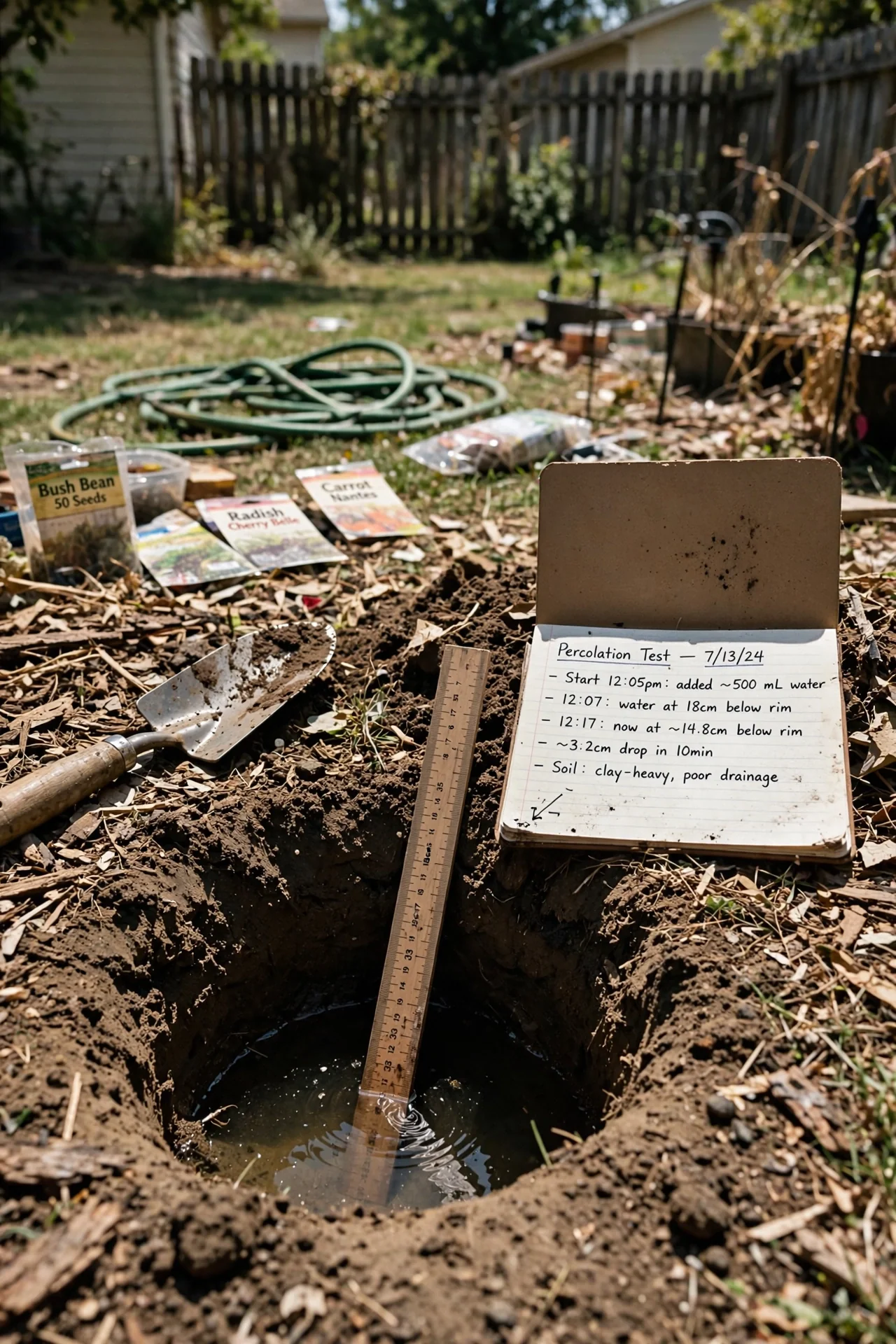
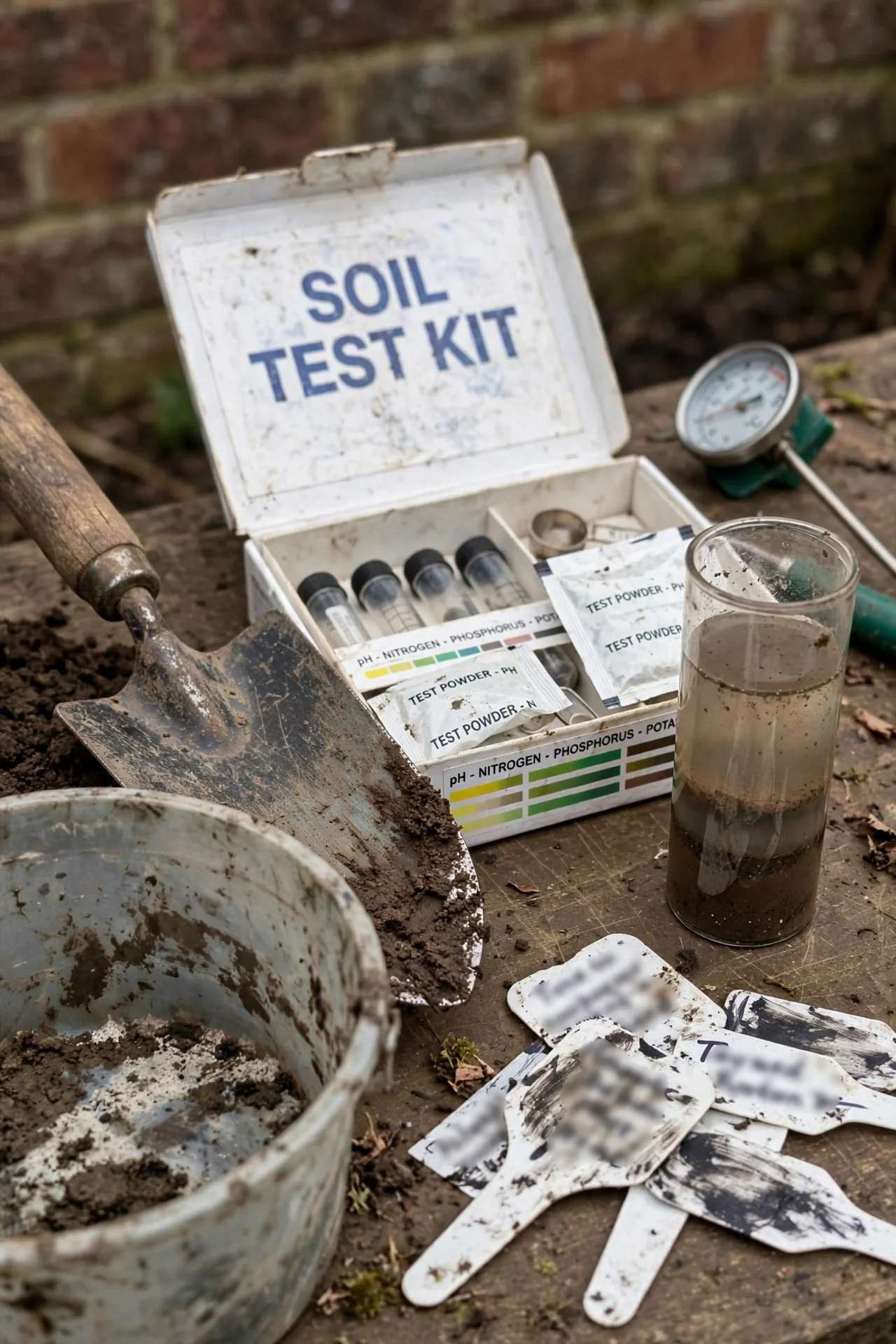
10-Minute Workflow: Step 1: Dig a hole 12 inches deep and 6 inches wide in the area where you plan to place turf. Fill it with water and let it drain completely. Step 2: Refill to the top and measure how far the water level drops in 60 minutes. A drop of 1 to 3 inches indicates suitable drainage for most turfgrass. Less than 0.5 inches means drainage correction is needed before any lawn installation. More than 4 inches means the soil will require frequent irrigation. Step 3: Collect 5 to 8 soil cores from across the yard at a 4-inch depth, mix them in a clean bucket, and send a composite sample to your local extension service for pH and nutrient analysis. Most turfgrasses perform best in the pH 6.0 to 7.0 range.
Edge Case: If your percolation rate falls between 3 and 4 inches per hour, you sit in a gray zone: most standard turfgrasses will survive but will require roughly 1.5 inches of water per week in peak summer instead of the standard 1 inch. This pushes you toward Branch 1 with a higher water commitment or Branch 2 with a drought-tolerant species. The percolation test eliminates guessing; skip it and you may install a lawn that needs either drainage tile or supplemental irrigation that doubles your cost. For a complete walkthrough of soil testing methodology, see how to run a soil test for lawn planning.
2. Kentucky Bluegrass Classic Lawn
Best for: Branch 1.
Use vs. Skip: Use Kentucky bluegrass (Poa pratensis) if you live in USDA zones 3 through 7, have full sun, and are committed to weekly mowing at 1.5 to 2.5 inches plus 1 to 1.5 inches of water per week during the growing season. Its rhizomatous growth habit means it self-repairs from damage. Skip it if your soil pH is below 5.8 without amendment, if you have fewer than 5 hours of direct sun, or if you cannot commit to the weekly maintenance schedule. The edge case that surprises people: Kentucky bluegrass goes summer-dormant above approximately 85 degrees Fahrenheit soil temperature and turns brown; this is survival, not death, but it conflicts with the expectation of a green summer lawn.
3. Microclover Lawn Conversion
Best for: Branch 2.
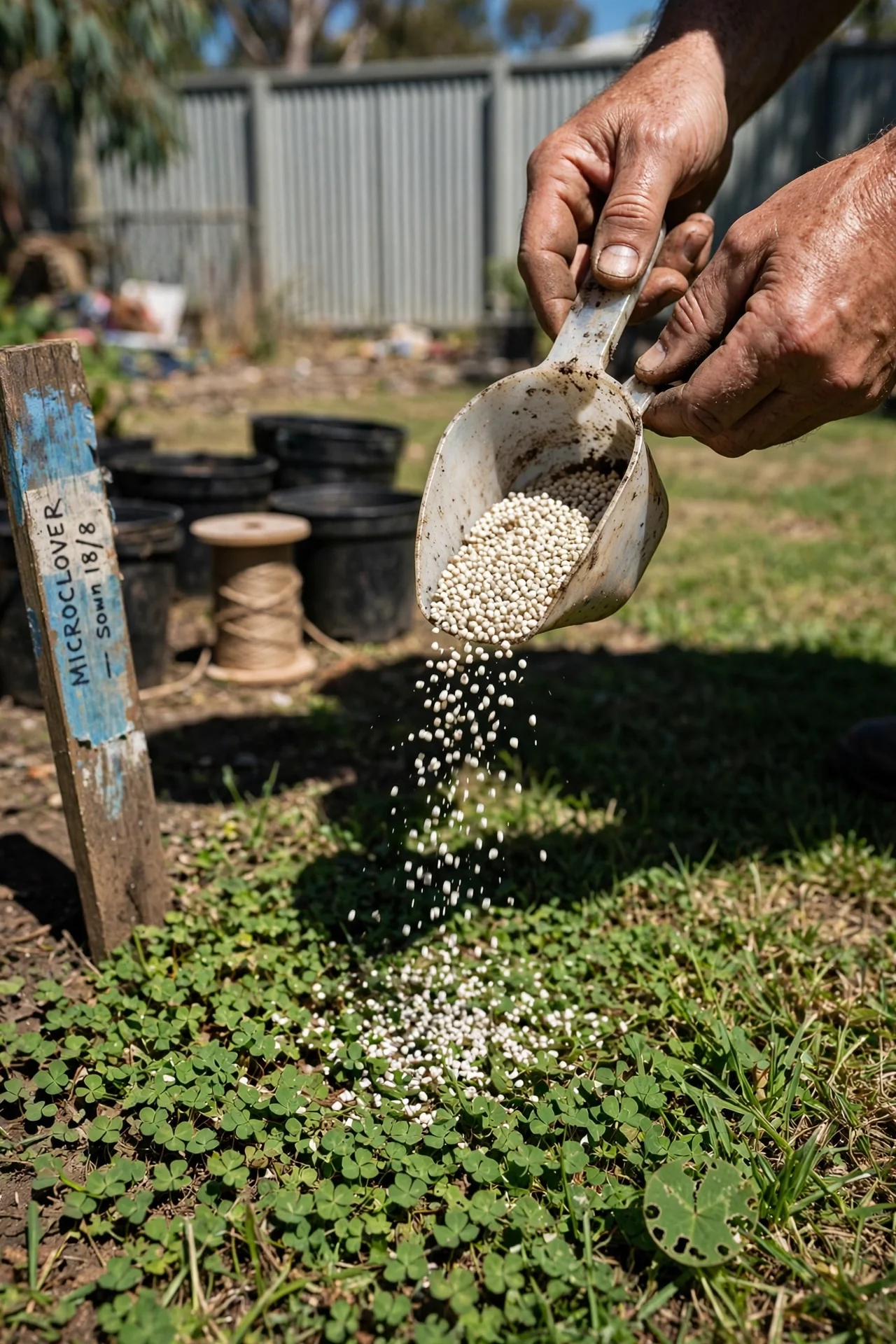
Threshold Rule: Microclover (Trifolium repens var. Pipolina) establishes when soil temperatures reach 50 degrees Fahrenheit at a 2-inch depth and stays green with as little as 0.5 inches of water per week once established. The rule that matters most: microclover fixes atmospheric nitrogen, so applying any nitrogen fertilizer above a rate of 0.5 pounds per 1,000 square feet per year will suppress the clover and favor whatever grass remains in the mix. If you have been fertilizing a traditional lawn at standard rates, you must stop entirely for at least one full growing season before overseeding with microclover, or the existing nitrogen load will prevent establishment. Seeding rate for a pure stand is 1 pound per 1,000 square feet, broadcast evenly over bare soil or an existing mowed-short lawn in early spring. For detailed establishment guidance, see how to plan and plant a microclover lawn.
4. Buffalo Grass Drought-Tolerant Lawn: The Native Warm-Season Workhorse
Best for: Branch 2.
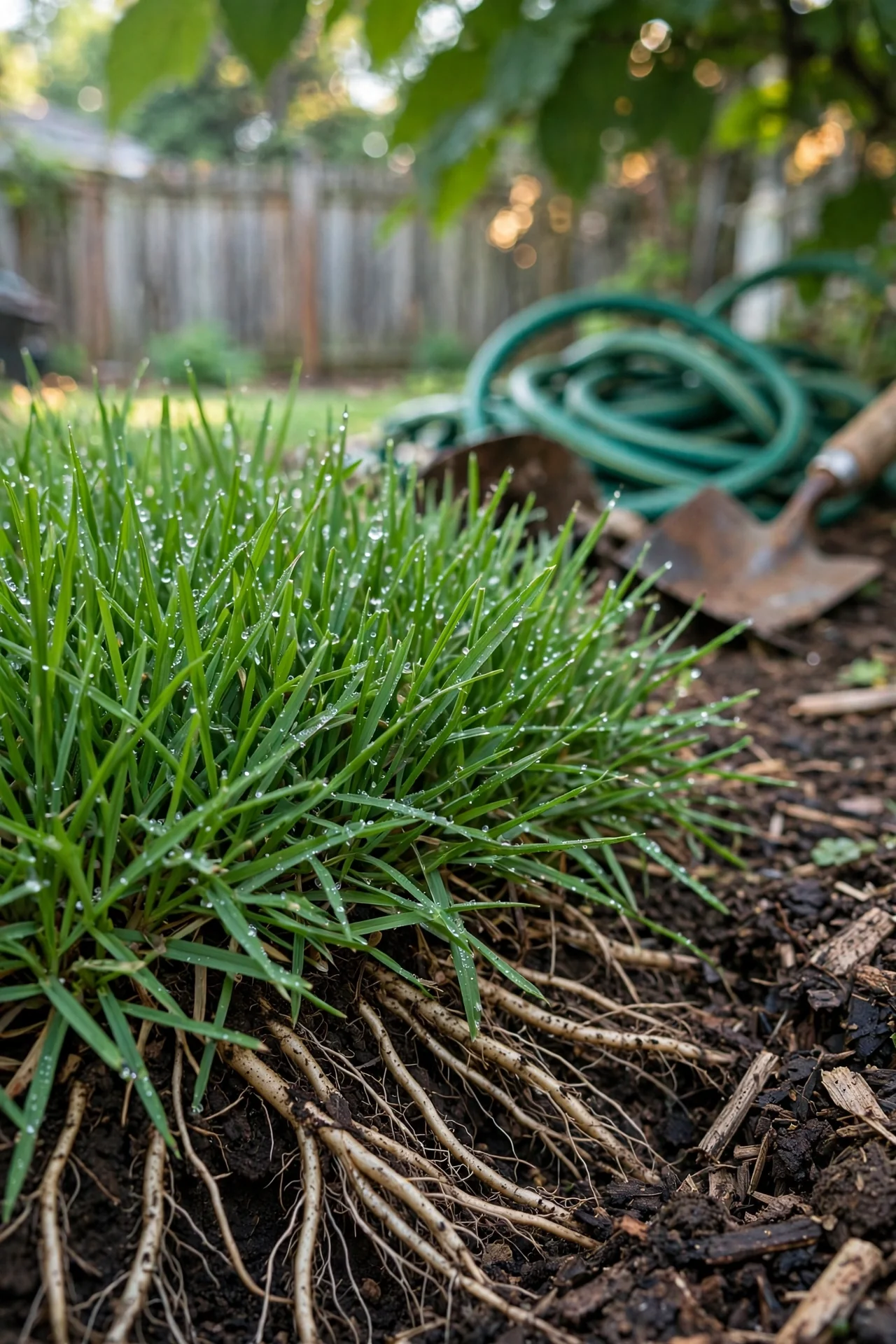
Blueprint: Buffalo grass (Bouteloua dactyloides) is a North American native warm-season grass that thrives where cool-season turfgrasses require expensive summer irrigation. What it replaces: High-water Kentucky bluegrass or tall fescue lawns in regions that receive under 25 inches of annual rainfall. Requirements: Full sun (minimum 6 hours), well-drained soil with pH 6.0 to 7.5, and a soil temperature of 60 degrees Fahrenheit at a 2-inch depth for seeding, which typically occurs between late April and early June depending on latitude. Steps: (1) Kill existing vegetation with solarization or a non-residual herbicide in the fall prior. (2) Broadcast seed at 1 to 2 pounds per 1,000 square feet. (3) Water lightly twice daily for 14 to 21 days until germination. (4) Once established, mow to 2 to 3 inches every 3 to 4 weeks, or leave unmowed for a 4-to-6-inch meadow appearance with a single annual spring cut. Common mistake: Overwatering established buffalo grass. Its deep root system, which can reach 5 feet in mature stands, accesses subsurface moisture that other turfgrasses cannot reach. Applying more than 0.5 inches of water per week during summer can trigger weed invasion. For a deeper look at this species, see our complete buffalo grass lawn guide.
5. Tall Fescue Tough-Traffic Lawn
Best for: Branch 1.
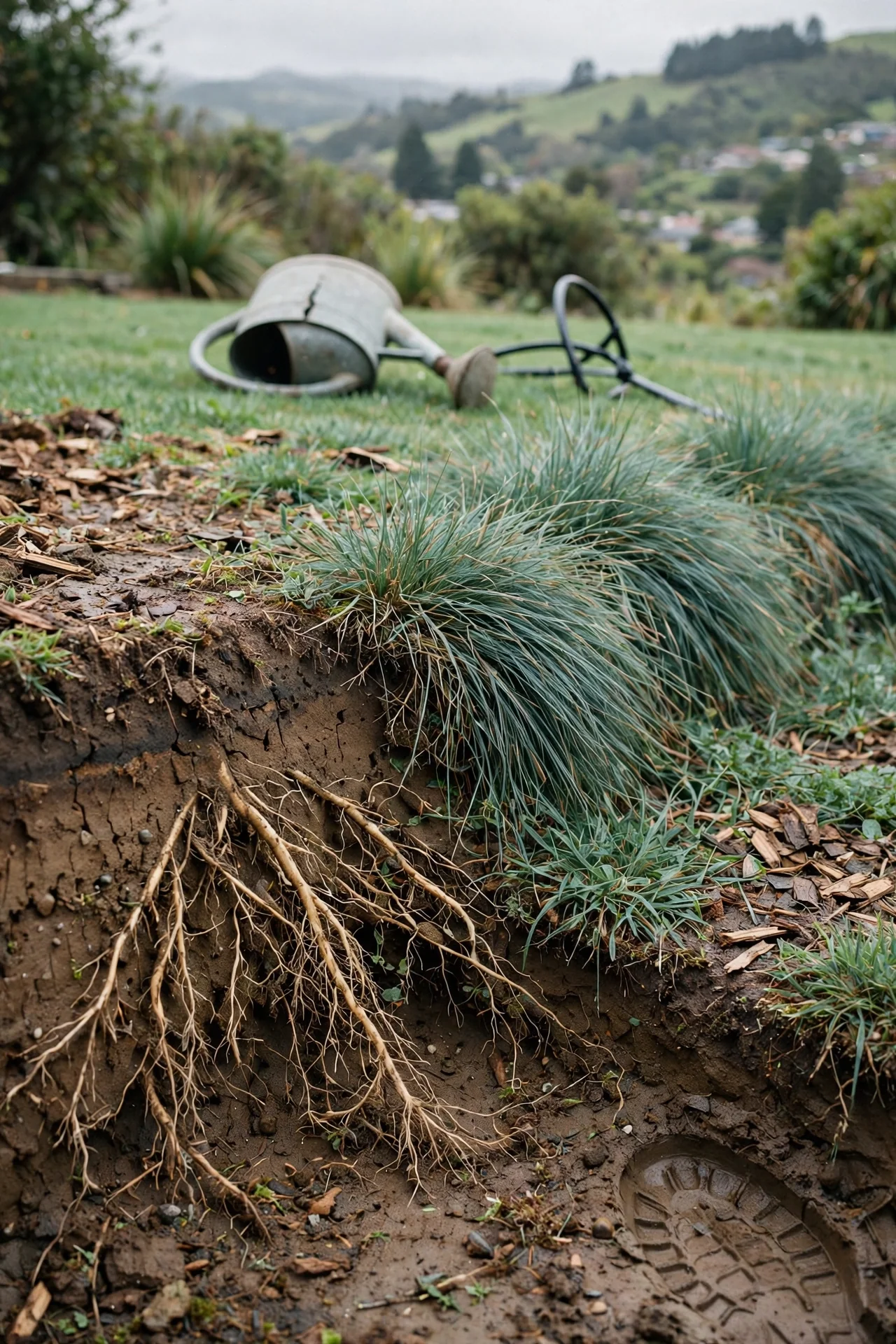
10-Minute Workflow: Step 1: Verify your USDA zone is between 5 and 8; tall fescue (Festuca arundinacea) is a cool-season grass with better heat tolerance than Kentucky bluegrass, active growth continuing into the mid-30s Celsius range. Step 2: Overseed bare or thinning areas at 5 to 8 pounds per 1,000 square feet in early fall when soil temperatures drop below 70 degrees Fahrenheit. Step 3: Set your mower deck to 3 to 4 inches. Tall fescue grown at this height shades its own soil, reducing summer weed germination. The upgrade path: if foot traffic creates persistent wear paths, mix in 5 to 10 percent Kentucky bluegrass by seed weight; the bluegrass rhizomes will fill gaps that the bunch-type fescue cannot repair on its own.
6. No-Mow Fine Fescue Carpet
Best for: Branch 2.
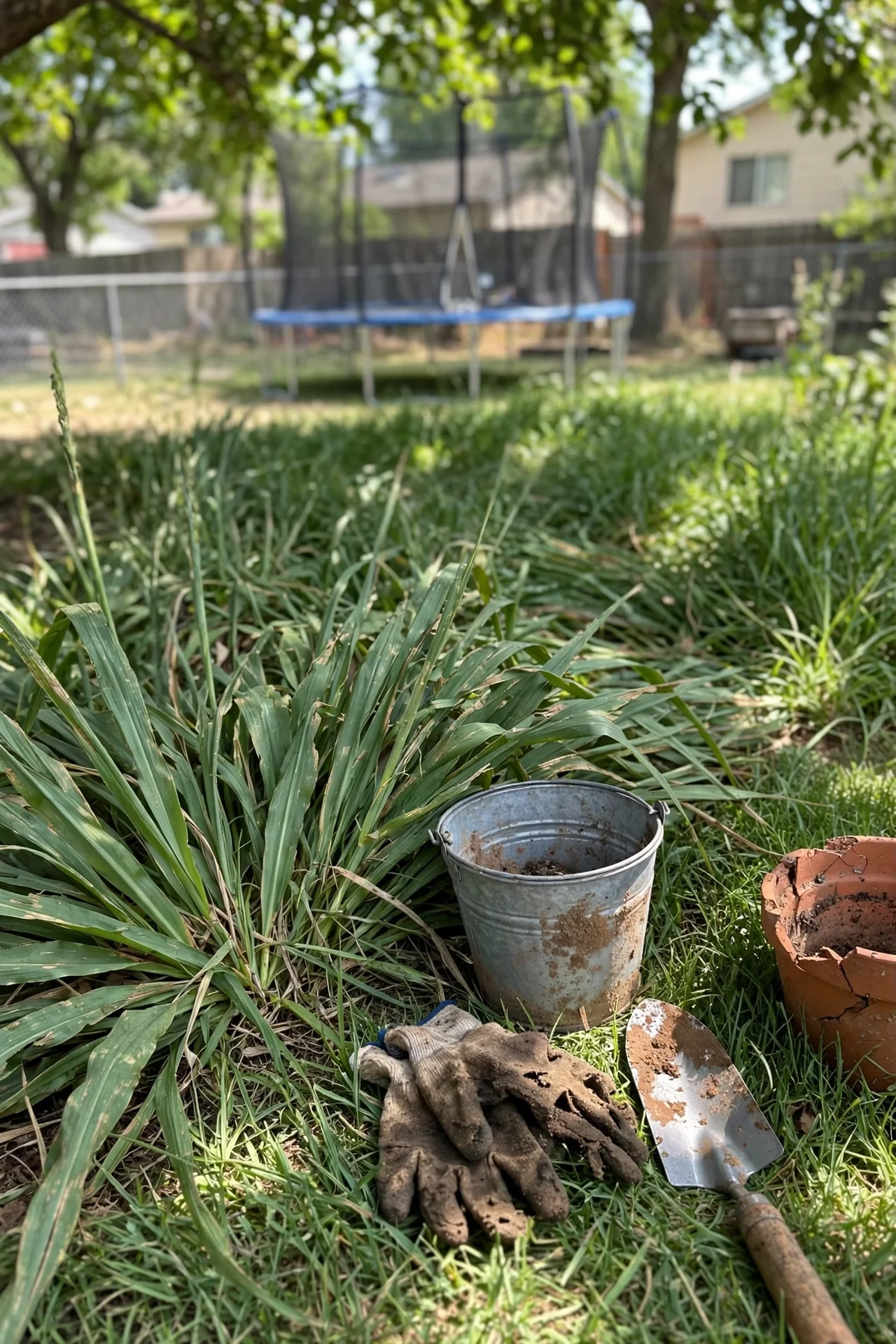
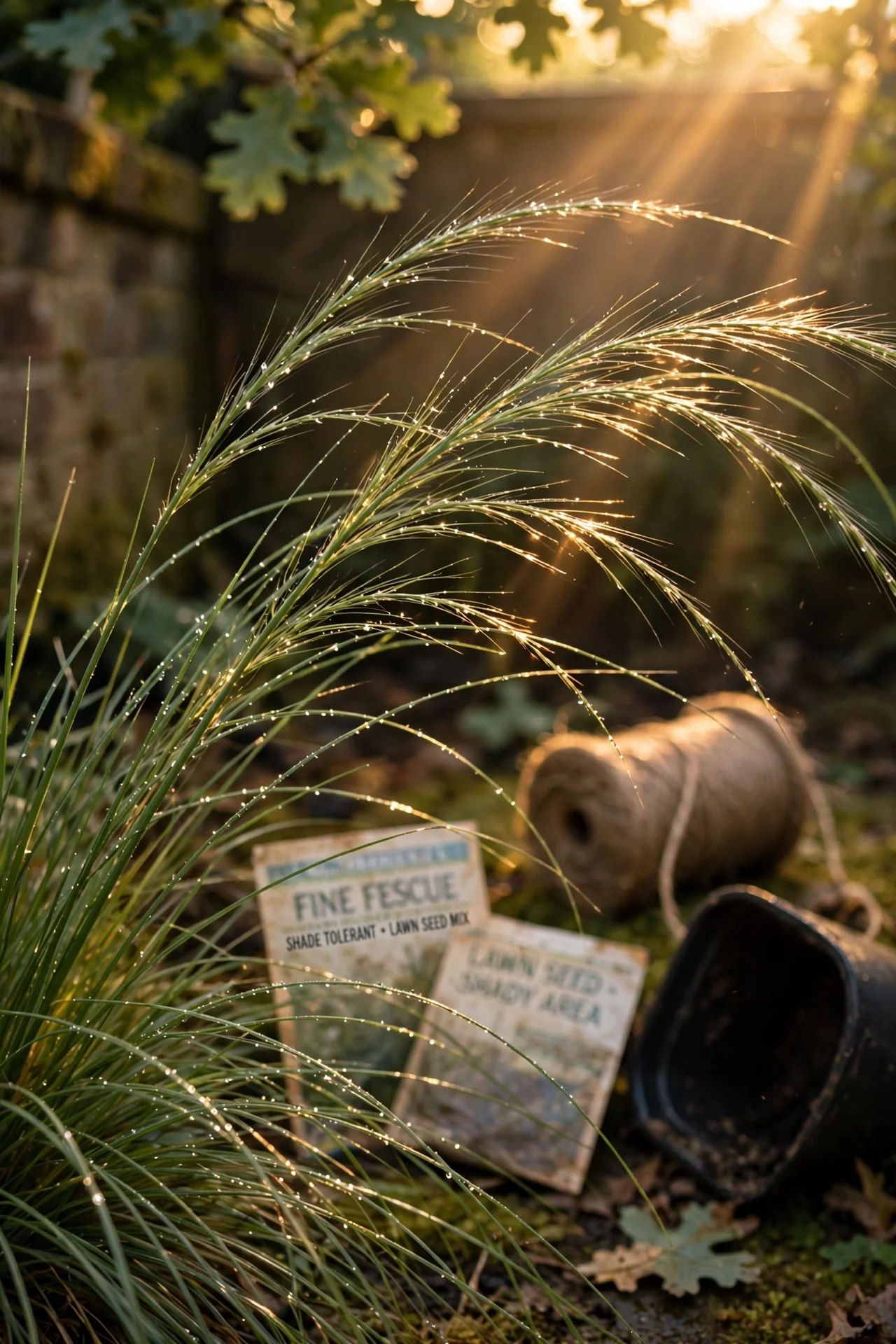
Use vs. Skip: Use a fine fescue blend (Festuca rubra, Festuca ovina, Festuca trachyphylla) if your yard receives fewer than 4 hours of direct sun and you want a green cover that requires mowing only 1 to 2 times per year at a 4-inch minimum height. Fine fescues are the most shade-tolerant cool-season turfgrasses available. Skip this option in any area that receives regular foot traffic. Fine fescue has virtually no wear tolerance; even a single weekly pass of a lawn game will create bare patches that do not self-repair. The constraint most guides omit: fine fescue that is never mowed can reach 8 to 12 inches and lodge (flatten), creating a mat that traps moisture against the crown and invites fungal disease in humid climates.
7. Drip Irrigation Integration: Put Water Only Where Roots Use It
Best for: Branch 1, 3.
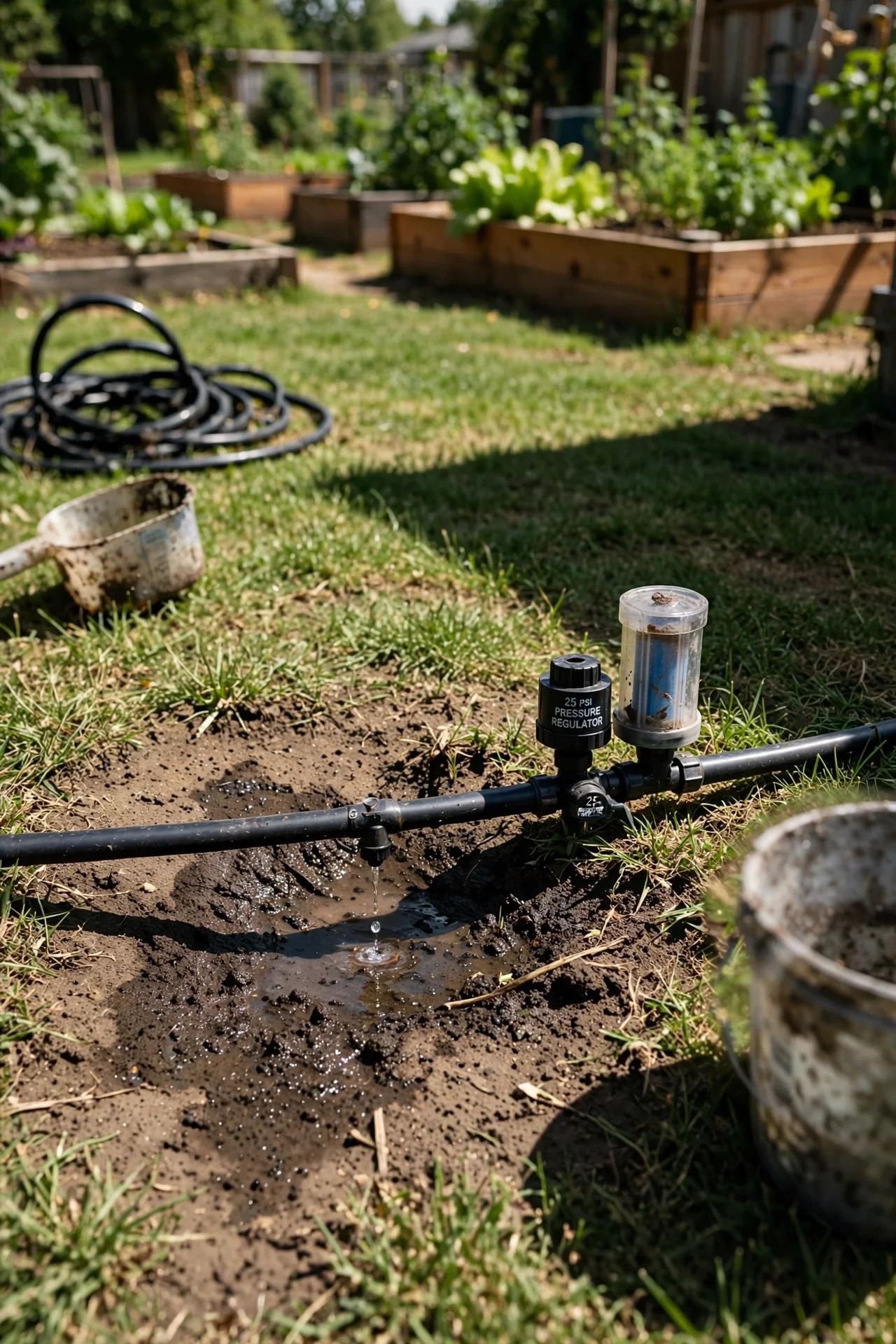
Blueprint: Subsurface drip irrigation (SDI) delivers water directly to the root zone at a rate of 0.5 to 2.0 gallons per hour per emitter, compared to overhead sprinklers that can lose 30 to 50 percent of applied water to evaporation and wind drift. What it replaces: Oscillating or rotary sprinklers that wet the leaf surface, encouraging fungal pathogens, and waste water on hardscape edges. Requirements: A backflow preventer (required by code in most municipalities), a pressure regulator set to 20 to 30 PSI, a 120-mesh filter to prevent emitter clogging, and drip tubing with emitters spaced at 12-inch intervals buried 3 to 6 inches below the soil surface. Steps: (1) Map zones by sun exposure and soil type; sandy soils need closer emitter spacing. (2) Install the mainline and lateral tubing before seeding or sodding, or retrofit into an existing lawn using a trenching attachment. (3) Run the system for 30 to 45 minutes per zone, 2 to 3 times per week during peak summer, adjusting based on a catch-can audit. Common mistake: Installing emitters at the same spacing in clay and sandy soil. Clay’s capillary action spreads water laterally; sandy soil lets it drop straight down. Emitter spacing must be 18 inches in clay and 12 inches or less in sand. For more on efficient watering systems, see our drip irrigation planning resource.
8. Zoysia Grass Warm-Climate Lawn
Best for: Branch 1.
Threshold Rule: Zoysia (Zoysia japonica or Zoysia matrella) requires a soil pH between 5.8 and 7.0 for optimal nutrient uptake. The threshold that disqualifies many yards: zoysia needs a minimum of 180 frost-free days to establish from plugs or sod before winter dormancy. If your growing season is shorter, zoysia will spend too much of the year brown and dormant. The adjustment: in USDA zone 6 and the cooler edge of zone 7, only plant zoysia from sod, not plugs or seed, and install it no later than June 15 to ensure adequate rooting before the first frost. Mowing height should be maintained at 0.5 to 1.5 inches, which requires a reel mower for a clean cut; rotary mowers tend to scalp zoysia at heights below 1.5 inches.
9. Eco-Friendly Mixed Lawn: Grass Plus Low-Growing Groundcover
Best for: Branch 2, 3.
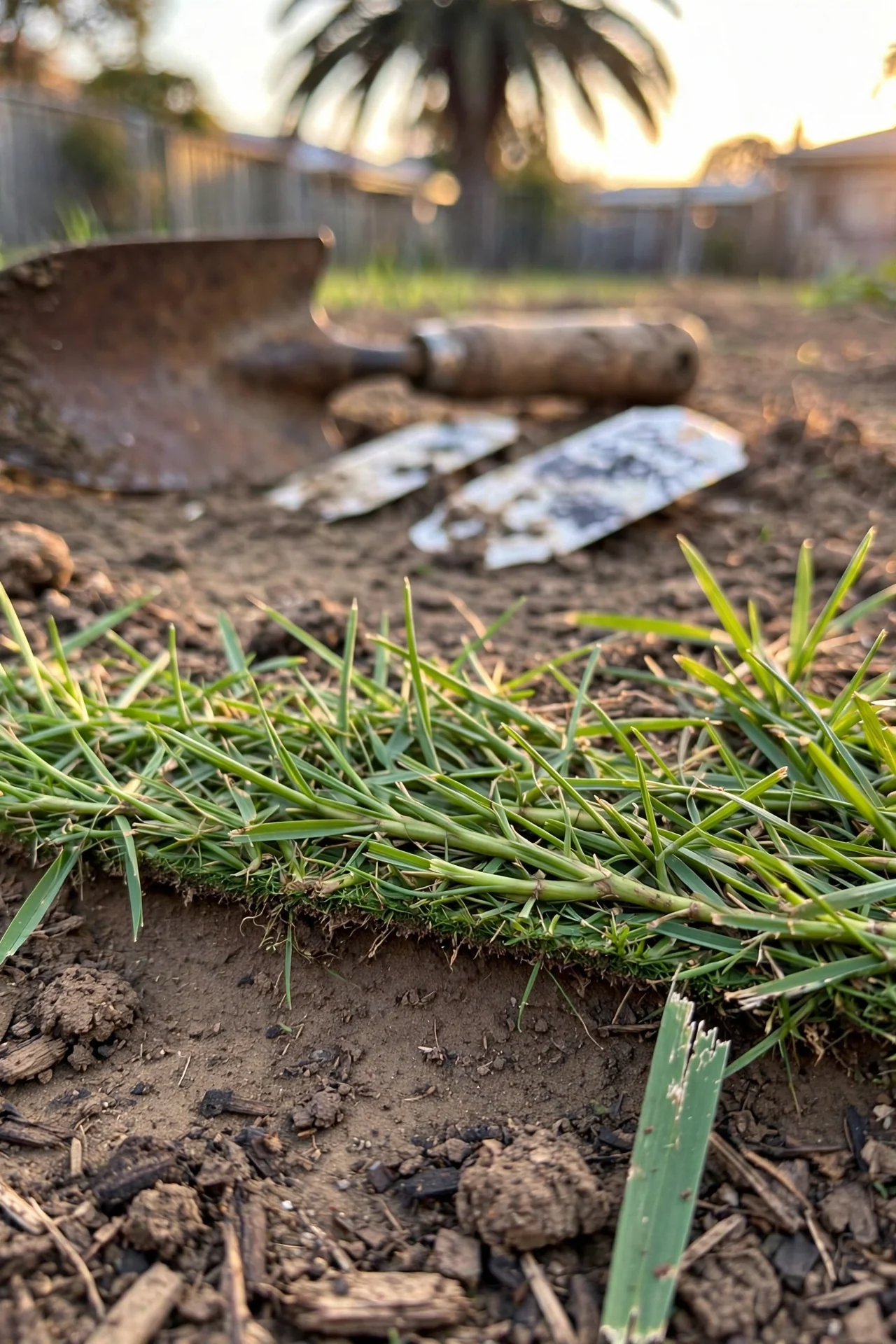
10-Minute Workflow: Step 1: Identify the lowest-traffic zone of your yard where a pure grass monoculture is unnecessary. Step 2: Overseed that zone with a mix of fine fescue and microclover at a combined rate of 3 pounds per 1,000 square feet. Step 3: Add a low-growing groundcover such as creeping thyme (Thymus serpyllum) in sun-exposed patches at a rate of 1 plug per square foot, planted in spring after the last frost. Step 4: Mow once monthly at 3 inches; the thyme will bloom below the mower deck and release fragrance when stepped on. The upgrade path: if weeds encroach in the first season, apply corn gluten meal at 20 pounds per 1,000 square feet as a pre-emergent in early spring, which adds a slow-release nitrogen source without synthetic chemicals. For more approaches that reduce chemical inputs, see eco-friendly lawn care strategies.
10. Sod Installation for Instant Results: The Same-Day Lawn
Best for: Branch 1.
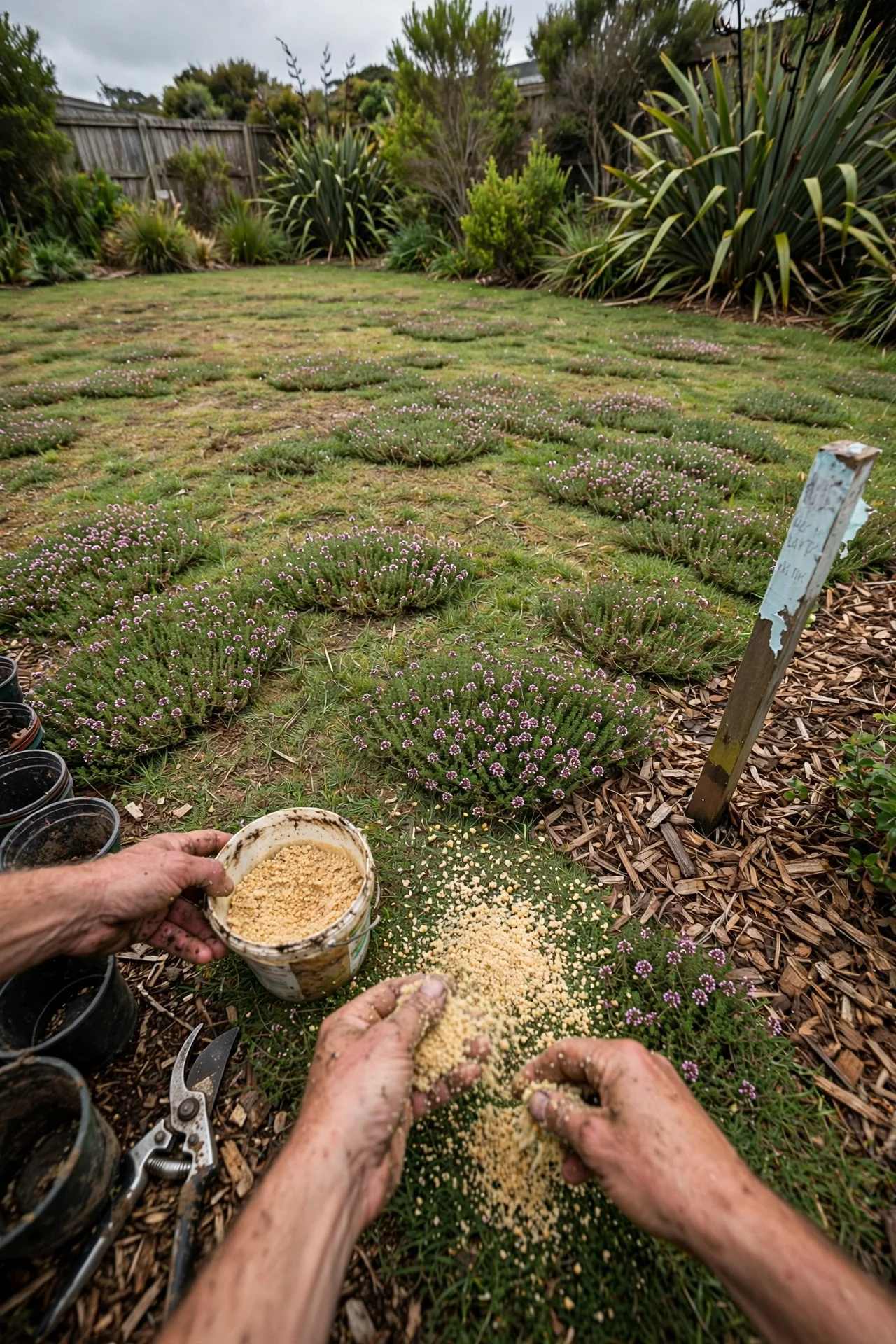
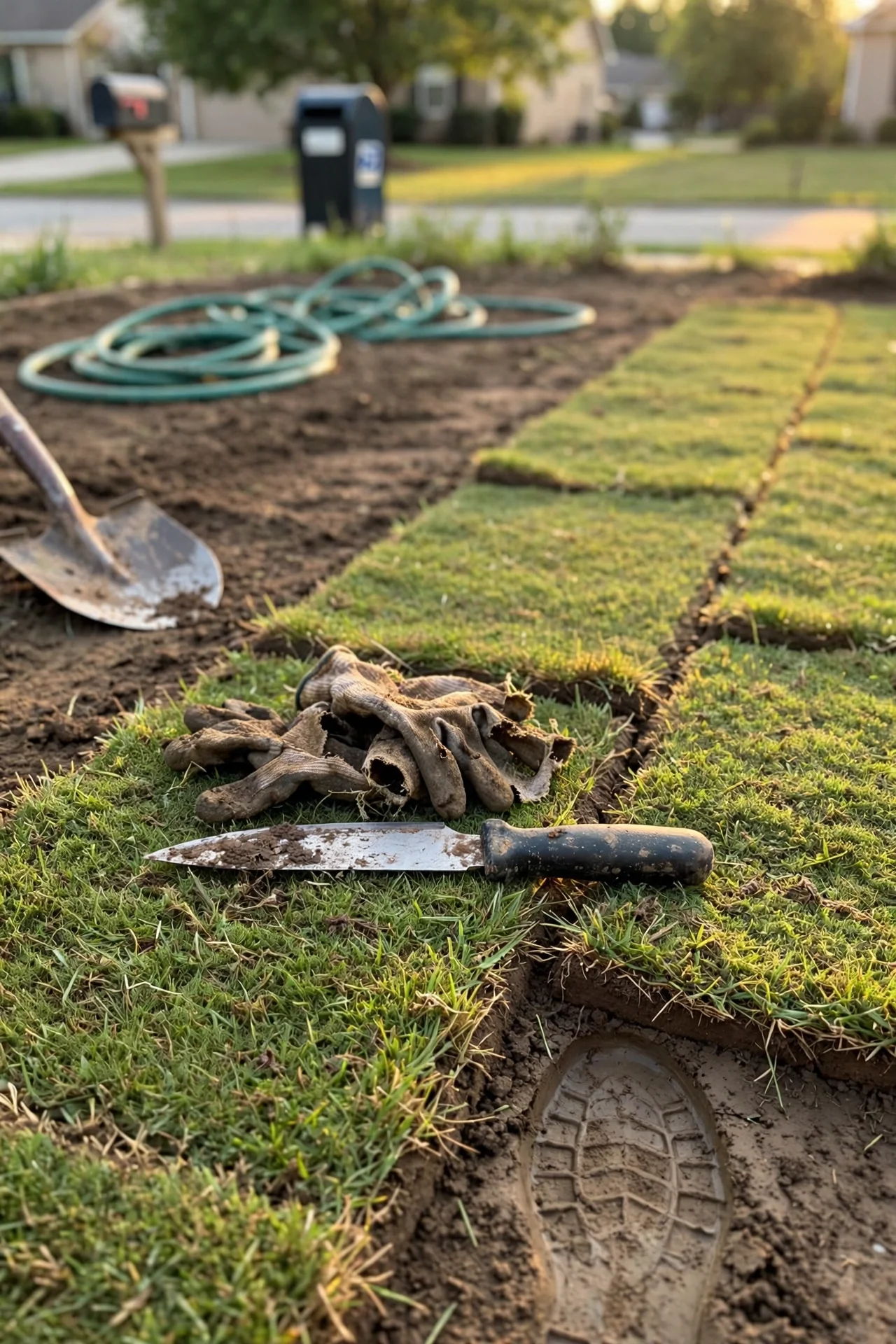
Use vs. Skip: Use sod when you need a usable lawn surface within 2 to 3 weeks of installation rather than the 6 to 8 weeks required for seed establishment. Sod also stabilizes slopes and erosion-prone sites immediately. Professional installation costs range from $1.70 to $3.50 per square foot including materials and labor for a standard 1,000-square-foot lawn, with DIY sod material alone costing $0.35 to $0.85 per square foot. Skip sod if your soil has not been prepared to a depth of 4 inches with organic matter incorporated; sod laid on compacted subsoil will root poorly, develop thatch, and require replacement within 3 years. The edge case: sod is the only viable option when the installation window falls between June and August, because cool-season grass seed germinates poorly in soil temperatures above 70 degrees Fahrenheit. For a comparison with seeding, see our sod versus seed decision guide.
11. Lawn Games Activity Zone
Best for: Branch 3.
Threshold Rule: A usable lawn games zone requires a flat, rectangular area with less than a 2 percent slope in any direction. Measure this with a 2×4 and a carpenter’s level: place the 2×4 on the ground, set the level on top, and lift the low end until the bubble centers. If the gap between the board and the ground exceeds 2 inches over an 8-foot span, grading is required before turf establishment. The mowing adjustment: for games that require a smooth roll (bocce, croquet), mow at 1 to 1.5 inches using a reel mower for at least the 4 weeks leading up to use. For general family games (cornhole, badminton), a 2.5-inch mowing height on Kentucky bluegrass or tall fescue is sufficient. For more activity-centered design approaches, see backyard lawn games layout ideas.
12. Lawn Edging as Design Framework: Define the Boundary Before You Plant
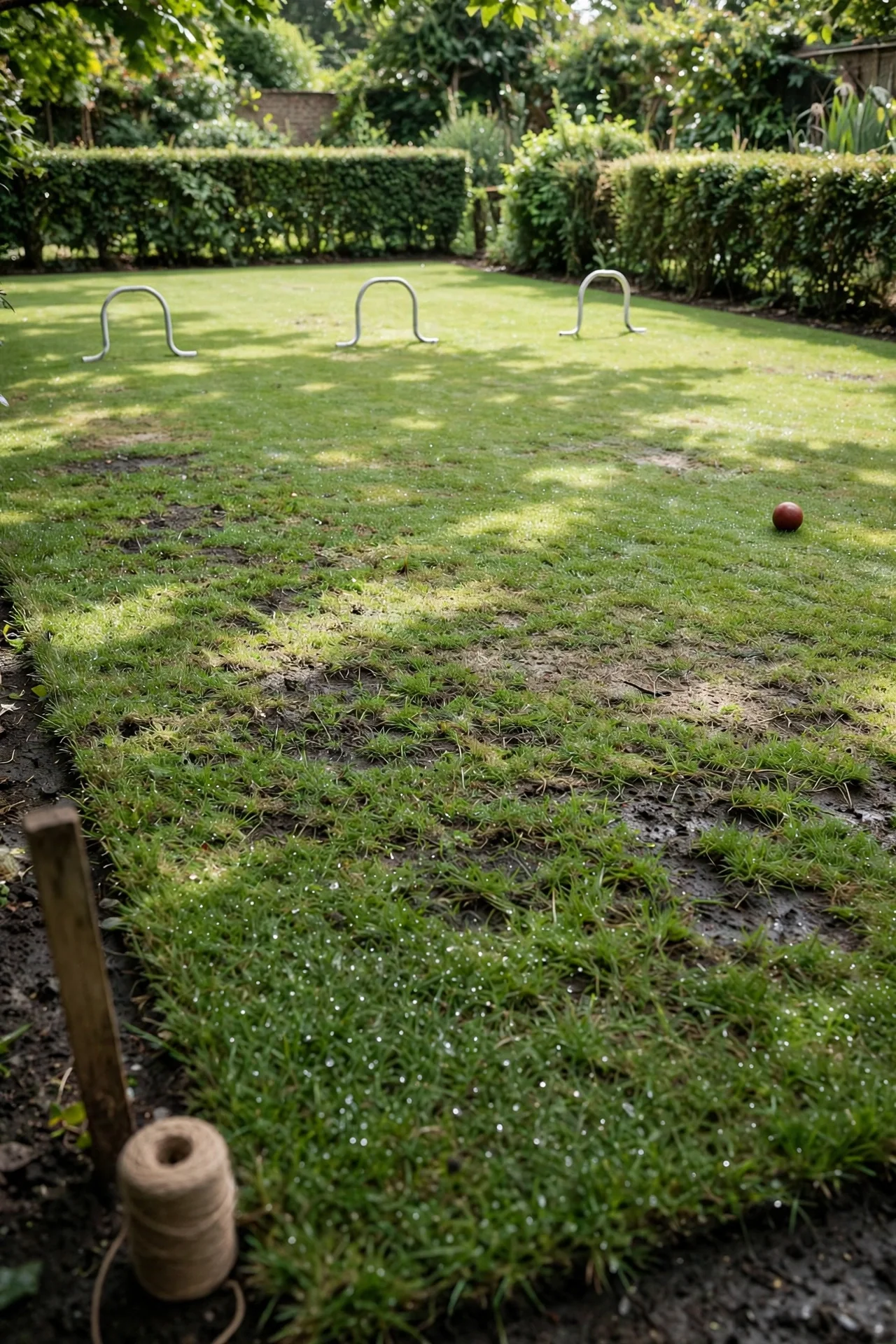
Best for: Branch 1, 2, 3.
Blueprint: Lawn edging is not decorative; it is a root-barrier and maintenance-reduction tool that prevents turfgrass rhizomes and stolons from invading garden beds, and vice versa. What it does: A properly installed edge reduces string-trimming time by creating a mower-wheel track and eliminates the need for hand-shearing along beds. Material threshold: For rhizomatous grasses (Kentucky bluegrass, zoysia, bermuda), use steel or aluminum edging at least 6 inches deep with 1 inch exposed above grade. For bunch-type grasses (tall fescue, perennial ryegrass), plastic edging installed 4 inches deep is sufficient. Steps: (1) Mark the boundary with landscape paint or a garden hose. (2) Dig a trench matching the edging depth plus 1 inch for a sand leveling base. (3) Install the edging with the top at or 0.5 inches above the finished grade. (4) Backfill on both sides and tamp firmly. Common mistake: Installing edging flush with the soil surface. It must protrude at least 0.5 inches to create a mower-wheel barrier; otherwise, the mower wheel rides over it and the grass edge still requires trimming. For a wider view of edging styles and materials, see lawn edging design options.
Starter Stack (What to Choose First)
Branch 1 Starter Stack: Kentucky Bluegrass Foundation Plus Edging
Begin with Item 1 (Soil Test) and Item 12 (Lawn Edging). Install the edging first to define the turf boundary. Then seed or sod Kentucky bluegrass (Item 2) within the defined area. The edging prevents the rhizomatous bluegrass from spreading into adjacent beds and cuts weekly trimming time by an estimated 15 to 25 minutes per session. Combined initial time investment: approximately 2 to 3 hours for edging installation plus one full day for seeding or sodding. Cost range: $150 to $400 for edging materials plus $80 to $250 for seed or $350 to $850 for DIY sod (1,000 square feet).
Branch 2 Starter Stack: Soil Test Then Microclover or Buffalo Grass
Begin with Item 1 (Soil Test) to confirm pH and drainage. If your soil drains well and receives at least 4 hours of sun, proceed with Item 3 (Microclover Lawn) for nitrogen self-sufficiency. If you have full sun and low rainfall, choose Item 4 (Buffalo Grass). These two options work together only in separate zones; do not mix them, as buffalo grass is a warm-season species that goes dormant when microclover is actively growing in spring and fall. Combined initial time: 1 hour for soil test, 2 to 3 hours for seeding. Cost range: $25 to $50 for seed (1,000 square feet of microclover) or $40 to $80 for buffalo grass seed.
Branch 3 Starter Stack: Drip Irrigation Plus Lawn Games Zone
Begin with Item 1 (Soil Test) to determine emitter spacing for sandy versus clay soil. Install Item 7 (Drip Irrigation) in the turf zone before seeding or sodding. Then establish Item 11 (Lawn Games Zone) on top of the irrigated area using a traffic-tolerant species like tall fescue or Kentucky bluegrass. The drip system delivers water to the root zone without wetting the playing surface, which reduces slip risk and fungal disease pressure. Combined initial time: 4 to 6 hours for a DIY drip system (500-square-foot zone) plus 2 to 3 hours for seeding. Cost range: $100 to $250 for drip components plus $40 to $125 for seed.
When This Won’t Work
Failure Condition 1: Percolation Rate Below 0.2 Inches Per Hour. When soil drains at less than 0.2 inches per hour, no turfgrass species, including those marketed as wet-tolerant, will survive prolonged root saturation. The roots suffocate from lack of oxygen, and fungal pathogens establish in the anaerobic zone. Installing any lawn under these conditions without first installing subsurface drainage tile will result in complete turf loss within one growing season. The alternative: install a French drain system or regrade the yard to achieve a minimum 2 percent slope away from the house foundation before any planting.
Failure Condition 2: Shade Exceeding 80 Percent of Daily Sun Hours. If your yard receives fewer than 2 hours of direct sunlight per day during the growing season, even fine fescue, the most shade-tolerant turfgrass, will thin to less than 50 percent ground cover within two seasons. The alternative: replace the turf plan with a shade-tolerant groundcover such as Pennsylvania sedge (Carex pensylvanica) or a mulched hardscape surface with container plantings. A lawn in deep shade is a recurring expense, not a one-time failure.
If you are deciding between establishing from seed or sod and your timeline is tight, our sod versus seed comparison lays out the cost and timing tradeoffs in detail.
Choosing the Right Option for Your Situation
Budget Threshold
If your total budget is under $300 for a 1,000-square-foot area, eliminate sod (Item 10) immediately; seed-based options including Kentucky bluegrass, tall fescue, microclover, and buffalo grass all fall within range. If your budget is under $100, limit choices to microclover or fine fescue seed, which cost $25 to $50 for 1,000 square feet. Drip irrigation (Item 7) adds $100 to $250 for components and should be treated as a separate capital investment.
Time Threshold
If you have fewer than 30 minutes per week for lawn maintenance during the growing season, eliminate Kentucky bluegrass (Item 2), tall fescue (Item 5), and zoysia (Item 8). Your viable options narrow to microclover (Item 3), buffalo grass (Item 4), or no-mow fine fescue (Item 6). All three require mowing no more than once every 3 to 4 weeks, or even just 1 to 2 times per year in the case of fine fescue.
Technical Constraint: Soil pH Below 5.5
If your soil test returns a pH below 5.5, most turfgrass species will exhibit nutrient lockout, particularly of phosphorus and potassium. You have two paths: (a) apply pelletized limestone at a rate of 50 pounds per 1,000 square feet, retest after 6 months, and delay planting until pH reaches 6.0, or (b) plant microclover, which tolerates a pH range of 5.5 to 7.5 without amendment. The first path adds 6 months to your timeline; the second avoids the delay entirely.
Yes/No Checklist:
- Have I measured my percolation rate? (If no, stop and do Item 1.)
- Does my chosen option match my real weekly maintenance minutes? (Be honest.)
- Have I priced water for a peak-summer month at my local rate? (Check your bill.)
- Do I have a backup plan for the failure conditions listed above? (If no, identify one.)
Expert Q&A
How do I measure percolation rate without special equipment?
Dig a hole 12 inches deep and 6 inches across. Fill with water and let it drain completely. Refill, then measure the water level drop after 60 minutes using a ruler. A drop of 1 to 3 inches indicates suitable drainage for most turfgrasses. Less than 0.5 inches signals compaction requiring mechanical aeration or drainage tile before any lawn installation.
Can I mix microclover into an existing grass lawn without killing the grass first?
Yes, but with a constraint: the existing grass must be mowed to 1 inch or lower and the clippings removed so seed contacts soil. Broadcast microclover at 0.5 pounds per 1,000 square feet in early spring when soil temperature reaches 50 degrees Fahrenheit. Do not apply nitrogen fertilizer for at least 8 weeks before or after seeding; nitrogen favors existing grass over establishing clover.
What is the minimum sun requirement for any lawn option to survive?
Fine fescue is the most shade-tolerant turfgrass, requiring a minimum of 2 to 3 hours of direct sun daily. Below that threshold, even fine fescue thins to less than 50 percent cover within two seasons. At that point, the only viable options are shade-tolerant groundcovers like Pennsylvania sedge or hardscape with container plantings.
Is buffalo grass suitable outside the Great Plains region?
Buffalo grass performs best in regions with under 30 inches of annual rainfall and at least 6 hours of full sun. It can grow in the Intermountain West, parts of the Southwest, and select areas of the Midwest with well-drained soil. It struggles in the humid Southeast due to fungal pressure and in the Pacific Northwest due to cool, wet springs that delay green-up until late May.
Which lawn idea adds the most resale value with the least ongoing cost?
A well-defined turf area framed by permanent edging (Item 12) with drip irrigation (Item 7) consistently adds curb appeal while minimizing water bills. The edging signals intentional design to buyers; the drip system reduces operating costs. Together they cost less to maintain than a standard sprinkler-fed lawn and photograph better at listing time.
Conclusion
Backyard lawn ideas fail when they are chosen before the site is measured. The single most common mistake is installing a high-input turfgrass on soil that cannot support it, then spending years and dollars trying to fix a preventable mismatch. Your percolation rate, your real weekly maintenance time, and your local water cost are the three numbers that eliminate the wrong options before they cost you.
If you take one action after reading this, do the percolation test described in Item 1. It takes under an hour and costs nothing. The number you get will immediately narrow your viable options from twelve to three or four, and every subsequent decision becomes easier. For ideas that require even less ongoing input than the options above, see no-mow lawn alternatives worth considering.