
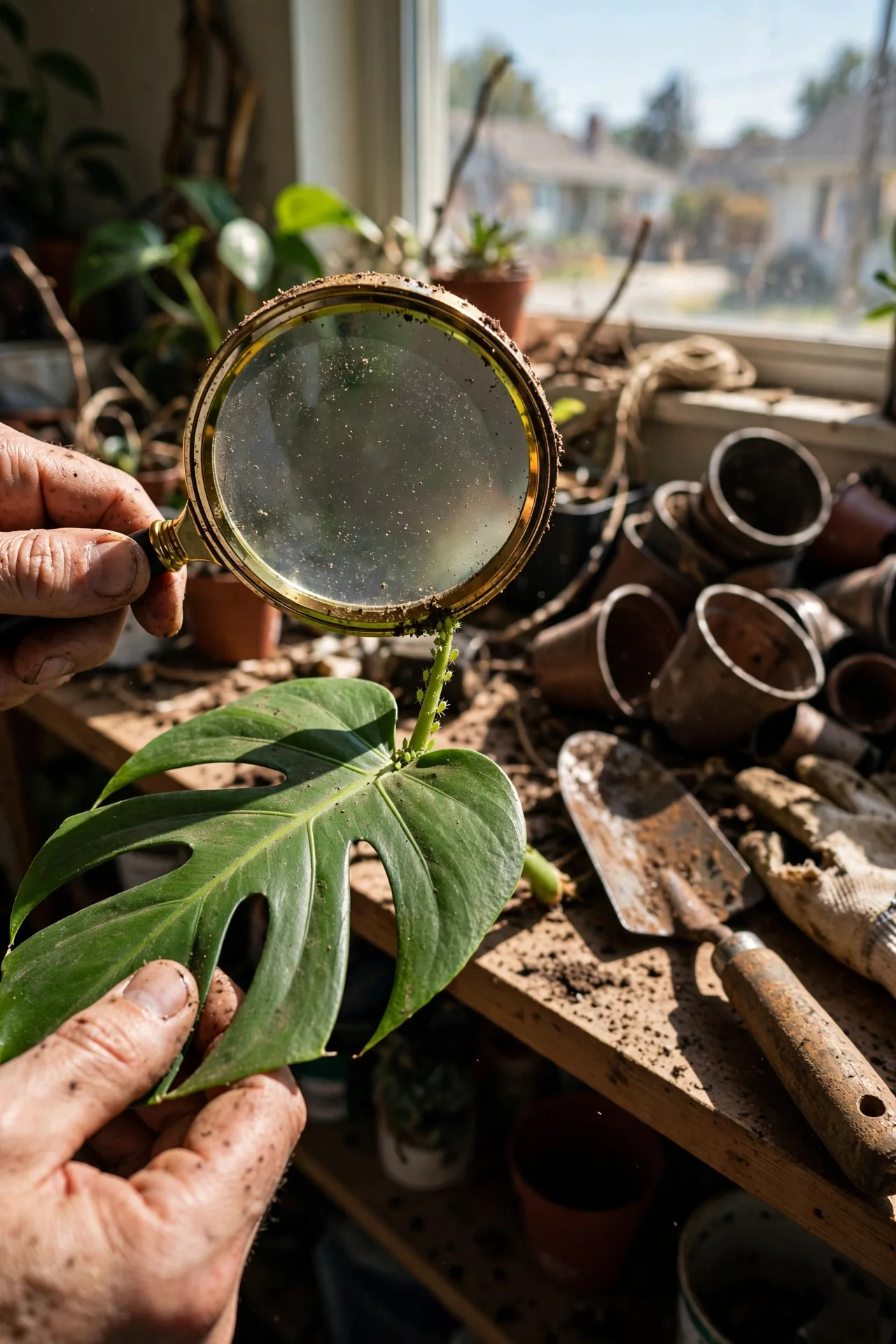
Aphids on indoor plants are not one problem. They are three distinct problems wearing the same tiny, soft-bodied costume. A handful of aphids on a vigorously growing Monstera is a maintenance annoyance. The same handful on a stressed Calathea is an emergency. And a colony that has already produced winged adults is a contagion risk for every plant in the room. Most advice collapses these scenarios into a single list of remedies. This guide separates them so you can match the intervention to the actual threat level, not the one-size-fits-all recommendation.
This article covers physical, biological, and chemical controls suitable for indoor environments in the US, UK, Canada, Australia, New Zealand, South Africa, and India, where common houseplant aphid species (green peach aphid, cotton aphid, potato aphid) behave similarly indoors. Excluded are outdoor-only solutions such as broad-spectrum pesticides requiring protective equipment, and companion planting strategies that depend on garden ecosystems.
By the end, you will know which method to deploy based on how many aphids you see, where they are on the plant, and how sensitive your particular plant species is to treatment. You will also know when the correct decision is to discard the plant rather than treat it.
Bottom line: Match your response to the infestation stage, not to the top search result.
The Yield Grid Decision Grid
Before reading the full list, locate your situation in one of these three branches. Each is defined by a measurable condition, not a vague description.
Branch 1: Early Detection (fewer than 10 aphids visible, no leaf curling). You caught this during routine inspection. The aphids are clustered on one stem tip or leaf underside. No honeydew sheen is visible yet. The plant otherwise looks healthy. Recommended: Items 1, 2, 4 below.
Branch 2: Established Colony (10 to 50 aphids across multiple leaves, sticky residue present). You can see honeydew on leaves below the colony. Some leaf distortion may be starting. Aphids are present on at least two separate stems or plants. Recommended: Items 3, 5, 7, 8 below.
Branch 3: Severe Infestation (more than 50 aphids, or winged adults visible, or multiple plants affected). Winged aphids indicate the colony is overcrowded and seeking new hosts. Sooty mold may be developing on honeydew deposits. Plant vigor is visibly declining. For additional context on pests that cause similar sticky residue, see our guide on scale insects on houseplants, which produce comparable honeydew but require different treatment. Recommended: Items 6, 9, 10 below.
Quick Comparison Table
| Option | Key Mechanism | Best For | Decision Grid Branch | Effort Score (1-5) |
|---|---|---|---|---|
| 1. Water Spray | Physical dislodgement | Small, sturdy plants | Branch 1 | 3 |
| 2. Insecticidal Soap | Contact desiccation | Soft-bodied pests, most foliage | Branch 1 | 3 |
| 3. Neem Oil | Antifeedant, growth regulation | Moderate infestations, prevention | Branch 2 | 4 |
| 4. Rubbing Alcohol | Contact dehydration | Spot treatment, waxy leaves | Branch 1 | 2 |
| 5. Horticultural Oil | Suffocation | Dormant or tough-leaved plants | Branch 2 | 3 |
| 6. Diatomaceous Earth | Physical abrasion, dehydration | Soil-surface pests, crawling stages | Branch 3 | 4 |
| 7. Beneficial Insects | Predation or parasitism | Large collections, greenhouse setups | Branch 2 | 5 |
| 8. Pruning and Isolation | Mechanical removal | Localized infestations | Branch 2 | 2 |
| 9. Hydrogen Peroxide | Oxidation, contact kill | Mild infestations, soil-dwelling stages | Branch 3 | 3 |
| 10. Systemic Insecticides | Translocation through plant tissue | Persistent, widespread infestations | Branch 3 | 1 |
1. Water Spray: Physical Dislodgement
Best for: Branch 1
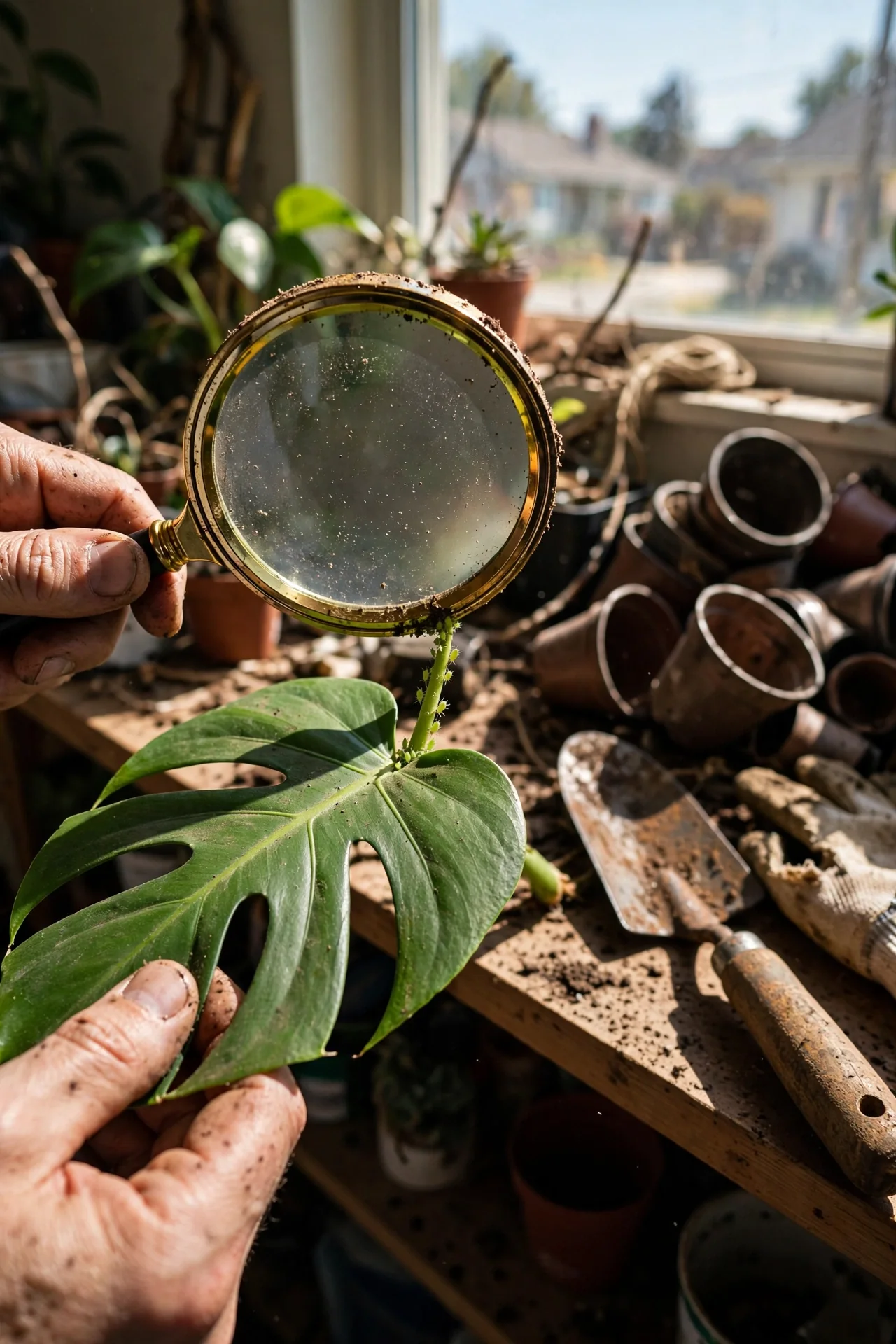
What it is: A directed stream of room-temperature water applied to infested foliage, usually in a sink or shower. The mechanism is purely mechanical: aphids are knocked off the plant and cannot easily climb back up before dehydration or starvation occurs. This is not a contact kill method. Most dislodged aphids survive the fall but die because they cannot relocate the host plant in time.
For: Plants with smooth, sturdy leaves such as Ficus elastica, Monstera deliciosa, and Philodendron hederaceum. Also effective on plants with accessible stem tips where aphids cluster.
Steps: (1) Move the plant to a shower or deep utility sink. (2) Use a handheld sprayer set to a flat or jet pattern. (3) Direct water at the undersides of leaves and stem tips for 30 to 60 seconds. (4) Allow the plant to drain thoroughly before returning it to its spot. (5) Repeat every 2 to 3 days for at least two weeks, because eggs hidden in leaf axils will continue hatching.
Mistake to avoid: Using water that is too cold. Tap water below 15 degrees C can shock tropical plants. Let the water run until it reaches room temperature before spraying. Also avoid water pressure that tears leaves; if the leaf bends more than 45 degrees under the stream, reduce the pressure.
This method works poorly on plants with dense crowns, hairy leaves (like African violets), or very fine foliage (like asparagus ferns), where aphids can shelter. For plants with leaf structures that hide pests in a similar way, see our guide on spider mites on Monstera.
2. Insecticidal Soap: Contact Desiccation
Best for: Branch 1
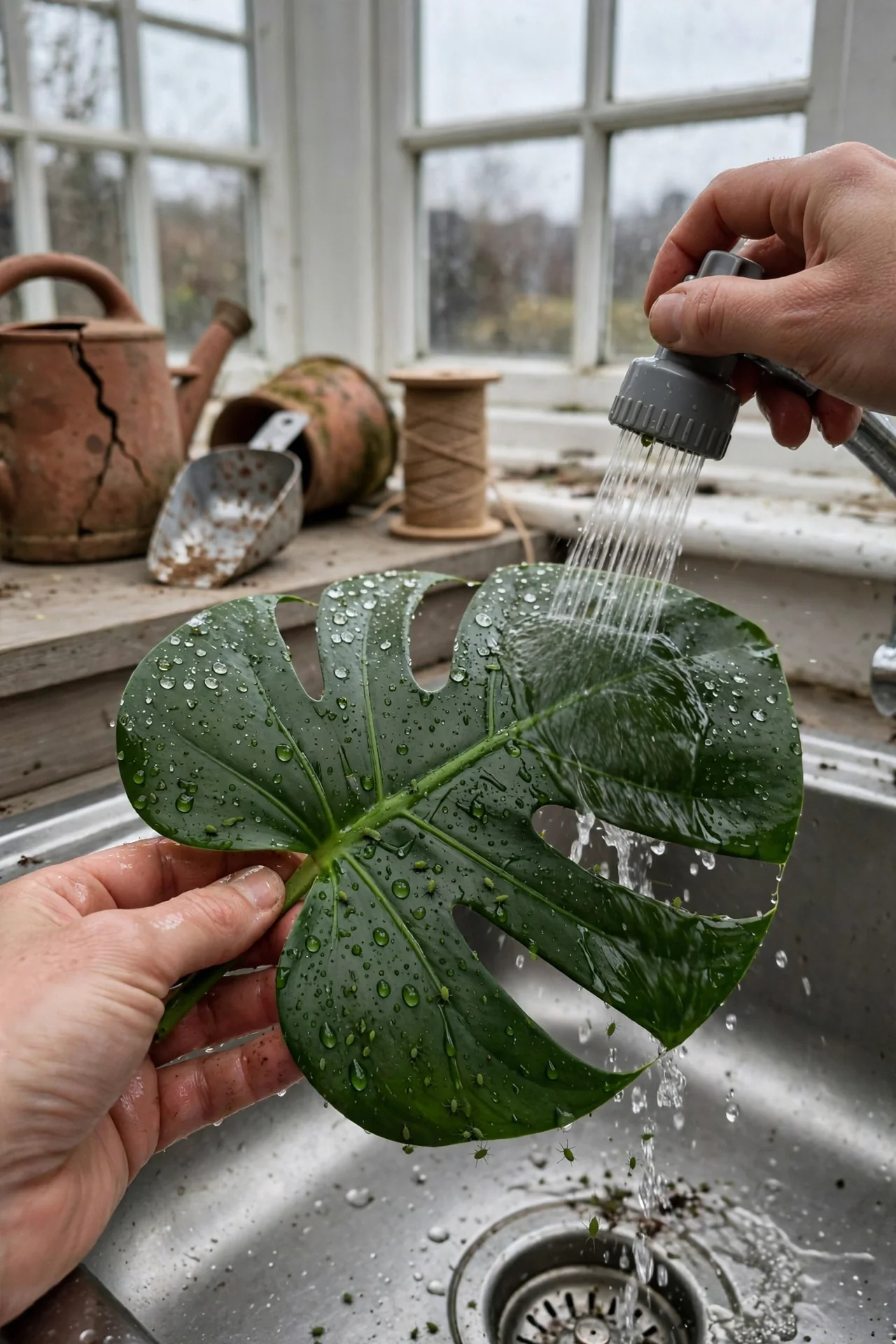
A potassium-salt-of-fatty-acids solution that disrupts aphid cell membranes on contact. Apply a premixed formula or dilute concentrate at a ratio of 2.5 fluid ounces per gallon of water. Spray until runoff, covering leaf undersides completely. No residual activity exists, so reapply every 3 to 4 days while aphids are present. Avoid spraying in direct sunlight or when temperatures exceed 29 degrees C, as phytotoxicity risk increases sharply on thin-leaved plants like ferns and Calathea.
3. Neem Oil: Antifeedant and Growth Regulator
Best for: Branch 2
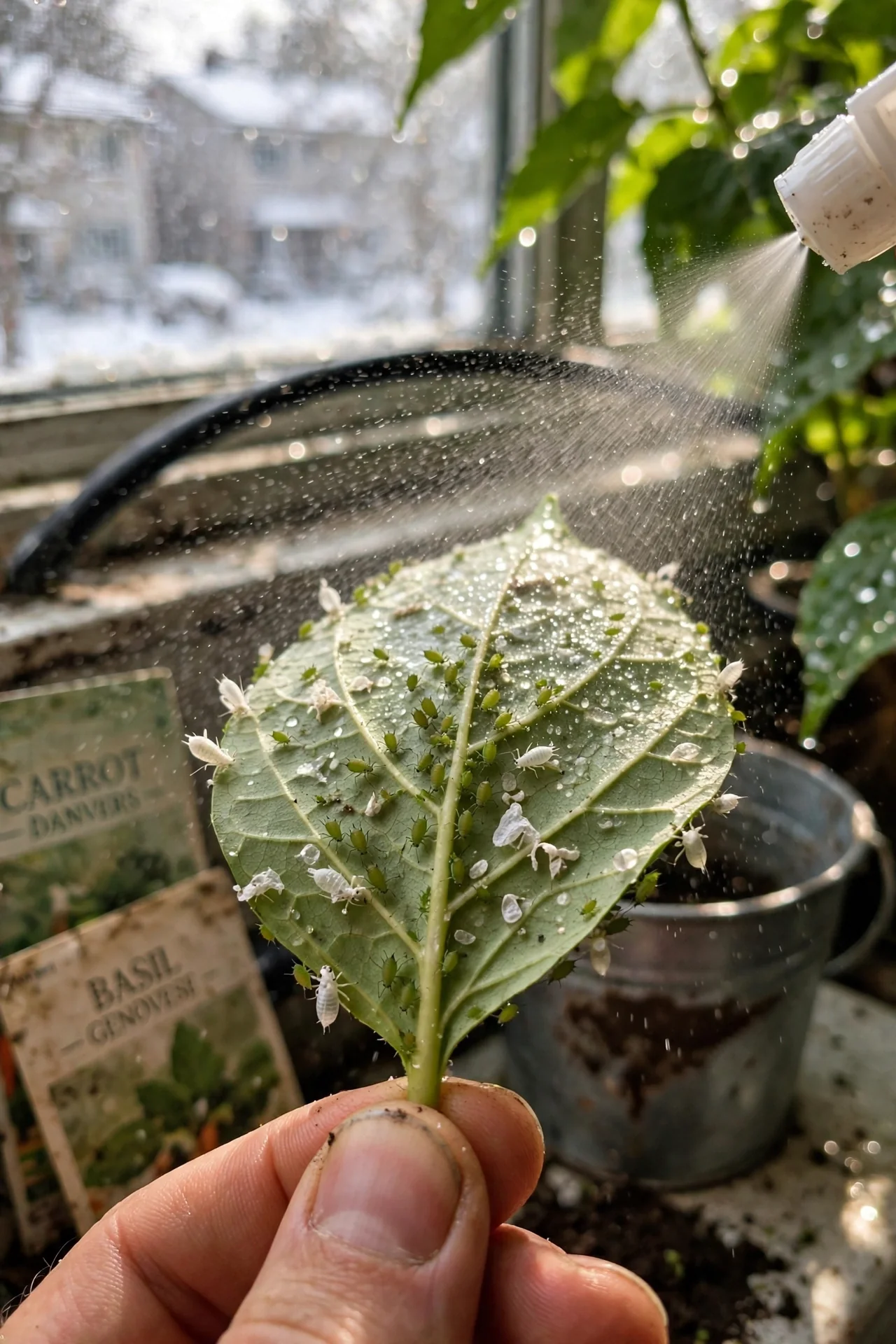
Cold-pressed neem oil contains azadirachtin, which disrupts aphid molting and suppresses feeding. Mix 2 tablespoons of neem oil per gallon of water with a half-teaspoon of mild liquid soap as an emulsifier. Shake vigorously before each use. Spray every 7 days for active infestations, or every 14 days as a preventive. The oil coats and suffocates eggs and nymphs on contact, while azadirachtin is absorbed by the plant and ingested by feeding aphids.
Use when: You have a moderate colony and want a single product that handles both current aphids and reduces egg viability. Neem is also effective against thrips and spider mites, which can co-occur with aphids.
Skip when: The plant has thin, sensitive leaves (e.g., nerve plants, some ferns) that may react to oil residues. Also avoid neem on plants stressed by underwatering, as stomatal uptake of oil can cause leaf burn. Test on one leaf and wait 48 hours before full application.
Edge case: Neem oil degrades rapidly under high-intensity grow lights. If you use LED panels exceeding 200 watts, apply neem at the end of the light cycle to allow absorption before lamps resume. For plants prone to similar pest complexes, our mealybugs on succulents article explains why oil-based treatments require different timing on succulent tissue.
4. Rubbing Alcohol: Rapid Spot Treatment
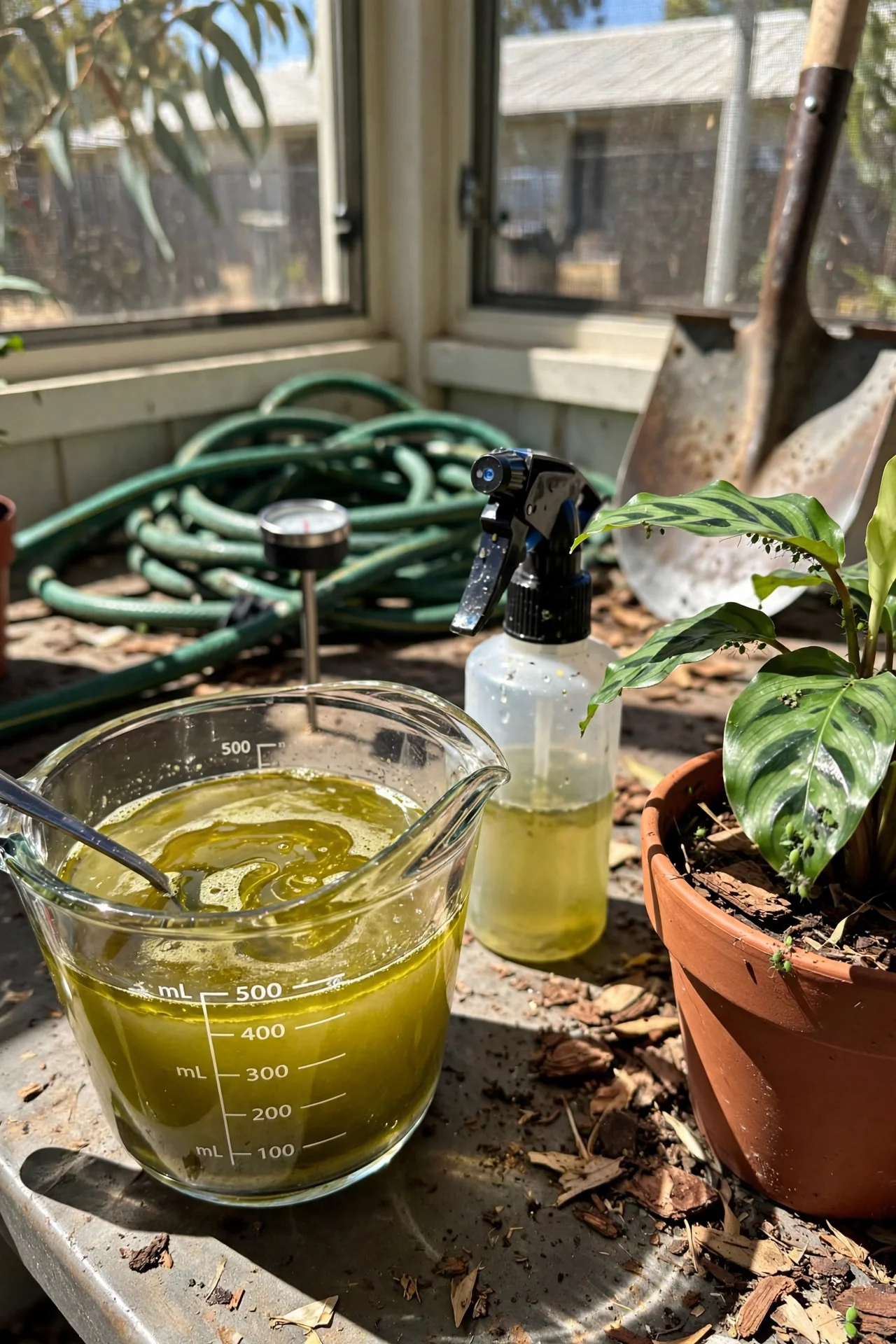
Best for: Branch 1
Threshold rule: Use 70 percent isopropyl alcohol diluted with water at a ratio of 1 part alcohol to 7 parts water. For direct wiping (not spraying), undiluted 70 percent alcohol on a cotton swab can be applied to individual aphid clusters, then immediately rinsed off after 30 seconds. Alcohol dissolves the waxy cuticle of aphids, causing rapid dehydration.
Adjustment for sensitive plants: On thin-leaved plants like Calathea or Maranta, test a single leaf first. If no damage appears within 4 hours, proceed. Never use alcohol on plants with hairy leaves; the hairs trap the alcohol and extend contact time, increasing the risk of tissue damage.
Adjacent query answered: Why does alcohol kill aphids but not the plant? Alcohol evaporates quickly from smooth leaf surfaces but stays long enough on the aphid’s body to penetrate its thin cuticle. The plant’s thicker epidermal layer and waxy coating (on most species) prevent equivalent absorption.
5. Horticultural Oil: Suffocation Method
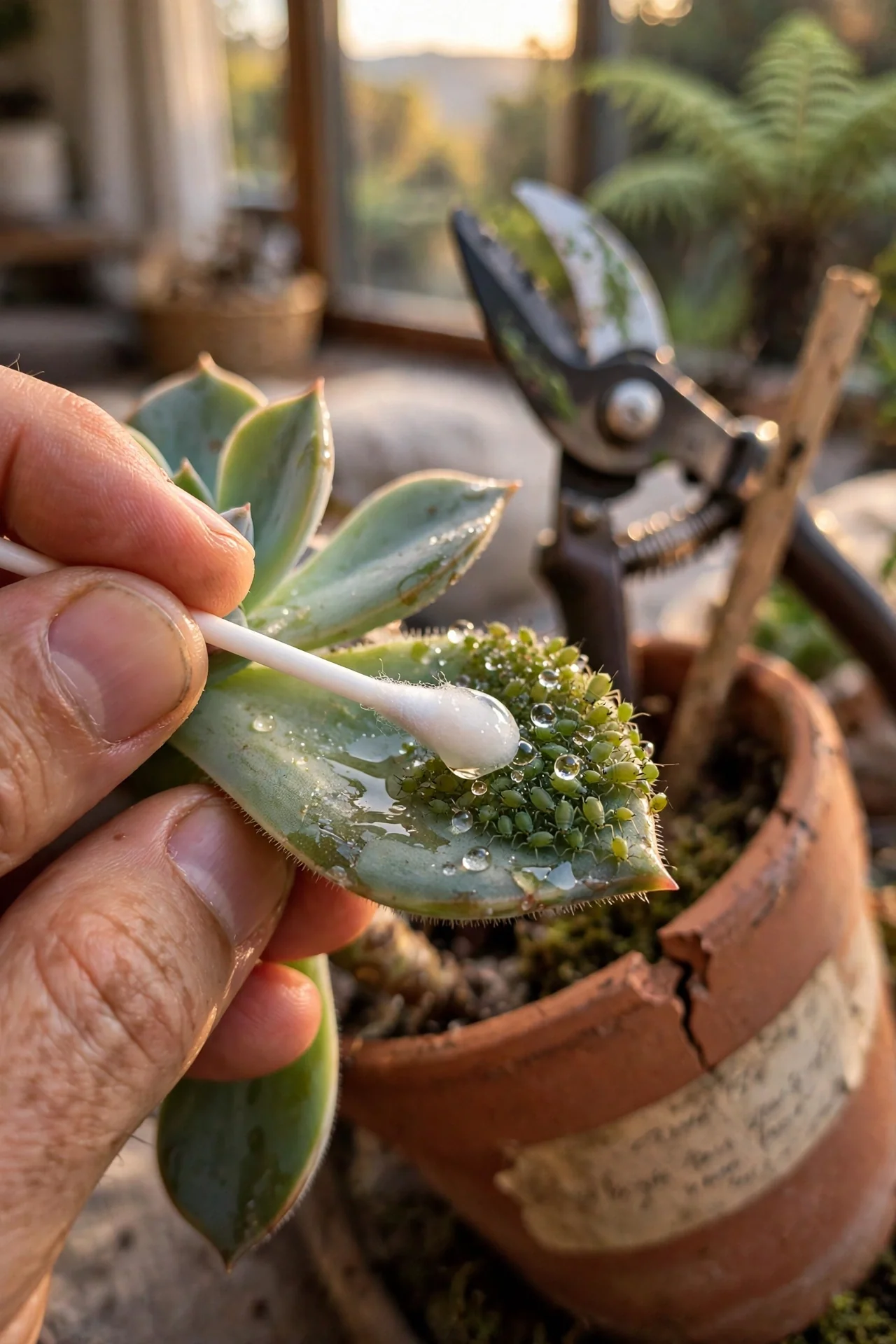
Best for: Branch 2
Highly refined petroleum or plant-based oils that coat aphids and block their spiracles (breathing pores). Apply a 1 to 2 percent solution (1 to 2 fluid ounces per gallon of water) as a foliar spray. Unlike neem, horticultural oil has no systemic or antifeedant properties; it works strictly by suffocation on contact. It is most effective on stationary life stages and less effective on winged adults that can fly away during application.
6. Diatomaceous Earth: Barrier and Desiccant
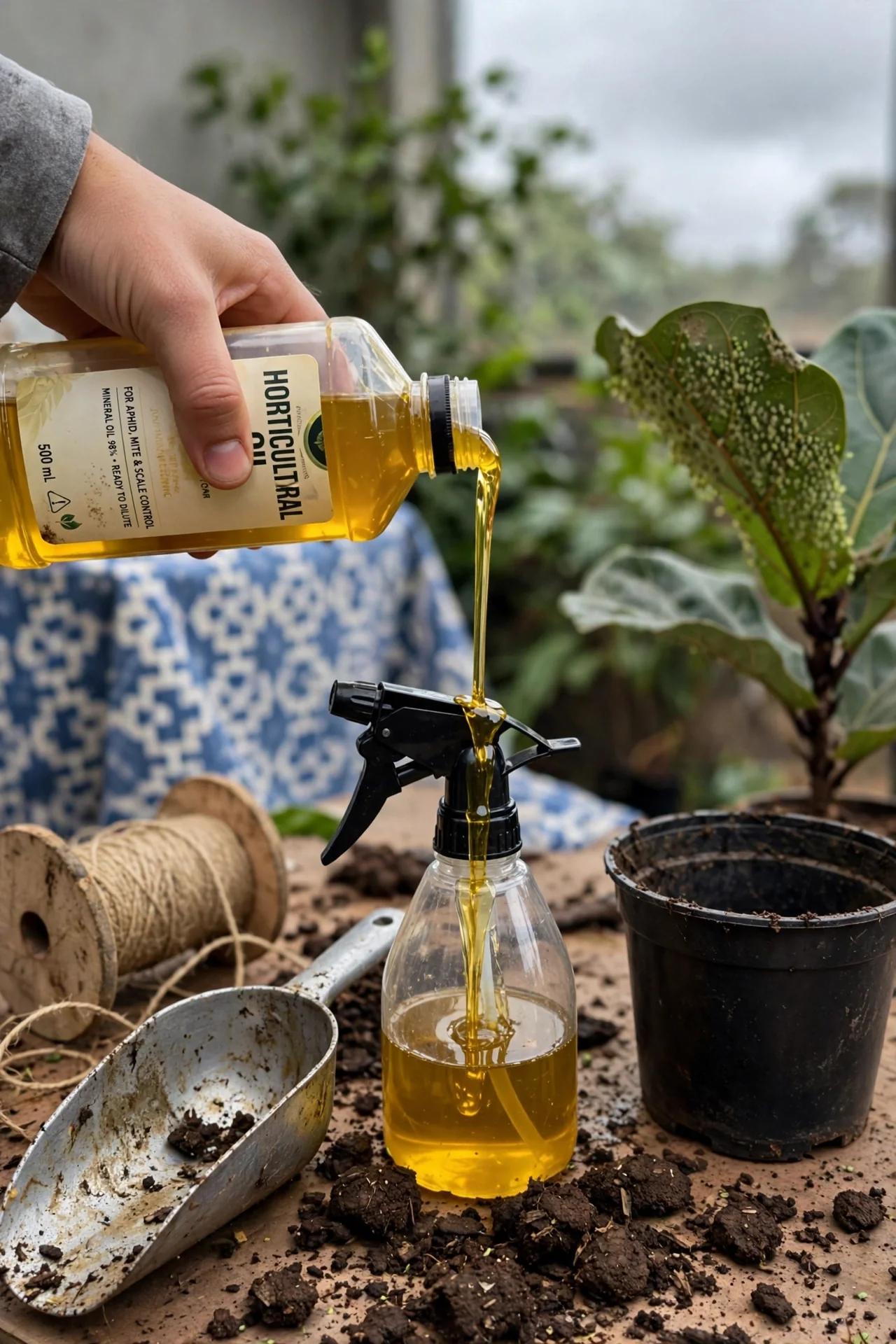
Best for: Branch 3
Food-grade diatomaceous earth consists of fossilized diatom silica that abrades the waxy coating of aphids, causing them to desiccate. It works only when dry, so use it as a soil-surface barrier to intercept aphids that drop off the plant and attempt to climb back up. Dust a thin layer on the potting medium surface and around the pot rim. Reapply after every watering, as moisture renders it ineffective. This is a supplementary treatment, not a standalone solution for active foliage infestations. For soil-dwelling pests that require similar barrier strategies, our root mealybugs guide covers the differences.
7. Beneficial Insects: Living Predators
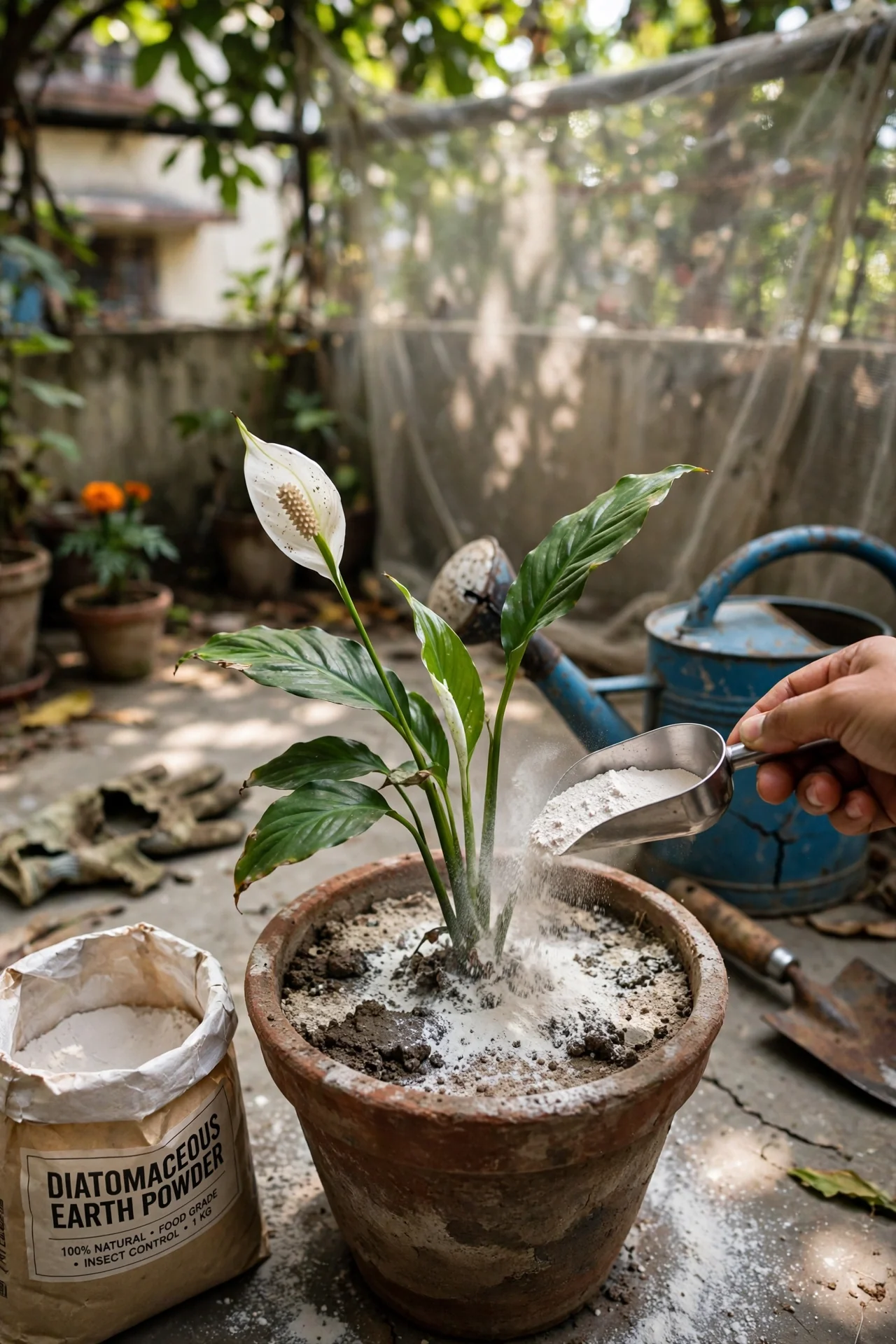
Best for: Branch 2
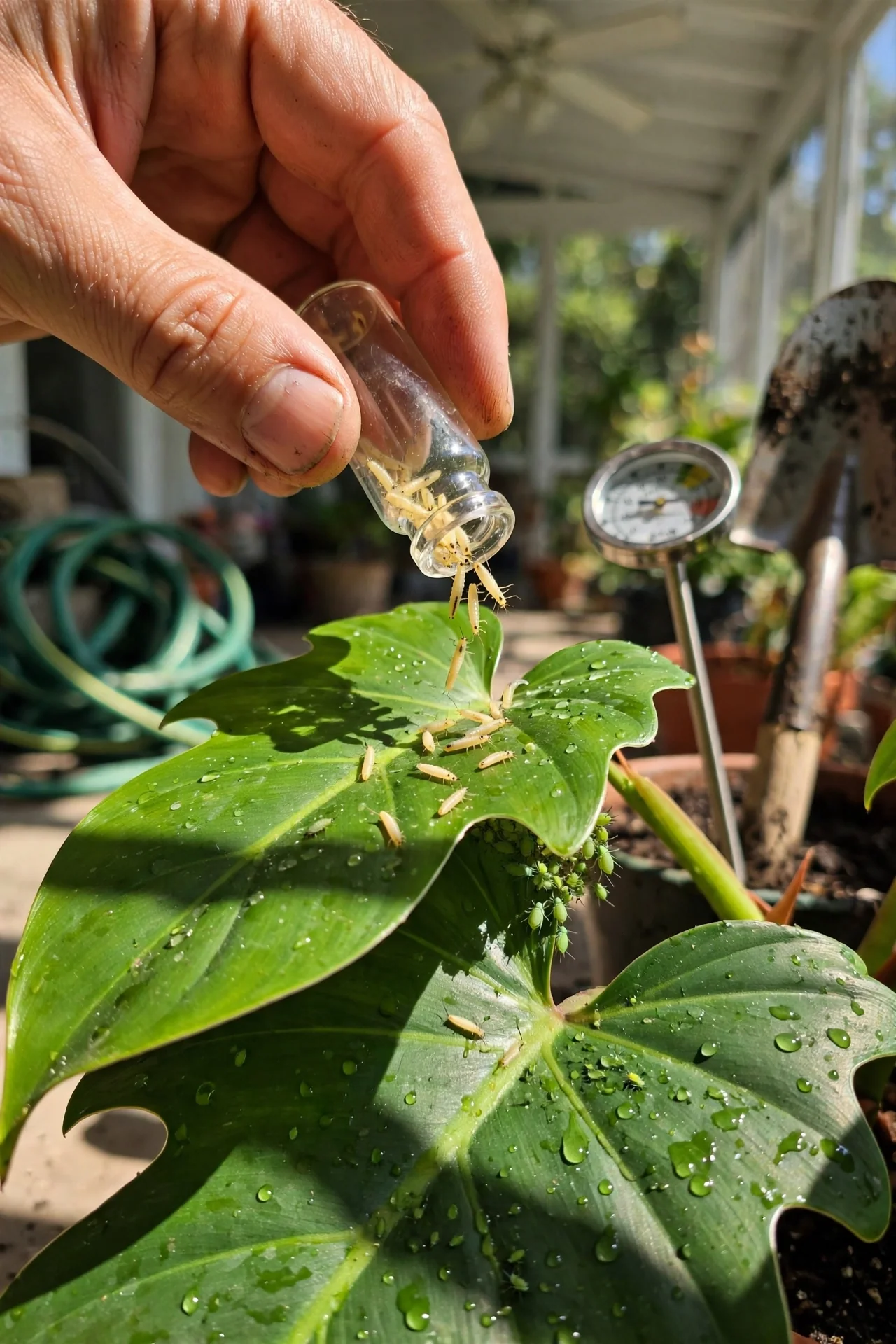
Blueprint: Purchase lacewing larvae (Chrysoperla carnea) or the parasitoid wasp Aphidius colemani from a commercial insectary. Lacewing larvae each consume roughly 100 aphids during their 2- to 3-week larval stage. Release them directly onto infested plants in the evening to reduce dispersal. Aphidius wasps lay eggs inside aphids; the aphid swells into a tan mummy, and a new wasp emerges. This method requires maintaining indoor temperatures between 21 and 25 degrees C and humidity above 70 percent for optimal predator activity.
What it solves: Aphid colonies that rebound after repeated spraying, often because eggs survive in leaf crevices. Predators actively hunt and can access these microhabitats.
What it introduces: A new dependency. If temperatures drop below 10 degrees C or humidity falls under 50 percent, predator reproduction stalls and aphids can resurge. This is the highest-effort method and works best in dedicated grow spaces, not a living room with a few plants.
Steps: (1) Stop all insecticide sprays at least 7 days before release. (2) Order predators with overnight shipping. (3) Release in the evening onto damp foliage. (4) Monitor for aphid mummies (parasitism indicator) within 7 to 10 days. (5) Repeat releases every 2 to 3 weeks during warm months. For comparison, thrips also have effective biological control agents, as detailed in our thrips on houseplants article.
8. Pruning and Isolation: Mechanical Removal
Best for: Branch 2
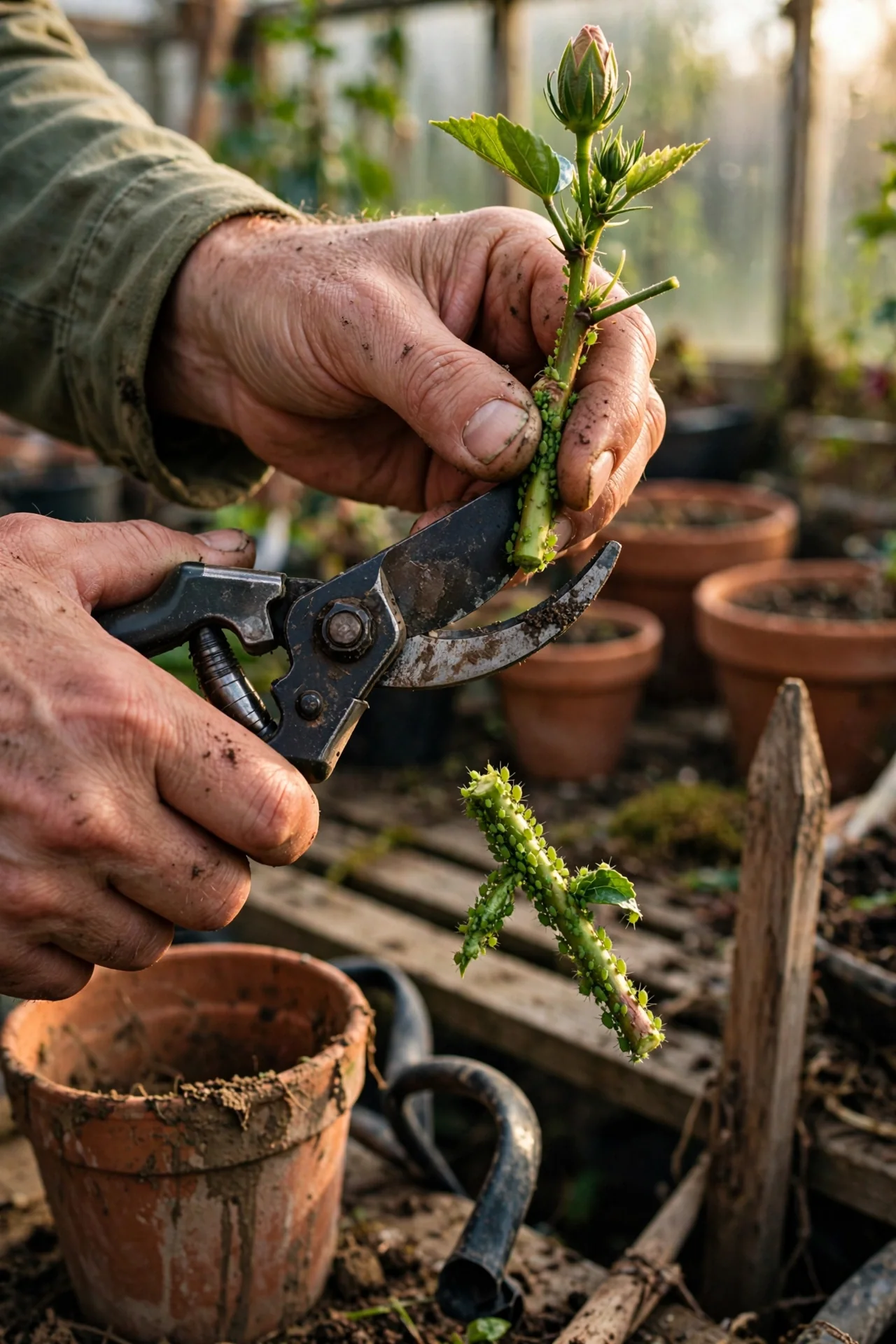
When aphids are confined to one or two stems, cutting those stems below the lowest visible colony and disposing of the trimmings in a sealed bag eliminates the infestation faster than any spray. Immediately isolate the treated plant at least 2 meters from other plants. Monitor remaining stems daily for 10 days. This method fails if aphids have already produced winged forms that dispersed before pruning.
9. Hydrogen Peroxide: Oxidation Treatment
Best for: Branch 3
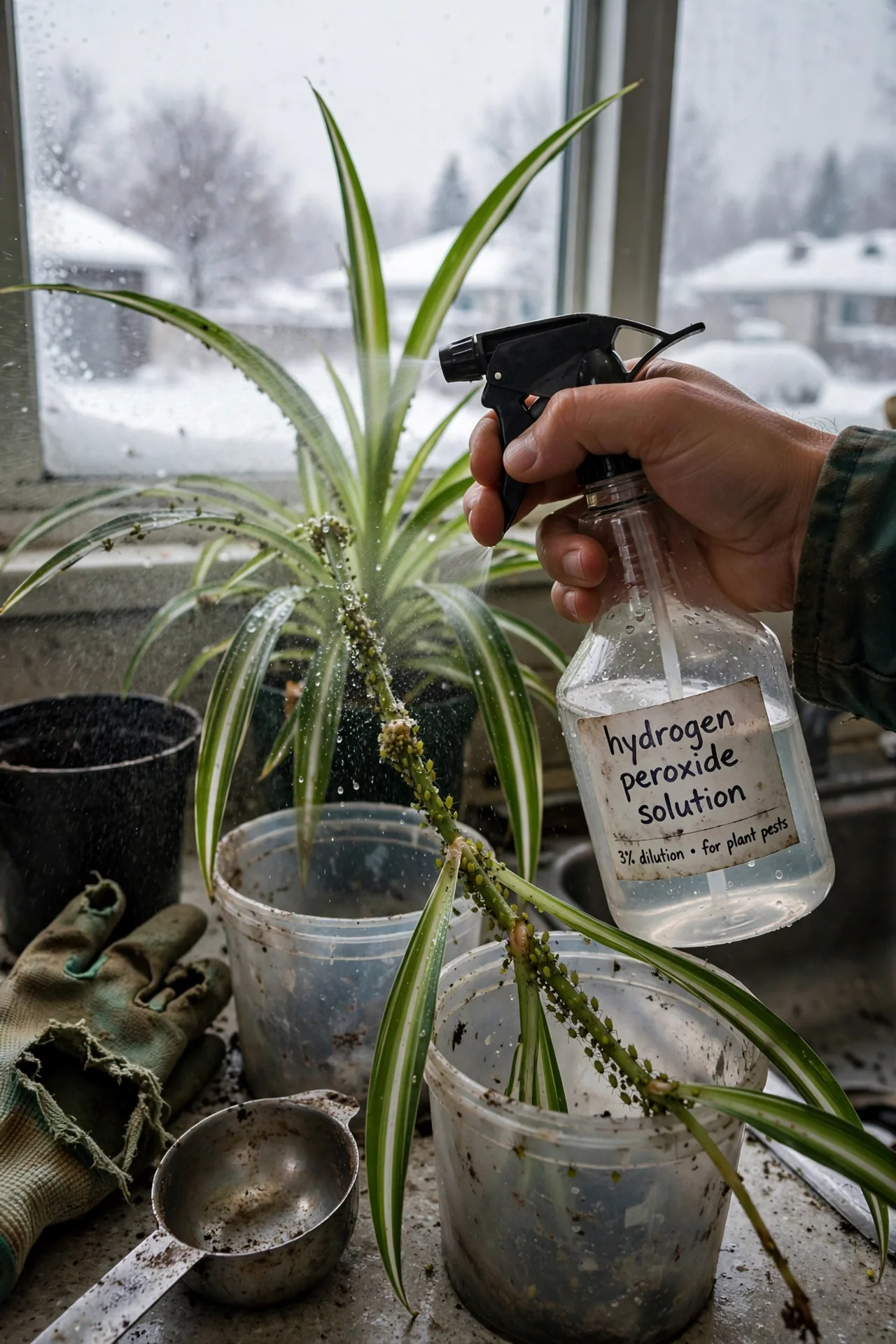
Use a 3 percent hydrogen peroxide solution diluted with water at a ratio of 1 part peroxide to 3 parts water. Spray on leaves and stems where aphids are visible. The solution oxidizes organic matter on contact, killing aphids and dissolving honeydew residues. It also aerates the root zone if applied as a soil drench, which can help plants stressed by heavy infestations. Apply every 5 to 7 days, and always test on a single leaf first, as some plants such as peace lilies and African violets may show sensitivity.
10. Systemic Insecticides: Last Resort for Persistent Infestations
Best for: Branch 3
What it is: A chemical solution absorbed by the plant roots and translocated through vascular tissue, making the plant itself toxic to feeding aphids. Imidacloprid is the most common active ingredient for indoor use, typically applied as a soil drench at a rate specified on the product label. Systemic insecticides provide residual control for several weeks to months, depending on the formulation and plant growth rate. They are the only option on this list that protects new growth as it emerges.
When to use: The infestation has persisted through multiple rounds of physical and biological controls. Winged aphids are appearing repeatedly despite treatment. Multiple plant species are affected, and you cannot realistically treat each one individually.
Critical constraints: (1) Systemic insecticides are toxic to bees if plants are later moved outdoors. Do not use on plants that will spend any time outside during the growing season. (2) They can exacerbate spider mite outbreaks by eliminating natural enemies while leaving mite populations unaffected. (3) Imidacloprid is not permitted for use on edibles in some jurisdictions. If your indoor plant is a culinary herb or fruiting plant, check local regulations. (4) Repeated use in enclosed spaces requires ventilation. For plants that have suffered pest damage alongside aphid issues, our spider mites on indoor plants page explains why systemic treatments affect different pest classes differently.
Mistake to avoid: Applying systemic insecticide and then immediately washing the plant. The chemical must remain in the soil and be taken up by roots. Wait at least 48 hours after application before resuming foliar sprays or rinses.
The decision to use a systemic is irreversible in the sense that the chemical residue persists in plant tissue for weeks. If beneficial insects are reintroduced too soon, they will die from feeding on treated aphids. Wait a minimum of 6 weeks after the last systemic application before attempting biological controls.
Starter Stack (What to Choose First)
Branch 1 Starter: Water Spray plus Rubbing Alcohol
Begin with a thorough shower rinse (item 1). Immediately follow with spot treatment of any remaining aphids using a cotton swab dipped in diluted rubbing alcohol (item 4). Together, these cost under USD 5 and require roughly 10 minutes per plant. The water spray handles the visible colony; the alcohol catches individuals hidden in leaf axils that the spray missed. This pair resolves most early detections within two treatment cycles spaced 3 days apart.
Branch 2 Starter: Insecticidal Soap plus Pruning
Remove the most heavily infested stems first (item 8), then spray the entire plant with insecticidal soap (item 2). The pruning eliminates the highest aphid concentration immediately, reducing the bioload that the soap must handle. Expect to spend USD 8 to USD 15 on a ready-to-use soap spray and roughly 15 to 20 minutes per plant for the first session. Follow up with soap sprays every 3 to 4 days for two weeks.
Branch 3 Starter: Neem Oil plus Systemic Insecticide
Apply neem oil as a foliar spray for immediate knockdown (item 3), then apply a systemic soil drench (item 10) the following day. The neem handles adult aphids and eggs on contact, while the systemic protects new growth as it emerges. Combined cost ranges from USD 20 to USD 35, and initial treatment takes approximately 30 minutes per plant. This is an aggressive protocol reserved for infestations that threaten an entire collection.
When This Won’t Work
Failure condition 1: The plant is already in terminal decline. If more than half the leaves are yellowed, dropping, or severely distorted, and the root system has been compromised by prolonged stress, aphid removal will not reverse the damage. Aphids weaken plants, but they are rarely the sole cause of death. In these cases, the plant was likely already failing from overwatering, insufficient light, or root rot. The aphids are a symptom, not the primary problem. Discard the plant and sanitize the pot before reuse.
Failure condition 2: Winged aphids have colonized plants throughout the room. If you find aphids on more than three plants in different locations, the infestation has moved beyond what targeted treatment can manage. Adult winged aphids can travel several meters and will continue reinfesting treated plants. In this scenario, the only effective response is to treat every plant in the room simultaneously with a systemic insecticide, or to discard the most heavily infested plants and quarantine the rest for 4 to 6 weeks. If you are also dealing with other pests simultaneously, our scale on ficus page addresses multi-pest scenarios on woody indoor plants.
Choosing the Right Option for Your Situation
Budget Threshold
If your budget is under USD 10, start with water spray and rubbing alcohol (items 1 and 4). If you can spend USD 15 to USD 25, add insecticidal soap or neem oil (items 2 or 3). Budget above USD 30 allows for systemic insecticides or beneficial insect orders (items 10 or 7). The most expensive option is not always the most appropriate; a severe infestation on a USD 5 plant is rarely worth a systemic treatment.
Time Threshold
If you have less than 10 minutes per week to manage aphids, use a systemic insecticide (item 10) and accept the constraints. If you can commit to 10 to 20 minutes twice a week, choose physical methods and contact sprays (items 1, 2, 4). Beneficial insects (item 7) require the most monitoring time and are unsuitable for low-availability schedules.
Technical Constraint: Plant Sensitivity
Plants with thin, delicate leaves, including Calathea, Maranta, ferns, and some begonias, react poorly to oil-based sprays and alcohol. For these, restrict treatment to water sprays and insecticidal soap at the lower end of the dilution range. If aphids persist, isolate the plant and use a systemic insecticide rather than risking foliage damage from repeated contact treatments.
Quick Checklist
- Can you see fewer than 10 aphids? Yes: Start with item 1 or 4.
- Is sticky honeydew present on leaves below the colony? Yes: Move to Branch 2 methods.
- Are winged aphids visible, or are multiple plants affected? Yes: Go to Branch 3.
- Is the plant already losing more leaves than it retains? Yes: Consider discarding it.
Expert Q&A
How do aphids get onto indoor plants in the first place?
Aphids enter indoors primarily through three routes: hitchhiking on new plants from nurseries, entering through open windows or doors during warm months (winged adults), and riding in on clothing or pet fur after outdoor exposure. A single winged female can produce live offspring without mating, so one aphid can start a colony within days of arrival.
Why do aphids keep coming back after I spray?
Most contact sprays do not kill eggs, which are often tucked into leaf axils and bud crevices. Eggs hatch over a 5- to 10-day window, so a single spray application leaves the next generation untouched. Additionally, winged aphids can reinfest from untreated plants in the same room. Reapply every 3 to 4 days for at least two weeks to break the egg hatch cycle.
Can I use dish soap instead of insecticidal soap?
Dish soap is a detergent, not a soap. Detergents are designed to strip grease and can damage the waxy cuticle of plant leaves, causing dehydration and leaf burn. Insecticidal soap uses potassium salts of fatty acids, which are gentler on plant tissue. If you must use a household alternative, choose a pure castile soap diluted at half the rate of insecticidal soap and rinse the plant after 2 hours.
Do aphids on indoor plants go away in winter?
No. Unlike outdoor aphids that produce cold-hardy eggs in autumn, indoor aphids reproduce year-round because temperatures remain consistently above their developmental threshold of roughly 5.5 degrees C. In fact, indoor aphid populations can increase during winter when heating systems reduce humidity, stressing plants and making them more susceptible.
What is the sticky stuff on my leaves and why is it turning black?
The sticky substance is honeydew, a sugary liquid excreted by aphids as they feed. When honeydew accumulates, sooty mold fungi colonize it, creating a black, powdery coating. The mold does not infect the plant tissue but can block enough light to reduce photosynthesis. Wash leaves with lukewarm water to remove both honeydew and sooty mold. Controlling the aphids is the only way to stop the cycle.
Conclusion
The single most important decision when facing indoor aphids is distinguishing between a nuisance population and a spreading infestation. Treating the former with systemic insecticides wastes money and introduces unnecessary chemicals. Treating the latter with water sprays wastes time. The Yield Grid Decision Grid exists to eliminate that mismatch.
The number one mistake indoor plant owners make is stopping treatment too early. Aphid eggs continue hatching for up to 10 days after the last adult is removed. Whatever method you choose, continue monitoring and reapplying for a full two weeks after you last see a live aphid. Your next step: identify your branch using the grid above, then read the full item entry for your recommended method. For broader pest management strategies across your entire collection, visit our mealybugs on houseplants guide, which covers another sap-sucking pest that frequently co-occurs with aphids.