
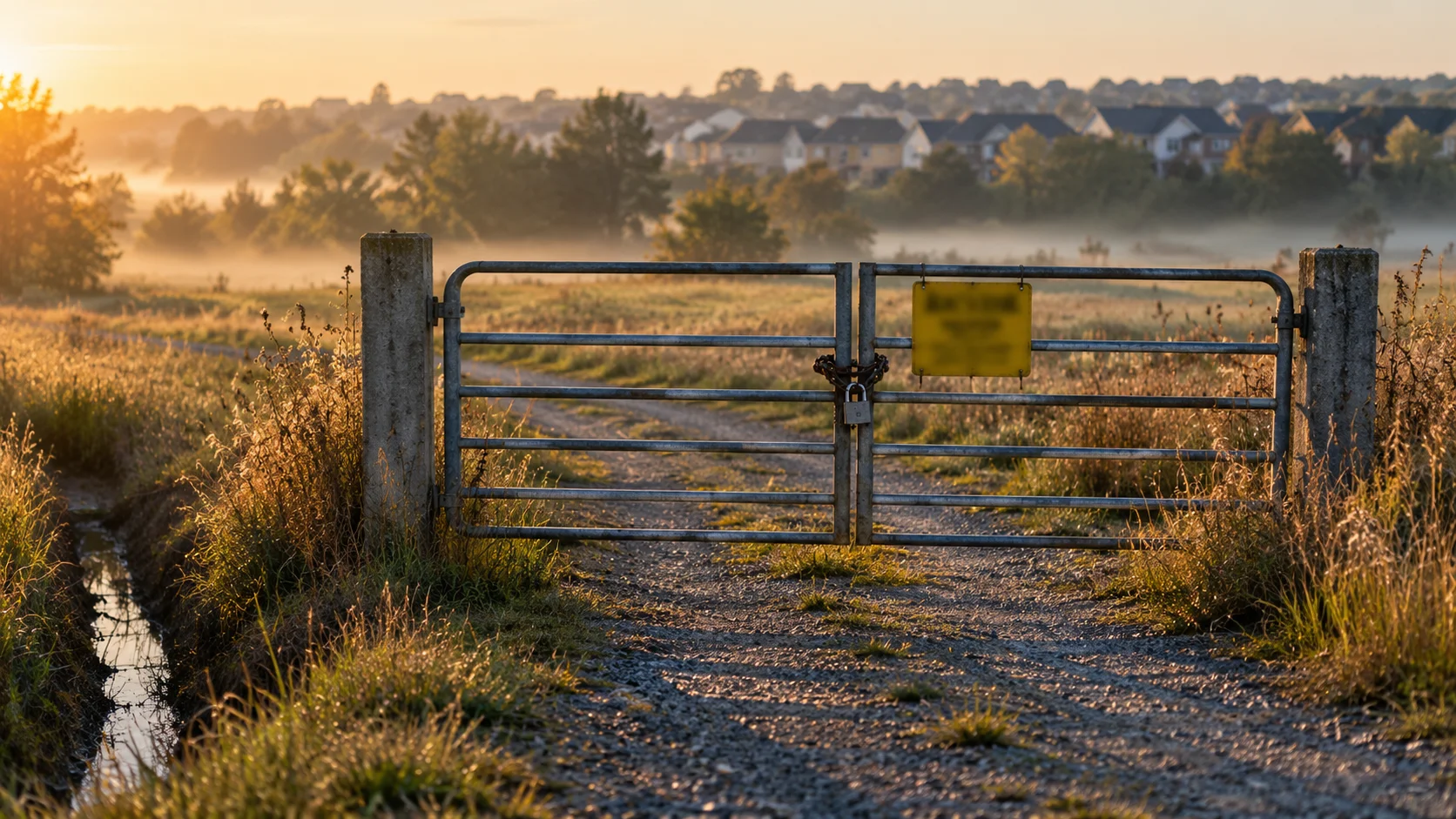
A homeowner gated the gravel path his neighbors had treated as a free shortcut for years. What followed included a sheriff’s visit, trespassers on camera, and an HOA lawsuit over land it never owned.
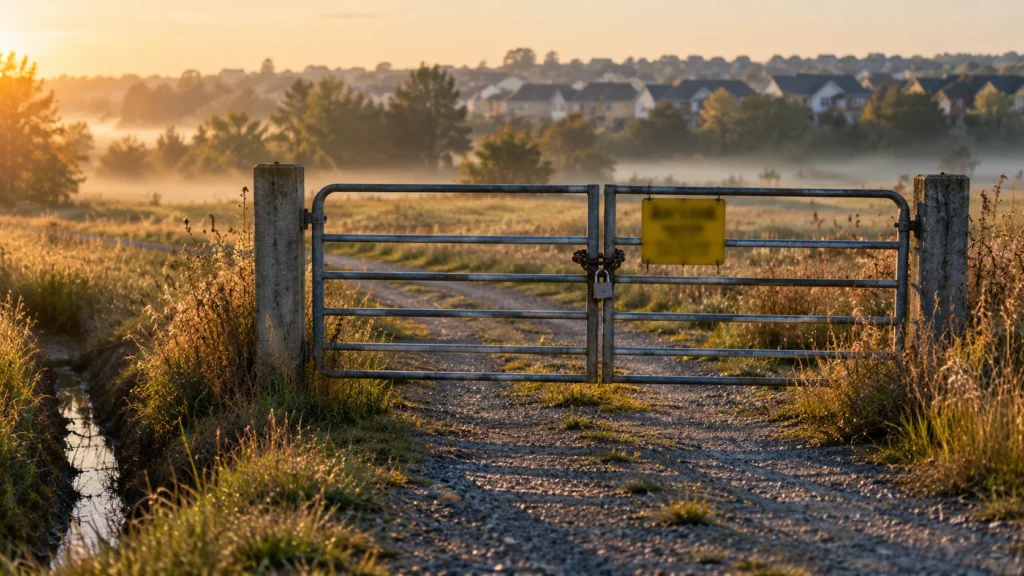
When a homeowner put a gate across the private gravel road his HOA neighbors had been using as a commuter shortcut, a simple property line dispute turned into a fight over property rights, trespassing, and a claimed easement. Here’s the whole thing, start to finish, including how the court ruled.
The Shortcut Nobody Thought to Question
About three years ago, a man we’ll call Dan bought a rural lot on the edge of a growing town. The land had passed between private owners for decades, and the last one was an older hunter who kept a small cabin there and mostly showed up on weekends. When he died, his kids sold the place, and Dan got it for a fair price. He knocked down the cabin, built a proper house, and moved in with his wife about six months later.
Next door sits an HOA community of around 120 homes, built roughly ten years earlier, with exactly one entrance and exit on its west side. Anyone heading for the highway has to leave through that entrance, follow a country road south for a couple of miles, and merge from there. It adds five or six minutes, and people running late notice every one.
Along the southern edge of Dan’s land runs a gravel path about fifteen feet wide. It starts near the HOA side of his property line and ends at a rural road to the east, which connects straight to the highway. Drive the path and you skip the detour. The old owner either didn’t mind or never noticed, and over the years residents had folded it into their morning routine. There were no gates or signs, nothing except the obvious fact that it was a gravel track through somebody’s land rather than a paved public road.
Dan noticed tire tracks when he moved in and didn’t think much about them. Then, about three weeks in, he was drinking coffee on the back porch when four cars rolled down the path in a row, like it was a commuter lane. Nobody slowed down or glanced at the house. That’s when the tire tracks stopped being a curiosity and started being a problem.
The next morning he walked down and waited. Around 7:15, a pickup came through, and Dan waved it down. The driver rolled his window down already looking irritated, and Dan explained, politely, that this was private property and not a public road.
“I’ve been using this road for six years,” the driver said. When Dan said he’d just bought the place and would appreciate people stopping, the guy asked if he was seriously going to block the shortcut. Dan told him it wasn’t a shortcut, it was his land. The driver shook his head and drove off.
Dan had a few more conversations like that over the week. Nobody got nasty, but nobody seemed to think he had a real complaint either, and the general mood was that he was the unreasonable one. When something has been free for long enough, losing it feels like being robbed, even when it was never yours. He called the HOA’s management company, and the woman on the phone was polite but firm. His property wasn’t part of the HOA, so they had no say over what residents did outside the neighborhood. Her advice was to put up some signs.
A Chain, a Gate, and a Note on the Door
Dan did exactly that. He bought four no trespassing signs at the hardware store and posted two at each end of the path. He also strung a simple chain between two posts at the end nearest the neighborhood, with another sign hanging from the middle. It wasn’t a fortress, just a clear message.
The message lasted about a day. Someone unhooked the chain and left it in the gravel, so Dan put it back, and the same thing happened about four times in a single week. On the fifth round, someone skipped the unhooking and cut it, leaving a clean slice through one of the links.
That was where Dan’s patience ran out. A cut chain isn’t confusion about a property line; it’s someone deciding your boundary doesn’t apply to them and bringing tools to prove it. He bought a heavy steel tube gate, bolted it to two posts set in concrete on the HOA end, and padlocked it. Then he put a second gate on the rural road end, so the path was closed from both directions.
For four days, everything went quiet. Then Dan came home from work on a Thursday and found a note tacked to his front door. As he remembers it, the note said he was blocking a road the community had used for over a decade, demanded the gates come down immediately, and threatened legal action on behalf of more than 100 families. It was signed only “HOA board member,” with no name. Dan threw it away and got on with his week.