
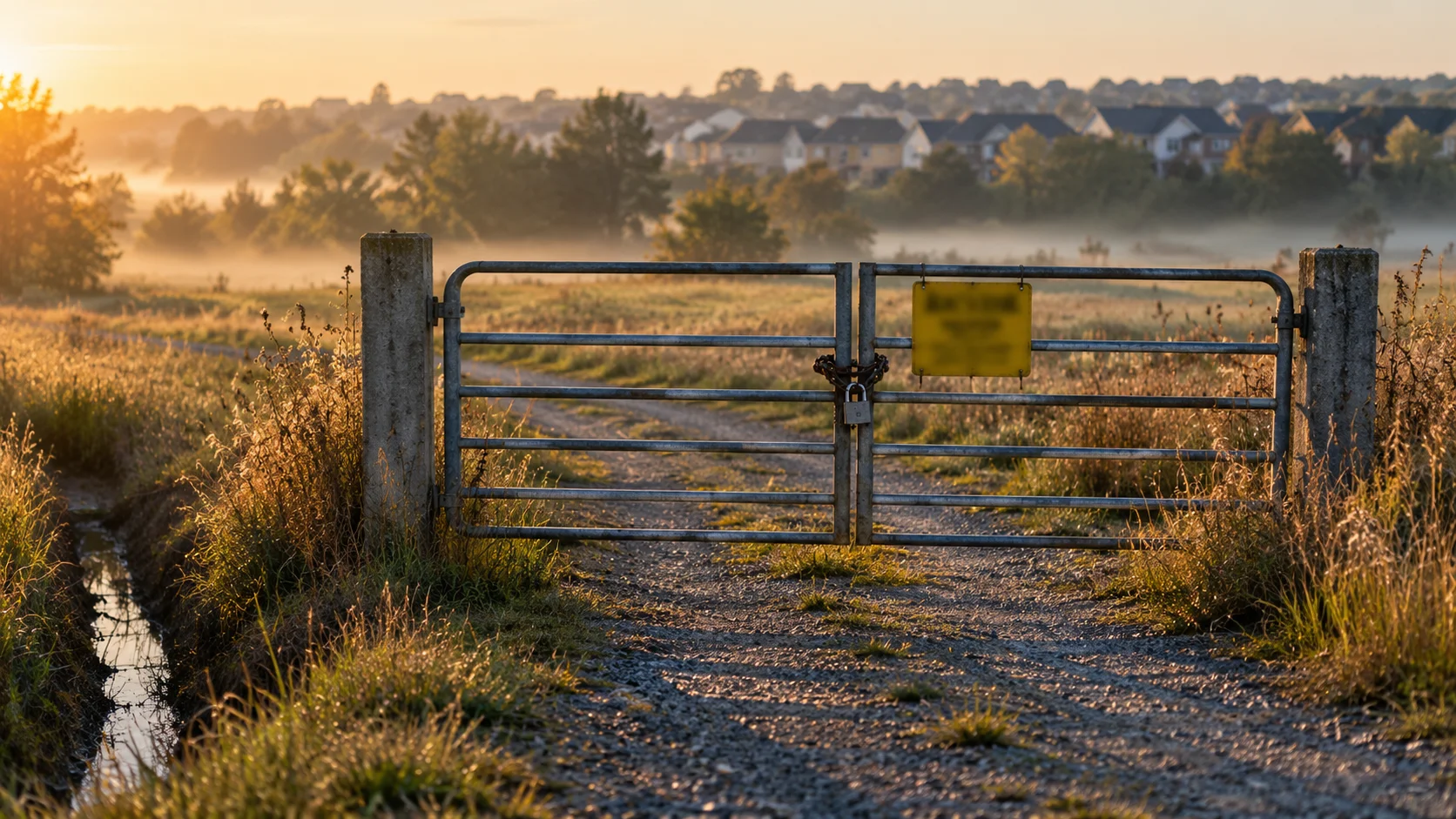
“I’m Calling the Police”
The following Saturday, around 10 a.m., a car horn started blaring near the HOA-side gate. Dan walked down and found a woman in an SUV leaning on the horn as if the gate might open if she pressed hard enough. When she saw him, she climbed out and asked if he was the property owner. He said he was.
She told him to open the gate right now, because this was a community access road and he had no right to block it. Dan said it was his property and there was nothing “community” about it. She said she was on the HOA board, the road had been in use for over ten years, and he couldn’t just show up and shut it down.
Dan’s answer was calm and specific. He had the deed, the survey, and the property tax records. The path had never been a public road, and as far as he was concerned, she and her neighbors had been trespassing for years.
“This is ridiculous,” she said. “I’m calling the police.”
“Go ahead,” Dan told her.
About twenty minutes later, a sheriff’s deputy pulled up, a younger guy who seemed unbothered by the whole scene. He spoke to the board member first. By then Dan had fetched his survey and deed from the house, and after looking them over, the deputy said it was pretty clear the land was his. Dan said he’d been trying to tell people that for weeks.
Dan could hear most of what came next. The deputy told the woman the documents were clear and Dan was within his rights to put up a gate. She argued that years of use had to count for something. He told her it didn’t work that way, and that using private property without permission doesn’t make it yours.
“This is not over,” she said. “The HOA will be looking into this.”
The deputy said that was between her and her HOA, but warned her against touching Dan’s gate or property, since that would be criminal trespassing and destruction of property. She left. He told Dan to call if anyone tampered with the gates and suggested cameras, which Dan already planned to buy. Most people, after calling the police and being told they’re the one in the wrong, would let it go. She seemed to treat it as round one.
Strangers on the Camera Feed
Over the next week, Dan installed six cameras: two on each gate, one on the driveway, and one on the back of the house. They recorded around the clock and backed up to the cloud, so a smashed camera couldn’t erase anything.
Within two weeks they caught people at the gates three more times. Twice, someone tried to pry the padlock off with what looked like a crowbar. On the third visit, someone brought bolt cutters and cut the lock clean off, and Dan came home to find the gate swinging open. The person wore a hat that hid their face but came from the neighborhood’s direction.
He fitted a heavier lock, added a second chain, and filed a police report. The deputy copied the footage and was honest with him. Unless they could identify the person, there wasn’t much they could do, though the report would matter if things escalated.
Dan and his wife were worn down, so he talked to a lawyer. The lawyer told him a property owner can use reasonable measures to protect land from trespassers, especially with documented trespassing and damage. He specifically mentioned that tire deflation devices on private property were legal in their state as long as there was adequate warning signage, comparing it to barbed wire on ranch land.
Dan bought two sets of commercial spike strips, the parking-garage kind rather than the kind police use in chases. The angled teeth fold flat if you drive over them leaving the property, and puncture your tires if you come in from outside. He installed one set about ten feet inside each gate and hung two bright yellow signs on each gate, warning of private property, tire deflation devices, and prosecution for trespassers.