

After years of shielding his daughter from the fallout of her mother’s postpartum depression, a single father had to face a harder question than who would win custody. It was whether his fear was still protecting her at all.
When his ex-wife asked to revisit custody, a single dad who had spent five years guarding his daughter from the aftermath of postpartum depression had to face something harder than a legal fight. Family mediation, a stubborn fear, and a little girl quietly looking out for him all pushed toward an answer he didn’t want to hear.
The Dad Who Thought Love Was Enough
He had wanted to be a dad longer than he’d wanted anything else. When his daughter, Isabella, was born five years ago, he stood in the hospital holding her and felt sure that nothing bad could touch them as long as he was in the room. He sees now that this was the naïveté of a new parent, the belief that love alone works like a shield.
A few months after they brought Isabella home, his wife started to struggle. It wasn’t dramatic at first. She was tired in a way sleep couldn’t fix, her eyes went distant when she looked at the baby, and her voice sounded flat when she said she was fine. Doctors called it postpartum depression, prescribed medication, and promised it would get better. He believed them, mostly because he needed to.
It didn’t get better. It got worse slowly, then all at once, until the woman he’d married felt like a stranger. She would cry for hours, snap at him over small things, then go silent for days, and the silence scared him more than the shouting. She never hurt Isabella, and he’s careful to say so, but he kept coming home to scenes he couldn’t shake: his daughter in her crib with a soaked diaper, his wife in the dark living room staring at nothing.
So he took over the feedings, the diaper changes, and bedtime, and told himself he was helping. In truth he was building a wall between his wife and his daughter, because he didn’t trust what might happen when he wasn’t there. His wife knew it and accused him of thinking she was a bad mother. He denied it, and they both knew he was lying.
The arguments got louder until Isabella learned to go quiet whenever their voices rose, which he says broke something in him that may never fully heal. When she was eighteen months old, they separated, and his wife checked herself into a treatment facility. He told himself it was the right call, even as he watched her drive away and wondered if he’d failed her. The custody arrangement gave him primary placement, with supervised visits for his wife.
Two People in a Small Apartment
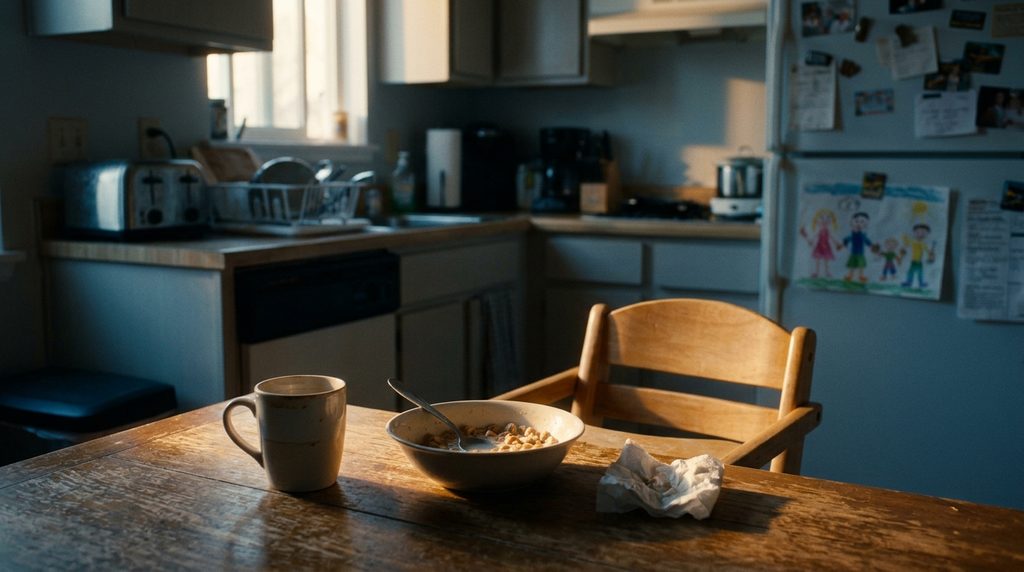
For a while it was just the two of them in a small apartment, learning to be a family of two. Those years were hard in ways he rarely talks about, and some nights he put Isabella to bed and then sat in the kitchen staring at the wall because he had nothing left. But kids grow whether you’re ready or not, and the watchful toddler became a girl who laughed easily, demanded bedtime stories, and told him he was her best friend in the whole world. He cried when she said it, and when she asked why he was sad, he told her he was so happy it came out as tears. She nodded like that made perfect sense.
His ex-wife got better too, though not cured, because that isn’t how mental illness works. She became stable enough that he had to make peace with her place in Isabella’s life, even when it scared him. Then she texted that she wanted to talk about custody.