

That Saturday there was a supervised visit at Riverside Park. Isabella bounced in her car seat in her favorite purple jacket and asked if mommy would remember that purple was her favorite color now. He told her yes, though he had no idea. From the spot near the parking lot where he was supposed to stay, he watched his ex-wife kneel to hug their daughter and Isabella’s whole face light up. When Isabella laughed on the swings, the sound carried across the playground and hit him somewhere in the chest, because he heard it every day at home but never from this distance.
After about forty minutes the social worker came over and said their relationship had really grown over the past year, and that Isabella seemed completely secure with her mother. He nodded, but what he was really thinking was that he’d treated these visits as something to endure, not something that brought his daughter joy. His next session with Petra pushed further: was he protecting Isabella from actual harm, or protecting himself from being hurt again? When she asked what would be left of him if he weren’t the dad who did everything, he had no good answer.
One Overnight at a Time
Lana met with each of them separately the following week and told him his ex-wife had proposed a gradual transition instead of a fifty-fifty split: one overnight a week, building from there depending on how Isabella adjusted. He’d expected her to push for more, and the restraint surprised him. Lana called it child-centered thinking, the kind that makes co-parenting possible.
That weekend he finally asked Isabella herself how she felt about spending more time with her mom. She stopped coloring her rainbow and thought for a long moment, then said she loved her mommy and wished she could have sleepovers there. Then she asked if that would make him sad. He realized his five-year-old had been protecting his feelings the same way he’d been protecting hers. He told her it wouldn’t make him sad, but he could see she didn’t quite believe him.
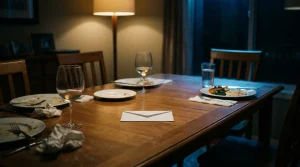
A week later an envelope arrived through Lana’s office, and he spread its contents across the kitchen table after bedtime. It held three years of employment records, reviews calling his ex-wife reliable and professional, therapy attendance logs signed by her therapist, medication compliance reports from her psychiatrist, and letters from her treatment team. He made himself read slowly, and what it showed was years of steady effort, not a few good months. He’d been avoiding it because seeing it meant admitting that his reasons for keeping things as they were had become more about his own fear than Isabella’s safety.
When Evan came over with pizza that Friday, he spent an hour building block towers with Isabella and letting her win at the matching game. Later, in the kitchen, he told the dad that giving Isabella a relationship with her mother wouldn’t erase the bond the two of them had built, and that maybe he was strong enough to share her without losing her. After Evan left, the dad stood at the sink and cried as quietly as he could.
At the next mediation session he caught himself actually listening, and what he heard was someone who loved Isabella as much as he did. His ex-wife acknowledged the harm her illness had caused, didn’t ask him to forget any of it, and asked only that he consider that people can heal. Lana proposed a two-month trial of one overnight a week, to be reassessed afterward. He looked across the table at the woman waiting for his answer, took a deep breath, and said yes. Her eyes filled and her voice broke when she thanked him, and he left shaking, terrified and hopeful at the same time.
The first overnight came two weeks later, and he over-prepared, texting reminders about the nightlight and the songs Isabella liked. His ex-wife answered every message patiently. That night the apartment felt too quiet, and he checked Isabella’s empty room twice. Around eight his phone buzzed and he grabbed it so fast he nearly dropped it. It was a photo of the two of them on a couch in pajamas, smiling, with a book open and three bedtime stories picked out. He felt relieved, and also like he was losing something he couldn’t name.
Isabella came home the next morning talking about pancakes, three board games, and popcorn during a movie. The weekly overnights became routine faster than he expected, and he and his ex-wife started texting during the week about snacks and winter coats. At the two-month reassessment, everyone agreed it had gone better than anyone feared, and Lana suggested a second overnight in six months if things stayed steady.
A week after that, Isabella called him over to the kitchen table to show him her newest drawing: three stick figures holding hands, her in the middle, with “my family” across the top in her wobbly letters. She told him it was her whole family, all of them together. It looked nothing like the family he’d imagined when she was born, but he understood it was the one she needed. He taped it to the refrigerator beside the old picture of just the two of them and stood there for a long time, feeling something loosen in his chest that had been tight for years.
Reflection: Nobody in this story was wrong in the way he feared. His protectiveness was real love, and it also became a place to hide from a harder question, which was who his daughter needed beyond him. Fear that was earned once can keep running a household years after the danger has passed, and the people who love you will sometimes see it before you do. In this case the first person to see it was five years old.
More stories you may like
 I Sat in a Room Built for 60 While My Family Celebrated My Brother’s Promotion
 My Mother Wanted My Wedding After Taking My Fiancé
 Eight Years After My Husband Abandoned Our Four Children, He Crossed Their Names Off His Christmas Guest List
 My Family Called Me the Leech on My 30th Birthday. I Owned the House They Lived In.