
A mother who spent thirty years explaining away her own childhood couldn’t explain away her son’s bruises. What she found when she finally listened changed three lives.
When a six-year-old keeps coming home bruised from the one place that’s supposed to be safe, a mother has to choose between family peace and the truth. This child abuse story starts with a woman who spent two years talking herself out of what she was seeing.
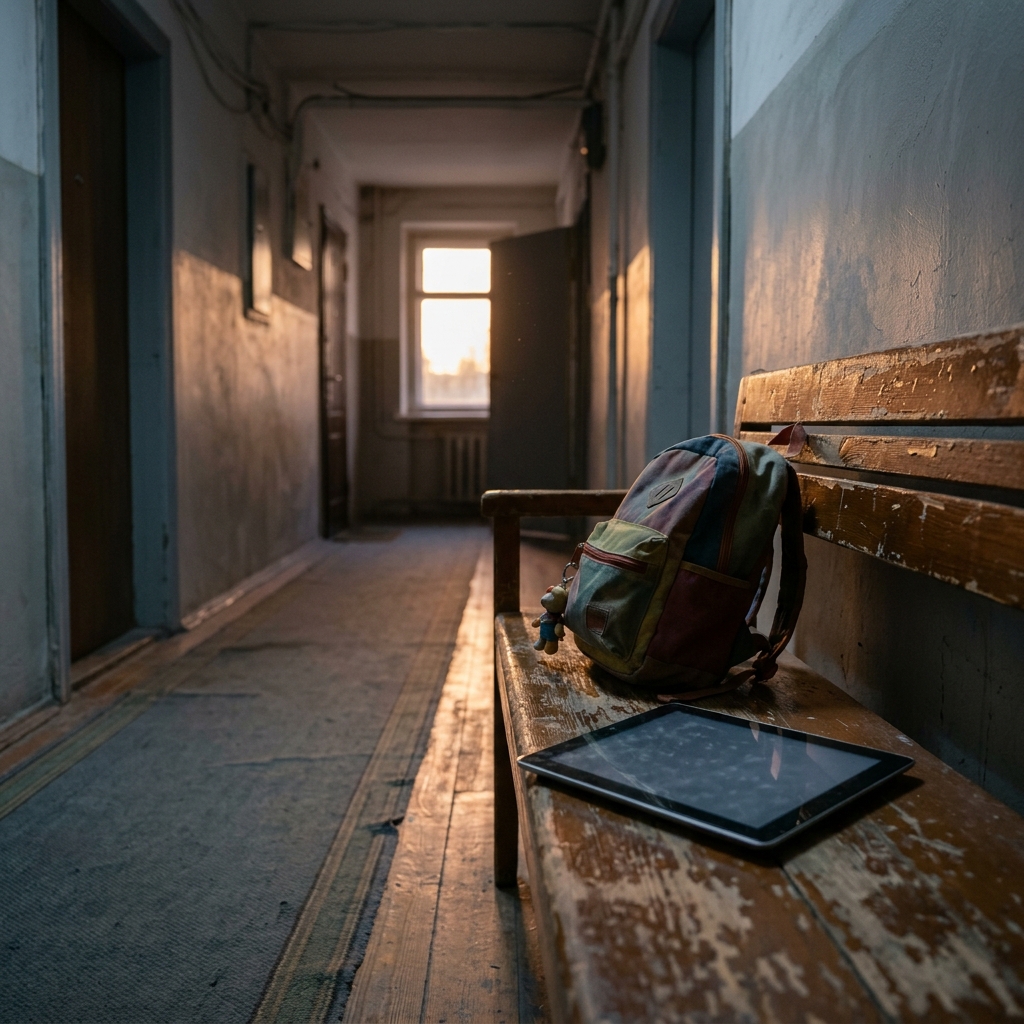
Grandma Says I Bruise Easy
Nora’s husband had been gone for two years when her mother, Judith, offered to take Oliver every Thursday. Nora worked long days and couldn’t afford daycare, so she said yes without a second thought. Judith never asked for money, and she always had Oliver fed and bathed by the time Nora came to pick him up. For a single mother stretched thin, it looked like family doing what family is supposed to do.
About three months before everything broke open, Oliver started coming home bruised. At first they were small purple ovals on his forearms, and Nora told herself they came from the playground. Then she found three parallel welts across his lower back, spaced exactly like fingers. When she asked what happened, Oliver went still, stared at the floor, and whispered, “I don’t remember, Mommy.”
The pattern was what finally cut through her excuses. The marks were always on his back and upper arms, in places a shirt would cover, and never on his face. Whoever was hurting him knew how to keep it out of sight. Then one Thursday she found four fingerprint bruises wrapped around his bicep, with a thumb mark on the inside.
She asked if someone had grabbed him hard. “Grandma says I bruise easy,” Oliver said. “Like a banana.” Nora’s stomach dropped, and she asked whether Grandma really said that. He nodded, and then his face crumpled with panic. “Don’t tell her I told you,” he begged. “She said if I told, you’d lose your job and we’d live in a box under the bridge.”
It’s hard to think of a more effective way to silence a six-year-old than convincing him the truth will cost his mother everything. The threat turns honesty into a danger and makes staying quiet feel like an act of love. Oliver had been carrying that weight alone, week after week.
What the Tablet Caught
That night Nora photographed every mark on her son’s body. She counted seventeen bruises, some yellow and fading, others fresh and purple, a record she realized she’d been too desperate to see. The next morning she called his pediatrician, Dr. Reyes, who examined Oliver while Nora waited outside. When the doctor came out, her face was carefully neutral, but Nora caught the tightness around her eyes.
“The bruising pattern is consistent with non-accidental injury,” Dr. Reyes said. She described grab marks and impact marks with uniform edges, likely from a flat object, and deep tissue bruising that took significant force. Nora asked how much force. “Enough to cause him pain for days.”
Standing in that hallway, Nora felt memories surface that she’d buried for thirty years. She remembered her mother’s hand across her face over spilled milk, and the wooden spoon that lived in the kitchen drawer. She remembered learning to make herself small and quiet, and telling herself that every mother did this. Memory can stay silent for decades when the alternative is admitting the person who raised you was dangerous, and now Nora understood she had been handing her son to exactly that person.