
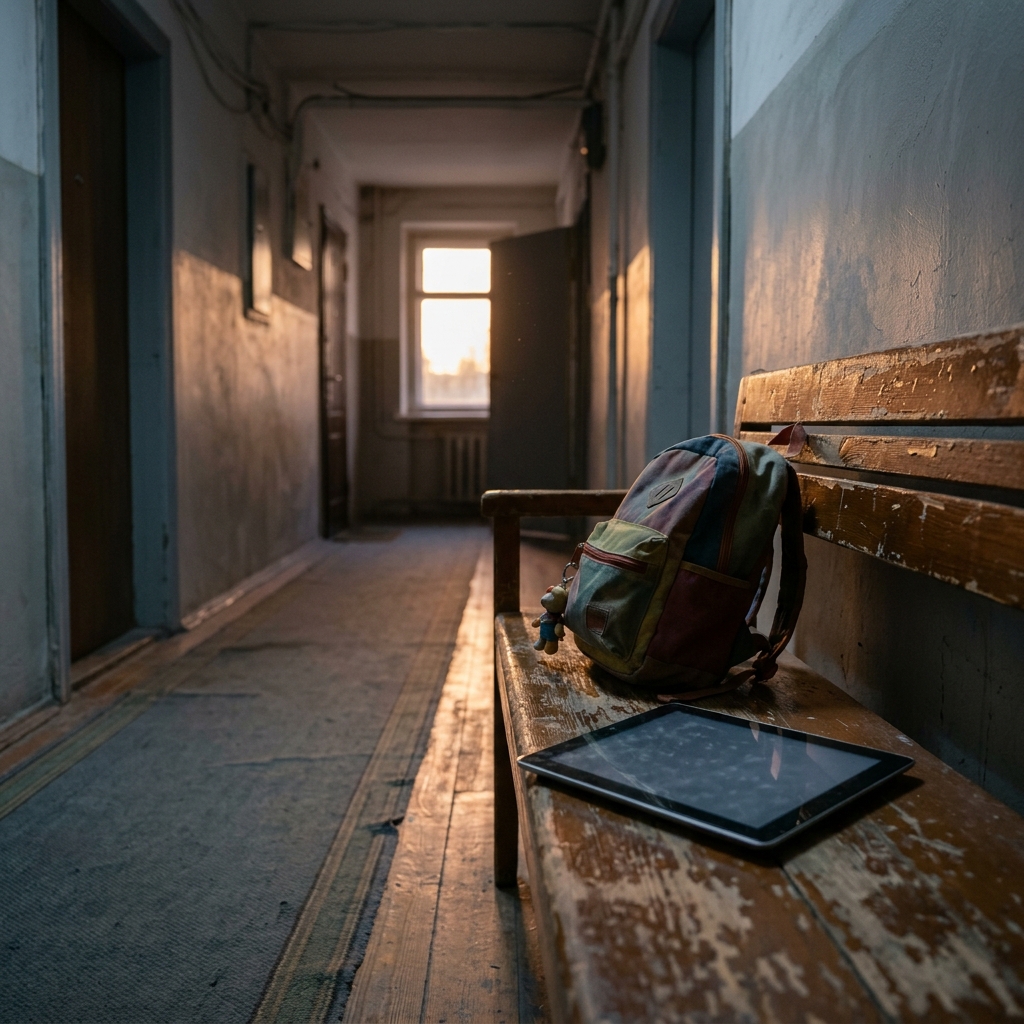
That night she installed a recording app on Oliver’s tablet and told him it was a new educational game. The following Thursday she sent him off with it and picked him up at six like always. There was a new bruise on his shoulder blade. Judith offered coffee and complained about her hip, and Oliver hugged her goodbye while angling his sore shoulder away from her grip.
Nora listened that night with headphones while he slept. The first two hours were ordinary, with a television, lunch, and Oliver playing far too quietly for a six-year-old. Then he asked for a second juice box. “You already had one,” Judith said, her voice turning to ice. “Greedy children get corrected.” A slap followed, then Oliver crying, then Judith telling him his mother worked herself to death for him and this was how he repaid her.
The recording held four more incidents: hitting him for laughing during her show, for asking to call his mom, for stepping on her foot. Each time Judith reminded him that telling would make them homeless. Nora drove to her mother’s house at midnight, and Judith opened the door in her robe, smiling, asking if Oliver was okay. Nora played the recording. Judith’s face went from confusion to anger to cold defiance, and she said recording her was illegal. “I discipline him the way I disciplined you,” she said, “and you turned out fine.”
Nora thought that she had turned out terrified, with memories she’d had to bury just to function. Judith laughed and said Nora would be back Thursday because she needed her. When Nora promised nobody would touch Oliver again, Judith promised she’d lose her job and her apartment. Nora left without another word.
The Knock at Seven
At seven the next morning, someone pounded on Nora’s door. Two police officers and a CPS worker stood in the hallway, and her mother was right behind them, dabbing at her eyes with a tissue. Judith told them she was terribly worried about her grandson, that Nora had been under stress, and that she’d noticed bruises for months. Then she looked at Nora and smiled. She had filed a report that morning claiming she’d seen Nora hit Oliver.
Nora kept her shoulders down and her voice level. The CPS worker, Cara Thornton, asked to speak with Oliver alone, and before she closed his bedroom door Nora handed over her phone with all seventeen photographs. At the kitchen table, Nora walked an officer through the three-month pattern and offered to play the recording, so he called in Detective Melton from the child abuse unit. Judith, still in the living room, grew louder as she insisted it was all a misunderstanding.
The recording changed the room. The officer’s grip on his pen tightened with each incident, and Detective Melton listened through headphones with his eyes on Judith the whole time while she twisted her tissue to shreds. When he asked whether it was her voice, she said technology could fake anything and that Nora must have edited it. She added that Nora had probably caused the bruises herself.
Then Cara examined Oliver in the bathroom, and Nora heard her gentle voice ask about the bruise on his shoulder. He began to say he didn’t remember, stopped, and went quiet. After a long silence, he said, barely loud enough to hear, that Grandma had grabbed him hard the day before when he asked for juice. Cara had already found fresh bruising less than twenty-four hours old, and when Detective Melton asked Oliver directly if his grandma hurt him, the boy looked at her, then at the floor, and whispered, “Yes.”
Judith demanded to leave, but the detective blocked the doorway. Cara’s supervisor arrived and told Judith she was now the subject of a child abuse investigation, with no contact allowed. Judith said she wasn’t going anywhere without a lawyer, and the detective told her she could come in voluntarily or be arrested for suspected child abuse and a false police report. She left in the back of a patrol car and didn’t look back.
At the hospital, a forensic examiner photographed and measured every bruise, and Dr. Reyes arrived with a thick file of her own documentation, calling it the clearest case of non-accidental injury she’d seen in fifteen years. In a recorded interview with anatomical dolls, Oliver showed where Grandma had grabbed him, where she’d hit him with her hand, and where she’d used a wooden spoon and, once, a hairbrush. Nora watched through the observation window with her palm pressed against the glass.
A Family That Wanted It Quiet
Nora blocked her mother’s number after seventeen missed calls, and the nights got harder instead of easier. Oliver woke up screaming at two in the morning, then again at four and at five-thirty, each time asking whether Grandma knew where they lived. Judith had told him she could take him away whenever she wanted. Nora kept the door locked, kept repeating that it wasn’t true, and eventually gave up on sleep altogether.