Most advice on cedar apple rust rushes straight to fungicide recommendations. But the real fork in the road comes earlier: you need to decide whether you are protecting a juniper, an apple tree, or neither. The fungus Gymnosporangium juniperi-virginianae needs both hosts to complete its two-year cycle, yet it damages them unequally. On junipers, the orange gelatinous galls are dramatic but rarely harmful to the tree. On susceptible apple varieties, the same pathogen can defoliate a tree and render fruit unsellable. Treating without answering the “which host” question first leads to wasted sprays, unnecessary pruning, and occasionally making the problem worse.
This guide covers twelve distinct decision paths for cedar apple rust, organized by which host you are defending and what outcome you actually need. We include chemical options (myclobutanil, propiconazole, copper formulations), cultural controls (gall removal, host separation, tool sanitation), genetic resistance (apple and crabapple cultivar selection), and the under-discussed option of managed tolerance. Excluded are treatments for cedar-quince rust and cedar-hawthorn rust, which are related but follow different gall morphology and timing rules.
By the end, you will know which branch of the decision grid matches your situation, which items within that branch create the lowest-effort path to your goal, and under what measurable conditions you should skip treatment entirely. Every item includes a consistent Effort Score (1 = apply once per season with no mixing, to 5 = weekly mixing and monitoring), so you can weigh labor cost alongside efficacy.
Bottom line: Before you spray, prune, or replant, identify whether your priority is juniper health (Branch 1), apple fruit quality (Branch 2), or avoiding the disease at planting time (Branch 3).
The Yield Grid Decision Grid
Answer one question to find your branch: Which plant are you trying to protect?
Branch 1: I need to protect a juniper or Eastern red cedar. Cedar apple rust galls on junipers swell into orange spore horns during spring rains, then dry and fall off. The tree itself is rarely harmed. Treatment is almost always optional and cosmetic. If the galls are on a few accessible branches and you want them gone for aesthetic reasons, prune them before they release spores. If the tree is large and covered with galls, the effort required to remove them all may exceed the cosmetic payoff. Recommended: Items 1, 10 below.
Branch 2: I need to protect an apple or crabapple tree (fruit quality matters). This is where the disease does real economic and horticultural damage. Fungicide sprays applied at precise phenological stages (pink bud through petal fall) are the backbone of control on susceptible varieties. Organic options exist but require more frequent reapplication and deliver less consistent suppression. If you are growing a highly susceptible cultivar like Jonathan, Rome, or Golden Delicious, expect to commit to a weekly spray schedule during the infection window. Recommended: Items 3, 5, 7, 8 below. For a deeper look at a related apple disease with overlapping spray timing, see our guide on scab on apples.
Branch 3: I am planning new plantings and want to avoid cedar apple rust from the start. This is the highest-leverage decision point. Choosing a resistant apple or crabapple cultivar eliminates the need for most fungicide sprays and frees you from having to remove nearby junipers. If you already have established susceptible trees and are considering replacement, the cost of replanting a resistant variety often breaks even against three to five years of fungicide purchases and labor. Recommended: Items 2, 4, 9 below.
Quick Comparison Table
| Option | Key Mechanism | Best For | Decision Grid Branch | Effort Score (1–5) |
|---|---|---|---|---|
| 1. Gall Pruning | Physical removal of inoculum source | Juniper aesthetics | Branch 1 | 2 |
| 2. Resistant Apple Varieties | Genetic resistance to infection | New orchard plantings | Branch 3 | 1 |
| 3. Myclobutanil Spray | DMI sterol inhibitor, protective | Susceptible eating apples | Branch 2 | 4 |
| 4. Juniper Removal | Host elimination breaks disease cycle | Small properties | Branch 3 | 2 |
| 5. Copper Soap Fungicide | Contact multi-site protectant | Organic orchards | Branch 2 | 5 |
| 6. Precision Timing | Targets spore release window | All spraying strategies | Branch 2 | 3 |
| 7. Propiconazole Systemic | DMI fungicide, systemic mobility | Heavy rust pressure areas | Branch 2 | 3 |
| 8. Lime Sulfur Dormant | Multi-site contact, eradicant | Organic dormant season | Branch 2 | 3 |
| 9. Resistant Crabapples | Genetic resistance in ornamentals | Landscape design | Branch 3 | 1 |
| 10. Tool Sanitation | Interrupts mechanical spread | All pruning activities | Branch 1 | 2 |
| 11. Biofungicide Program | Microbial competition on leaf surface | Low-pressure organic sites | Branch 2 | 5 |
| 12. Managed Tolerance | Accepts cosmetic damage as cost-free | Low-value or resistant trees | Branch 1 / 2 | 1 |
1. Prune and Destroy Juniper Galls Before Spore Release
Best for: Branch 1 (Protecting juniper aesthetics)
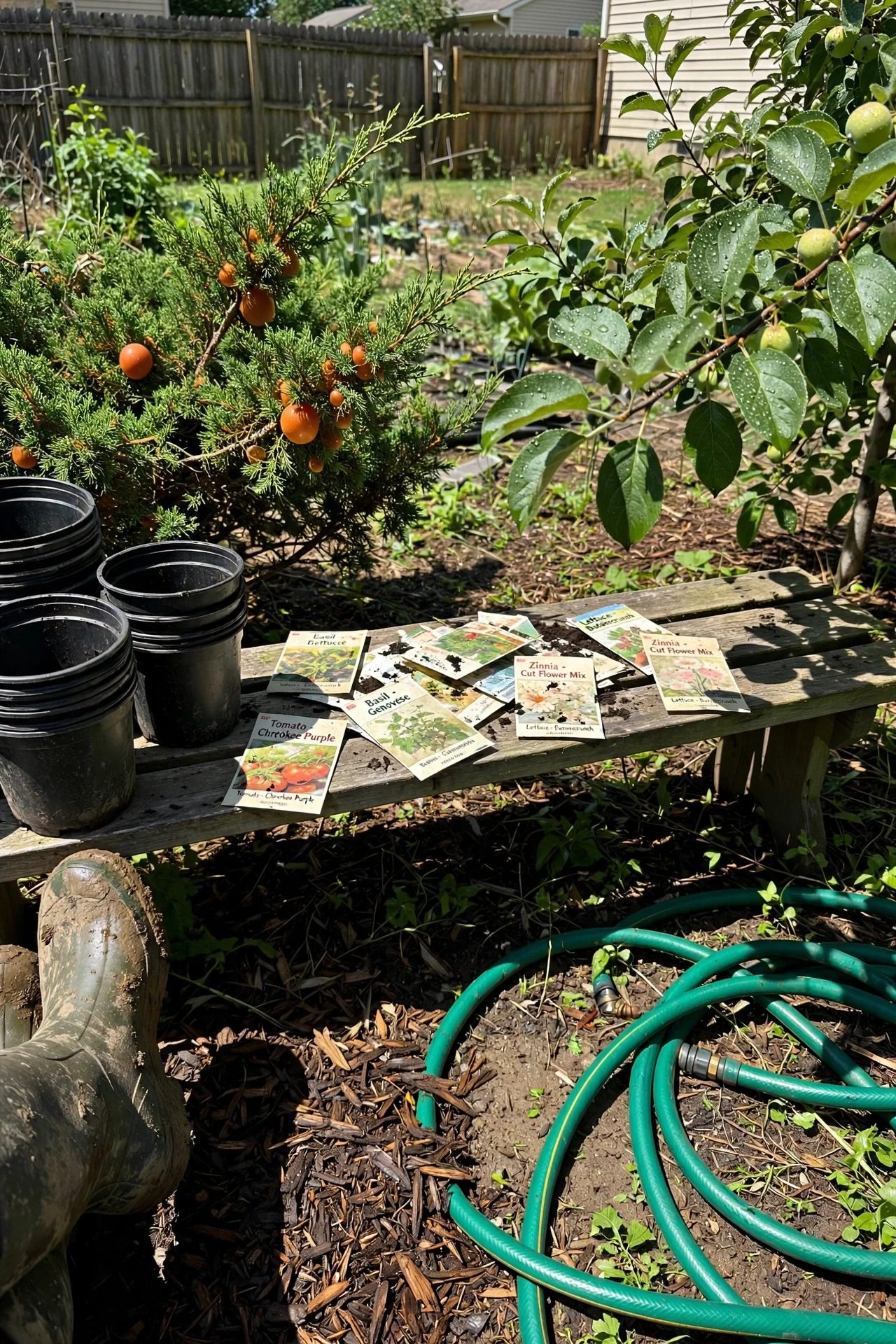
What it is: Physical removal of the brown, woody galls from juniper branches during the dormant season (late fall through late winter), before spring rains trigger the orange gelatinous spore horns to emerge.
How to execute: Inspect branches of Eastern red cedar and ornamental junipers between November and February. Galls are hard, round to kidney-shaped, and range from roughly 10 mm to 50 mm in diameter. Using sharp bypass pruners, cut the branch at least 50 mm below each gall. Destroy all removed galls by bagging and disposing in household trash, not compost. Disinfect pruners between cuts with a 70 percent isopropyl alcohol solution to avoid spreading any residual spores to healthy wood. For more on proper tool disinfection technique, see our guide to sanitizing garden tools.
Common mistake: Pruning galls in spring after they have already produced spore horns. By then, the spores have already discharged and removal offers no disease control benefit for that season. Wait until the following dormant period.
2. Plant Cedar-Apple-Rust-Resistant Apple Varieties
Best for: Branch 3 (Prevention at planting time)
Skip if: You already have a mature susceptible tree you are unwilling to replace. Use if you are establishing a new home orchard or replacing a tree that has required heavy spraying for multiple seasons.
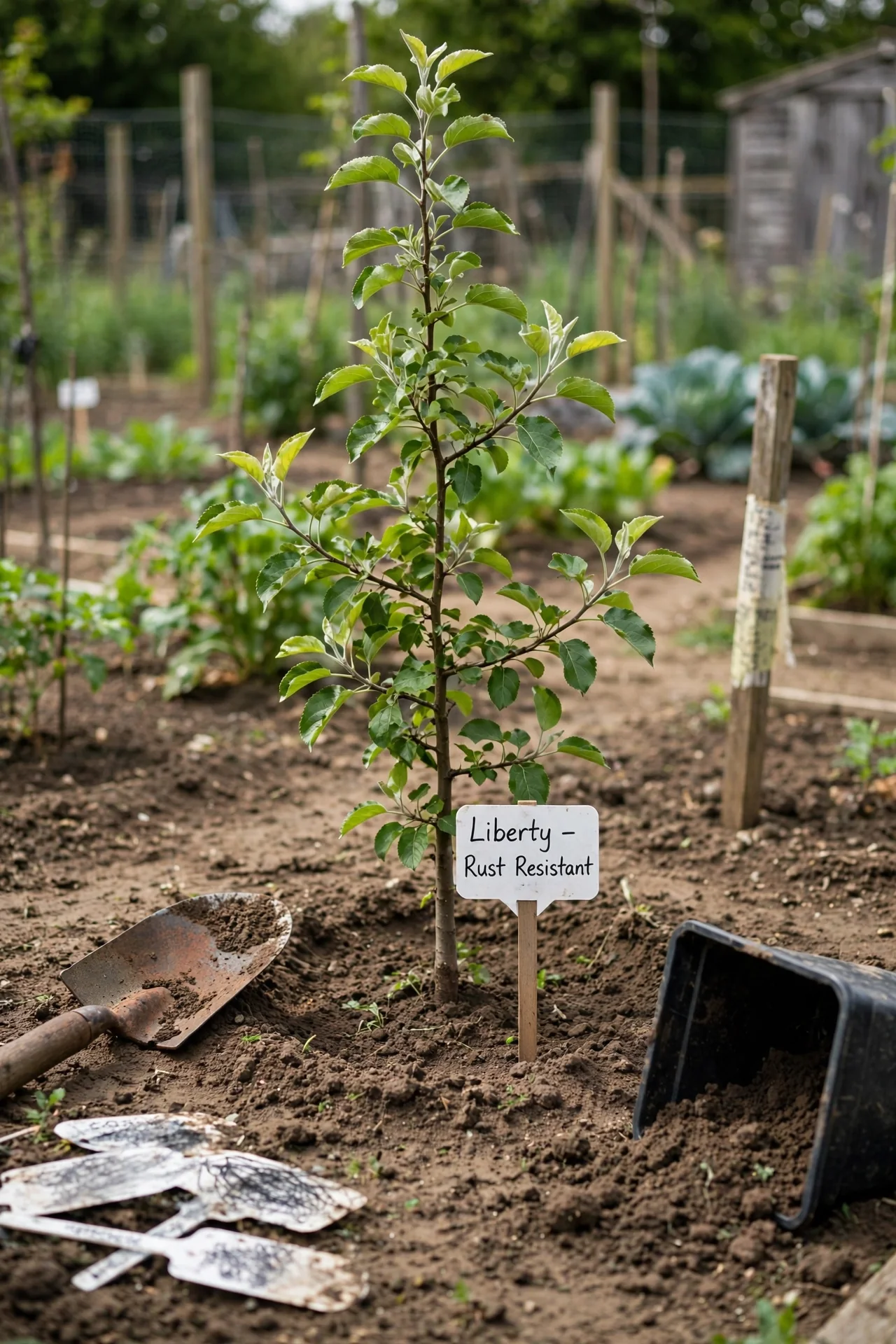
Edge case: Redfree and Liberty are field-immune to cedar apple rust, but Redfree is susceptible to fire blight and Liberty can develop powdery mildew in humid summers. Match the resistance profile to your region’s secondary disease pressure. For a detailed breakdown of apple diseases that may coexist with rust, consult our powdery mildew treatment guide.
3. Myclobutanil Protective Spray Program
Best for: Branch 2 (Protecting fruit on susceptible apple trees)
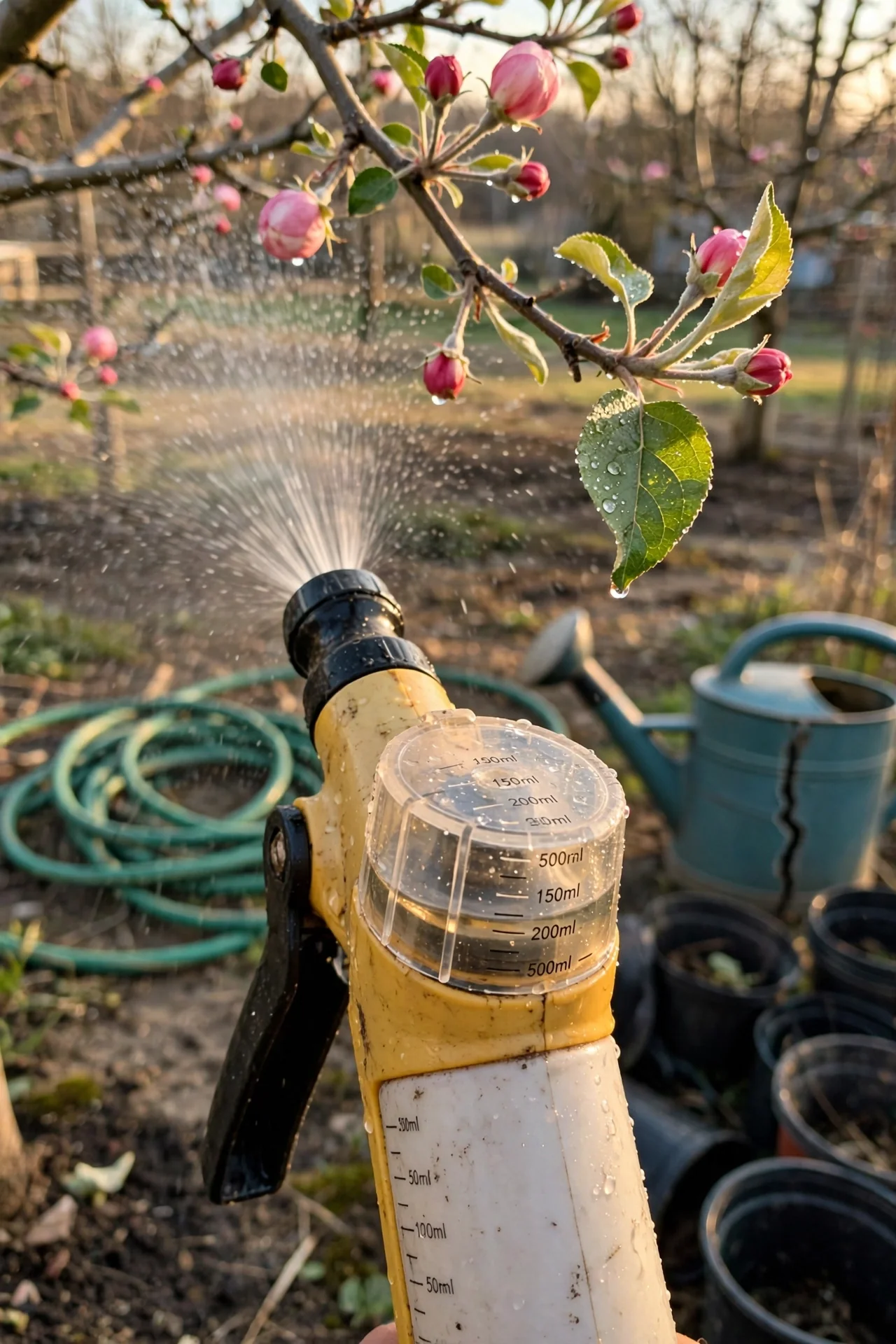
Threshold rule: Begin the first application at the green-tip phenological stage (when leaf buds first show green tissue, typically March to early April in USDA zones 5 through 7). Continue on a 10 to 14 day schedule through petal fall, which usually means four to six applications total. If spring rainfall exceeds 25 mm in a 48-hour window, tighten the interval to 7 days regardless of your planned schedule.
Adjustment for low-pressure sites: If no junipers exist within a 500-meter radius of your tree, you may reduce to three applications: pink bud, petal fall, and first cover. Myclobutanil is a DMI (sterol inhibitor) fungicide; rotate with a different FRAC group every second season to delay resistance development. Available to US homeowners as Immunox and to UK gardeners under various trade names, though always verify the specific formulation is labeled for fruiting apples.
4. Remove Eastern Red Cedars Within Spore-Travel Range
Best for: Branch 3 (Prevention through host removal)
What it is: Cutting down and removing all Eastern red cedar trees (Juniperus virginiana) and ornamental junipers within a defined radius of your apple trees to break the two-host disease cycle.
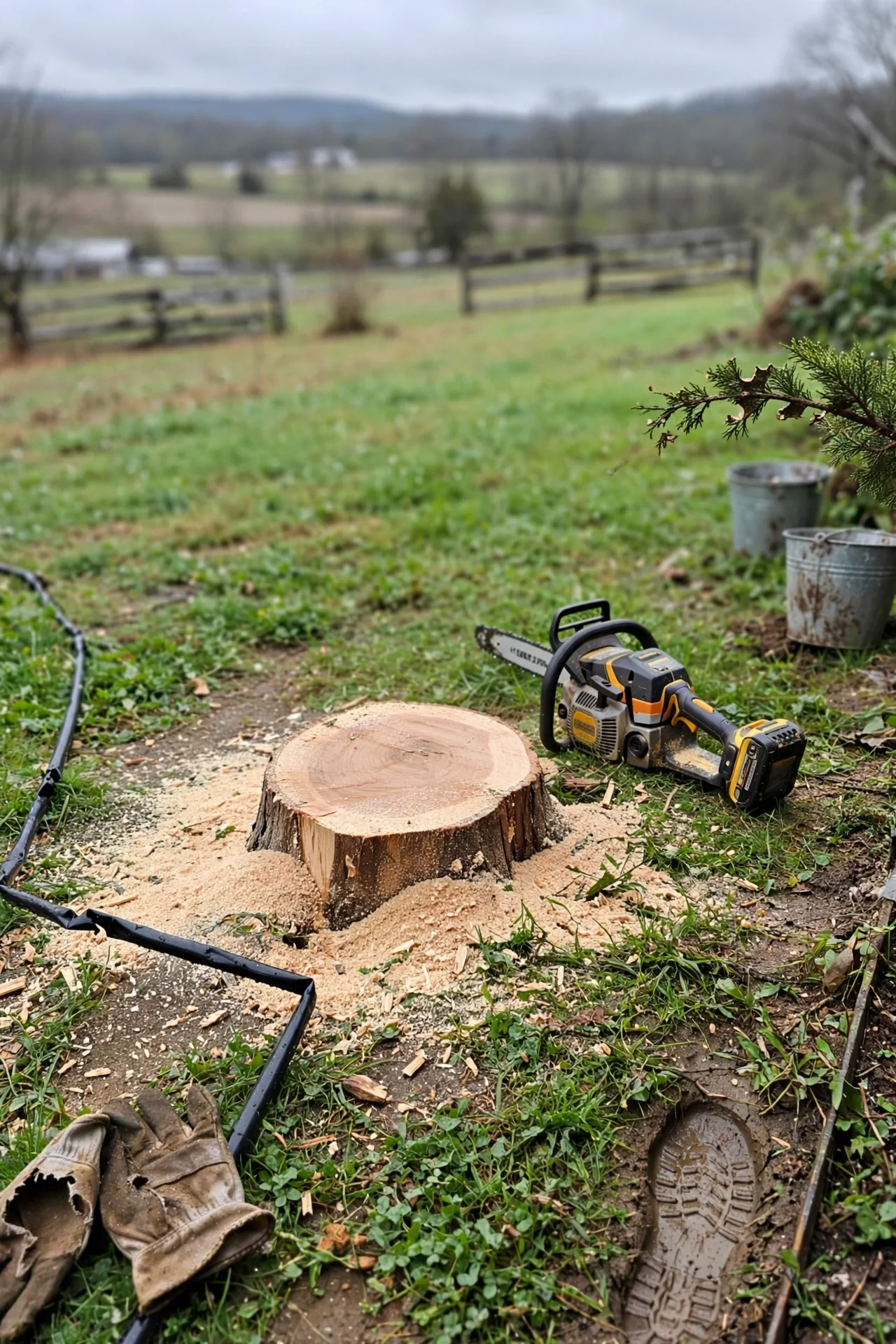
Steps: First, survey all woody plants within a 150-meter radius of your apple trees. Identify every juniper species present; Eastern red cedar is the primary host in North America, but Rocky Mountain juniper, creeping juniper, and many ornamental juniper cultivars can also harbor the fungus. Next, decide whether removal is legally permitted on each site (neighbor consent for off-property trees, local tree ordinances for public land). Remove permitted trees by cutting at ground level; stump grinding is unnecessary for disease control purposes. Finally, monitor the cleared zone annually for juniper seedlings, which birds readily disperse.
Key constraint: Research consistently documents spore travel distances of 800 meters to 3.2 kilometers under favorable wind conditions. This means removal on a single suburban lot often fails to eliminate inoculum because a neighbor’s unmanaged juniper two streets away can still supply spores. Host removal is most effective on properties exceeding 2 hectares where you control all planting decisions within the buffer zone.
5. Copper Soap Fungicide for Organic Production
Best for: Branch 2 (Certified organic apple production)
Use when: You are pursuing organic certification or prefer to avoid synthetic fungicides. Skip when fruit finish quality is paramount: copper can cause russeting on apple skin, particularly on varieties like Golden Delicious.
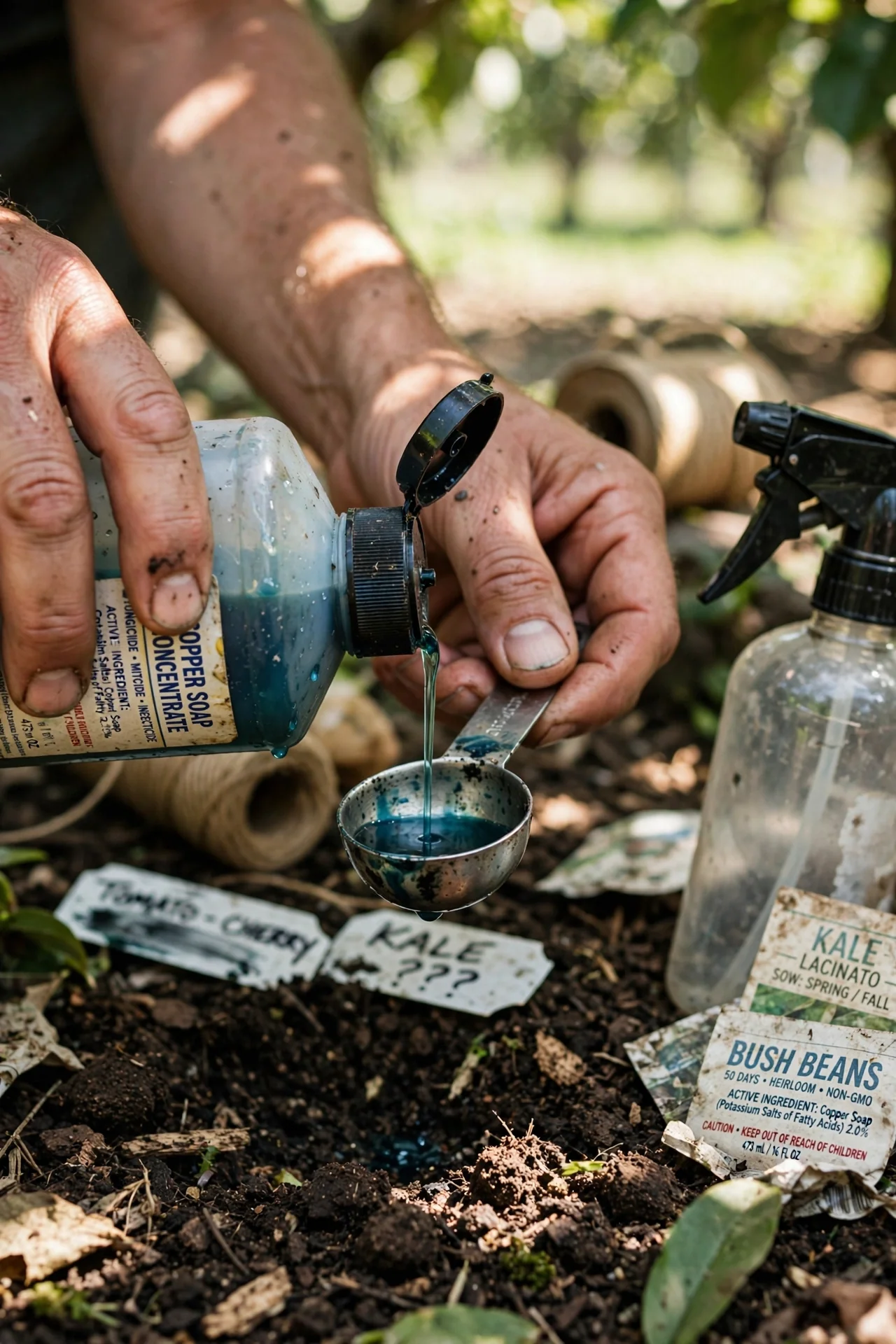
Edge case: Copper soap (copper octanoate) is labeled for cedar apple rust suppression but is not curative. Apply preventively at a dilution of 10 mL to 20 mL per liter of water, repeating every 7 to 10 days during the infection window. Reapply after any rainfall exceeding 12 mm within 24 hours. For fruit tree growers managing multiple diseases, see our guide on peach brown rot for comparisons of organic fungicide programs across tree fruit crops.
6. Precision Timing: Pink Bud to Petal Fall
Best for: Branch 2 (All fungicide users who want to minimize sprays)
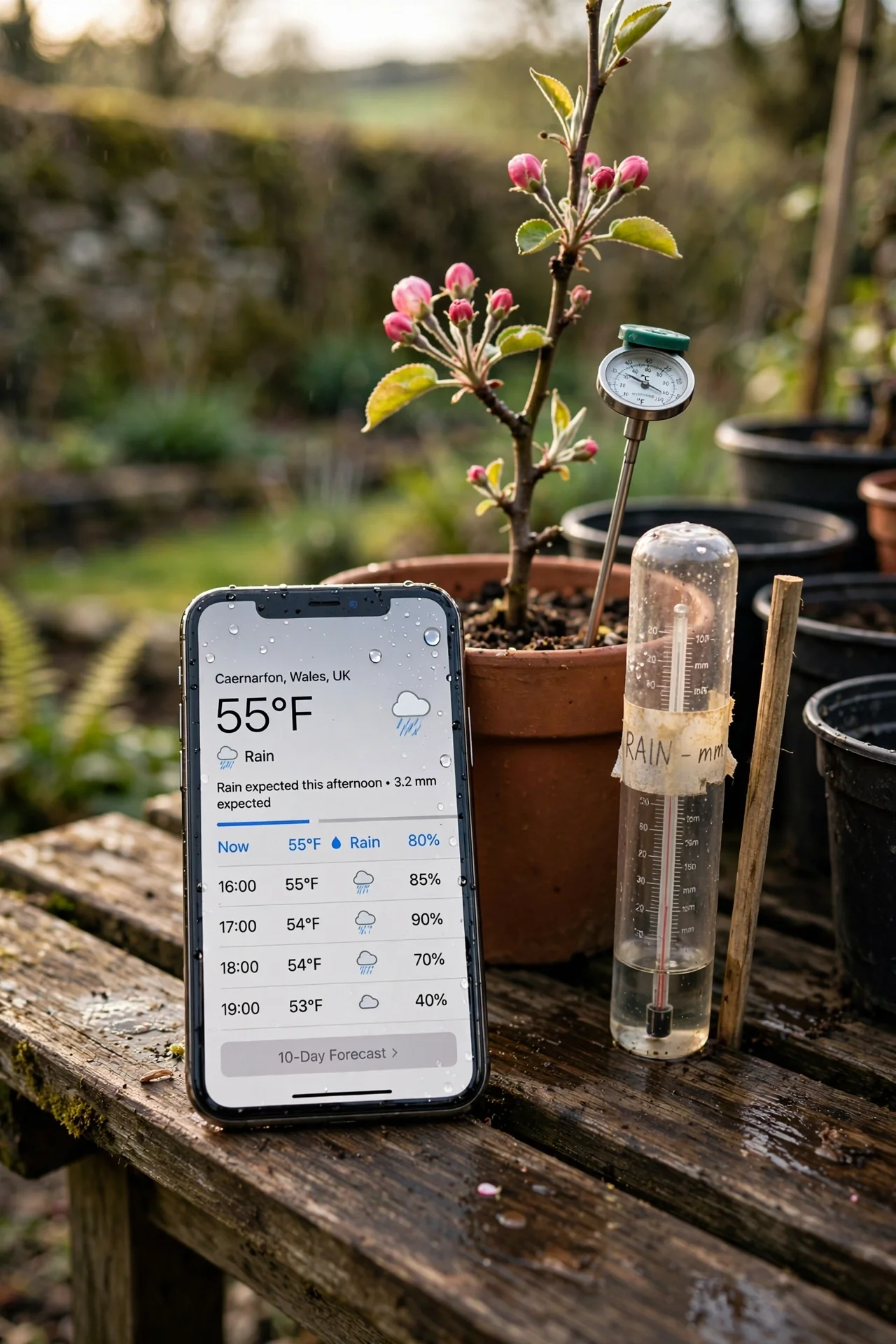
Threshold rule: The critical infection window opens when apple flower buds reach the “pink” stage (sepals separate, pink petal tips visible) and closes approximately 30 days after petal fall. This six to eight week window is when the cedar galls release basidiospores during warm spring rains. Temperature threshold for spore release: sustained temperatures above 8 degrees Celsius (46 degrees Fahrenheit) combined with at least 4 hours of leaf wetness. Use your local agricultural extension’s degree-day model if available; otherwise, mark your calendar at pink bud and commit to protective coverage until the galls on nearby junipers have dried and stopped producing orange spore horns.
Adjustment for dry springs: If your region receives less than 25 mm of total rainfall during the pink-to-petal-fall period, you may extend spray intervals to 14 days. In wet springs (over 100 mm during the same window), shorten to 7-day intervals.
7. Propiconazole Systemic Fungicide for High-Pressure Sites
Best for: Branch 2 (Sites with confirmed heavy rust pressure year after year)
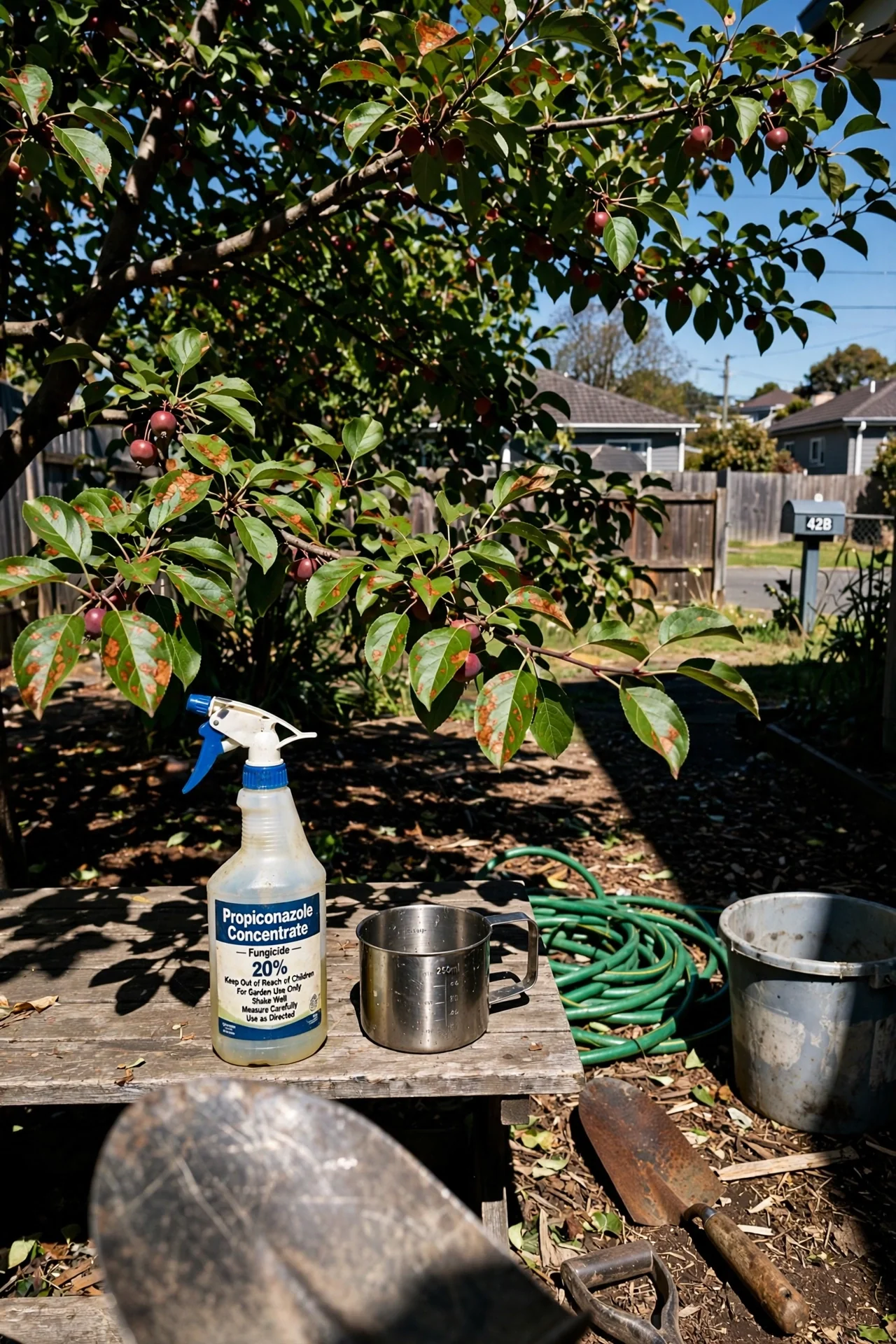
What it is: A DMI (demethylation inhibitor) fungicide with systemic mobility, meaning the active ingredient moves into leaf tissue and provides post-infection activity within roughly 72 hours of spore germination. Unlike myclobutanil, propiconazole is not labeled for use on apples that will bear harvestable fruit within 12 months in many jurisdictions; it is primarily suited to ornamental crabapples and non-fruiting landscape trees.
When to choose it over myclobutanil: Select propiconazole when you are treating a high-value ornamental crabapple in a landscape where juniper removal is impossible and the tree has defoliated in previous years. Apply every 14 days from green tip through second cover. The 14-day interval is half the frequency of copper-based options, reducing total seasonal applications. A common formulation is a 14.3 percent propiconazole concentrate; follow label dilution rates precisely, as over-application can cause phytotoxicity on new foliage. For companion reading on apple diseases that also respond to DMI fungicides, see our article on fire blight in apples.
Mistake to avoid: Using propiconazole as your sole fungicide year after year. Rotate FRAC groups seasonally to delay resistance development in the local Gymnosporangium population.
8. Lime Sulfur Dormant Season Application
Best for: Branch 2 (Organic growers using dormant-season tactics)
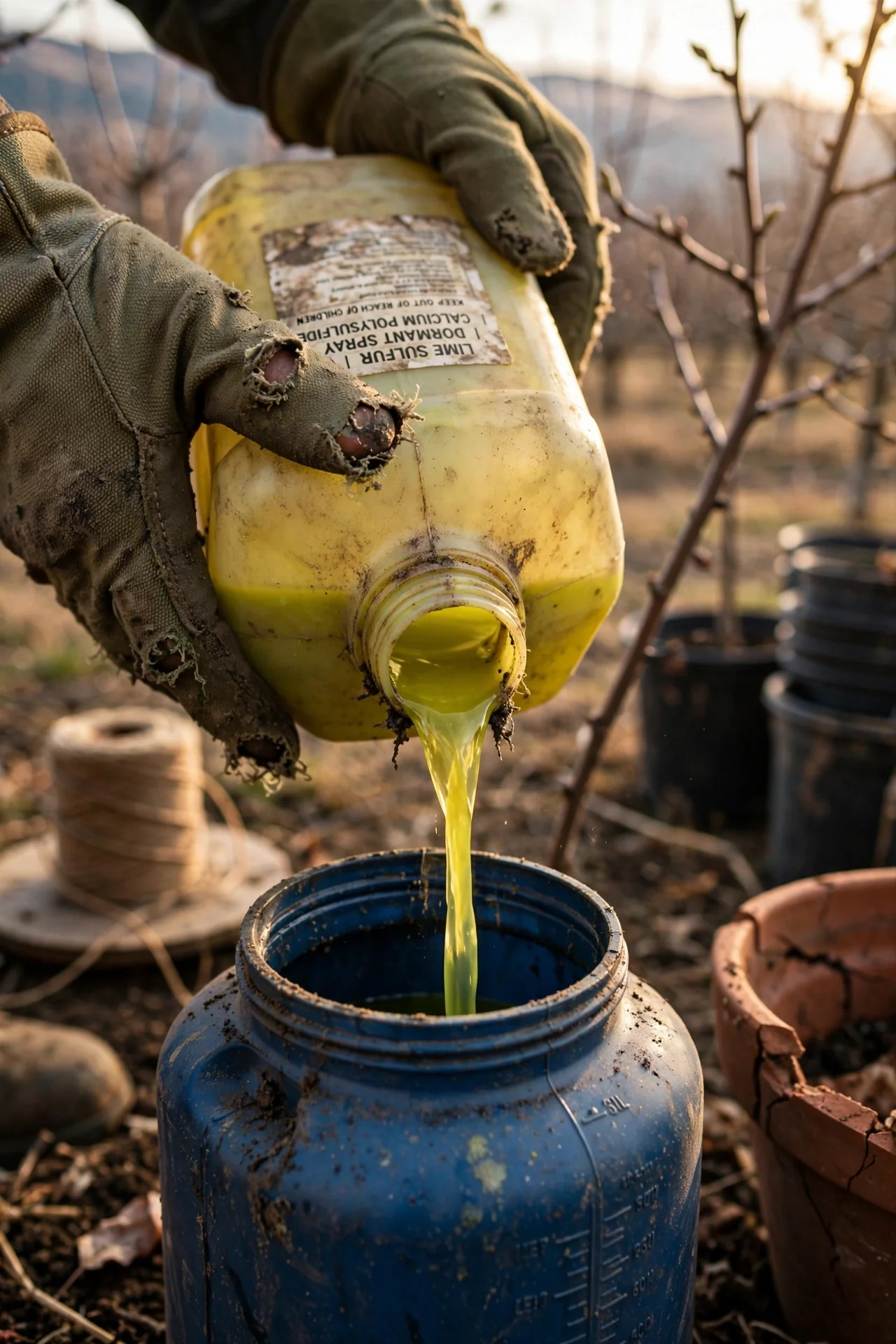
What and when: Apply lime sulfur at a dormant-season concentration of 4 to 10 percent (volume per volume) in water before bud break in late winter. This eradicant treatment reduces overwintering fungal inoculum on bark and bud scales.
Upgrade option: Combine lime sulfur at 1.5 to 2 percent with dormant horticultural oil at 1 percent for a combination spray that also targets overwintering insect eggs. The trade-off: lime sulfur has a strong odor, is corrosive to metal sprayer parts, and must not be applied within 10 days of any copper-based product.
9. Select Cedar-Apple-Rust-Resistant Crabapple Cultivars
Best for: Branch 3 (Landscape design and ornamental plantings)
Use when: You are designing a landscape that must include both junipers and ornamental crabapples within the same property. Skip when you are committed to a specific susceptible cultivar for its flower color or fruit persistence trait.
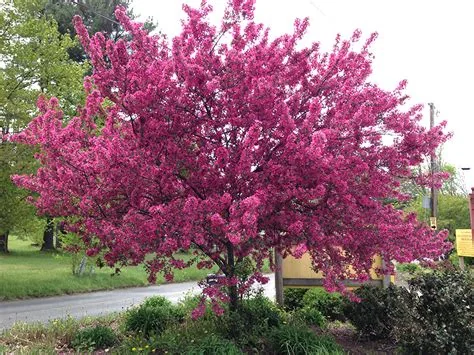
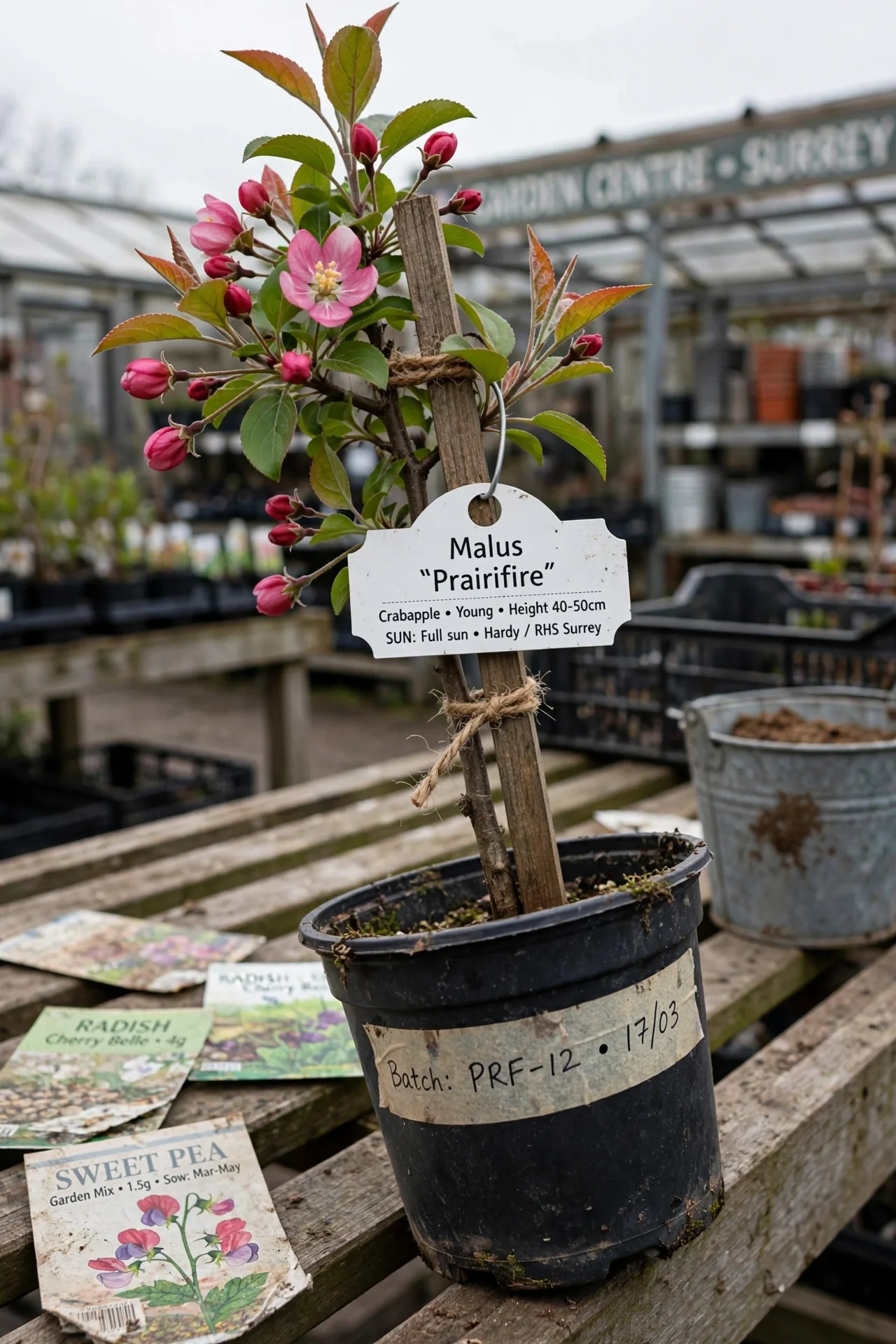
Edge case: The crabapple cultivars ‘Prairifire,’ ‘Professor Sprenger,’ ‘Adams,’ ‘Indian Magic,’ and ‘Sargent’ all carry documented resistance to cedar apple rust. However, resistance ratings from different university trials show cultivar-by-region variation. ‘Prairifire’ performs well against rust in Midwestern US trials but shows only moderate resistance in Southeastern trials where higher humidity increases disease pressure. Verify regional performance with your local extension office. For another common ornamental disease problem, see black spot on roses.
10. Tool Sanitation Protocol During Gall Removal
Best for: Branch 1 (All pruning activities on junipers and apples)
Threshold rule: Any time you prune a juniper with visible galls or an apple tree showing leaf lesions, disinfect cutting tools between every cut. The fungal mycelium inside infected tissue can transfer to healthy wood on pruner blades. Use a 70 percent isopropyl alcohol solution (or a household disinfectant spray containing at least 0.5 percent benzalkonium chloride). Dip or spray blades and allow a minimum 30-second contact time before the next cut. Alcohol is preferred over bleach because it is less corrosive to tool metal and does not require rinsing.
Constraint to understand: Tool sanitation prevents mechanical spread of the pathogen within your own trees and within a single pruning session. It does not reduce airborne spore pressure from neighboring properties. Sanitation is a necessary supplement to other controls but is not a standalone solution for airborne rust diseases. For turfgrass rust, which spreads via a different mechanism, see rust on turfgrass.
11. Biofungicide and Cultural Integration Program
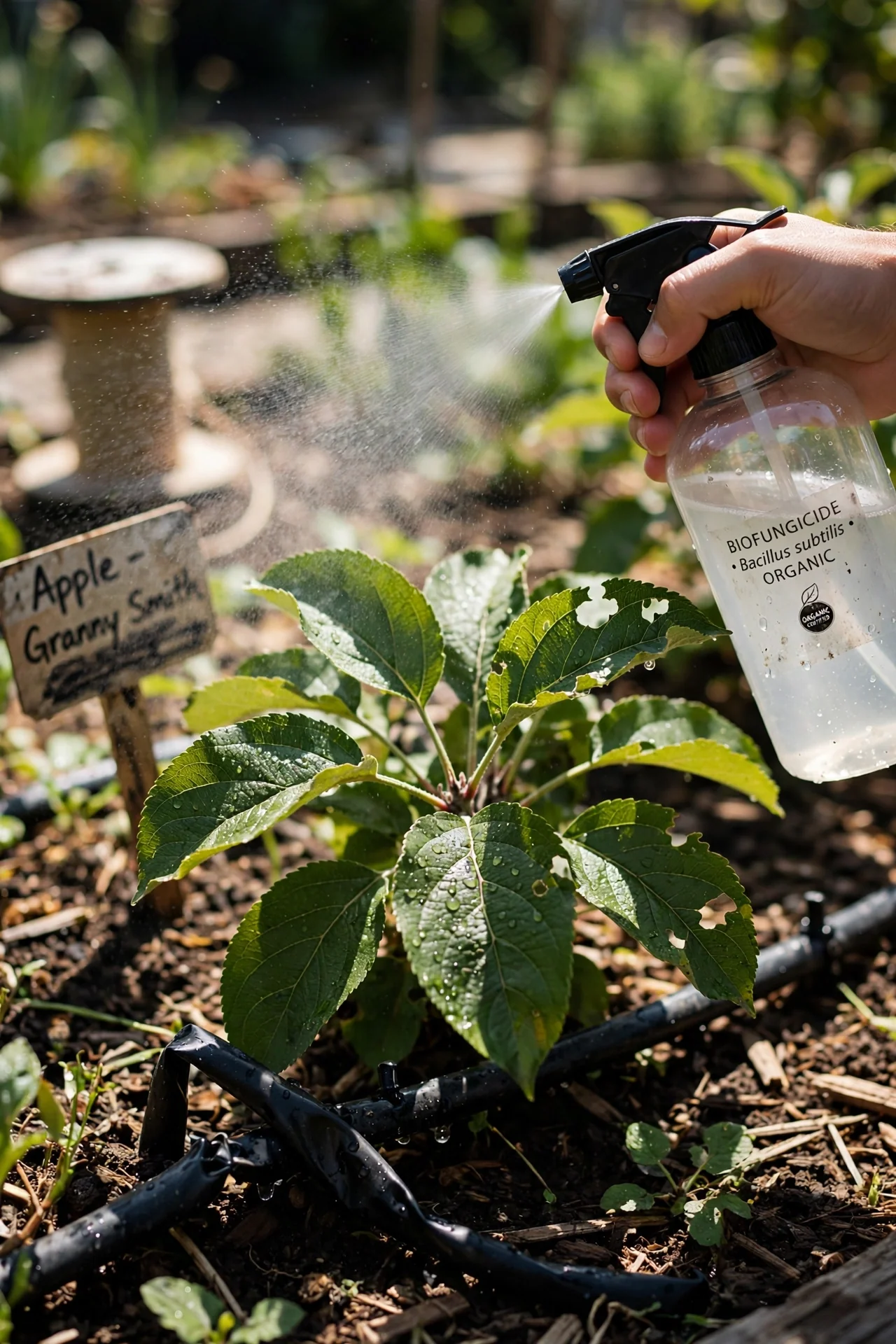
Best for: Branch 2 (Organic growers in low-to-moderate rust pressure regions)
How to deploy: Begin with bloom thinning to improve air circulation within the canopy. Remove roughly one-third of flower clusters on heavily blooming trees to reduce the density of susceptible tissue and speed leaf drying after rain. Follow with a biofungicide containing Bacillus subtilis or Streptomyces lydicus applied every 7 days from pink bud through first cover.
Reality check: University trials consistently show that biofungicides alone provide less complete rust suppression than DMI fungicides. This program is best suited to sites where (a) juniper density within 500 meters is low, (b) the apple variety carries partial resistance, and (c) you accept some level of leaf spotting as tolerable.
12. Managed Tolerance: When Doing Nothing Is a Valid Strategy
Best for: Branch 1 or 2 (Low-value trees, resistant varieties, or ornamental-only settings)
What it is: A conscious decision to accept the presence of cedar apple rust without active intervention, based on the observation that many trees tolerate infection without meaningful long-term harm.
When it applies: On junipers, galls are almost never a health threat; they are an aesthetic concern only. On apple trees, resistant varieties like Liberty and Enterprise may show minor leaf spotting in high-pressure years but rarely defoliate or lose fruit quality. On ornamental crabapples grown for spring flowers rather than fruit, leaf spotting in July and August has no impact on the following year’s bloom display. The decision to tolerate is economically rational when the cost of treatment exceeds the value of the damage prevented. A fungicide program costing USD 40 to USD 80 per season in product and labor that protects a tree producing USD 20 worth of apples is a net loss; redirect that effort to soil fertility, pruning, or a resistant replacement tree.
One rule to follow even under tolerance: Rake and remove all fallen leaves from under apple trees each autumn. The sexual stage of the rust fungus does not complete on apple leaves, but other pathogens like apple scab do overwinter in leaf litter, and general sanitation reduces total disease pressure on the tree.
Starter Stack (What to Choose First)
Branch 1 Starter Stack: Juniper Aesthetics
Combine Item 1 (Gall Pruning) with Item 10 (Tool Sanitation). Prune all visible galls during one dormant-season session, disinfecting between cuts. Total time investment: roughly 30 to 90 minutes per tree depending on gall density. Cost: under USD 15 for alcohol and pruner maintenance. This stack removes the current season’s inoculum source and prevents self-reinfection. Do not expect it to eliminate rust if junipers exist on neighboring properties, but it resolves the cosmetic issue on your own trees.
Branch 2 Starter Stack: Apple Fruit Protection
Combine Item 3 (Myclobutanil Spray) with Item 6 (Precision Timing). Purchase a myclobutanil product labeled for fruiting apples, calibrate your sprayer to deliver full leaf coverage, and apply at pink bud, petal fall, and first cover. Total seasonal cost: approximately USD 25 to USD 45 for a single standard-size tree over three applications. This is the minimum effective chemical program for a susceptible variety in moderate rust pressure. If you garden in the UK or EU, verify myclobutanil registration status; it has faced regulatory restrictions in some jurisdictions.
Branch 3 Starter Stack: Prevention at Planting Time
Combine Item 2 (Resistant Apple Varieties) with Item 9 (Resistant Crabapples). Before purchasing any tree, cross-reference the cultivar against at least two university extension lists of rust-resistant varieties for your specific region. Liberty, Enterprise, and Redfree are the most broadly adapted eating-apple choices for North America. For ornamental landscapes, ‘Prairifire’ and ‘Professor Sprenger’ crabapples provide spring flower display without requiring fungicide support. One-time cost: the price difference between a susceptible and resistant bare-root tree is typically USD 5 to USD 15, a fraction of one season’s spray program expense.
When This Won’t Work
Failure condition 1: The gall source is beyond your control radius. If junipers within 800 meters of your apple trees are on property you cannot access or influence (municipal parks, neighbor’s yards, conservation land), then host removal (Item 4) and gall pruning (Item 1) cannot eliminate the inoculum source. In this scenario, you are limited to host protection measures: resistant varieties, fungicide programs, or tolerance. Recognize this early to avoid spending seasons removing your own junipers only to see rust return from airborne spores across the fence line.
Failure condition 2: The apple variety is genetically susceptible under high humidity. Cultivars like Jonathan, Rome Beauty, and Golden Delicious will develop rust infections even with a full myclobutanil spray program if spring rainfall exceeds long-term averages and you miss a single application during peak spore release. The alternative action: graft onto a resistant rootstock, replace the tree, or accept that perfection is not achievable and focus on keeping the tree healthy enough to crop rather than blemish-free.
If your tree is already stressed from other factors such as poor drainage, the additional defoliation from rust can compound damage significantly. Review our guide on overwatering symptoms to rule out root-zone problems before investing heavily in fungicide programs.
Choosing the Right Option for Your Situation
Budget Threshold
If your total annual orchard budget is under USD 50, skip all synthetic fungicide programs. Choose Item 2 or Item 9 (resistant variety selection) if you are planting new trees. For existing susceptible trees, use Item 1 (gall pruning on accessible junipers) and Item 12 (managed tolerance). A single myclobutanil product plus a pump sprayer alone costs USD 40 to USD 70 upfront, exceeding this threshold before the first application.
Time Threshold
If you can allocate at most one weekend afternoon per season to rust management, restrict yourself to Effort Score 1 and 2 items only. This means selecting resistant varieties, removing accessible junipers, or practicing managed tolerance. Weekly spray programs (Effort Score 4 and 5 items) demand roughly 30 to 60 minutes per application plus mixing time, which over a six-week infection window consumes six to twelve hours of seasonal labor.
Technical Constraint: Organic Certification
If your orchard is USDA-certified organic, you cannot use myclobutanil or propiconazole. Your options narrow to Item 5 (copper soap), Item 8 (lime sulfur), Item 11 (biofungicide program), or Item 2/9 (resistant varieties). Among these, resistant variety selection is the only path that achieves rust control comparable to synthetic fungicides without requiring weekly reapplication. Copper and lime sulfur suppress rust but rarely provide complete control on highly susceptible cultivars.
Yes/No Checklist:
1. Can you identify every juniper within 500 meters of your apple tree? (If no, prioritize host protection over host removal.)
2. Do you know your apple variety’s rust susceptibility rating? (If no, look it up before choosing any treatment.)
3. Are you willing to spray every 7 to 14 days for 6 to 8 weeks? (If no, eliminate Effort Score 4 and 5 items.)
4. Is your goal fruit quality or just tree survival? (If survival only, managed tolerance may be sufficient.)
Expert Q&A
Can cedar mulch spread cedar apple rust to my apple trees?
No. Cedar apple rust requires living juniper tissue to produce galls and spores. Mulch made from chipped Eastern red cedar wood or bark does not harbor viable Gymnosporangium fungus. The galls form on living twigs and branches, not on heartwood or bark. You can safely use cedar mulch around apple trees without increasing rust risk.
How do I tell cedar apple rust apart from cedar-quince rust on my tree?
Cedar apple rust galls on junipers are round, woody, and golf-ball sized, producing orange spore horns only in spring. Cedar-quince rust produces elongated, swollen cankers on twigs that ooze orange gelatinous material and remain infectious for four to six years rather than one. On apple fruit, quince rust lesions extend deep into the core, while cedar apple rust spots remain superficial.
Does spraying junipers with fungicide prevent the disease on my apples?
Spraying junipers with a protectant fungicide between June and September (when they receive spores from apple leaves) can reduce gall formation on the juniper side of the cycle. However, this approach requires accessing large, often tall trees and achieving thorough coverage. It is generally less practical than spraying the smaller apple trees during their shorter infection window in spring.
Will a single infected apple tree spread rust to my other apple trees?
No. Cedar apple rust cannot spread from apple to apple. The spores produced on apple leaves in late summer can only infect junipers. The fungus must complete the juniper phase of its life cycle before it can reinfect apples. This is why the disease requires both hosts in proximity and why removing one host type breaks the cycle.
What temperature stops cedar apple rust spore production?
Spore release from juniper galls requires sustained temperatures above approximately 8 degrees Celsius (46 degrees Fahrenheit) combined with free moisture from rain or heavy dew. Once temperatures consistently exceed 30 degrees Celsius (86 degrees Fahrenheit) and humidity drops, spore viability declines rapidly. The infection window naturally closes in early summer as both temperature and the exhaustion of mature galls limit spore availability.
Conclusion
The single most leveraged decision in managing cedar apple rust is choosing which host you are defending. Most resources default to apple-protection advice without acknowledging that juniper owners face an entirely different cost-benefit equation: dramatic galls that pose almost no risk to tree health. The number one mistake is launching a full fungicide program before confirming that your apple variety actually needs it and that you have the time budget to maintain a six-to-eight-week spray schedule through spring rains.
If you take one action after reading, identify your apple or crabapple cultivar and check its rust resistance rating against a university extension database for your region. You may discover that your tree is already resistant and that the leaf spots you observed are something else entirely, such as a physiological disorder or a different foliar disease. For guidance on distinguishing rust from other apple leaf problems, consult our article on leaf curl in peach, which covers diagnostic principles applicable across tree fruit species.