
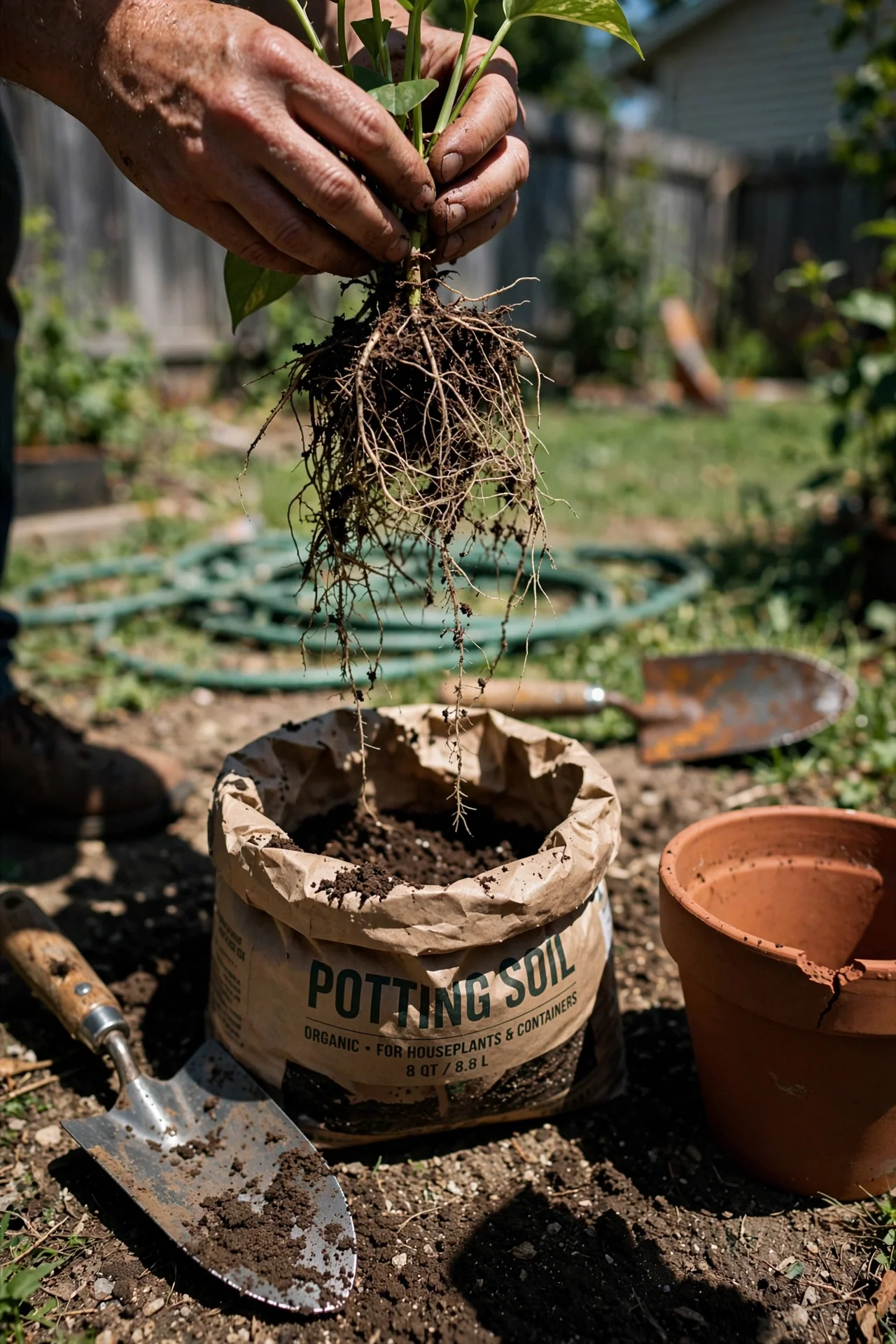
Roots drown in silence. That is the mechanism behind nearly every failed houseplant. Most potting soil advice focuses on drainage speed, but the real variable is root-zone oxygen. A mix that holds water longer can still work if enough air moves through it. A mix that drains fast can still suffocate if its particles are too fine and compact. The question is not “does it drain well” but “does the root zone stay aerobic between waterings.”
This guide covers commercial pre-mixed bags, base blends you amend, and from-scratch recipes organized by plant type. What is excluded: outdoor garden soil, raised-bed vegetable mixes, and pure hydroponic nutrient solutions. The geographic scope spans North America, the UK, Australia, India, the Philippines, Germany, and the Netherlands. Availability notes are included where regional differences matter.
You will finish this article knowing which of three decision paths fits your watering habits and plant collection, which individual ingredients actually change how much air reaches roots, and how to pick or build a mix matched to the specific genera on your shelf.
Bottom line: The right potting soil is the one that stays aerated at the watering frequency you actually maintain, not the one with the highest rating on a retail site.
The Yield Grid Decision Grid
Start here. Choose the one branch that describes your situation most accurately. Do not try to blend branches. Each branch leads to a specific subset of recommendations later in this list.
Branch 1: Scheduled Waterer, Dry Indoor Air. You water on a calendar (every 7 to 10 days) and your home runs heated or air-conditioned air most of the year. Soil needs moderate water retention with enough fine particles to hold moisture between scheduled waterings. Particle size tends toward the smaller end: peat, coir, fine compost. Recommended: Items 1, 5, 7 below.
Branch 2: Overwaterer or Humid Climate. You check soil with your finger and water when the top inch feels dry, but pots sometimes stay wet longer than expected. Or you live in a coastal, tropical, or monsoon-affected region where ambient humidity slows evaporation. Soil needs high macro-porosity: chunky bark, large perlite, coarse sand. The goal is maximum air-filled pore space after drainage. Recommended: Items 2, 3, 4 below.
Branch 3: Specialist Grower, Single-Plant Focus. You grow a specific genus that has well-documented soil preferences, or you are setting up a controlled environment (terrarium, grow cabinet, semi-hydroponic reservoir). Soil needs precise particle grading, specific pH ranges, or nutrient-free substrates. Recommended: Items 6, 8, 9, 10 below.
For a deeper breakdown of what each component contributes, see our guide to potting soil ingredients and their functions.
Quick Comparison Table
| Option | Key Mechanism | Best For | Decision Grid Branch | Effort Score (1-5) |
|---|---|---|---|---|
| 1. Peat-Based All-Purpose Mix | Fine particle moisture retention with added perlite | Most foliage houseplants in dry homes | Branch 1 | 1 |
| 2. Coir-Based Peat-Free Mix | Fibrous coir holds water while resisting compaction | Overwaterers; sustainable-choice buyers | Branch 2 | 1 |
| 3. Gritty Cactus & Succulent Mix | Coarse sand and gravel create large, fast-draining pores | Succulents, cacti, and other drought-adapted plants | Branch 2 | 2 |
| 4. DIY Chunky Aroid Mix | Bark chunks and large perlite maximize air-filled porosity | Monstera, Philodendron, Epipremnum, and climbing aroids | Branch 2 | 4 |
| 5. Fine-Textured African Violet & Begonia Mix | Peat-dominant blend with vermiculite for even moisture | Plants with fine, fibrous root systems | Branch 1 | 1 |
| 6. Organic Compost-Based Living Soil | Microbial activity and slow-release nutrient cycling | Heavy feeders; organic-only growers | Branch 3 | 2 |
| 7. Orchid & Epiphyte Bark Mix | Large bark pieces create air gaps around thick roots | Phalaenopsis, Cattleya, Dendrobium, and other orchids | Branch 1 | 2 |
| 8. Propagation Mix for Cuttings & Seeds | Sterile, low-nutrient, fine-textured for fragile new roots | Starting cuttings, germinating seeds | Branch 3 | 2 |
| 9. Carnivorous Plant Nutrient-Free Mix | Inert, acidic peat-perlite blend with zero added nutrients | Venus flytraps, pitcher plants, sundews | Branch 3 | 2 |
| 10. LECA & Semi-Hydroponic Setup | Clay aggregate wicks nutrient solution from a reservoir | Growers wanting soil-free pest reduction | Branch 3 | 5 |
1. Peat-Based All-Purpose Indoor Potting Mix
Best for: Branch 1
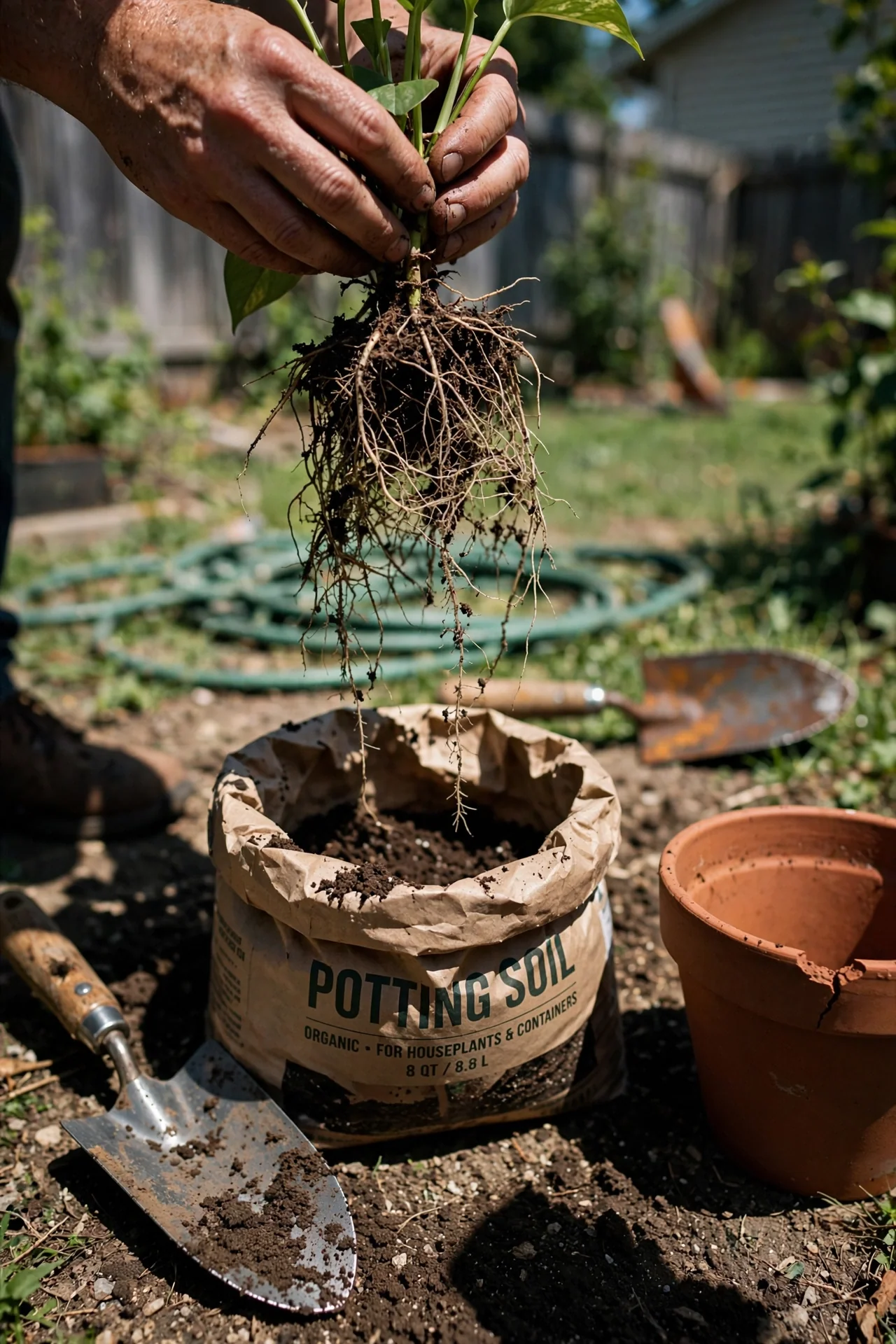
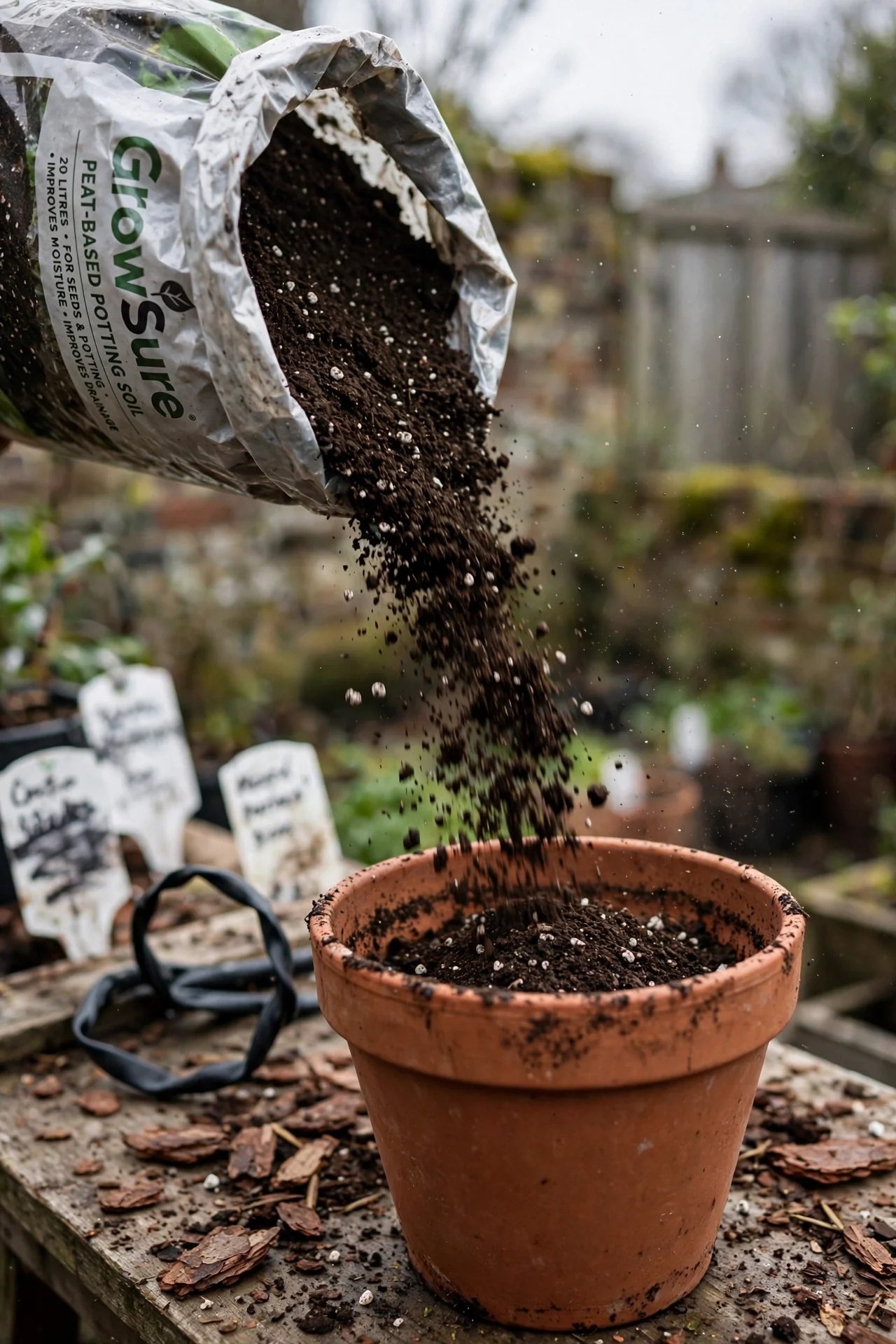
What it is: A commercially pre-mixed bag combining sphagnum peat moss (roughly 45 to 65 parts), horticultural-grade perlite (15 to 25 parts), and sometimes vermiculite plus a starter charge of slow-release fertilizer. The peat provides water retention; the perlite creates air channels.
Who it serves: Growers with mixed collections of pothos, spider plants, peace lilies, dracaenas, and other common foliage houseplants who want a single bag for everything. Also the right starting point for anyone in a dry indoor climate who waters on a weekly schedule.
The mechanism that matters: Peat holds up to 20 times its weight in water, but its acidity (pH 3.5 to 4.5) requires manufacturers to add dolomitic limestone. A quality all-purpose mix will list lime on the label. Without it, the pH drifts low enough to lock out nitrogen and phosphorus within a few months of watering.
Common mistake: Assuming all bags labeled “potting mix” are the same. Some budget formulations substitute styrofoam beads for perlite or use composted wood fines instead of peat. These alternatives break down faster, reducing air space and increasing the risk of root rot within a single growing season.
2. Coir-Based Peat-Free Indoor Mix
Best for: Branch 2
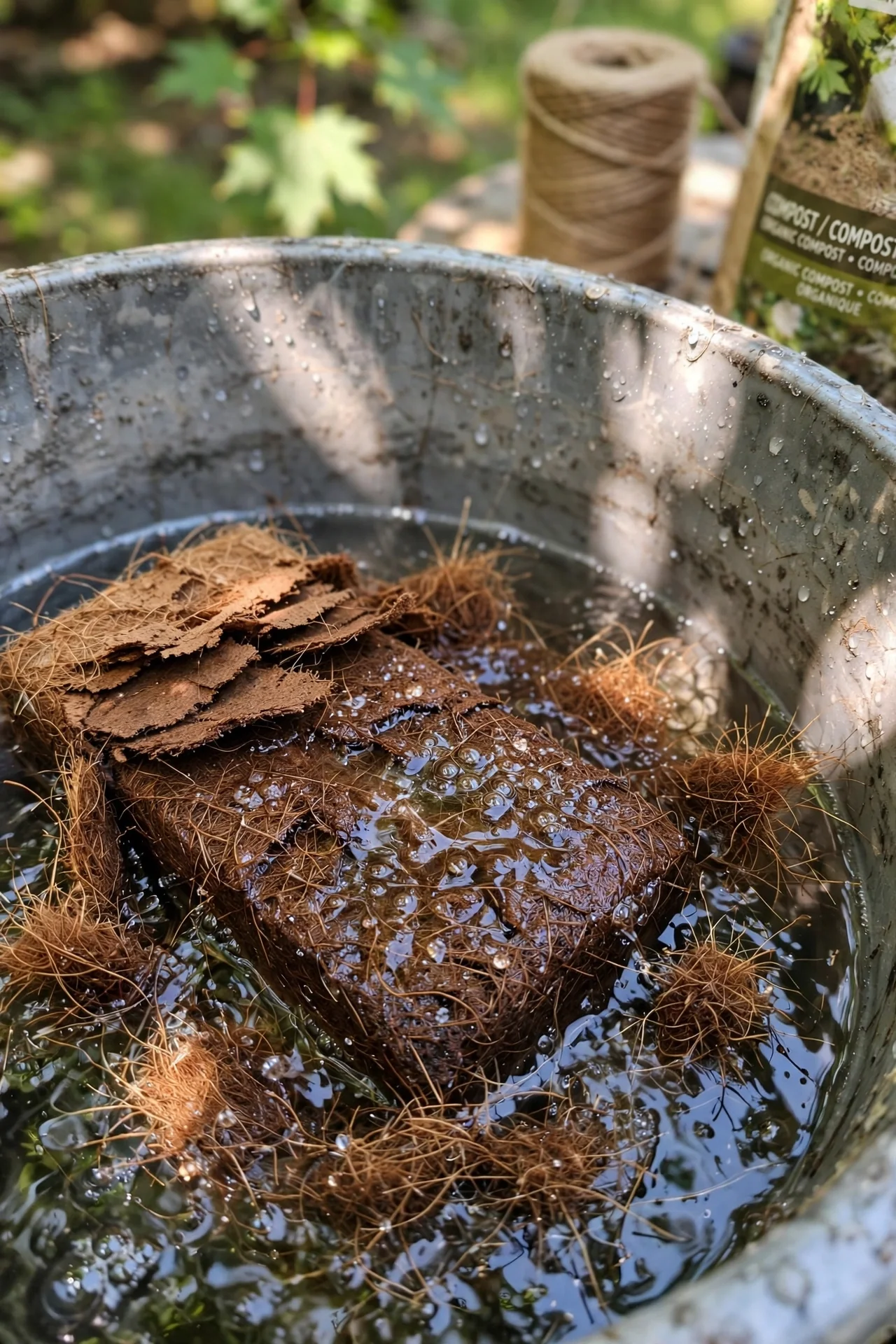
When to use: Coir (coconut husk fiber) has a naturally neutral pH of 5.8 to 6.5, making it easier to manage than acidic peat. It resists compaction better over time, maintaining air space even after repeated watering cycles. This makes it a better forgiving base for growers who tend to overwater.
When to skip: Coir can be high in potassium and sodium if not properly washed. Low-quality coir may also wick unevenly. Check the bag for “buffered” or “washed” on the label. If you use unbuffered coir, rinse it thoroughly and soak in a calcium nitrate solution before potting to displace excess salts.
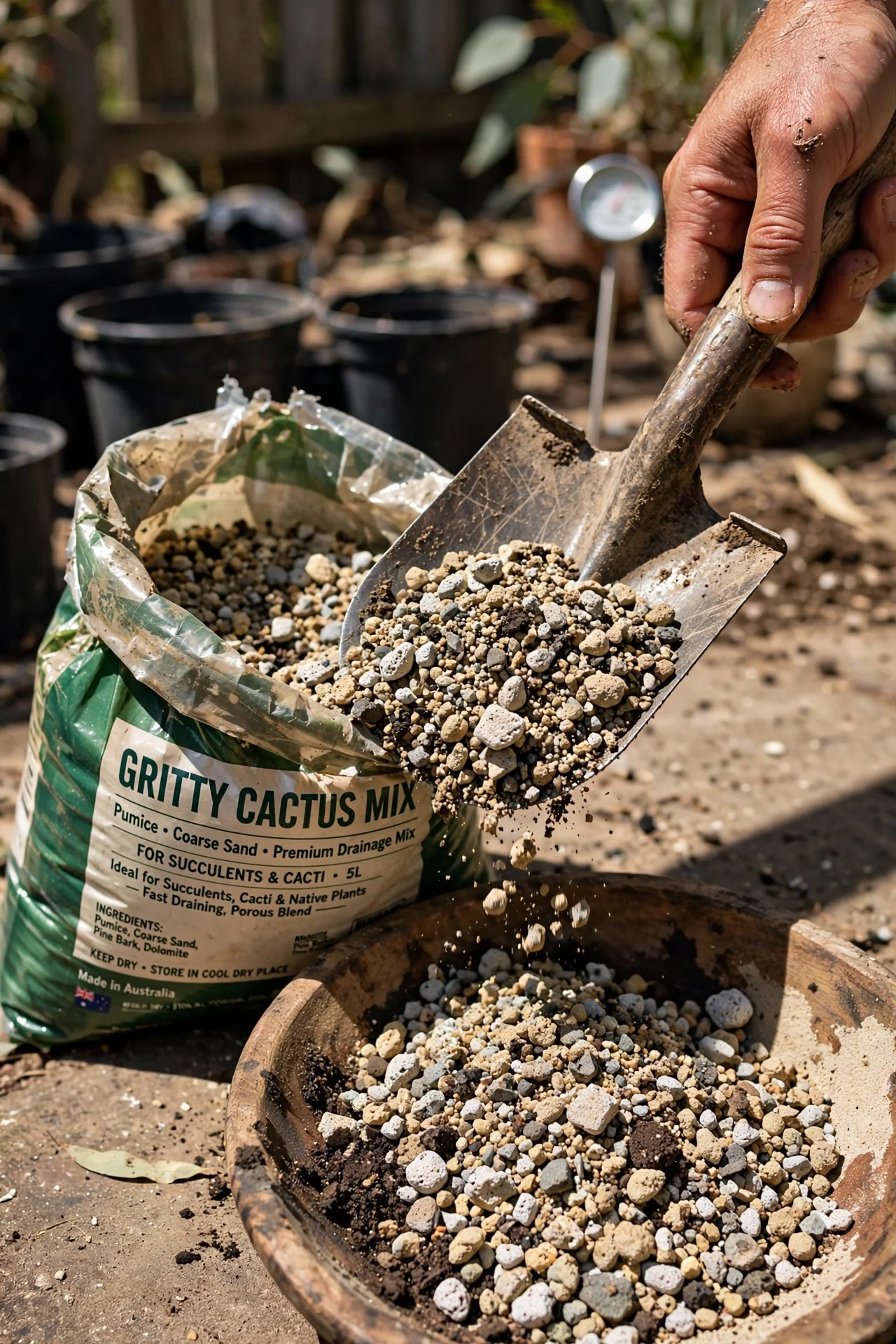
3. Gritty Cactus & Succulent Mix
Best for: Branch 2
The threshold rule: A functional succulent mix must contain at least 40 to 50 parts coarse mineral aggregate by volume. This means coarse sand (1 to 3 mm grain size), poultry grit, crushed granite, or pumice. The particle size threshold is critical. Fine sand (under 0.5 mm) fills pore spaces and reduces drainage, defeating the purpose. If the bag feels heavy and smooth when squeezed dry, the mineral fraction is too fine.
Adjustment for humid climates: In regions like coastal Australia, the Philippines, or the southeastern US, increase the mineral fraction closer to 60 parts and reduce any organic component to 40 parts. The added humidity slows evaporation, so the mix must drain faster to avoid prolonged saturation. For more on choosing between amendment options, see our comparison of perlite and pumice for drainage.
Edge case: Some jungle cacti (Schlumbergera, Rhipsalis) evolved in humid forest canopies, not deserts. They need higher organic content (closer to 50 parts peat or coir) than desert cacti. Treat holiday cacti as Branch 1 plants, not Branch 2.
4. DIY Chunky Aroid Mix
Best for: Branch 2
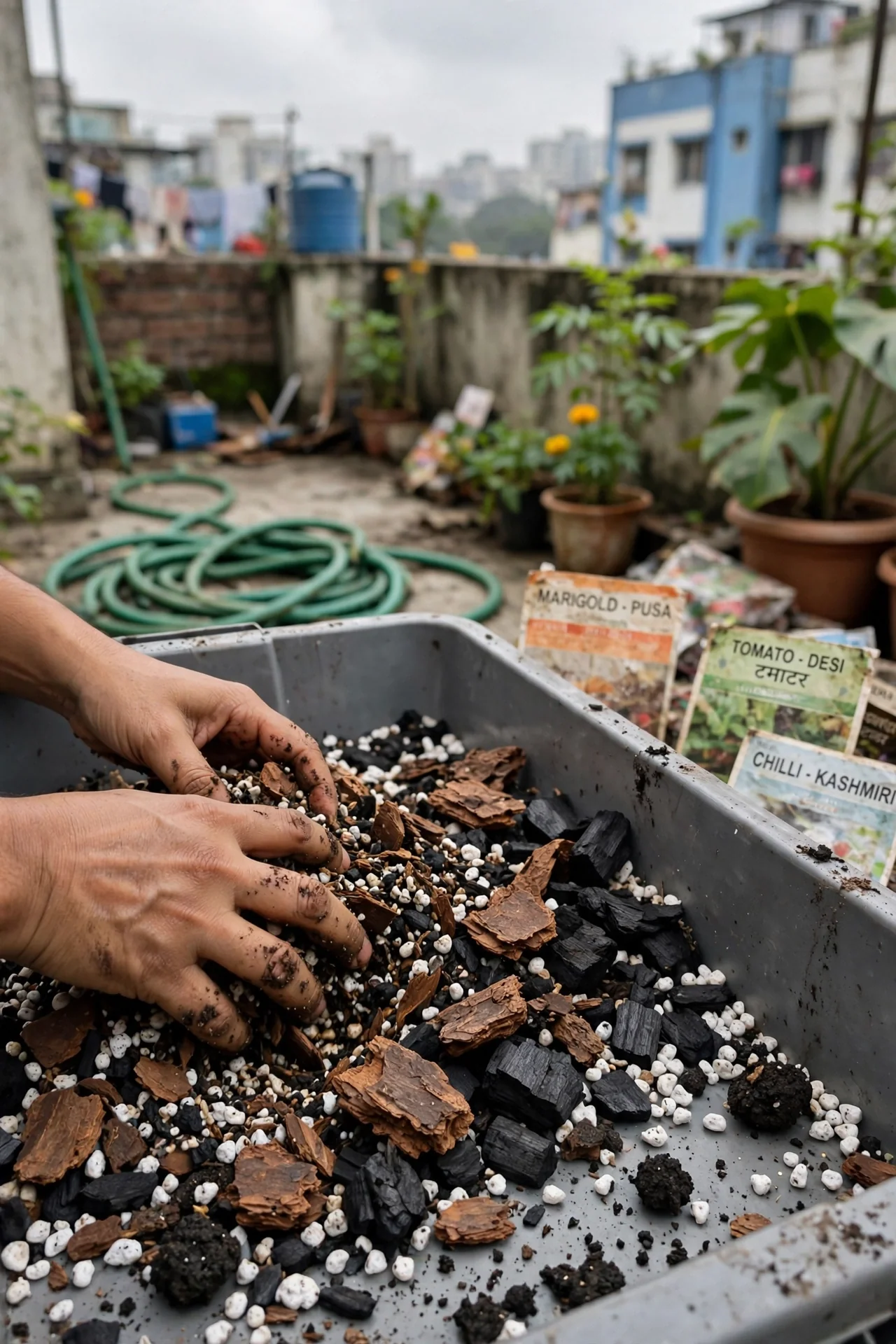
The 10-minute workflow: Gather four ingredients: orchid bark (medium grade, roughly 10 to 20 mm pieces), large-grade perlite (grade 3 or 4), horticultural charcoal (rinsed), and coco coir or peat as the moisture-holding base. Combine in a large bin using roughly equal parts of each by volume. Adjust the bark fraction upward if your home stays humid; increase coir if your air is dry.
Why this works: Aroids (Monstera, Philodendron, Epipremnum, Anthurium) are epiphytic or hemiepiphytic in the wild. Their roots climb tree trunks and are adapted to intermittent rainfall with rapid drying. Chunky bark creates large, irregular air pockets that mimic the bark crevices these roots naturally colonize. Fine soil compacts around aroid roots and triggers root rot within weeks of overwatering.
Upgrade option: Add worm castings at roughly 10 parts of the total volume for a slow-release nutrient source that does not increase water-holding capacity the way compost does. For a detailed recipe breakdown, see our aroid soil mix recipe with ratio options.
5. Fine-Textured African Violet & Begonia Mix
Best for: Branch 1
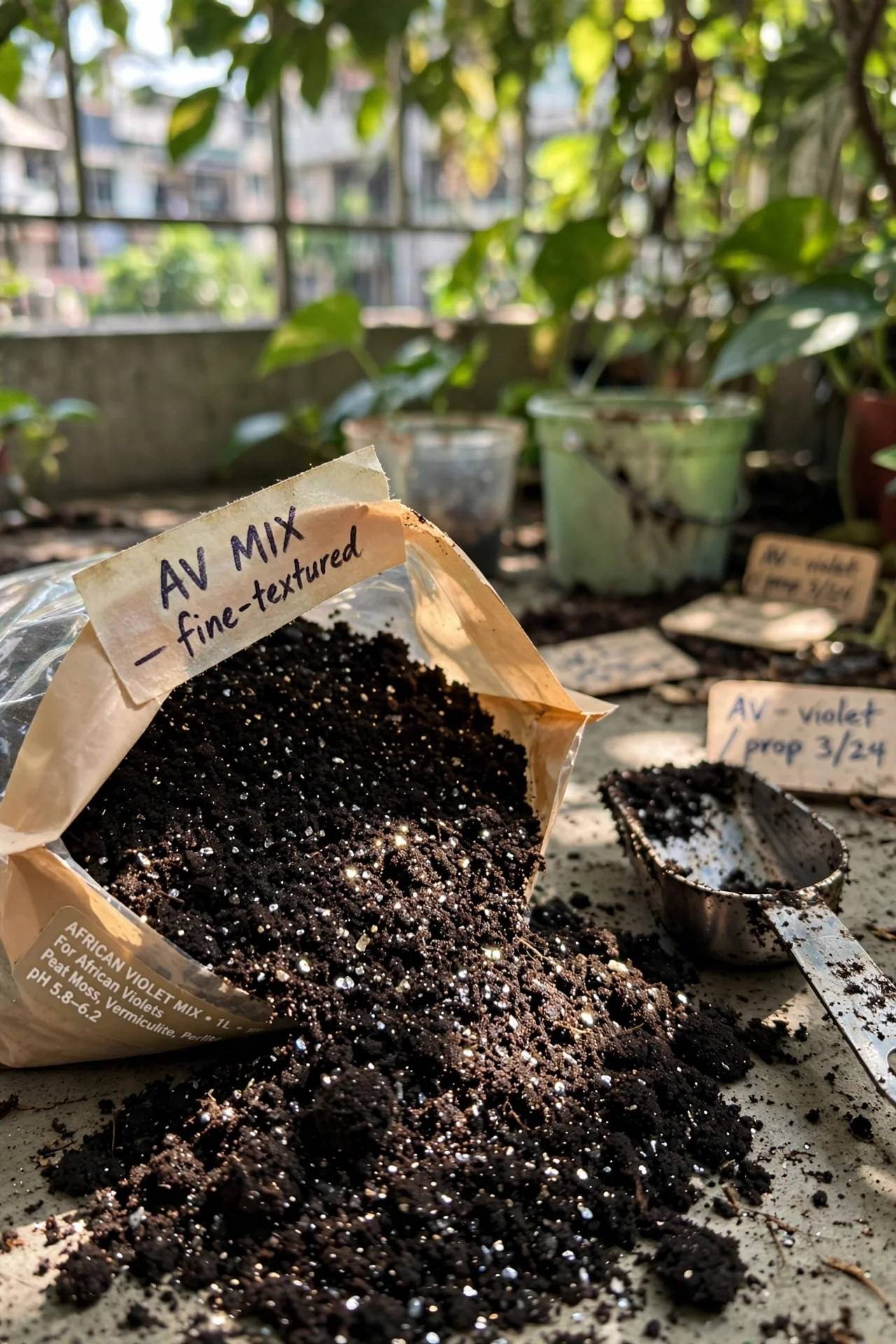
What it is: A peat-heavy blend with vermiculite as the primary aeration amendment instead of perlite. Vermiculite holds water inside its layered mineral structure while perlite repels it. This gives the mix a consistent, even moisture profile that suits plants with fine, hair-like roots that cannot penetrate chunky substrates.
The mistake to avoid: Using a chunky aroid mix for African violets. Their fine roots dessicate in large air pockets and will not reach the moisture held deep in bark pieces. The root mass shrinks, the plant wilts, and the grower assumes underwatering is the problem. The reverse problem applies equally: fine mixes suffocate thick aroid roots.
6. Organic Compost-Based Living Soil
Best for: Branch 3
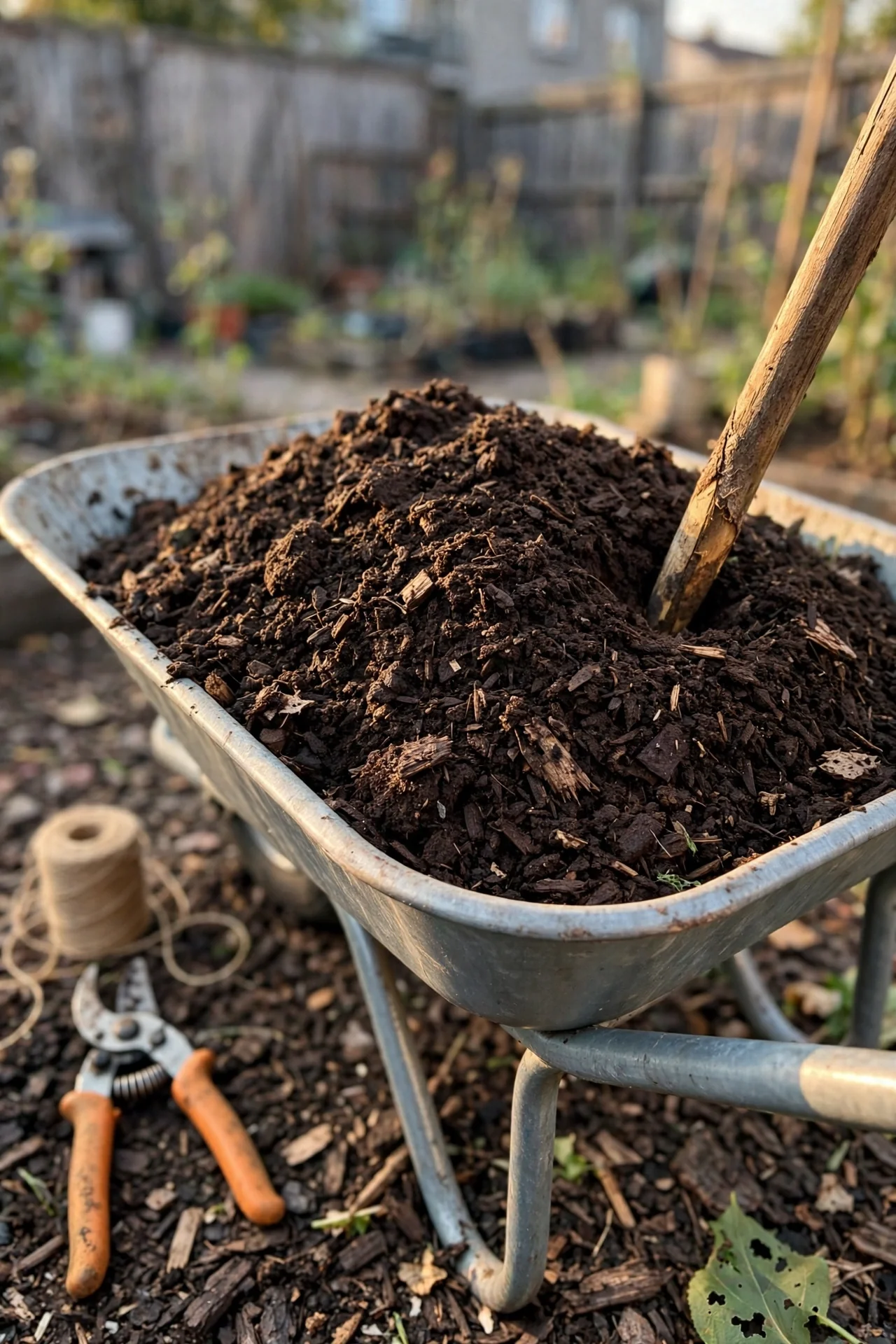
When to use: This approach suits growers committed to organic methods who grow heavy-feeding plants like Ficus, Alocasia, or flowering tropicals. A compost-based mix supports a living microbial community that mineralizes nutrients slowly, reducing the need for frequent liquid feeding.
When to skip: Compost continues decomposing in the pot. Over 6 to 12 months, the particle structure collapses, air space decreases, and the mix becomes denser. This is not a set-and-forget option. It requires repotting or refreshing more frequently than inert peat or coir blends. If you repot less than once a year, choose a mix with a higher mineral fraction instead. For understanding how organic amendments interact with feeding routines, see our guide to organic fertilizer for houseplants.
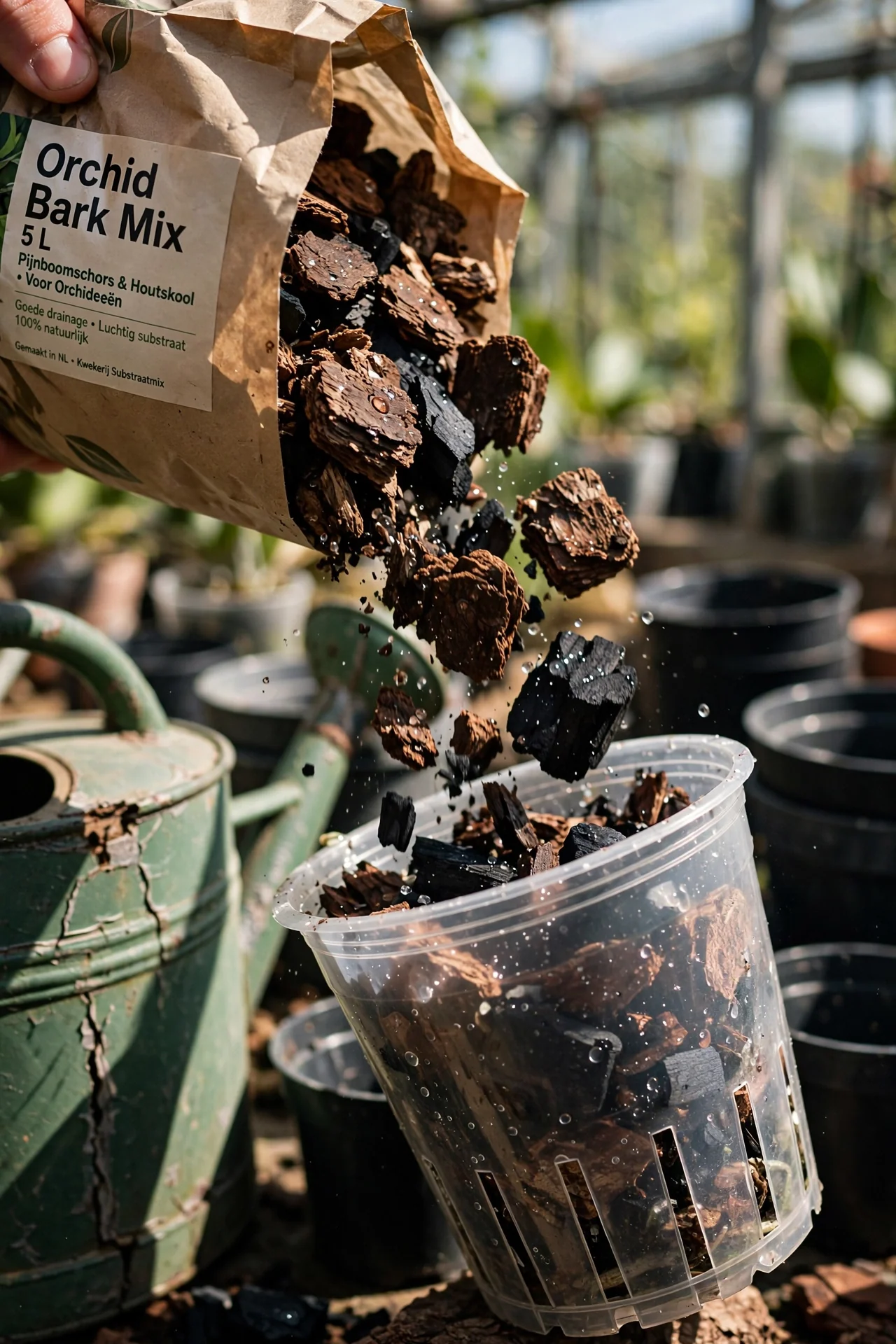
7. Orchid & Epiphyte Bark Mix
Best for: Branch 1
The threshold that matters: Orchid roots need a wet-dry cycle where the medium dries to roughly 60 to 70 parts of its water-holding capacity before rewatering. Bark achieves this because water coats the outer surface of each piece while the interior stays relatively dry, creating air channels between pieces even when the pot has just been watered.
Particle size adjustment: For Phalaenopsis and other thick-rooted orchids, use medium-grade bark (15 to 25 mm pieces). For fine-rooted orchids like Oncidium or Miltonia, use small-grade bark (8 to 15 mm) or add roughly 20 parts sphagnum moss to increase moisture contact with the thinner roots.
Degradation note: Bark breaks down over 18 to 24 months. As it decomposes, the pieces soften, collapse, and fill the air spaces that roots depend on. Repot orchids on this schedule regardless of whether the plant appears root-bound. Delaying invites root rot from the inside of the pot outward.
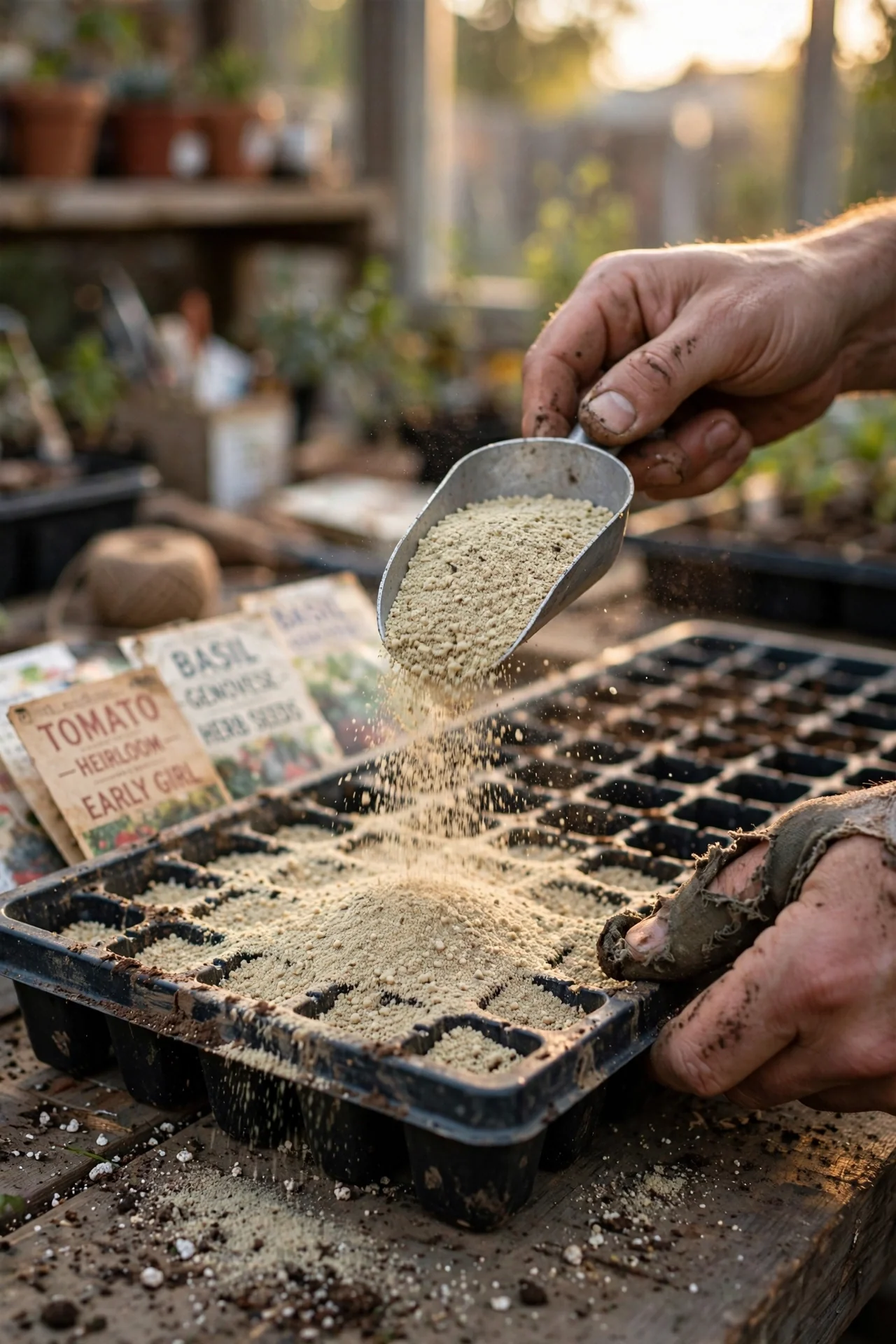
8. Propagation Mix for Cuttings & Seeds
Best for: Branch 3
Steps in 10 minutes: Combine 50 parts sieved peat or coir (pass through a 6 mm screen to remove large fibers), 25 parts fine perlite or vermiculite, and 25 parts coarse sand or fine pumice. Moisten until the mix holds a loose ball when squeezed but crumbles when poked. Fill clean cell trays or small pots.
Why sterile matters: New roots and emerging seedlings have no defense against damping-off fungi (Pythium, Rhizoctonia) that persist in reused soil or compost. A nutrient-free, sterile starting mix removes the pathogen’s food source. For more on cutting-specific substrates, see our propagation potting mix guide.
9. Carnivorous Plant Nutrient-Free Mix
Best for: Branch 3
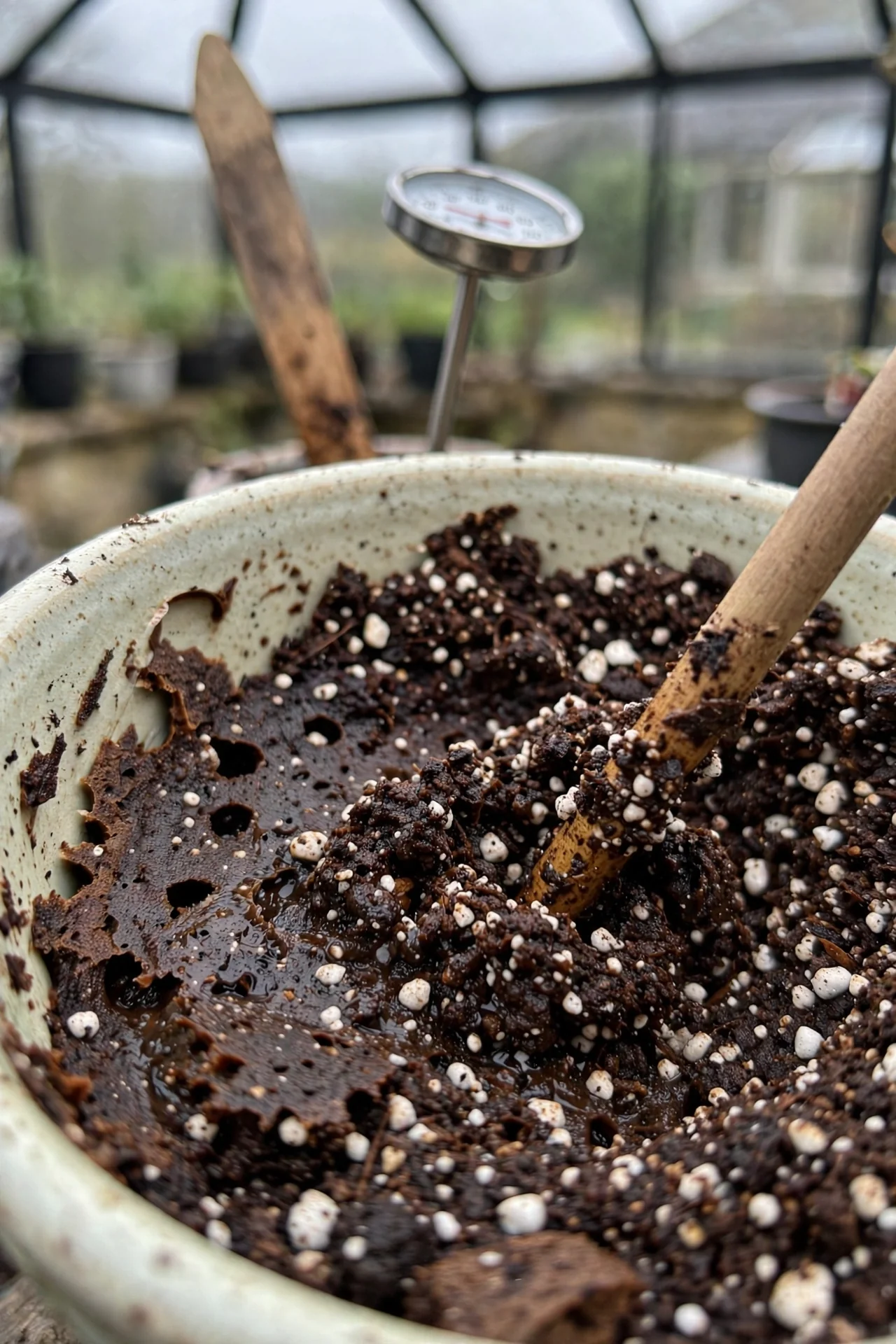
What it is: A simple blend of sphagnum peat moss and coarse perlite or silica sand, usually at a ratio near 50:50. The defining feature is what is absent: no compost, no fertilizer, no added nutrients of any kind. Carnivorous plants evolved in nutrient-poor bogs and obtain nitrogen from trapped insects. Fertilizer in the soil burns their roots.
The water constraint few guides mention: This mix must be kept consistently moist using rainwater, distilled water, or reverse-osmosis water only. Tap water in most municipal systems contains dissolved minerals (calcium, magnesium) that accumulate in the peat over weeks and raise the pH above the acidic range these plants require. If your only water source is treated tap water, reconsider growing carnivorous plants in this mix entirely. For species-specific soil requirements, see our carnivorous plant soil guide.
10. LECA & Semi-Hydroponic Setup
Best for: Branch 3
The threshold commitment: LECA (lightweight expanded clay aggregate) replaces soil entirely. Clay pebbles sit in a pot with a water reservoir at the bottom. The pebbles wick nutrient solution upward through capillary action. Roots grow into the spaces between pebbles where they access both moisture and air simultaneously. This is the highest-effort option in this list for a reason: it requires weekly reservoir monitoring, pH adjustment to keep the solution between 5.5 and 6.5, and a complete hydroponic fertilizer that provides all macro and micronutrients.
The transition cost: Moving a soil-grown plant to LECA means the existing soil roots will die and be replaced by water-adapted roots. The plant will decline visibly for 2 to 6 weeks during this transition. Some species, particularly those with thick storage roots, may not survive the process. Start with a cutting propagated in water, not a mature soil-grown plant, if you want to test this method.
Regional availability note: LECA is widely available under brand names like Hydroton, Clay Pebbles, and Plagron in the US, UK, Europe, and Australia. In India and the Philippines, it is often sold through hydroponic specialty suppliers rather than general garden centers. Expect to pay roughly 800 to 1,500 INR for a 5-liter bag in India, or 15 to 25 AUD in Australia.
Starter Stack (What to Choose First)
Branch 1 Stack: Scheduled Waterer, Dry Air
Start with a peat-based all-purpose mix (Item 1) as your default for all common foliage plants. Add an African violet mix (Item 5) for any fine-rooted flowering plants in your collection. Together these cover the vast majority of houseplants found in typical home collections. Cost estimate: roughly $12 to $22 USD for two bags that will repot 15 to 25 medium-sized plants. Time investment: under 10 minutes per repotting session.
Branch 2 Stack: Overwaterer or Humid Climate
Start with a coir-based peat-free mix (Item 2) as your general-purpose base, then keep a bag of gritty cactus mix (Item 3) for succulents. The coir base resists compaction through repeated wet-dry cycles, while the gritty mix handles plants that need truly fast drainage. Cost estimate: roughly $14 to $28 USD. If you grow aroids, add the DIY chunky mix (Item 4) ingredients for an additional $18 to $35 USD upfront, with enough raw materials for 6 to 10 batches.
Branch 3 Stack: Specialist Grower
This branch is modular. Pick the two items that match your specific plant focus. For a carnivorous plant grower, that means the nutrient-free mix (Item 9) plus the propagation mix (Item 8) for starting new plants from divisions. For a semi-hydroponic grower, start with LECA (Item 10) and keep a bag of organic living soil (Item 6) for any plants that struggle with the transition. Cost estimate for LECA setup: roughly $40 to $75 USD including pebbles, hydroponic fertilizer, pH test kit, and suitable pots with reservoirs.
When This Won’t Work
Failure condition 1: The pot has no drainage hole. No potting mix, regardless of how well it is formulated, can prevent root rot in a pot with no exit for excess water. Water accumulates at the bottom, fills all air spaces, and creates anoxic conditions within 48 to 72 hours of a thorough watering. The solution is not a different soil. It is a different pot, or using the no-hole container as a cachepot with a drained plastic pot nested inside.
Failure condition 2: The plant’s root system is already compromised before repotting. If roots are brown, mushy, or smell sour, a fresh bag of the best potting mix will not reverse existing rot. Trim dead roots back to firm, white tissue with sterilized scissors before repotting. Then pot into a mix one drainage tier coarser than the one you would normally select, because the reduced root mass cannot take up water as quickly as a healthy root ball.
Alternative action for both conditions: Fix the container problem or the root health problem first. Soil is the third variable, not the first. If you are storing opened bags between repotting sessions, see our guide to keeping potting soil fresh during storage.
Choosing the Right Option for Your Situation
Budget Threshold
Commercial pre-mixed bags (Items 1, 2, 3, 5, 7) run roughly $6 to $18 USD per 8-quart bag across the US, Canada, UK, and Australia. In India and the Philippines, imported brands cost more; local coir-based mixes are often 40 to 60 parts cheaper by volume. DIY options (Items 4, 9) have higher upfront costs for individual ingredients but yield more total mix per dollar spent, especially if you maintain more than 10 plants.
Time Threshold
If you have fewer than 2 hours per month for plant care, stay within Effort Score 1 or 2 options. Semi-hydroponic LECA (Effort Score 5) requires weekly reservoir checks, monthly pH monitoring, and periodic flushing to prevent salt buildup. That commitment is real and should not be underestimated.
Water Quality Constraint
If your tap water has total dissolved solids (TDS) above 200 ppm or a pH above 8.0, avoid peat-dominant mixes for acid-loving plants (Items 7, 9). The alkaline water will neutralize the peat’s acidity faster than lime can buffer it, causing nutrient lockout. Use coir-based mixes or switch to rainwater or distilled water for those specific plants.
Checklist:
Is your pot drilled? Yes / No
Are the roots firm and white? Yes / No
Do you water on a schedule or by feel? Schedule / Feel
Is your tap water TDS above 200 ppm? Yes / No
If all four answers match the assumptions of your chosen branch, proceed. If any mismatch, revisit the Decision Grid above.
Expert Q&A
Can I reuse potting soil from a plant that died?
Reusing soil from a plant that died of root rot or fungal disease risks transferring pathogens to the next plant. If the plant died from underwatering or old age and the soil still smells earthy and crumbles freely, you can sterilize it by baking at 180 degrees Fahrenheit for 30 minutes, then amend with fresh perlite at roughly 25 parts by volume to restore drainage.
What is the difference between potting soil and potting mix?
“Potting mix” is technically a soilless blend of peat, coir, perlite, bark, and amendments. “Potting soil” may contain actual mineral soil or compost and is generally heavier. The terms are used interchangeably on most retail packaging, but for indoor containers, always choose a product labeled “potting mix” or “indoor potting mix” to avoid the compaction that mineral soil causes in pots.
How do I know if my soil drains well enough?
Water a freshly potted plant until water runs from the drainage hole. Time how long the saucer keeps collecting runoff. If water still drips after 2 to 3 minutes, the mix drains adequately. If runoff stops within 15 seconds and the surface looks wet but the saucer is nearly dry, the mix may be hydrophobic: peat has dried out and is repelling water. Soak the entire pot in a basin for 15 minutes to re-wet it.
Is peat moss bad for the environment?
Peat extraction from bogs releases stored carbon and destroys slow-regenerating ecosystems. Peatlands regenerate at roughly 1 mm per year, making peat a functionally non-renewable resource on human timescales. Coir is a renewable byproduct of coconut processing, though it carries its own environmental costs in water use and transport from tropical producing regions. There is no impact-free option; the choice is between different trade-offs.
Can I mix my own soil and still use slow-release fertilizer?
Yes. If your DIY mix includes compost or worm castings, reduce the slow-release fertilizer rate by roughly half the label recommendation. The organic fraction already supplies some nutrients. If your mix is purely inert (peat plus perlite only), use the full label rate. Over-fertilizing an already nutrient-containing mix causes salt buildup that burns root tips and shows as brown leaf margins within 2 to 3 weeks.
Conclusion
Potting soil fails when root-zone oxygen runs out, not when the brand is wrong. Every recommendation in this guide routes back to that single principle. The number one mistake is choosing a mix based on the plant’s name on the bag rather than matching the soil’s air-filled porosity to your actual watering behavior and indoor humidity.
The next step is simple: identify your branch, pick one item from the Starter Stack for that branch, and repot a single plant this week. Observe how long the soil stays moist. Adjust one variable at a time. For guidance on measuring soil moisture objectively before you water, see our guide to using soil moisture meters.