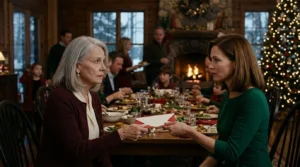
Elizabeth read the situation faster than anyone. She gathered seven friends into the couple’s living room and announced they were taking over: a meal rotation, mail screening, a media liaison, the errands. Friends do this, she said, and left it there. Looking around, the bride realized how isolated she and James had become trying to manage everything alone.
James, meanwhile, went looking for his biology. He joined a donor sibling registry, wrote to the cryo bank, and eventually received a clinical page about donor 447: a medical student, 24 at the time, six feet tall, brown hair, blue eyes, no major health problems. It made things harder, not easier, because he’d hoped for something that made the man feel like a person. Then a woman named Sue Napier messaged him, saying she was also donor 447’s child. Over the following months he met Sue, then Daniel and Kesha, and kept finding small echoes: the knuckle-cracking, the drumming fingers, the way they all tilted their heads when they listened.
Robert felt that pull and flinched. He and James had their first real fight in the half-finished nursery Robert was building in his new condo, with Robert accusing James of trying to replace him and James accusing Robert of being too passive with Briana for thirty years. It ended with both of them sitting on the floor admitting they were scared. The bride noticed something quietly unfair about it: biology gave James and Sue instant common ground, while Robert had to fight for every inch of his son’s trust. That’s what choice costs, and it’s also why it counts for more.
Helen took a plea deal for two years in prison plus restitution, and James watched the sentencing online and felt nothing, which worried him more than anger would have. His therapist said numbness after months of overload was normal. A few weeks later Elizabeth threw the bride a small baby shower, and for three hours she got to feel like an ordinary pregnant woman, right up until James unwrapped a tiny onesie reading “worth the wait” and started crying again.
Court Dates and One Early Morning
Briana’s trial opened when the bride was 22 weeks pregnant. Rosman Dean walked the jury through two years of identity theft, the embezzlement, the blackmail and the wedding sabotage, while Briana’s lawyer described a devoted mother who loved her son too much. The bride testified and held steady through cross-examination aimed at painting her as vindictive. James followed, describing the sabotage and the pregnancy-test break-in even as Briana shouted that she’d done it all for him and the judge warned her to stop. Robert brought binders of bank statements, medical records and registry confirmations, and Viola and other relatives described the blackmail they’d lived with.
After a few character witnesses who knew Briana only at surface level, the defense rested, and the prosecution closed by pointing out that love doesn’t explain stealing someone’s identity for two years. The jury deliberated for six hours. The verdict was guilty on every count: identity theft, wire fraud, tax evasion and embezzlement. Robert cried in the back row, James threw up in the parking garage, and the couple slept fourteen hours straight once they got home.
At sentencing two weeks later, the bride read a statement about her stolen identity and what the stress had done to her pregnancy. James read his, about growing up with a mother who made him doubt his own perceptions and about breaking the cycle for his daughter. Briana stood and screamed until two bailiffs dragged her out. The judge gave her eight years, with possible parole after five, plus restitution to her victims and mandatory counseling. It wasn’t the maximum, and the bride felt relief and disappointment in equal measure, but it drew a boundary around Briana’s reach.
Life slowly rearranged itself. Robert started dating a woman named Clare he’d met at a divorce recovery group. A check for $63,000 from Briana’s seized assets arrived, and the couple put it toward the baby’s college fund. Briana sent a long apology that sounded, for once, like real accountability, and James tucked it in a desk drawer to reread after the baby came. He also met Guiermo, his biological father, now a doctor in Portland with two kids, found him kind, felt no instant bond, and told his wife that Robert was his dad in every way that mattered.
At 34 weeks the bride’s blood pressure spiked and Lyanna ordered bed rest, so James took family leave. At 38 weeks her water broke at 3 a.m., and he drove five miles toward his office before she gasped that he was going the wrong way. Elizabeth met them in the hospital parking lot with the forgotten bag, and Robert arrived with coffee, invited into the delivery room because she wanted him there. Their daughter was born at 3:47 a.m., healthy and loud, and they named her Lyanna Viola, after the doctor who’d carried them through and the cousin who found the nerve to speak up. The next morning, pretending to sleep, the bride listened to James tell the baby about the grandmother in prison and the grandfather who’d chosen him every day.
Three days later they brought her home to an apartment full of meals and flowers, and Robert held his granddaughter, who shared none of his DNA and all of what counted. They were exhausted, scared, and a little baffled by how tiny she was. They were also, for the first time since the wedding, honestly happy.
Reflection: What sticks with me is how long the people around Briana mistook her control for love, James most of all, and how much quieter the family got once someone stopped pretending. Boundaries get called cruelty by exactly the people they were built to stop. And Robert’s thirty years of showing up taught James something no donor record could: being someone’s parent is something you keep doing, not a fact on a form.