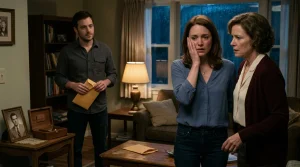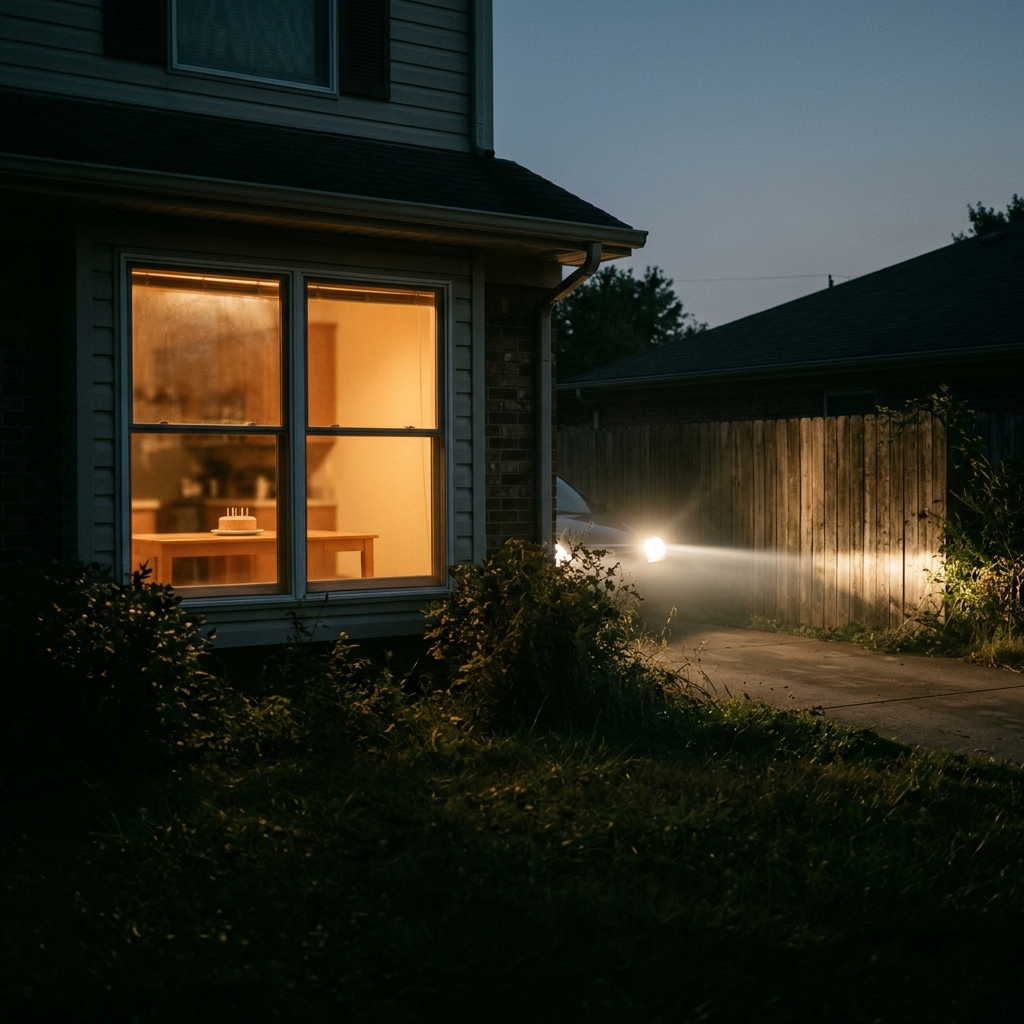
She asked whether he’d testify if it went to court. Nate said yes before she finished the question. Jordan had stood in that kitchen and, even while his father was hurting him, he hadn’t given Nate away. Telling the truth was the least Nate could do in return.
Tom was arrested at the casino during his next shift. His own workplace footage showed him leaving early, matching the video’s timestamp exactly, and coworkers remembered him checking his phone over and over before he stormed out. Detectives went to the hospital, where Jordan’s mother was being treated for broken ribs, deep bruising, and a concussion she’d been trying to hide. Shown the video and told her husband was already in custody, she finally broke down and gave a statement covering three years.
It was worse than anyone had guessed. Tom had made her hide her cancer diagnosis from her relatives and kept her from regular doctor visits, and he’d threatened to hurt Jordan more if she ever asked for help. His gambling had started after his promotion, and every loss at the casino came home with him as blame. They were bad luck, he’d say, they had ruined his life, and he took it out on them with his fists. That same day, Child Protective Services placed Jordan with his aunt, three towns over.
Relief came first, and the nightmares came second. Nate couldn’t stop replaying the footage in his head, so his mother took him to the school counselor, Derek, who explained that witnessing violence can register as trauma even when you aren’t the one being hurt. He taught Nate to breathe in for four counts and out for four, and to ground himself by naming five things he could see. Weeks later a text arrived from an unknown number: “It’s Jordan. Thanks for not running.”
Guilty on Every Count, and a Laugh at 6:30
Tom turned down a plea deal of fifteen years, apparently convinced he could argue that Jordan had provoked him. At his bail hearing the judge had watched Nate’s video in silence and refused to release him, saying a man who could do that to his own son was a clear danger to his family. So the case went to trial, and Nate would have to testify in person. He practiced with Derek, who played a hostile defense attorney and drilled him on sticking to what he had actually seen.
The courthouse hallway smelled like floor cleaner and old coffee. Tom’s parents stared at Nate as though he were the one who had done something wrong, and his mother stepped between them without a word until Detective Bradford led them away. Inside, Tom sat at the defense table in a dark suit and tie, looking like someone’s dad on his way to a business meeting. That scared Nate more than anger would have. Nate kept his eyes on the jury and told them everything. When the defense suggested the window angle might have fooled him, he calmly repeated what he had heard and seen, and then the video played in a completely silent room. One juror wiped her eyes, and the judge overruled the defense’s objections twice.
Jordan stayed away on his therapist’s advice, but his mother testified the next morning. She described three years of abuse with dates and details, showed photographs of bruises and a black eye, and explained how Tom controlled all of the money so she couldn’t leave. The defense hinted that her cancer medication might have clouded her memory. The prosecutor answered with her oncologist, who testified that Tom’s interference had dangerously delayed her treatment and that the fear at home had made her illness worse. After four hours of deliberation, the jury returned: guilty on every count.
At sentencing the judge handed down eighteen years, with no chance of parole for twelve. Tom turned in his chair and stared at Nate for about three seconds with pure hatred before the bailiffs took him out through a side door. In the hallway, Jordan’s mother wrapped Nate in a hug and said “You saved our lives” about ten times. She wore a natural-looking brown wig now, her face had color, and the silk scarf was gone. The divorce moved quickly, and the judge awarded her the house, custody of Jordan, and Tom’s pension, telling his lawyer he should consider himself lucky she wasn’t suing for more. Jordan texted that they were repainting every room and changing every lock. “We’re erasing him from every room.”
Four months after the party, Nate looked out a cafeteria window and saw Jordan standing by the school fence. He looked different. He had gained weight, his eyes stopped darting around, and his voice no longer cracked. He thanked Nate for not running, then pulled a crisp fifty-dollar bill from his wallet. “It’s not payment this time,” he said. “It’s an invitation. My aunt’s throwing me a real party.” Nate handed the bill back. “Keep it. I’ll come for free.” Jordan stared at the money for a long time before he laughed. “First time anyone’s ever said that to me.”
There were only six people at that second party, and every one of them was real. Jordan’s aunt had baked a cake, his mother sat by the window too tired to stand but smiling the whole time, and nobody looked at the clock. At 6:30, Jordan glanced at the door out of habit. Then he laughed, quiet and surprised, like he had just remembered his father wasn’t coming. Nate decided that sound meant more than the verdict. Months later Jordan sent a photo of his mother ringing the bell at the cancer center, in remission, with her aunt crying happily beside her.
Reflection: People who live with someone dangerous get very good at making their pain look like ordinary strictness, and the rest of us are very good at accepting the ordinary version. Nate wasn’t brave in any movie sense. He was scared the whole time, and he stayed at the window anyway. What changed that family’s life was a kid who didn’t look away and adults who believed him. I think most of us have a window we could stay at a few seconds longer.