Grace read the letter and threw it across the kitchen. A woman with dementia, she shouted, doesn’t pay a burner phone bill for three months, track her son-in-law’s location, or schedule meetings with a stalker. Nobody was buying the confused-elderly-woman act.
With Thea present as a neutral third party, Kevin finally agreed to meet Grace at a coffee shop across town. He admitted he’d believed the texts so easily because Louise had spent months hinting that Grace was distant and unhappy. Grace said she didn’t know if she could forgive him for hiring an investigator instead of simply asking her, and Kevin said he couldn’t forgive himself either. Soon both of them were crying while Thea slid the tissue box across the table.
Nora then drove to her father’s office without calling and asked why he had let this happen. Dean offered the old excuses, that Louise was difficult and possessive but not dangerous, until Nora said that imagining how far it could go was his job as a husband and father. His face crumpled. Louise had been fixated on Kevin since Grace first brought him to dinner, he admitted, and though he’d caught her going through Grace’s phone and texting Kevin far too warmly, he’d told himself it was harmless. He now understood that his silence made him part of what followed.
In therapy, Nora’s own history came flooding back: a high school boyfriend who got anonymous letters, a college roommate who moved out after Louise visited, a job offer that vanished after someone called the hiring manager with “concerns.” The therapist described a narcissistic parent who treated her children as extensions of herself and isolated them to keep them dependent. Nora cried for the first time since Thanksgiving, the kind of crying that comes with finally understanding something.
Then, four weeks after a no-contact order took effect, Louise appeared in the lobby of Nora’s office with roses and a card, her eyes already red, insisting that a mother’s apology should count for something. Coworkers stared as Nora’s face burned and she called the police, while Louise grew louder, accusing Nora of cruelty and Grace of poisoning her against her. When officers arrived, Louise cried harder about children who had abandoned her, and they walked her out as she screamed that the family would regret this.
The Day Louise Came in a Wheelchair
Around a month after Thanksgiving, the prosecutor charged Louise with stalking, harassment, and identity theft. Grace said later she no longer cared about punishment; she just wanted her mother gone from her family for good. Kevin moved back in on a trial basis, sleeping in the guest room, and the couple started therapy, where they practiced saying the real things instead of the safe ones. James, meanwhile, showed up drunk at Nora’s door at two in the morning after Sarah filed for separation, because she’d learned he was still in secret contact with Louise.
The hearing came in early March, four months after Thanksgiving. Louise was already on a bench in the hallway in a wheelchair she plainly didn’t need, wearing a frail-looking cardigan with her hair styled to look thinner, and Grace gripped Nora’s arm hard enough to hurt. Inside, the prosecutor laid out the phone records, the texts to Kevin, the meetings with Bradley, and the violation of the no-contact order at Nora’s workplace. Louise’s lawyer argued early dementia, and when the judge asked Louise directly whether she understood why she was there, she said yes in a small voice and claimed she’d only wanted to protect her daughter from a bad marriage.
The judge’s face didn’t change. He said the evidence showed deliberate manipulation stretching over months, and that dementia couldn’t account for that level of planning. He granted two-year restraining orders for Nora, Grace, James and Kevin, and gave Louise two years of probation with a mandatory psychiatric evaluation, warning that any violation meant jail. Louise started saying it wasn’t fair, but the judge had already moved on to the next case.
A week later, Dean showed up at Nora’s apartment with a single box and told her he’d filed for divorce after thirty-five years. He wanted to apologize to each of his children separately, because a group apology felt too easy. He had watched Louise control the family for decades and called it her personality, he said, and he’d chosen to look away instead of protecting them. He expected no forgiveness, only for them to know he was finished making excuses.
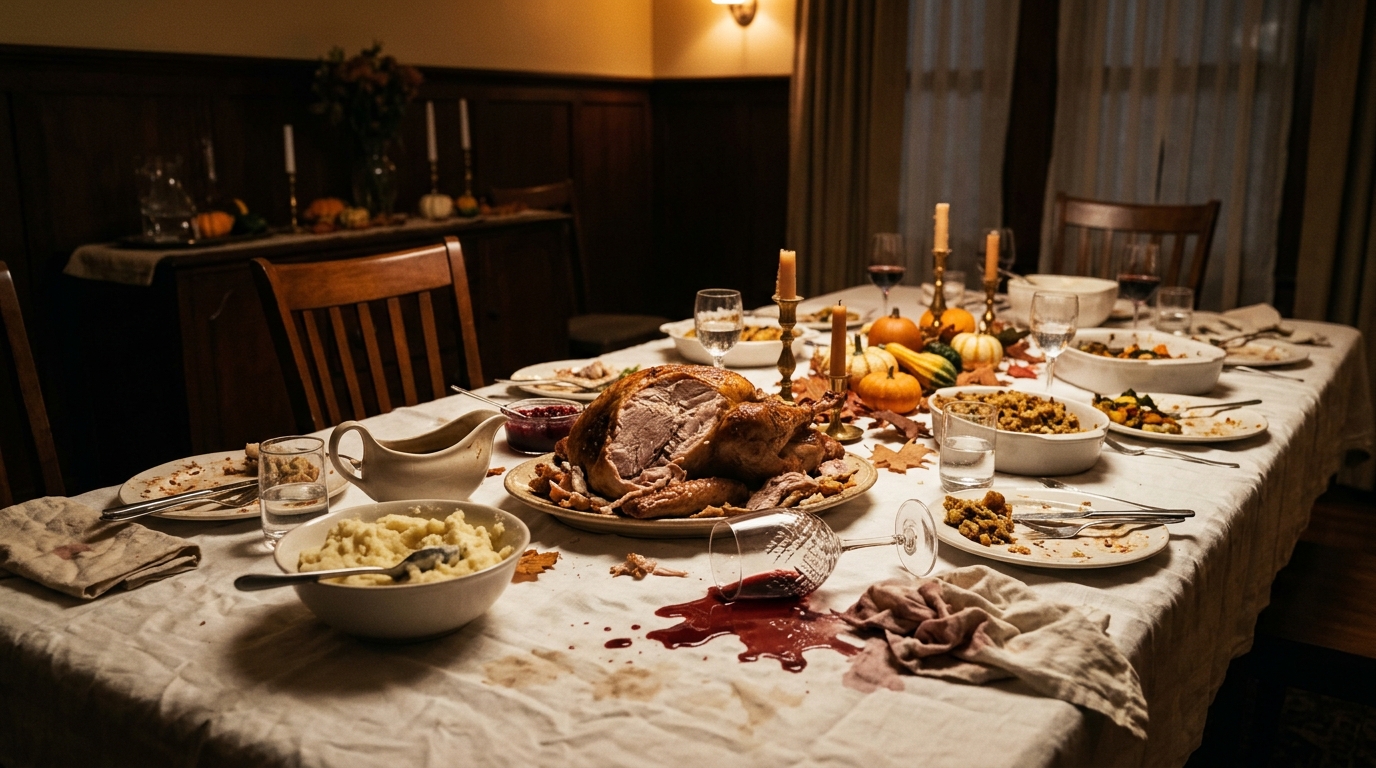
Six months after that Thanksgiving, Grace and Kevin renewed their vows in a small park ceremony, choosing each other again with full knowledge of how fragile trust can be. Kevin’s hands shook as he slid the ring back on, and Scarlet stood beside them in a flower crown asking why everyone was crying. A year after the slap, the family gathered for Thanksgiving at Nora’s apartment, because Grace’s house still felt contaminated. When Scarlet asked where grandma was, Grace said only that she was sick and couldn’t visit, which was enough truth for a five-year-old, and nobody mentioned the empty chair.
Reflection: What stays with me is how long this ran because everyone filed it under “Mom being Mom.” It took a phone bill to prove what her children had felt for decades, and by then the damage had reached three marriages and one preschool schedule. The people who came through it did the unglamorous thing: they asked each other direct questions instead of believing the worst.