
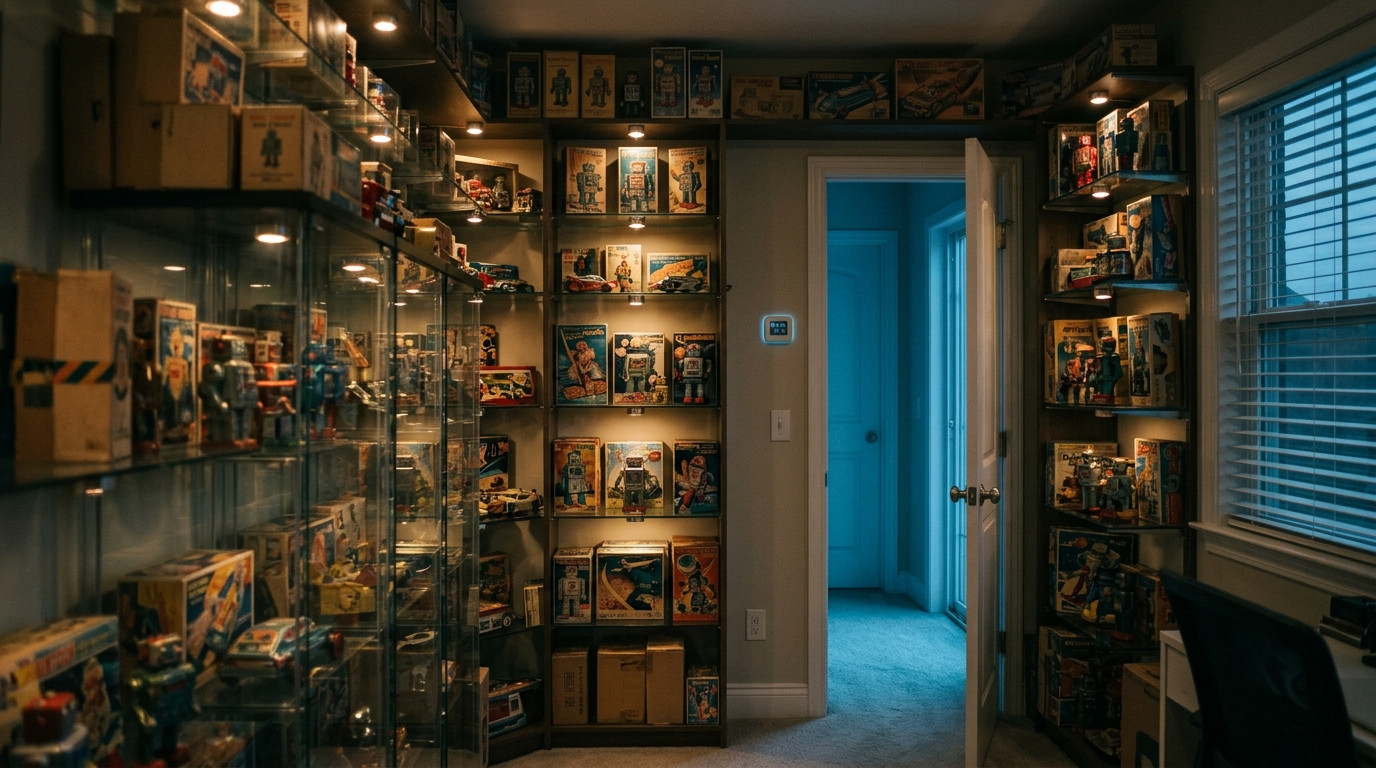
The numbers got worse from there. During those same four months Brandon had gone to just two job interviews, both at companies that were never going to hire him because he showed up in sweats. Rita helped Dana open an account at a different bank and redirect her paycheck there. Brandon didn’t notice for three weeks, partly because he was busy converting the spare room into a display hall with special shelving, careful lighting, and an $800 climate control system meant to protect the plastic.
He noticed when rent came due and the joint account was empty. He burst into the bedroom at midnight while Dana was coming off a shift and demanded to know where his investment fund had gone. She told him it was her money and it was covering the bills. He said they were partners and partners share everything, so she asked when he had last contributed to that partnership.
Brandon’s answer was that his collection was worth at least $30,000 by now. Dana suggested he sell a few pieces to cover rent, and he explained that she didn’t understand collectible markets and the value would only climb. Some people treat your limits like an opening offer, and every month she’d given a little more, he had learned to ask for a little more. That night Dana quit negotiating.
Two Hours to Pack
A few days later Brandon drove off to a toy convention two hours away, which he described as a networking opportunity for serious collectors. Dana spent that time on his collector forums instead. She posted in every group he belonged to that her husband’s entire collection had to go immediately, at half its market value, cash only, with pickup the same day.
His fellow collectors showed up within hours with cash in hand. The prize train set went for $1,500 to a dealer who admitted Brandon had outbid him for it. One man drove three hours to take the vintage robots for $2,000. By the time Brandon got back, every piece was gone and Dana was holding $21,000.
He walked into the toy room and stood motionless in front of the empty shelves. Then the shouting started, about how she had robbed him and how those toys were priceless investments. Dana handed him an envelope holding first and last month’s rent on a studio across town, plus a printed list of job openings. She told him he had two hours to pack his clothes.
Brandon called the police to report a theft. The officer listened, looked over Dana’s bank statements and pay stubs, and explained that either spouse is allowed to sell marital property. He suggested Brandon put that energy into finding a job. Brandon’s mother then phoned Dana and called her every name she could think of, until Dana sent her copies of the same statements showing what her unemployed son had spent while Dana worked overtime. The line went quiet fast.
Brandon fought the divorce anyway, claiming Dana had destroyed his business assets. The judge asked him for a business license, tax records, and any proof of income from the toy business. He had nothing: no license, no records, not a single sale or a dollar earned. The judge asked whether he seriously believed buying toys with his wife’s money counted as running a company, and the motion was denied.
Dana walked out of the courthouse into the afternoon sun and felt months of weight leave her shoulders. It was the kind of relief that doesn’t feel like winning, more like setting down a bag you’d carried so long you’d stopped noticing the straps. In the parking lot Brandon shouted that she had ruined his life, while his lawyer guided him away by the arm. She got in her car, locked the doors, and drove off without turning around.
The Man Who Wouldn’t Stop Calling
That evening Rita called with news Dana hadn’t asked for. She’d had a feeling Brandon would try something, so she’d been watching for credit applications, and he had attempted to open three new cards in a week using the old joint address. Rita had flagged every one with fraud alerts, contacted the credit bureaus, and set up alerts on Dana’s own report. Dana thanked her five times before Rita told her to stop, because this was simply what sisters did.
Dana then looked at the credit card balances Brandon had run up before she separated their finances. Three cards carried almost $8,000, all of it from toys, and she’d been making minimum payments while the interest piled up. She paid all three off with money from the collection sale. Watching each balance drop to zero felt like erasing his financial abuse one payment at a time.