
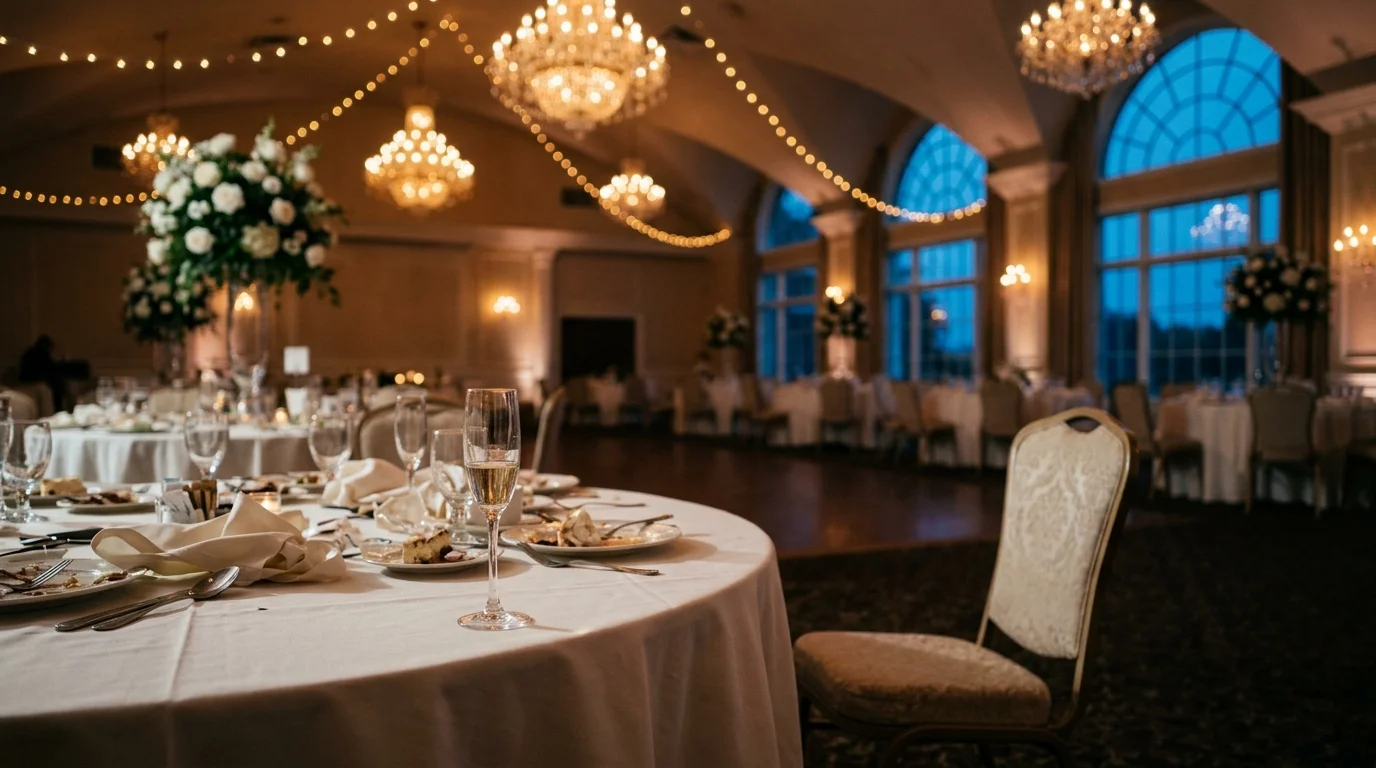
He tried once to join the conversation at his parents’ table, and his uncle talked over him, loud enough to drown him out. “No offense, Eric,” he said, “but some of us are actually interesting.” People laughed again. Emma didn’t say a word. She just wore the polished, camera-ready smile she’d worn all day and let it happen.
The bouquet toss delivered the worst of it. Eric had stepped back to give the women room, and he couldn’t help overhearing his mother talking to a family friend. She called Emma the shining star of the family, then added that Eric was fine, but some kids just make you proud in a different way. She’d said versions of it before. Hearing it that night, with his skin already raw, was like being cut where an old wound hadn’t healed.
He slipped out to the balcony and gripped the railing while the music muffled behind the glass. He told himself this was Emma’s day and not his. But he kept replaying it: the toast he never gave, the photos he wasn’t in, the laughter. He saw it now as years of being dismissed finally boiling over, and out there in the dark he started working out what he would do about it.
A Child Worth Celebrating
When Eric came back inside, the band was playing a song everyone knew, and guests were singing with their shoes kicked off under the tables. He thought he might blend in and leave early. Then the speeches started up again, and his uncle, visibly drunk but still able to command a room, took the microphone a second time.
He praised Emma as the heart of the family, the one they were all proud to show off. Then he looked straight at Eric and said it was nice to have a child worth celebrating. The room roared. People clapped, a few raised glasses, and Eric looked to his parents, hoping that this once one of them would say something. His father nodded like he’d heard a basic truth, and his mother whispered something that made him laugh harder. Emma, whose day it was, stared at her ring and let the silence stretch.
His uncle wasn’t finished. He leaned into the mic and added that maybe one day Eric would give them something to celebrate, but he wouldn’t hold his breath. Eric’s knuckles went white on the edge of his chair. The uncle’s cruelty hurt, but it was predictable. The part that landed hardest was his parents’ agreement and Emma’s silence.
He didn’t storm out or shout. He sat still with his face blank, because he understood something that had been hiding in plain sight for years: he finally knew exactly where he stood with these people. There’s an odd kind of power in that. It doesn’t feel good, but it stops the guessing.
Later he found a dim lounge off the ballroom and sat alone, thinking about the toast he’d wanted to give. He’d planned to mention the summer nights when he and Emma stayed up talking about the future, and how she used to braid his hair when they were small. Those words had been taken before they ever left his mouth. The real bottom came when he understood that his own sister hadn’t cared enough to stop it. When he drifted back to the edges of the ballroom, nobody asked where he’d been.
Two Years of Quiet Work
The weeks after the wedding were a fog. Group chats filled with photos from the night, and Eric scrolled past frame after frame without finding himself, or found himself blurry at the edge, half turned away like a stranger who’d wandered in. Nobody messaged him directly. Emma didn’t send a thanks for coming, an apology, or even an emoji.
For a while he drifted, going to work, coming home, and replaying the night. Then something shifted. The silence gave him room to think, and what he thought was that he’d been coasting for years in a job he was good at but didn’t love. Being told nobody cared what he had to say had become a dare, and he decided to answer it with results.
He took on projects nobody else wanted, stayed late to sharpen his skills, and built a professional network that had nothing to do with his relatives. Within a year he was promoted, then promoted again, and his salary nearly tripled. He moved into an apartment with floor-to-ceiling windows, the kind he used to drive past and wonder about. He started working out because he wanted to feel strong, and he made friends who laughed at his jokes instead of talking over him.