
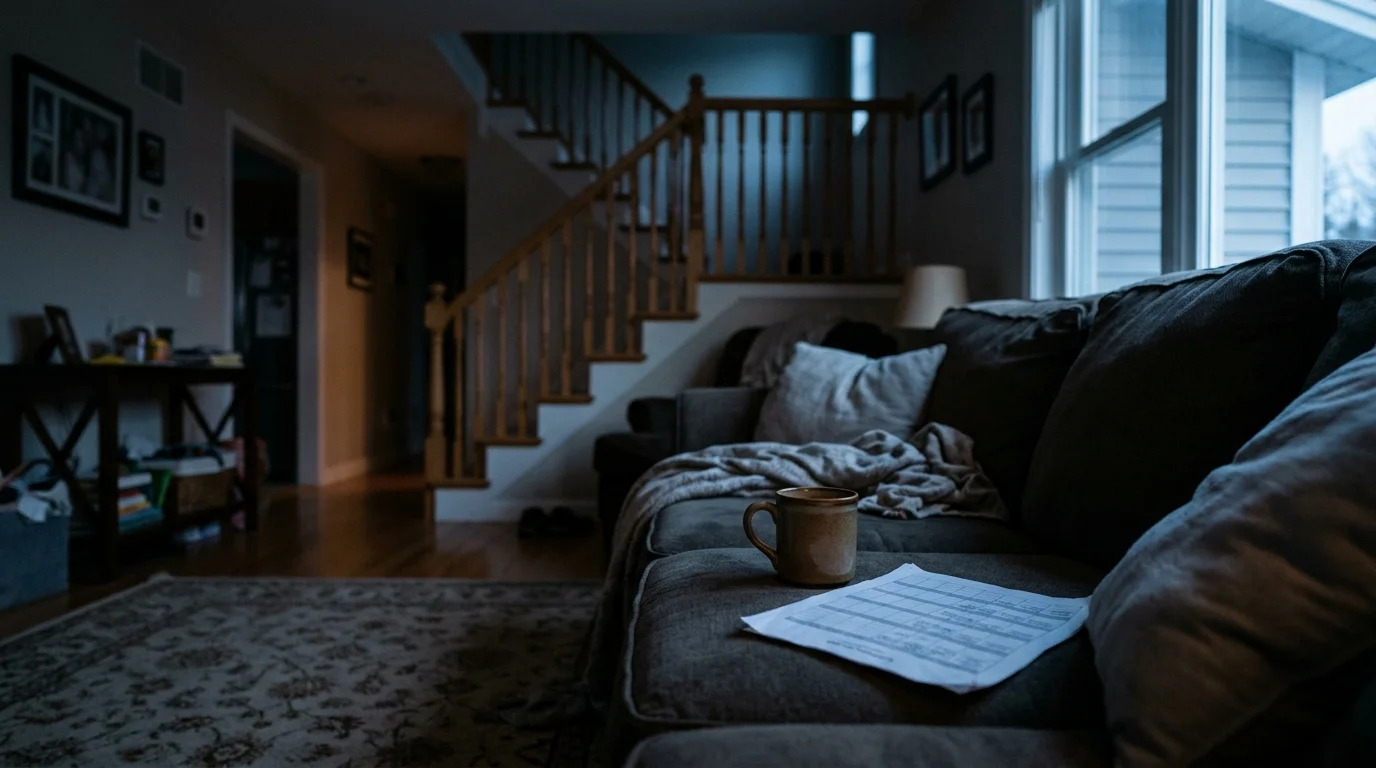
That night Nora lay awake and a pattern clicked into place. Laura had started the “backup parent” talk right after a family gathering where her late husband’s brother Axel asked how she was managing alone. Every time someone had suggested help, whether a daycare, a cleaning service or an hour off, Laura had tightened her grip on Nora instead. Nora called Rory the next morning. Over coffee he told her that Laura probably saw her as an extension of herself, and that the control came from fear of being judged as a failing mother.
Friday evening there was a knock. Laura stood in the hall with all three kids and two suitcases, said she had an emergency work trip, and pushed an overnight bag into Nora’s hands. Nora walked to her fridge, where the schedule was still taped up and yellowing, and pointed out that weekends weren’t on it. Laura exploded. Family helps family. Nora said, “Family doesn’t treat family like unpaid employees. I won’t be manipulated anymore.”
Laura grabbed her phone and called their mother. Her voice cracked into sobs, and she said Nora was refusing to help and didn’t care if she lost her job. The moment she hung up, the sobbing stopped. She looked at Nora with something between rage and fear, said, “You’re going to regret this,” and herded the kids out.
Five minutes later their mom called. Nora explained everything, from the beginning. At one point her mom stopped talking to her and asked Laura directly, “Is that true?” The line went quiet. Her mom said she’d call back, and an hour later she did. She had the kids for the weekend. She’d been enabling Laura by always smoothing things over, she said, and that stopped now.
At 3 a.m. Laura sent a long text accusing Nora of humiliating her in front of their mother and her boss. Nora wrote back that she’d been giving over forty hours a week for two years, that she loved the kids but wasn’t their parent, and that she’d offer two weekday pickups and one weekend afternoon. Laura would have to hire someone for the rest. Then she turned her phone face down and waited. Three days of silence passed before Laura called, sounding tired and small, and asked to meet at their mom’s house on Saturday with Rory there as a mediator.
The Number on Rory’s Legal Pad
On Saturday morning Nora changed clothes three times. In the driveway, Tom told her, “You didn’t create this situation. You just refused to keep enabling it. That’s not the same as causing it.” She nodded and walked up the steps.
Rory sat between the two sisters with a yellow legal pad. Laura went first, shaky and defensive. Nora’s turn was a calm, hour-by-hour walk through a typical week of the schedule. When she finished, Rory turned his pad around so both of them could see the total: 42 hours of childcare a week. Rory asked Laura what it would cost to hire someone for that. She said quietly that it would be more than her mortgage.
Then Laura broke down, and these weren’t the angry tears from before. She said she was terrified, of failing and of being judged. Brett leaving had made her feel like proof she wasn’t good enough for anyone. When Nora agreed to help, she’d felt less alone, and the promotion had put her under a microscope. Nora felt her own throat tighten, but understanding the fear didn’t make what Laura had done okay, and she said so. Laura admitted that somewhere along the way helping had turned into expecting.
They worked out the terms together, with their mom listening from the doorway. Laura would stop calling Nora a backup parent, would respect that Nora could date, and would hire a nanny. Anything beyond the agreed pickups needed advance notice and Nora’s actual yes. Laura apologized for telling the kids Nora was choosing Tom over them, and she admitted she’d been jealous of what Nora might have with someone. Their mom said she should have stepped in sooner. They all signed papers, and Rory scheduled a check-in two weeks out.
In the weeks after, things loosened. Nora took the kids to the park on a Wednesday and, for the first time in months, wasn’t watching the clock. The six-year-old hugged her goodbye and said it had been more fun than before, because she wasn’t grumpy anymore. It stung, and it was true. Laura started seeing Rory on her own and later texted her thanks for forcing the issue. Two weeks after the meeting, Nora and Tom ate pizza at Laura’s house, and Laura listened to Tom’s firehouse stories with the kids and said nothing about dating. At the door she whispered that she liked him.
A month later Laura introduced her to Siobhan, an experienced nanny, who now covers three afternoons a week. Julian told Nora her patients had noticed she was fully present again. By three months out, the sisters weren’t as close as they’d once been, and some of their old habits still tried to creep in. But when Nora texted that she and Tom were planning a coast weekend that fell on one of her kid days, Laura replied within minutes: have fun, I’ll work it out with Siobhan. No guilt, no comment. Nora showed Tom the text, and he called it progress.
Reflection: Most of what happened in this story could have been avoided if Laura had said, “I’m drowning, I need help.” Instead she tried to make it feel like Nora’s duty, and that fear of looking weak did more damage than the asking ever would have. Nora’s mistake was reasonable too, since saying yes to someone you love is easy and noticing it has turned into a job takes years. Help only stays a gift when the person receiving it hears “no” sometimes without taking it as an attack.
More stories you may like
 Mother Blamed Her Daughter for Breaking a Phone She Had Never Touched
 My Son Came Home Bruised Every Thursday, and I Finally Recorded Why
 My Nephew’s Wife Sent Me an Invoice for the Groceries in Front of the Neighbors — but the Timber Behind That Barn Is Mine
 He Hid in a Closet for 40 Minutes, and His Own Lecture on “Tactical Thinking” Came Back to Him