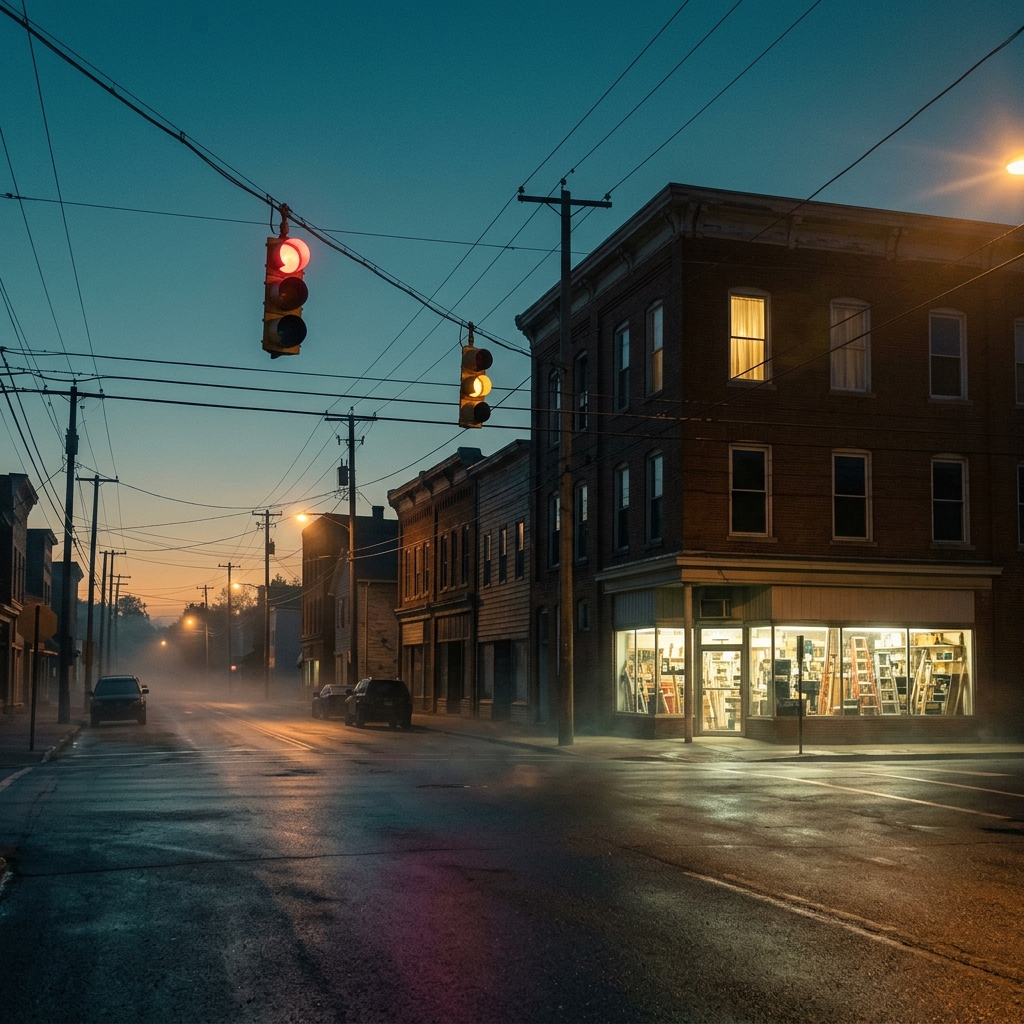
She rented a cheap apartment, took a remote data-entry job, and spent every evening hunting for a motive. The police had found no note, no manifesto, no history of mental illness, no grudges. A ranger at the nature preserve where Eleanor died told Claire something that made it stranger. Eleanor had carried a tent, a sleeping bag, food, water tablets, maps and a compass, enough to vanish for weeks, and none of it had been touched. She’d made it only about five miles in, sat down, and stopped.
An online forum offered a theory that fit better than anything else Claire had found: some people who commit atrocities are finishing a story in which their own death is the last chapter. If so, Eleanor hadn’t been running from consequences. She’d been walking toward an ending she wrote long before.
Digging into her work history turned up an archived website, EB Price Design, full of competent, forgettable logos and wedding invitations. A domain record led to a rental in Riverside, then Greenfield, then Ashton. Eleanor had moved every two or three years like clockwork for a decade, always to a small town, always leaving almost no footprint, and nothing about her existed before twelve years ago.
Claire hired a private investigator, who came back six weeks later with very little. Eleanor Price was most likely an assumed identity, and all he could offer were possibilities: witness protection, someone fleeing an abuser, someone with a criminal past. Claire had spent thousands of dollars she didn’t have on a dead end.
Her aunt let herself in with the spare key three days later and found Claire in pajamas at two in the afternoon, surrounded by timelines taped across every wall. She didn’t scold her. She quietly made tea, then asked when Claire had last eaten a real meal or talked to anyone not connected to Eleanor Price. She had noticed Claire talking about Eleanor like a friend, and she begged her to see a therapist before the research swallowed her whole.
That night the dream changed. Claire was in a child’s bedroom with sunshine coming through the yellow curtains, a small bed with a patchwork quilt, toys on the floor. It felt safe for a moment, and then she heard heavy footsteps in the hallway and watched the doorknob start to turn. She woke gasping, the smell of smoke still in the room, convinced she’d just remembered something that wasn’t hers.
A Face That Finally Belonged to Her
Three days later she booked the appointment. The therapist listened to the whole story and called the obsession a trauma response: researching Eleanor had given Claire a feeling of control over something that had been completely out of her hands. Over the following weeks Claire saw what lay underneath. The divorce, the lost house and the shame had left her unsure who she was, and Eleanor’s mystery was easier to chew on than her own grief.
She boxed up every document and photograph and carried them to a storage unit, and the apartment felt lighter the moment the walls were bare. She joined a book club, took a pottery class, and started getting coffee with a woman named Lisa. Nobody stared. Six months after leaving Milbrook, she slept through an entire night without dreaming of yellow curtains.
Life kept widening. She earned a promotion, moved into a sunny third-floor apartment, and bought yellow curtains on purpose, because the choice was hers. Her aunt visited and said she looked healthy again. Sam, a person she’d met at book club, started holding her hand on walks home, and when Sam traced the scar above her eyebrow, Claire told them the real story: a too-tall tree in her grandmother’s yard, three stitches, ice cream afterward. The mark had been hers long before Eleanor was a face anyone feared.
At Thanksgiving, she and her aunt spread the genealogy research across the dining table again, this time hunting for good stories. They found a great-great-grandfather who taught music, an aunt who fed half her neighborhood for free during the Depression, and a cousin who delivered babies in farmhouses across three counties. That, Claire decided, was her real inheritance: ordinary people doing their best with what they had.
Claire still thinks about Eleanor, usually late at night. She feels a distant sadness now, but she has stopped needing to know why. Both things can be true, that Eleanor suffered somehow and that nothing excuses what she did to fourteen people. Claire realized, folding laundry one Saturday, that her sense of herself was never handed to her by a town or by genetics. She builds it out of the small choices she makes each day.
Reflection: The town did what people do all the time, only louder: it read a stranger’s face like a verdict. Most of us decide who someone is within seconds, then stay loyal to that guess long after the evidence changes. What helped Claire was deciding she could live without the answer, which is harder than it sounds.