
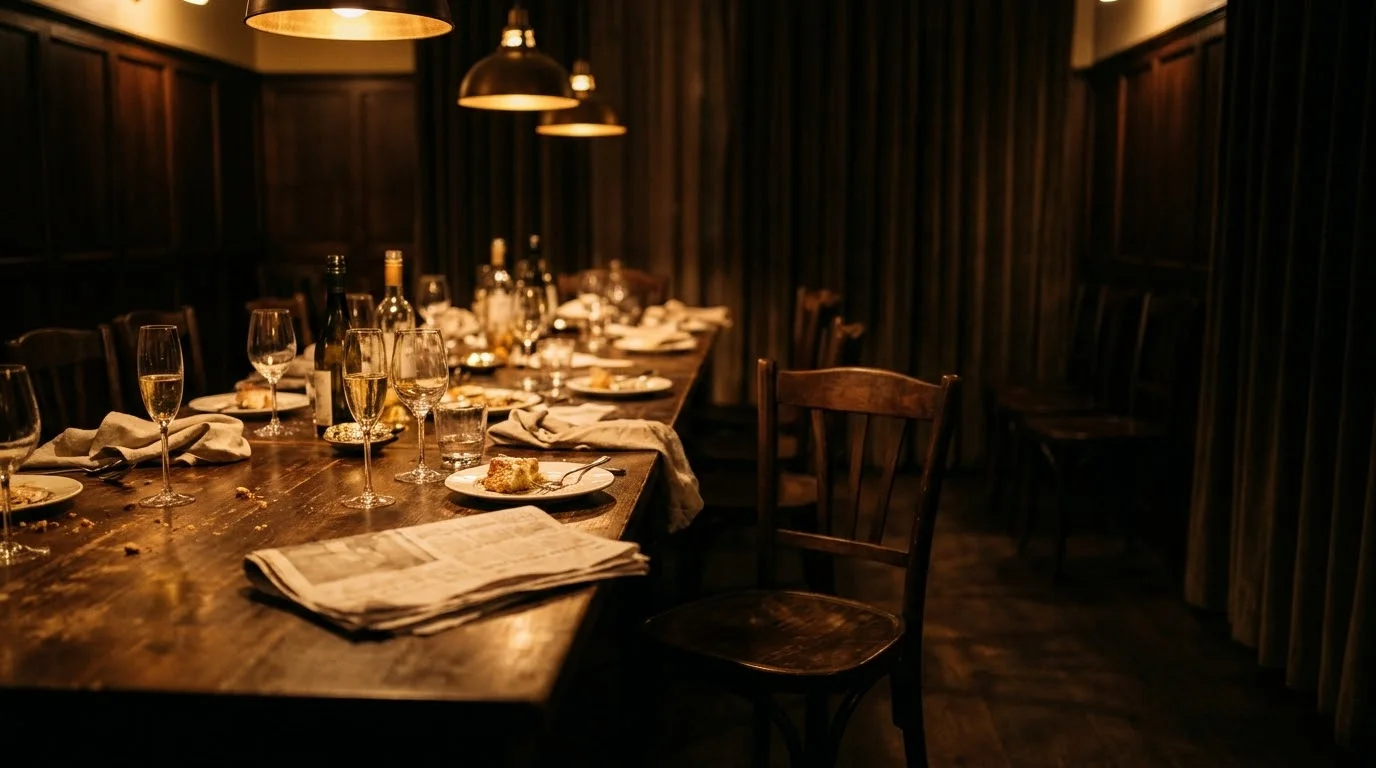
Oliver spent years as the family’s cautionary tale, then quietly built a business they never asked about. When his sister’s engagement came around, they finally noticed him, but only as a source of funds.
The Kid Who Was Always the Cautionary Tale
Oliver is 28 now, and five years ago he’d have laughed if someone told him he’d one day sit at a long wooden table in a private dining room, toasting his sister’s engagement alongside his parents. Family gatherings were never comfortable for him. In his house he’d been handed a specific part to play, and it wasn’t the golden child. That was his younger sister, Clare. Oliver was the cautionary tale.
Clare got perfect grades, collected awards, and never missed a deadline. Oliver took bikes apart, tinkered with everything, and dreamed up business ideas that nobody around him understood. His parents had a neat summary of the two of them: Clare was steady, Oliver was reckless. It was their favorite dinner-table topic, usually wrapped up with a forecast that he’d never amount to much unless he settled down and chose something realistic.
So he left as soon as he could. He worked two jobs and repaired bikes in his tiny apartment to keep the lights on, and his family barely visited. When they did show up, it was mostly to mention Clare’s newest scholarship or internship. Oliver insisted to himself that it didn’t bother him. Some nights, staring at the ceiling after a fourteen-hour day, he wasn’t so sure they were wrong.
Slowly, things shifted. A handful of good clients and one lucky break with an investor turned the repair hustle into a real business. In the first year, simply paying rent without panic felt like freedom. By year three he had employees, and by year five he had two locations, steady income, and more in savings than his parents could have guessed.
He told no one. Some of that was habit, since nobody in his family had ever asked how he was doing. Some of it was pettier and more human: he wanted to know how long it would take them to notice on their own. That’s a quietly painful experiment to run on people you love, waiting for them to get curious about you, and most people who’ve run it know how it usually ends.
Being cast in a family role early has a way of sticking even when the facts change. Once everyone has agreed who you are, evidence stops mattering much. Oliver had spent years collecting proof and mailing none of it home.
A Toast He Had Already Paid For
When Clare got engaged, his parents phoned with unusually sweet voices and asked whether he’d like to contribute to the engagement dinner. It wasn’t really a question. They explained how expensive it would be, how much it meant to Clare, and what a great chance it was to show support. Oliver wired the money without comment, more than he’d ever given them for anything, and never received so much as a thank-you.
That’s how he came to be sitting at a table he had technically paid for, watching Clare glow next to her fiancé. His father leaned back, loosened his tie, and said loudly enough for the whole room that they were so proud of the child who had actually made something of herself. His aunt laughed. His mother offered the small satisfied smile she’d been refining since Oliver’s teens. Everyone turned to see whether he’d shrink the way he always had.
He raised his glass instead, looked his father in the eye, and smiled. “Funny you say that,” he said, calm as anything. By tomorrow morning, he told them, the whole town would know exactly who had been paying for this party all along. Clare’s fork stopped in midair. His father’s face went slightly red, his mother blinked like she’d misheard, and Oliver took a slow sip and let the silence do the talking.