
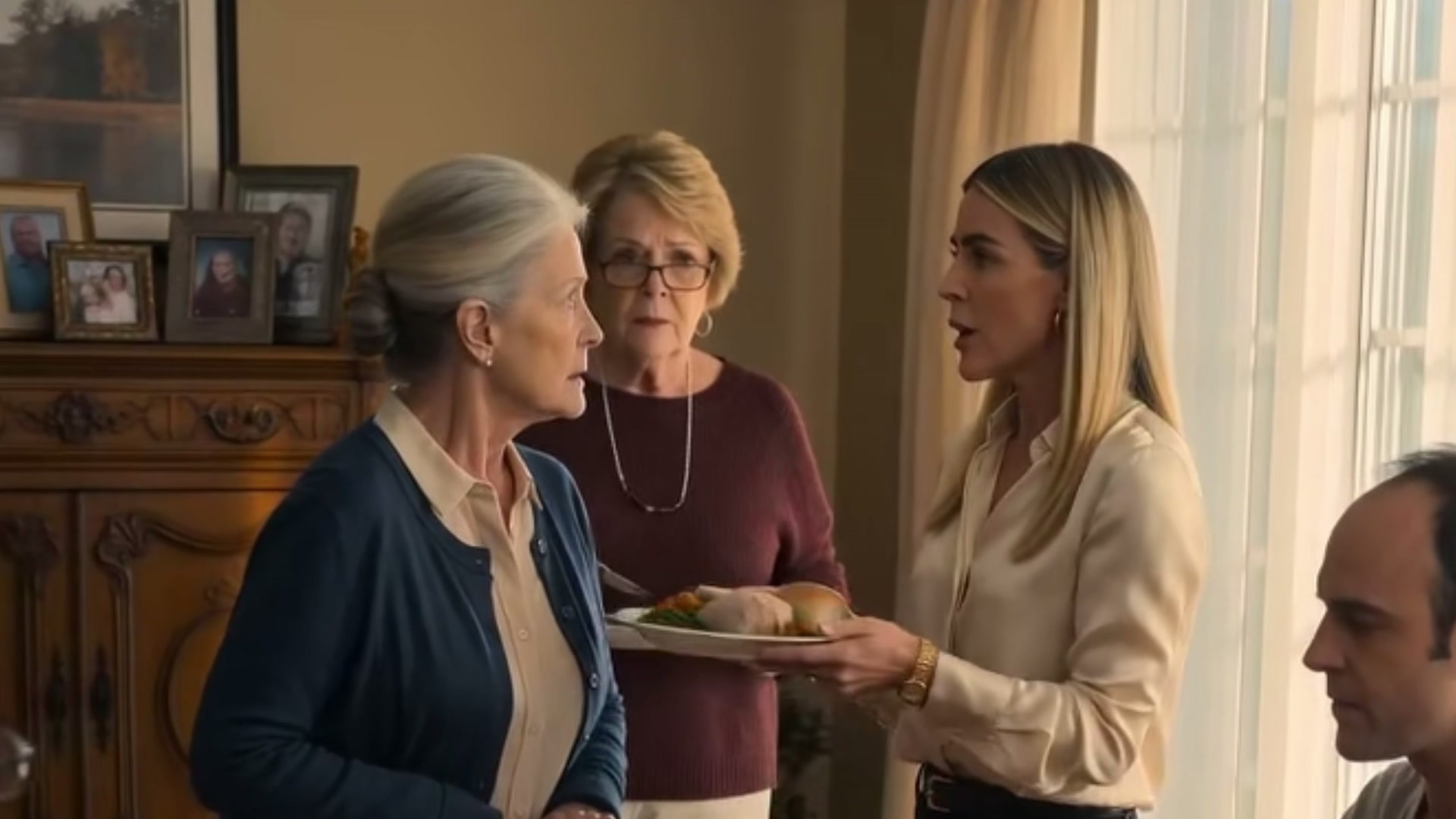
The folding card table was already out when I came down at seven in the morning.
It stood in the middle of the garage floor, square and grey, with one folding chair pushed up against it and a paper napkin folded into a triangle on the corner. Somebody had wiped it down. Somebody had thought about the napkin. That was what got me, standing there in my robe with the cold coming up through the concrete into my slippers. The cruelty had been planned early enough to include a napkin.
Behind the card table, under a dust sheet, was Walter’s workbench. He built that bench the summer we moved in, which was 31 years ago this past June. He used to come out here after supper and not do very much, just move things from one side of the bench to the other and listen to the radio, and when he came back in he would smell like sawdust and he would be in a better mood. He died in the front room of this house five years ago with his hand in mine. I have never once thought of the garage as a place where a person eats.
I did not say anything about the table. I went back inside and made coffee and watched my daughter in law Danielle come down at half past eight in a cream silk blouse, already dressed for a dinner that was nine hours away.
“You’re up,” she said, the way you would say it to a guest.
“I’m up.”
“It’s going to be a lot of people today, Margaret. Fourteen.” She filled a glass with water and did not look at me. “I thought you’d be more comfortable somewhere quiet.”
“I’m comfortable at my table.”
She smiled at the window. “We’ll see how you feel later.”
I want to be fair about how this happened, because it did not happen on Thanksgiving. It happened over two years, the way these things do, one reasonable sounding step at a time.
Danielle and Ethan moved in two years ago in September. It was temporary. Her job had moved, his had not, and the house had four bedrooms and one widow in it. I was glad. I will say that plainly because it matters: I was glad. The house was too quiet, and I had started leaving the television on for the sound of voices.
The first reasonable step was the groceries. She did the shopping, so it made sense that I paid my share. Then it was the utilities, and then it was a number she started calling the care and household fee, which was $4,200 a month, set up as an automatic transfer on the first, because, she said, it was simpler than counting up receipts and arguing about them. I remember thinking that $4,200 was a great deal of money for a woman who eats one meal a day and does her own laundry. I remember deciding not to be the kind of mother in law who counts.
The second step was the appointments. She drove me, which was kind, and then she came in with me, which was also kind, and then at some point she started answering for me. “She gets confused with the dates.” “She’s not great with paperwork.” I sat there in a paper gown while a doctor I had known for eleven years looked at her instead of at me.
The third step was the word they started using in front of me as if I were furniture. Transition. We’re thinking about a transition. Cedar Grove has a waiting list, so we put her name down, just in case, just to hold a place.
And the fourth step, the one I only learned about three weeks before Thanksgiving, was the refinance.
It came in the mail, as these things do, addressed to Ethan, and the envelope was open on the hall table because Danielle opens everything. An appraisal notice. A closing date of Monday, November 30. My son’s signature on an application that described him as the owner of 14 Harrow Lane.
I did not shout. I have never in my life got anything by shouting. I sat down at the kitchen table with my reading glasses and I read it twice, because I spent 26 years as a county court clerk and I know that the first read is for feeling and the second read is for facts.
Then I called Daniel Rees.
Daniel Rees was Walter’s lawyer and he is mine. He is 63 and he talks slowly and he has never once in 30 years told me something was fine when it was not. I asked him one question. He checked, and he called me back within the hour, and he said what I already believed but needed said out loud by somebody who could be deposed.
In 2019, two years before he died, Walter put the house into the Hollis Family Trust. Not out of suspicion. Out of tidiness, the same way he put the car title and the savings account in order, because he had watched his own mother’s house turn into a lawsuit between his brothers and he decided that would not happen to his wife. The trust owns the house. I am its sole trustee and sole lifetime beneficiary. Ethan is a remainder beneficiary, which means he inherits what is left when I am gone, and it means precisely nothing while I am alive.
My son had signed a refinance application for a house he does not own. The title company had already written to Rees and Mowbray asking for the trustee’s signature, because that is what title companies do, and Daniel had already written back, three weeks before any of this reached the dinner table, explaining that the trustee had not been asked and would not be signing.
“Do you want me to call Ethan?” Daniel said.
“No,” I said.
“Margaret.”
“Not yet.”
I will not pretend that was wisdom. Part of it was wisdom and part of it was that I wanted to see it. I had spent two years being handled, and I wanted to stand in my own dining room and watch what my son’s wife would do when she thought the paperwork had already gone through.
There was one more thing, and it is the thing this whole story turns on.