
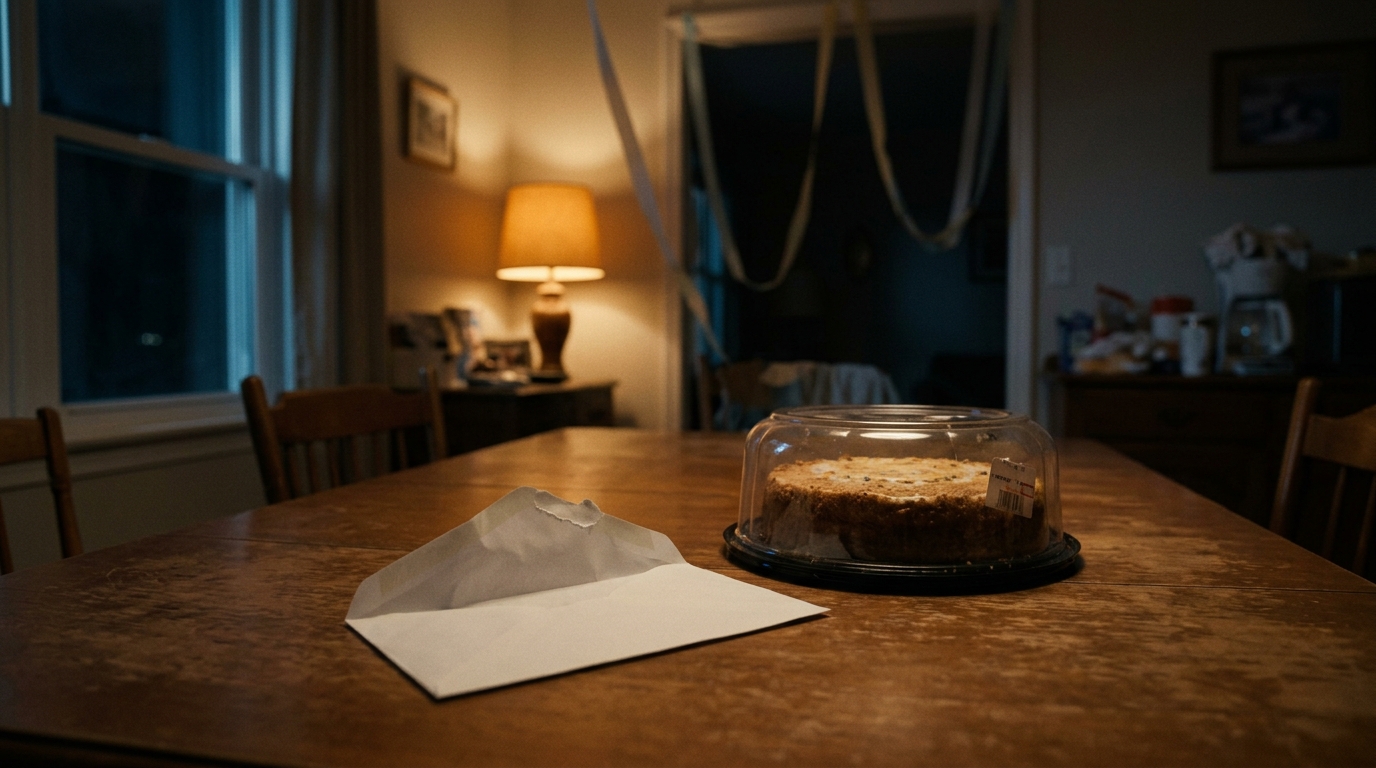
On his 27th birthday, Tim’s father handed him an envelope with nothing inside, and the family laughed. This is a story about family favoritism, financial pressure, and the day an overlooked son stopped asking for approval.
A Birthday Party With the Price Tag Still On
Tim turned 27 in the colonial-style house he grew up in, and he already knew what kind of night it would be. His younger sister Rachel had always been given balloons and a catered cake, sometimes even a slideshow. His older brother Eric had gotten the same treatment one year, complete with expensive presents and heartfelt toasts. Tim’s own birthdays tended to shrink down to a card, maybe a pair of socks, and a family dinner where he felt less like the guest of honor and more like an afterthought. This year the family had promised something different, which should have made him nervous instead of hopeful.
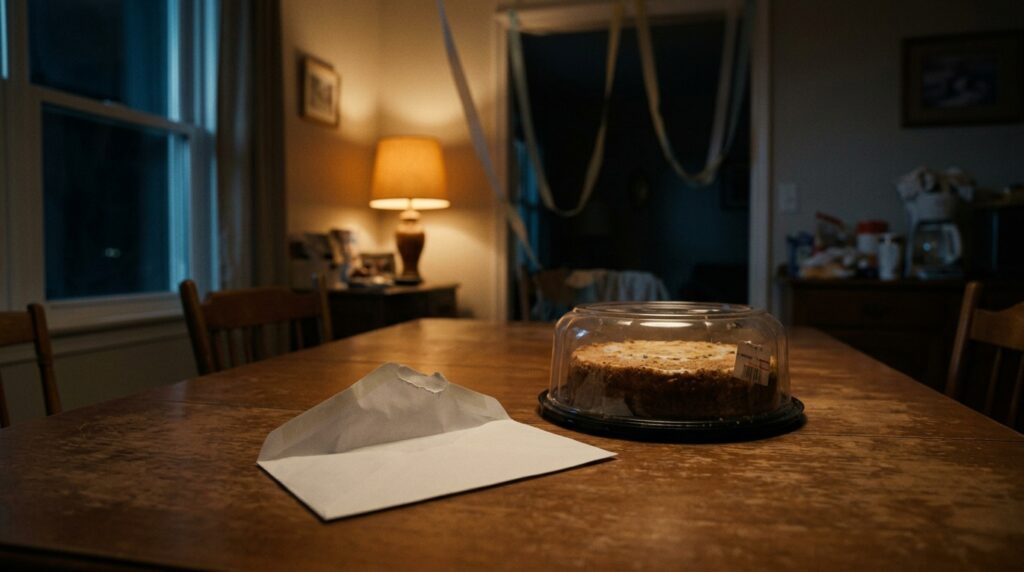
The decorations were a few half-hearted streamers, and the store-bought cake still had its price tag stuck to the plastic lid. Tim noticed that kind of thing without trying, the way you do when you’ve spent your whole life reading how much people care from the smallest clues. Rachel sat on the couch scrolling through her phone. Eric told a long story about work that nobody had asked for, and their mother hovered around the food, fussing the way she always did. Their father sat at the head of the room with the same watchful, calculating look he wore at every gathering, as if he were quietly grading everyone in it.
Gift time went about the way Tim expected. Rachel gave him a mug that called him the world’s okayest brother. Eric handed over a used paperback with a cracked spine and yellowed pages, obviously grabbed off his own shelf at the last minute, and he didn’t bother hiding his smirk. Tim told himself not to let it bother him, and mostly he managed. Then his father stood up, pulled an envelope from his jacket pocket, and against every bit of experience, Tim let himself hope that the old man had finally put some thought into something.
Inside was a single sheet of blank paper, folded once. There was no card and no cash, not even a line of handwriting. The room went quiet for a moment, and then his father leaned back in his chair and said, loud enough for everyone to hear, that a man who can’t pay his own bills doesn’t deserve gifts. Rachel laughed first, Eric joined in, and even their mother chuckled nervously before muttering something about tough love. Tim stood there with the envelope in his hand and his face burning, and what stung most was that his father knew exactly how tight money had been, since Tim was working part-time while finishing night classes.
Tim forced a smile and sat down to eat a lukewarm slice of his own birthday cake off a paper plate, and nobody had offered him candles. The jabs kept coming for the next hour. Eric stretched his arm across the table to show off the watch their dad had bought him after a mid-level promotion, remarking that it’s crazy how some people get rewarded for hard work. Their mother, trying to smooth things over the way she always did, told Tim that things would come easier if he were more like his brother. Rachel waved her phone around, bragging about her follower count, and their father applauded her ambition before adding, with his eyes on Tim, that not everyone in the room had that kind of drive. Tim swallowed his anger, because he knew any flicker of it would be twisted into proof that he was immature.
Tough Love, Priced at $800 a Month
After dinner the teasing turned into a performance. Rachel and Eric dug up old stories about Tim for laughs: the school play where he froze, the wallet he lost at the fair, the soda he spilled across the car seat. “Classic Tim,” Eric said, shaking his head, and their father added that this was exactly why he believed in tough love. Then their mother brought out the family photo album and paged past Eric’s graduation gown and Rachel’s cheerleading uniform. When she reached a picture of a young Tim holding a science fair ribbon, she said they’d tried so hard to support him but he never really kept up with things. Sitting in the corner of the living room that night, Tim understood that the favoritism he’d always known about had crossed into open contempt, and he decided that his silence was not the same thing as weakness.