
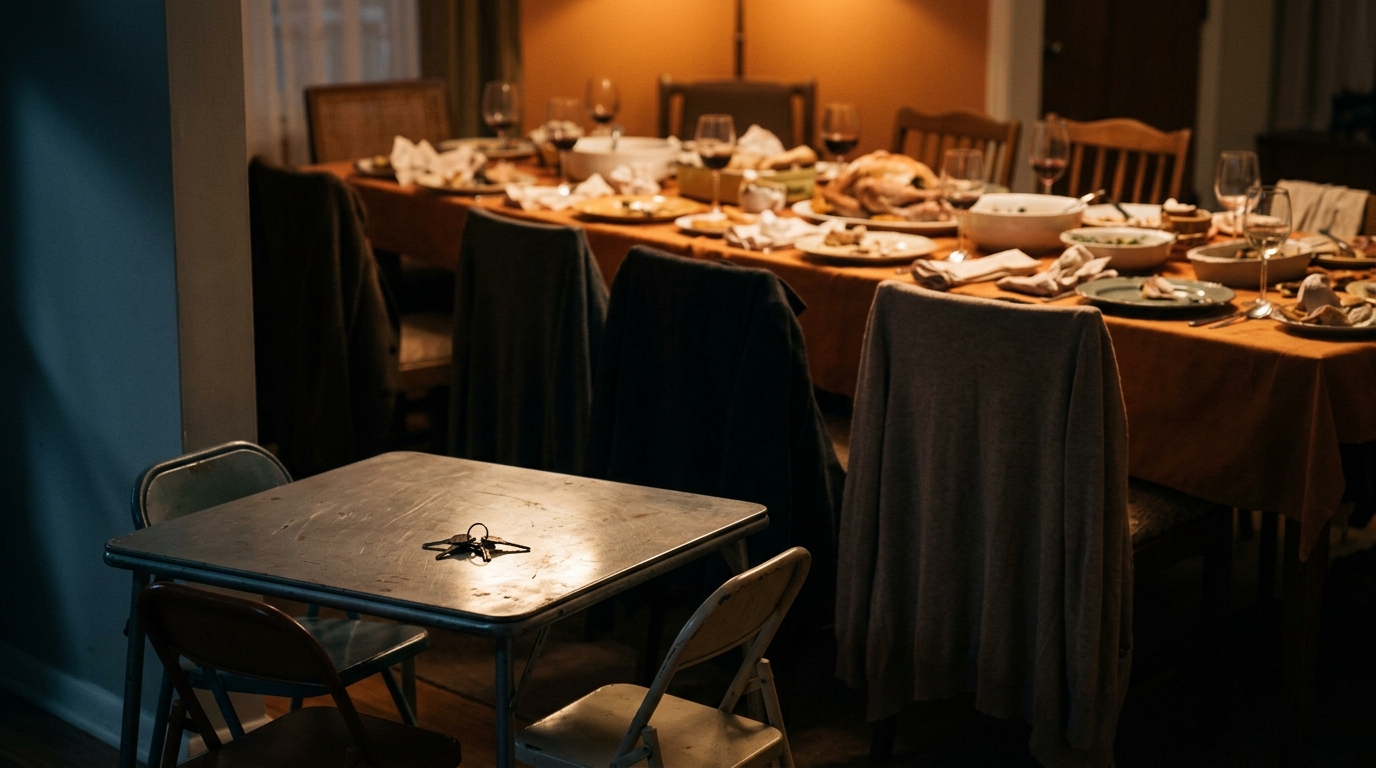
Sit With the Kids — until the keys hit the table. Subheading: Austin grew up as the family joke at a holiday arena where report cards were trophies and folding chairs were destiny. One Thanksgiving, the jokes turned into a public order to “practice” on his cousin’s BMW — and something in him stopped asking for a seat at the adult table.
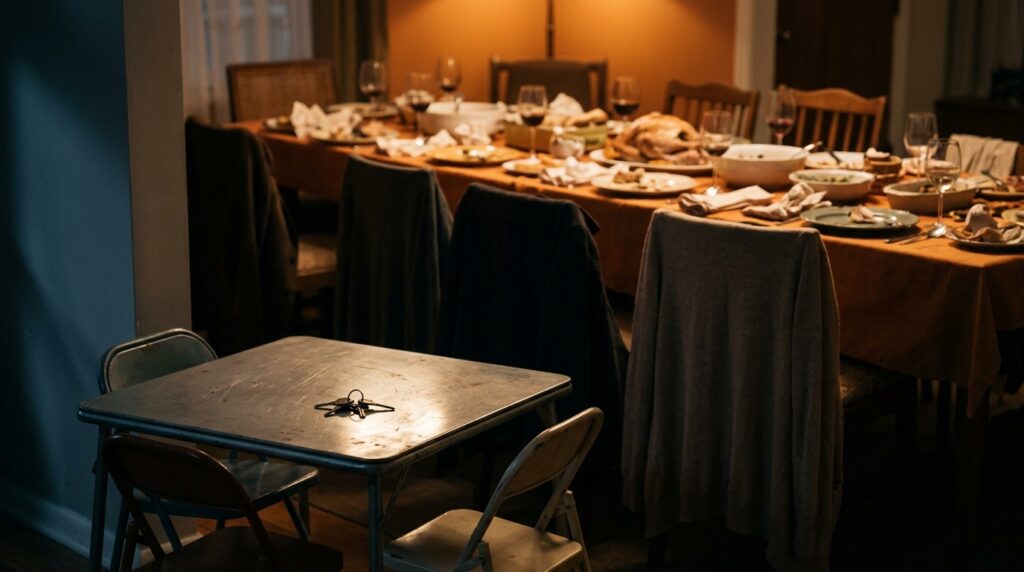
RE-HOOK OPENING
Family betrayal doesn’t always look like slammed doors. Sometimes it looks like Thanksgiving seating charts, sharp dad laughs, and a cousin dangling car keys like you’re the help. This is a story about sibling conflict, emotional manipulation dressed up as “jokes,” personal boundaries that took years to grow teeth, and a son who got tired of being the punchline at his own family’s table.
✍️ EDITOR’S NOTE (Opening) I’m tired of holiday stories that pretend every table is warm if you just “let it go.” Some families use Thanksgiving like a scoreboard, and the same person always loses. What caught me here wasn’t the eventual flex — it was how ordinary the cruelty sounded while it was happening. If you’ve ever smiled through a roast that wasn’t funny, this one’s going to sit in your chest.
The Arena With the Folding Table
Austin was twenty-seven when he told this, but the story started when he was still small enough for people to decide who he was out loud. Holidays in his family weren’t about pie so much as rankings. Report cards went on the fridge like trophies. Sports medals got paraded through the living room. Even summer jobs became evidence in a trial nobody admitted they were holding.
Thanksgiving meant relatives stuffed into a dining room that barely fit, adults trading careers and vacations at the big table while kids got shoved to a folding table in the corner. Cozy, if you squinted. An arena, if you didn’t. Even in his late teens, they still waved him toward the kids’ side. Mom would laugh that Austin didn’t mind — he fit better over there. The room chuckled. He smiled tightly and felt the sting every time.
Worse than the chair was his father’s sharp, cutting laugh whenever Austin tried to join adult talk. Around twenty, he tried telling an uncle about a little app he was building with a friend — nothing huge, just a side project he was proud of. Dad cut him off mid-sentence: don’t bore him with nonsense; you’ll never amount to anything. Cousin Matt smirked that Austin would probably wash their cars someday. The table roared. Austin pushed food around his plate and made a quiet promise: one day they’d regret dismissing him.
Years They Never Bothered to Notice
Proving people wrong doesn’t arrive with a bow. Austin spent years on jobs that barely paid, nights teaching himself skills he couldn’t afford to learn in classrooms, thin-walled apartments where neighbors’ fights came through the plaster. To the family he was still the failure cousin, the son who missed the marks. He stopped sharing anything at holidays because every attempt became mockery. Under the quiet, insults turned into fuel.