
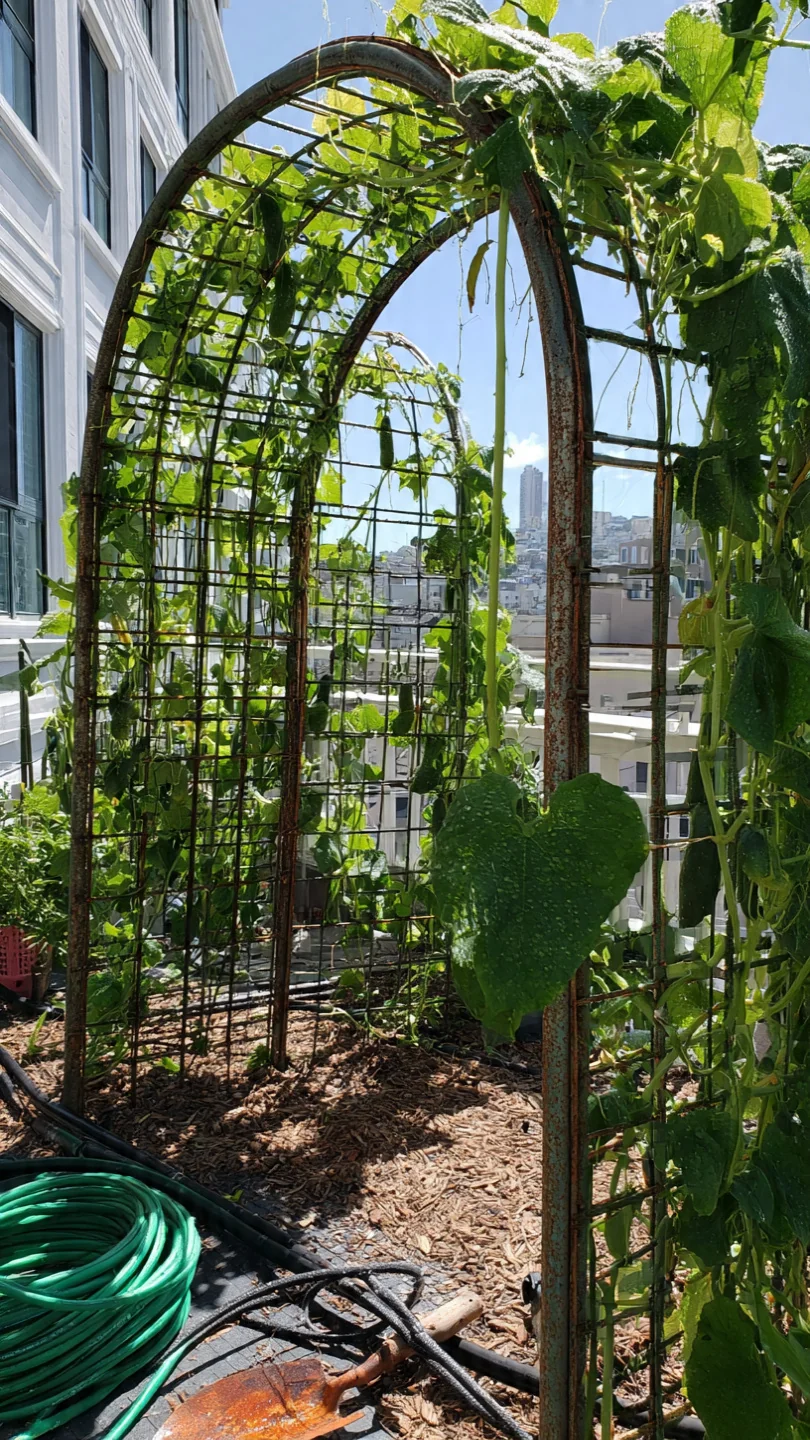
Standard trellises collapse under cucumber vines because they ignore the combination of long sprawling growth and heavy fruit loads common in urban microclimates. The right choice starts with matching the structure to your exact footprint, wind exposure, and vine length instead of copying generic designs.
This guide covers nine trellis systems built for balconies, patios, and containers in small urban gardens. It excludes sprawling ground methods and large-field farming setups.
You will walk away knowing which option fits your conditions, with exact blueprints where needed and measurable thresholds so you install once and skip mid-season fixes.
Bottom line: Match your conditions to one of the three Decision Grid branches before vines reach 18 inches tall.
The Yield Grid Decision Grid
Branch 1: Your growing area has a footprint of 4 square feet or less and experiences average winds above 12 mph (common on high balconies or exposed patios). Recommended: Items 1, 4, and 7 below.
Branch 2: Your cucumbers are vining types expected to exceed 8 feet in length in containers or small beds with moderate exposure. Recommended: Items 2, 5, and 8 below.
Branch 3: You want a structure installed once with no weekly adjustments needed after the first month. Recommended: Items 3, 6, and 9 below.
For broader vertical vegetable integration, see our vertical vegetable garden guide.
Quick Comparison Table
| Option | Key mechanism | Best for | Decision Grid Branch | Effort Score |
|---|---|---|---|---|
| Cattle Panel Arch Trellis | Curved rigid panel frame | High-wind balconies | Branch 1 | 1 |
| Wall-Mounted Twine Ladder | Vertical strings anchored to wall | Moderate vine length containers | Branch 2 | 3 |
| Classic Obelisk Trellis | Tapered wooden pyramid | One-time setup preference | Branch 3 | 2 |
| PVC Pipe Grid Trellis | Interlocked PVC frame with grid | Compact high-wind spots | Branch 1 | 2 |
| Adapted Bean Teepee Trellis | Converging pole teepee | Vining cucumbers in beds | Branch 2 | 2 |
| Recycled Pallet Lean-To Trellis | Leaning pallet frame | Low-maintenance urban patios | Branch 3 | 1 |
| Netting Sling Trellis for Heavy Fruits | Mesh netting with slings | Fruit-heavy vines in tight spaces | Branch 1 | 4 |
| Balcony Railing Clip-On Trellis | Hook attachments to railing | Balcony rail support | Branch 2 | 3 |
| Vertical Tomato Cage Hybrid | Upgraded wire cage with extensions | Container growers seeking simplicity | Branch 3 | 1 |
Cattle Panel Arch Trellis
Best for: Branch 1
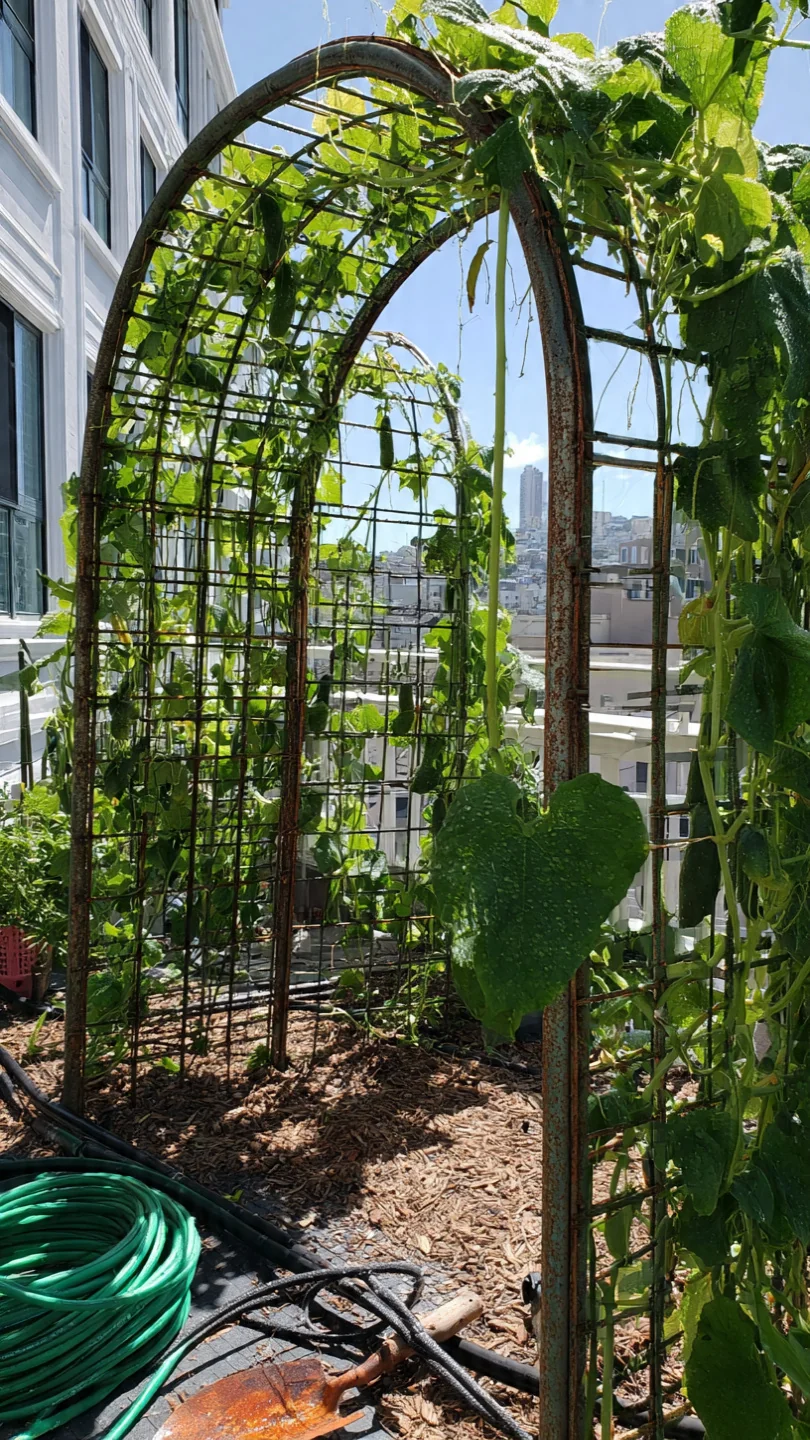
Use a single 16-foot cattle panel bent into an arch over your 4-foot-wide space. Drive two 4-foot rebar stakes 18 inches deep at each end as anchors. Bend the panel evenly and secure the base with heavy-duty zip ties or wire every 12 inches. Top the arch at 6 feet high for full vine coverage. The curved shape distributes fruit weight across the entire frame and reduces wind resistance compared with flat panels. Space the panel openings to let leaves thread through naturally. Common mistake: skipping base bracing, which lets the structure shift in gusts above 12 mph. This blueprint works in containers or ground beds and pairs with drip irrigation lines run along the base. See our full guide to cattle panel arch designs for exact cuts.
Wall-Mounted Twine Ladder
Best for: Branch 2
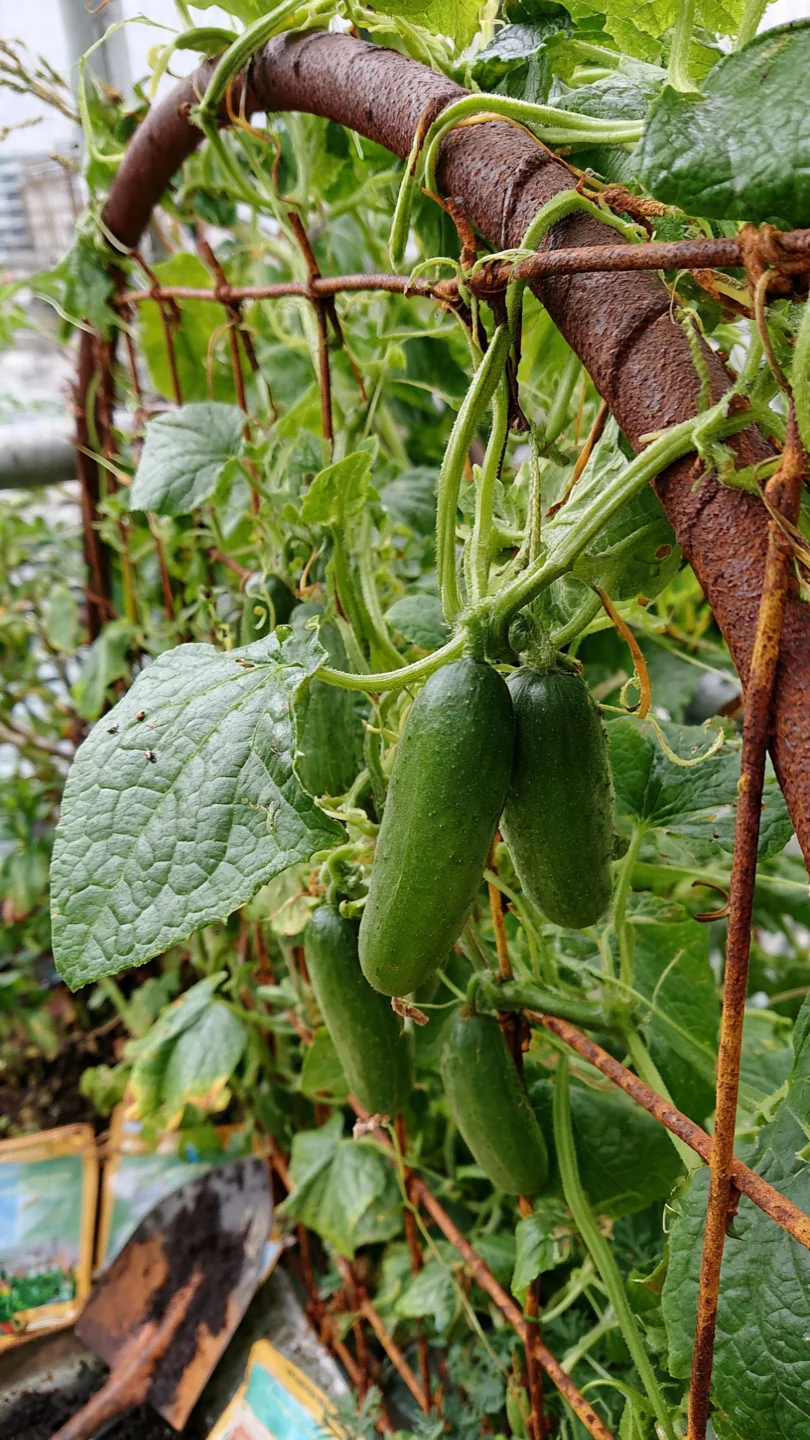
Pros: costs under 15 dollars and uses existing walls for zero floor space. Cons: strings stretch and need monthly re-tensioning in moderate wind. Skip if your wall is smooth concrete without screw points. Edge case: works best when vines stay under 10 feet and you tie every 18 inches.
Classic Obelisk Trellis
Best for: Branch 3
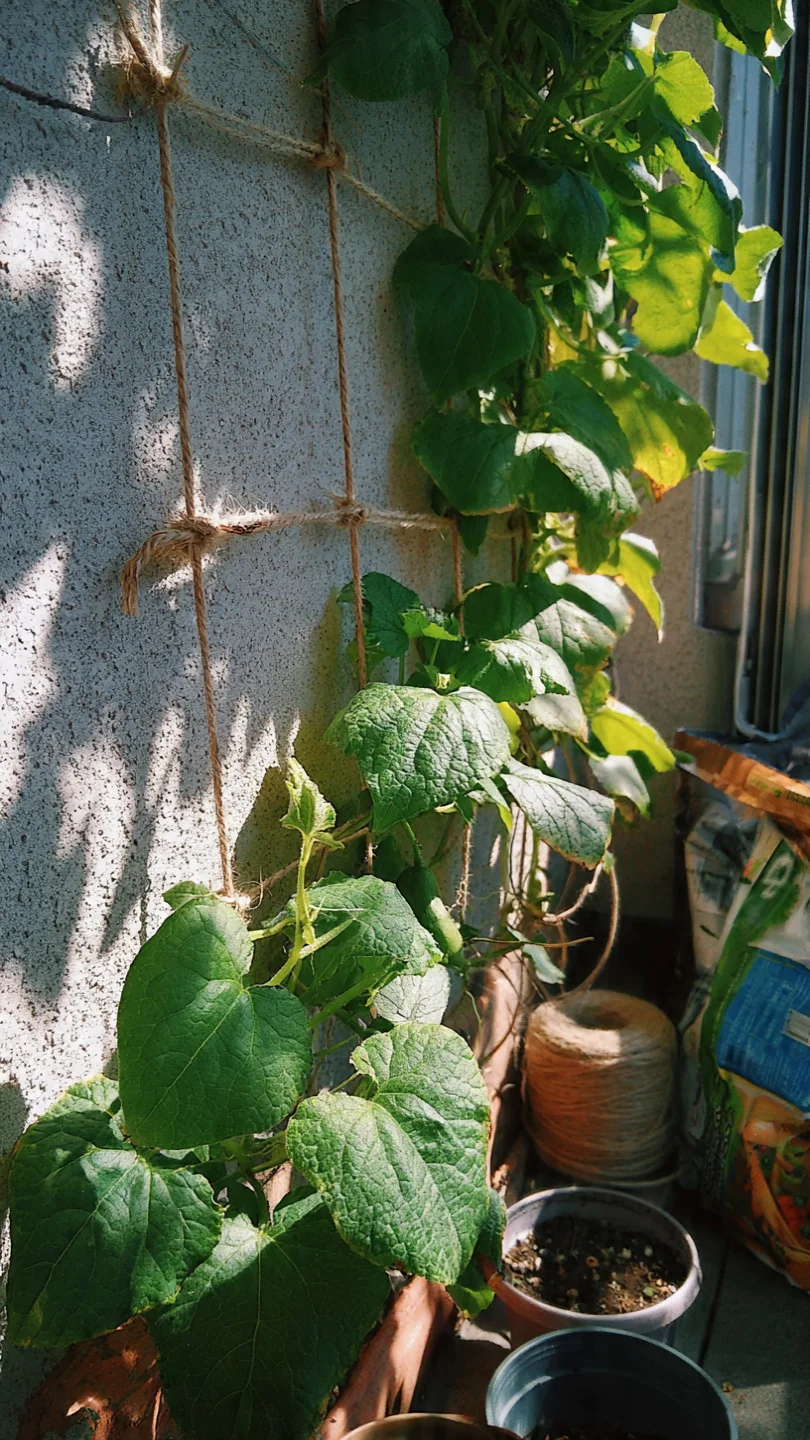
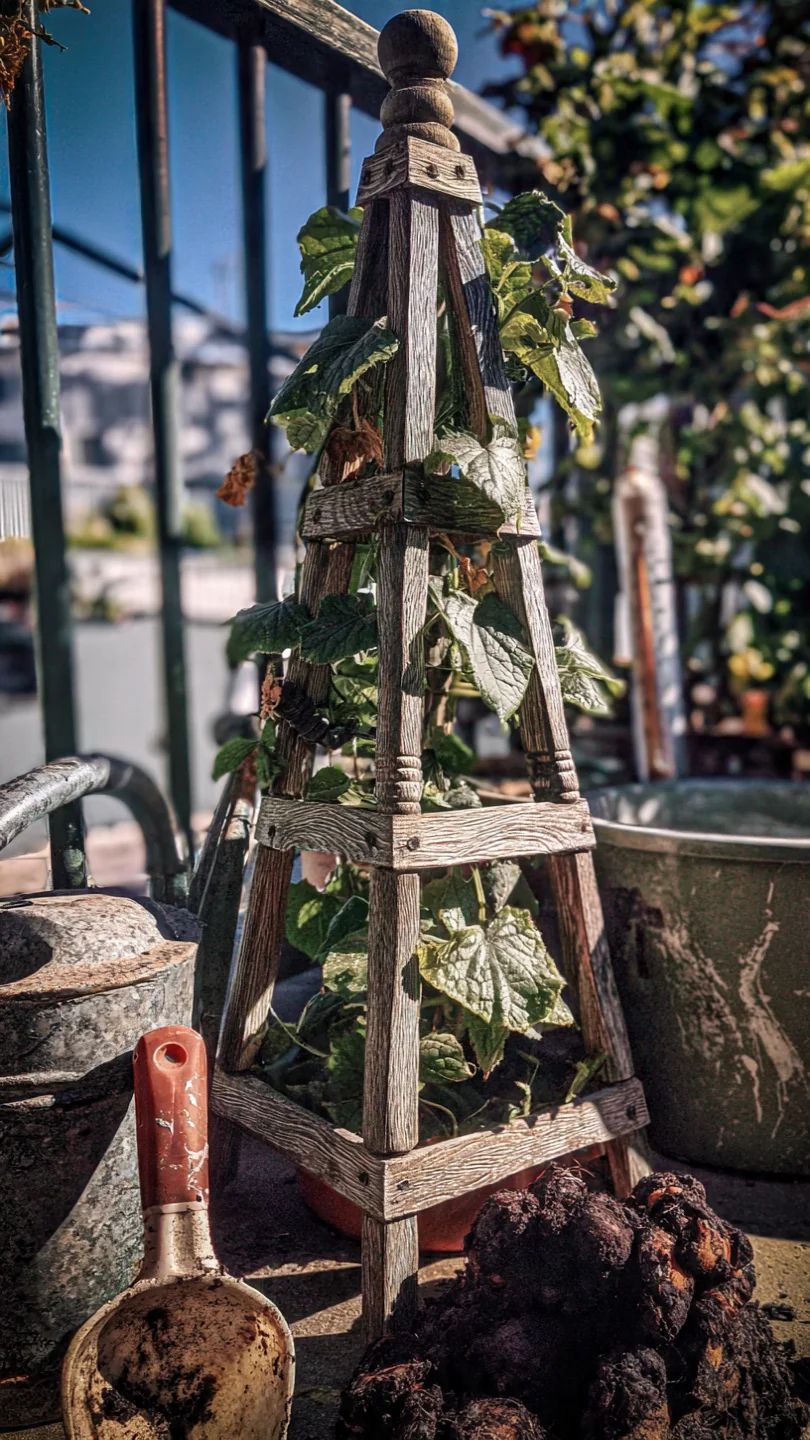
Build with four 6-foot cedar posts set in a 2-foot square base that tapers to a point at the top. Secure cross braces at 12-inch intervals using galvanized screws. Install when vines reach 12 to 18 inches tall and anchor the base with 12-inch ground stakes. Threshold rule: keep the structure at least 5 feet tall for slicing varieties and 6 feet for longer vining types to avoid top-heavy tipping. The tapered design encourages upright growth without constant tying after month one. This option suits containers on patios where you want a finished look with minimal follow-up. See full obelisk trellis adaptations for container sizing.
PVC Pipe Grid Trellis
Best for: Branch 1
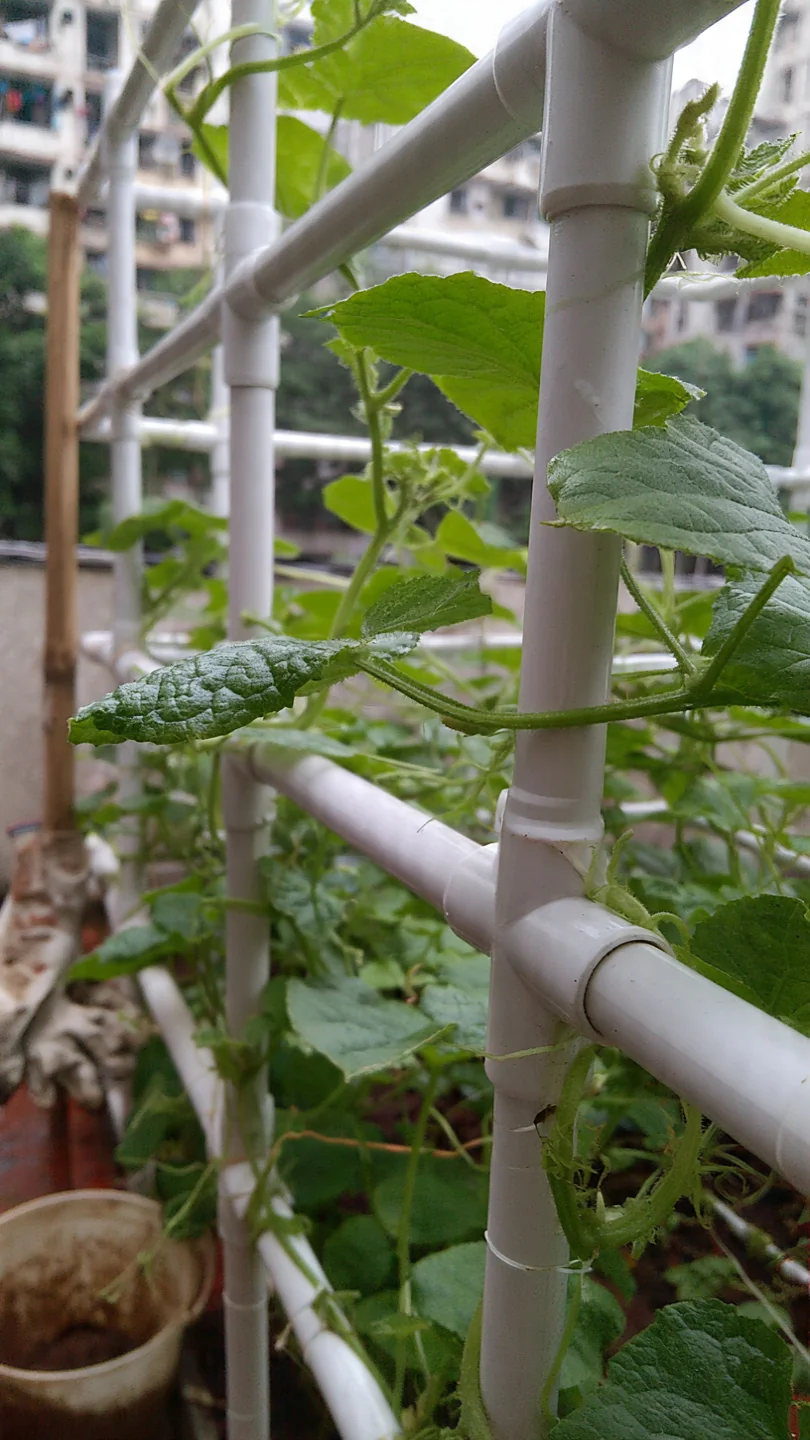
Assemble in under 10 minutes using 1-inch PVC pipe cut to 6-foot verticals and 4-foot horizontals. Connect with 90-degree elbows and tees to form a 4-by-6-foot grid. Secure to balcony rails or posts with pipe straps. Upgrade option: add diagonal braces if winds exceed 15 mph. Steps: dry-fit the frame first, glue joints only after confirming fit, then attach to anchors. This grid lets you train vines in straight lines and supports side growth without sagging. The lightweight material resists rust in humid urban air and stores flat off-season. Full details in our pvc pipe vertical garden resource.
Adapted Bean Teepee Trellis
Best for: Branch 2
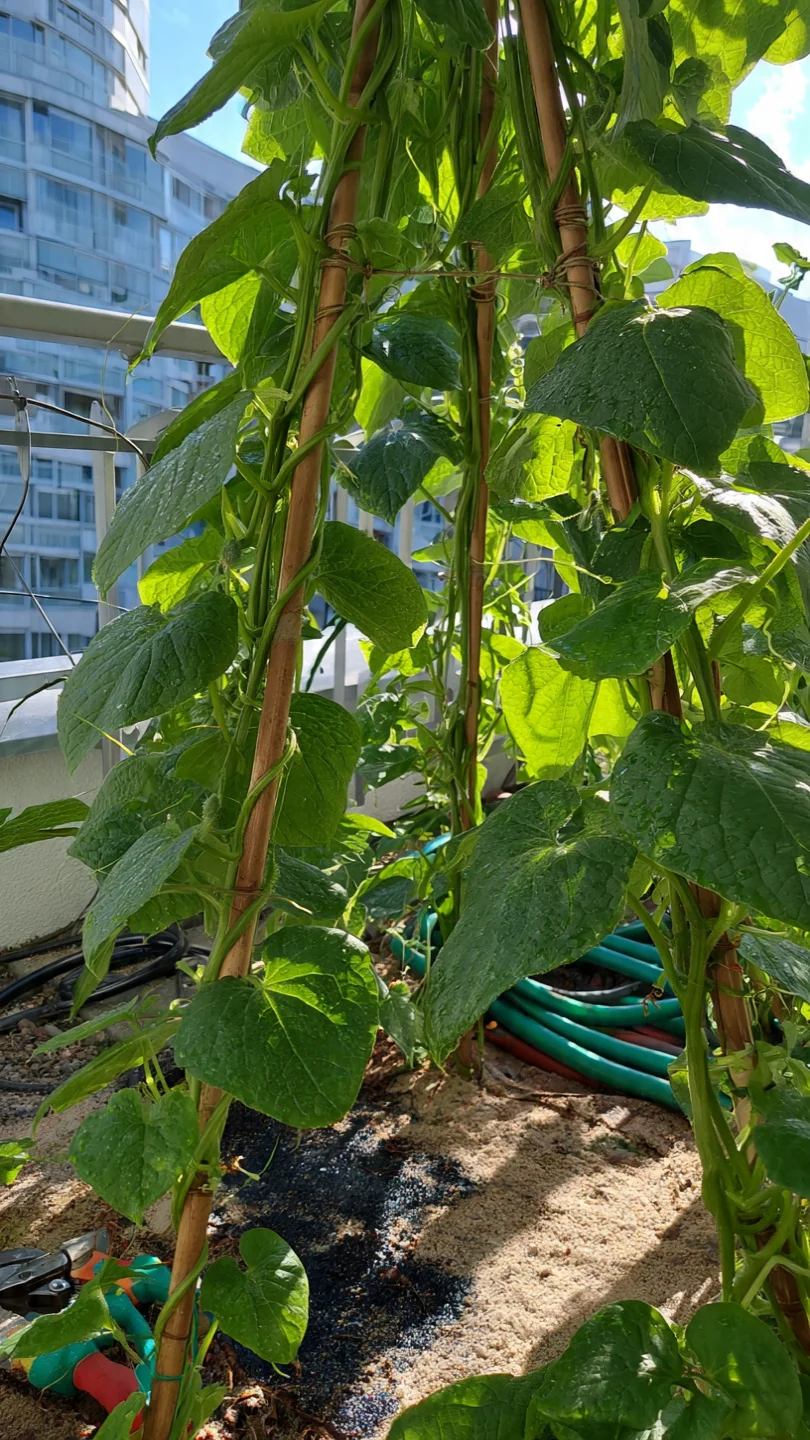
Pros: quick setup with six 8-foot poles and natural airflow for disease prevention. Cons: base can shift in containers unless weighted. Skip for spaces under 3 feet wide. Edge case: ideal when vines hit 8 feet and you need even distribution around the cone.
Recycled Pallet Lean-To Trellis
Best for: Branch 3
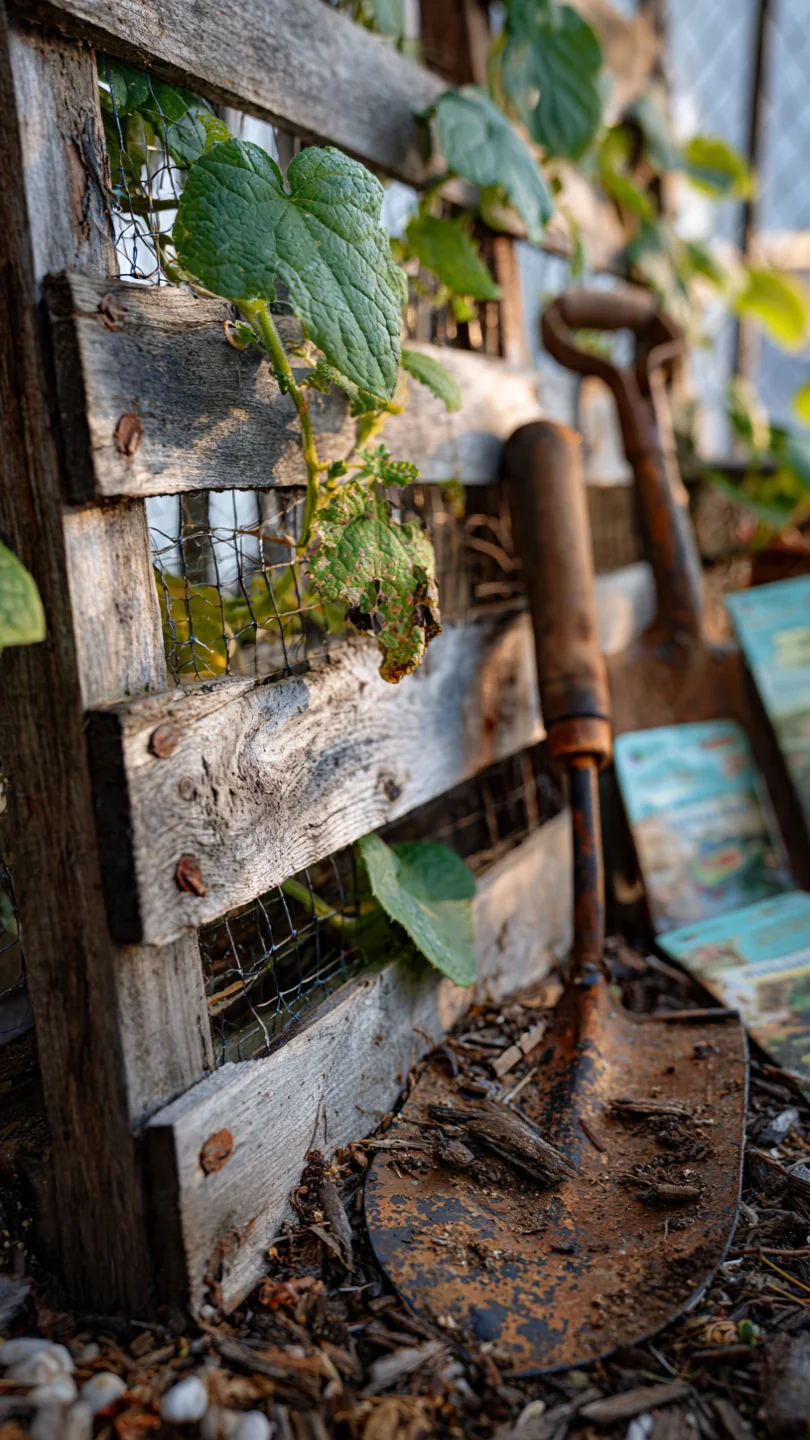
Stand one wooden pallet against a wall at a 70-degree angle and secure the top with lag screws into studs. Staple 2-inch mesh across the slats for vine grip. Install once vines reach 18 inches and brace the base with bricks or concrete blocks. The lean-to design uses zero extra floor space while letting fruit hang freely for easy harvest. Common adjustment: add a second pallet for wider coverage if your bed exceeds 4 feet. This system requires no painting or sealing in most urban conditions and breaks down for storage in minutes. Full instructions appear in our diy pallet vertical garden guide.
Netting Sling Trellis for Heavy Fruits
Best for: Branch 1
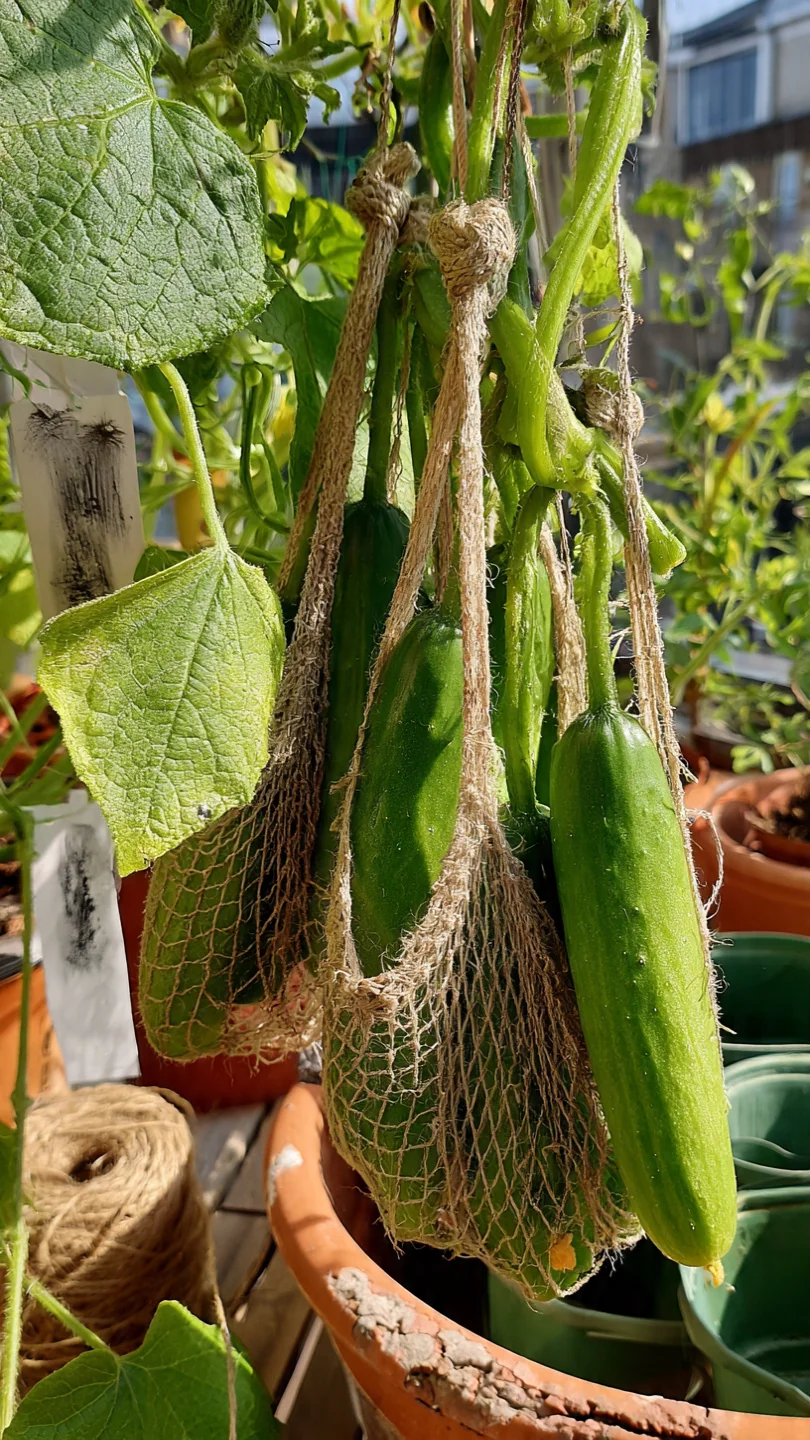
Stretch 4-by-8-foot bird netting between two vertical supports spaced 4 feet apart and anchored at the base. Create individual slings by tying loose netting pockets under developing fruits when they reach 8 inches long. Threshold rule: check sling tension every 10 days in high-wind Branch 1 conditions and loosen as fruits swell to prevent skin marks. The mesh allows air circulation while cradling weight up to several pounds per vine section. This setup prevents ground contact rot in tight balconies and works with both slicing and pickling types. Combine with the cattle panel arch for layered support in exposed spots. See our melon trellis resource for sling variations.
Balcony Railing Clip-On Trellis
Best for: Branch 2
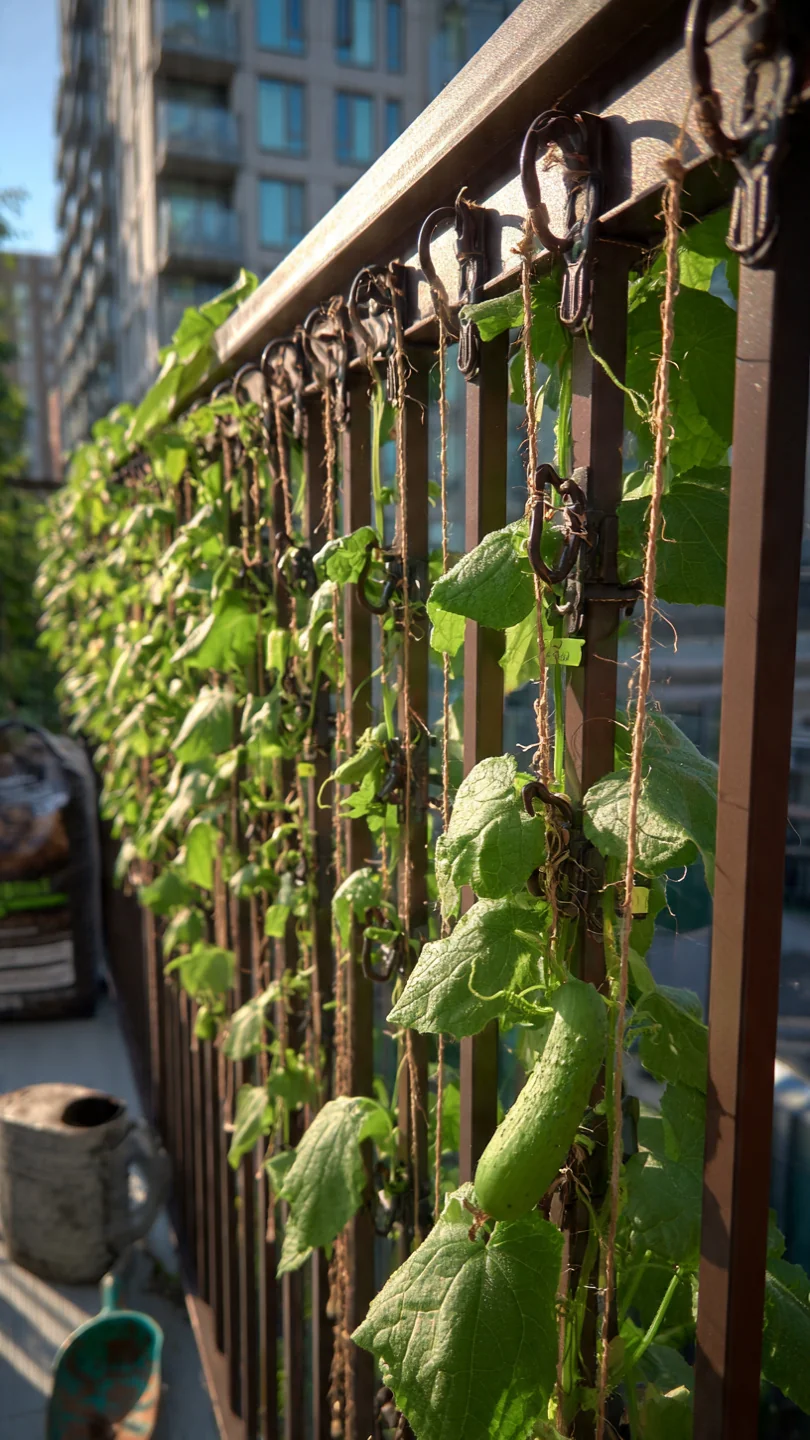
Clip heavy-duty S-hooks every 12 inches along the railing and run vertical twine or coated wire down to the planter base. Takes under 15 minutes and uses no wall drilling. Upgrade: add horizontal cross wires at 18-inch heights for lateral support on longer vines.
Vertical Tomato Cage Hybrid
Best for: Branch 3
Start with a standard 5-foot tomato cage and extend the top with two additional wire rings zip-tied in place for 7-foot total height. Sink legs 12 inches into the container soil at planting. The hybrid design provides rigid rings that cucumbers grip without extra tying after week three. Use for container growers who want one structure that transitions from seedling to harvest. This option stays stable in moderate winds and collapses flat for storage. Full adaptation steps appear in our vertical tomato trellis guide.
Starter Stack (What to Choose First)
Branch 1 Starters
Begin with the Cattle Panel Arch Trellis paired with the PVC Pipe Grid Trellis. The arch handles primary wind and fruit load while the grid adds side stability for compact footprints. Materials cost range: 20 to 45 dollars. Install time: 30 to 60 minutes.
Branch 2 Starters
Start with the Wall-Mounted Twine Ladder and the Adapted Bean Teepee Trellis. The ladder uses vertical space efficiently while the teepee distributes long vines evenly around the cone. Materials cost range: 15 to 35 dollars. Install time: 20 to 40 minutes.
Branch 3 Starters
Choose the Classic Obelisk Trellis and the Recycled Pallet Lean-To Trellis. Both require one-time setup and need no weekly tweaks after month one. Materials cost range: 10 to 30 dollars. Install time: 25 to 50 minutes.
When This Won’t Work
These trellises will not stay upright if your space lacks any solid vertical anchor within 6 feet, such as walls, posts, or railings. Switch instead to fully freestanding container systems. Another measurable failure condition appears when sustained winds exceed 20 mph without additional bracing or when soil temperatures stay below 60 degrees F at planting time, causing vines to sprawl rather than climb. In both cases review our vertical garden maintenance guide for ground-level alternatives or switch to determinate bush cucumber varieties in raised beds.
Choosing the Right Option for Your Situation
Budget Threshold
If your materials budget stays under 30 dollars, limit choices to Effort Score 1 or 2 options from the comparison table such as the Cattle Panel Arch or Recycled Pallet Lean-To.
Time Threshold
If you have less than 45 minutes available for installation, select only one-time setup structures rated Effort Score 1 or 2 and avoid netting systems that need follow-up sling checks.
Technical Constraint: Load Capacity
For varieties producing fruits over 12 ounces each, choose rigid frame systems such as arches, obelisks, or pallet lean-tos that distribute weight without stretching.
Yes/No checklist:
Does your space match one Decision Grid branch exactly?
Is your install time under the chosen threshold?
Does the selected trellis meet your load and wind conditions?
Will you install support before vines reach 18 inches?
Expert Q&A
How do I prevent cucumber vines from slipping off trellis rungs in windy urban balconies?
Space horizontal supports 10 to 14 inches apart to match the natural leaf spread of most vining cucumbers. Use soft plant ties or twist ties every 18 inches along the main stem during the first four weeks of climbing. This keeps vines anchored without restricting growth even when gusts reach 15 mph.
What spacing between rungs prevents vine tangling for vining cucumbers?
Set rungs or strings 12 inches apart vertically and 18 inches apart horizontally. This gap lets leaves spread fully while giving stems room to weave without crossing. Closer spacing under 10 inches causes tangling by week six in most urban container setups.
Can different cucumber varieties share the same trellis structure?
Slicing and pickling types share trellises only if both stay under the same height limit of 7 feet. Pair them on rigid frames such as obelisks but separate heavy-fruit slicers onto netting slings to avoid overload on one side of the structure.
How does trellis material choice affect maintenance in polluted city air?
Galvanized steel or PVC lasts three seasons without rust or rot in urban conditions with moderate pollution. Untreated wood needs sealing every 18 months to resist moisture and mildew. Avoid bare metal that corrodes and leaves residue on foliage.
When should I prune cucumbers on a trellis to keep them contained in small spaces?
Remove side shoots below the first 18 inches of the main stem once vines reach 3 feet tall. Continue removing any shoots growing outside the trellis footprint every two weeks. This keeps growth vertical and prevents overcrowding in containers under 4 square feet.
Conclusion
The Decision Grid ties every cucumber trellis choice directly to your measurable space conditions so you avoid collapse and wasted effort. The number one mistake remains installing support after vines exceed 24 inches, which creates tangled growth that resists correction.
Take the next step with the Starter Stack recommendation for your branch, then explore our stackable planters guide to layer additional vertical elements.