
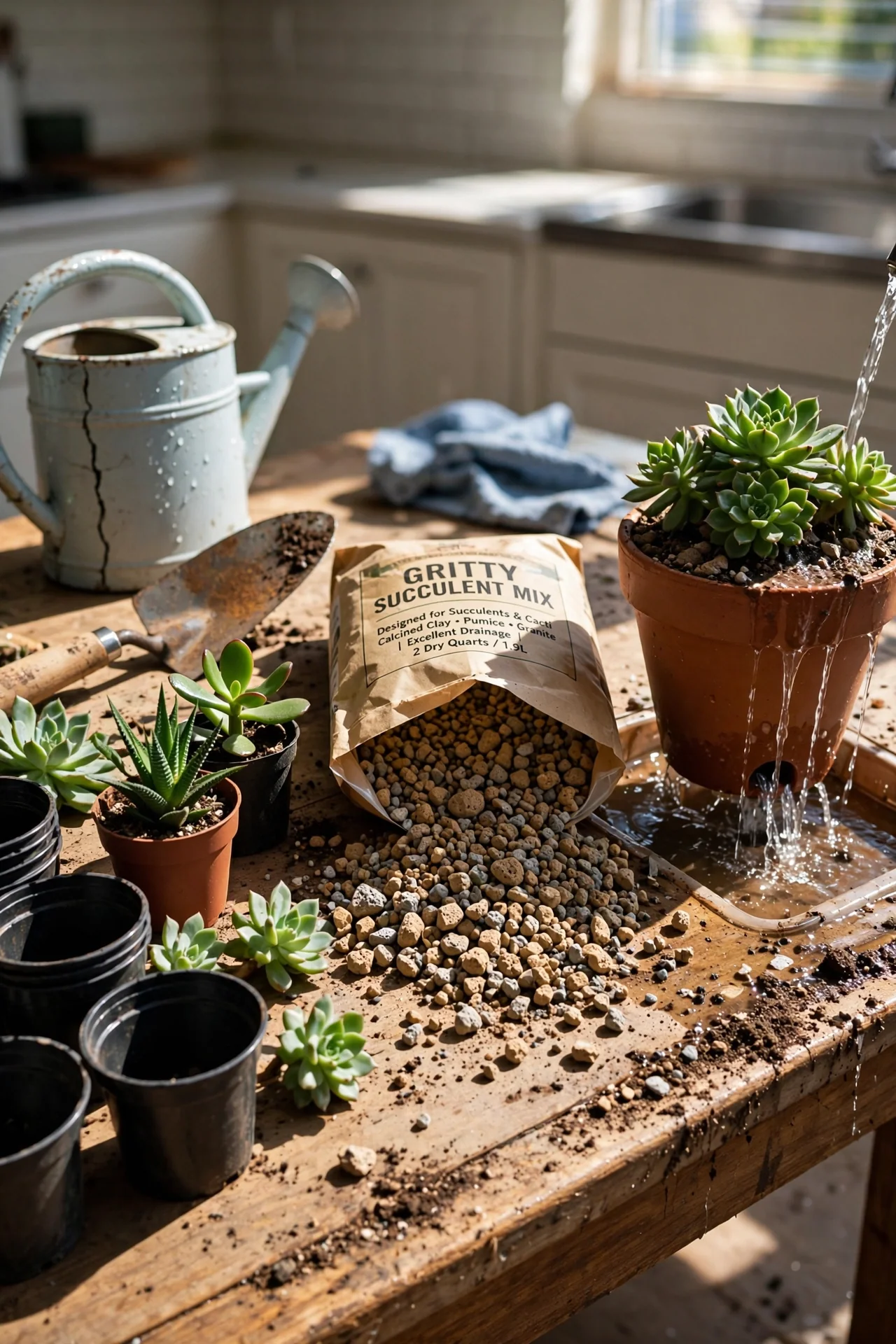
Walk into any garden center and the shelves promise the right answer in a bag. The phrase “cactus mix” printed on plastic suggests the decision ends there. That assumption collapses when you realize a mix that drains perfectly in week one can tighten into a dense, slow-draining mass by month six. The real measure of the best soil for succulents indoors is whether the material holds its shape, air space, and drainage speed across multiple watering cycles rather than degrading each time you wet it.
This guide sorts soil options by what keeps roots breathing long after you pot the plant. Included: commercial gritty mixes, DIY mineral-forward blends, semi-organic bagged soils that need amending, and pure-mineral substrates for growers who want maximum control over moisture timing. Excluded: standard all-purpose potting soil (too water-retentive), outdoor garden soil (compacts dangerously in containers), and any mix containing moisture-retaining crystals or slow-release fertilizer pellets that assume a wetter root zone than succulents tolerate indoors.
By the end of this article you can map your indoor conditions (low light, high humidity, occasional neglect, or frequent attention) to a specific soil decision and understand which two products belong in your first starter stack. You will also learn when swapping soil is smarter than adjusting your watering schedule.
Bottom line: Choose a soil that stays structurally open after six months of wet-dry cycles, not just one that looks gritty when you tear open the bag.
The Yield Grid Decision Grid
Answer the three branches below in order. Follow the branch where you answer yes, then jump to the recommended items listed beneath each section.
Branch 1: Do you have fewer than 10 plants and want a no-mix, pour-straight-from-bag solution?
You prioritize speed and simplicity. You are not currently blending ingredients or measuring ratios. Your risk is purchasing a bagged soil that still holds too much moisture once the organic fraction begins breaking down. You need a product that ships truly gritty right out of the bag, not a standard cactus mix that needs amending. Recommended: Items 1, 3, 7 below.
Branch 2: Are you willing to blend two or three ingredients and want the lowest cost per quart while controlling particle size?
You accept a small time investment (under 15 minutes per batch) in exchange for knowing exactly what ratio of mineral to organic material your plants receive. This path also lets you adjust for specific genera. Recommended: Items 2, 5, 8 below.
Branch 3: Are you growing in a humid indoor environment, using pots without drainage, or fighting persistent fungus gnat problems?
Your conditions demand a soil that dries within 48 hours after watering. Pure-mineral or near-mineral substrates become the practical choice here because organic particles (bark, coir, peat) hold moisture longer and provide habitat for larvae. Recommended: Items 4, 6, 9, 10 below. Before choosing a substrate for pots without drainage, review succulent pot drainage principles.
Quick Comparison Table
| Option | Key Mechanism | Best For | Decision Grid Branch | Effort Score |
|---|---|---|---|---|
| Bonsai Jack Gritty Mix | Uniform calcined clay and pine bark particles maintain air pockets | Beginners who want pour-from-bag reliability | Branch 1 | 1 |
| DIY 1:1:1 Blend (potting soil, coarse sand, pumice) | Three-component mineral-organic balance with adjustable ratios | Growers who want low cost and ratio control | Branch 2 | 3 |
| Hoffman Cactus and Succulent Mix | Peat-based bagged mix with added perlite and sand; benefits from amending | Widely available starter option that needs simple improvement | Branch 1 | 2 |
| Superfly Bonsai Succulent and Cactus Mix | Pre-washed pumice, lava rock, and pine bark in a ready-to-use blend | Humid environments where drying speed is critical | Branch 3 | 1 |
| Pumice-Only Substrate (sifted, 1/8 to 1/4 inch) | Uniform porous volcanic particles drain freely while holding trace moisture inside each grain | Drainage-free pots or terrariums | Branch 2 | 5 |
| Coconut Coir and Perlite Blend (70:30) | Coir provides structure without hydrophobia; perlite creates drainage channels | Peat-free households; growers managing fungus gnats | Branch 3 | 4 |
| Miracle-Gro Succulent Potting Mix | Peat and forest-product base with added perlite and slow-release fertilizer | Budget-conscious beginners with bright, dry indoor spots | Branch 1 | 1 |
| Turface and Granite Grit Mix (equal parts, plus 10% pine bark) | Calcined clay and crushed granite create a long-lasting, non-degrading matrix | Growers who want repotting intervals of 3 years or more | Branch 2 | 3 |
| Akadama and Pumice Blend (60:40) | Japanese volcanic clay holds moisture inside grains while draining between them | Enthusiasts who monitor moisture by color change | Branch 3 | 4 |
| Lechuza Cactuspon | Zeolite, pumice, and lava in a fine-grained, purely mineral substrate | Semi-hydroponic setups or growers who want zero organic breakdown | Branch 3 | 2 |
Bonsai Jack Gritty Mix
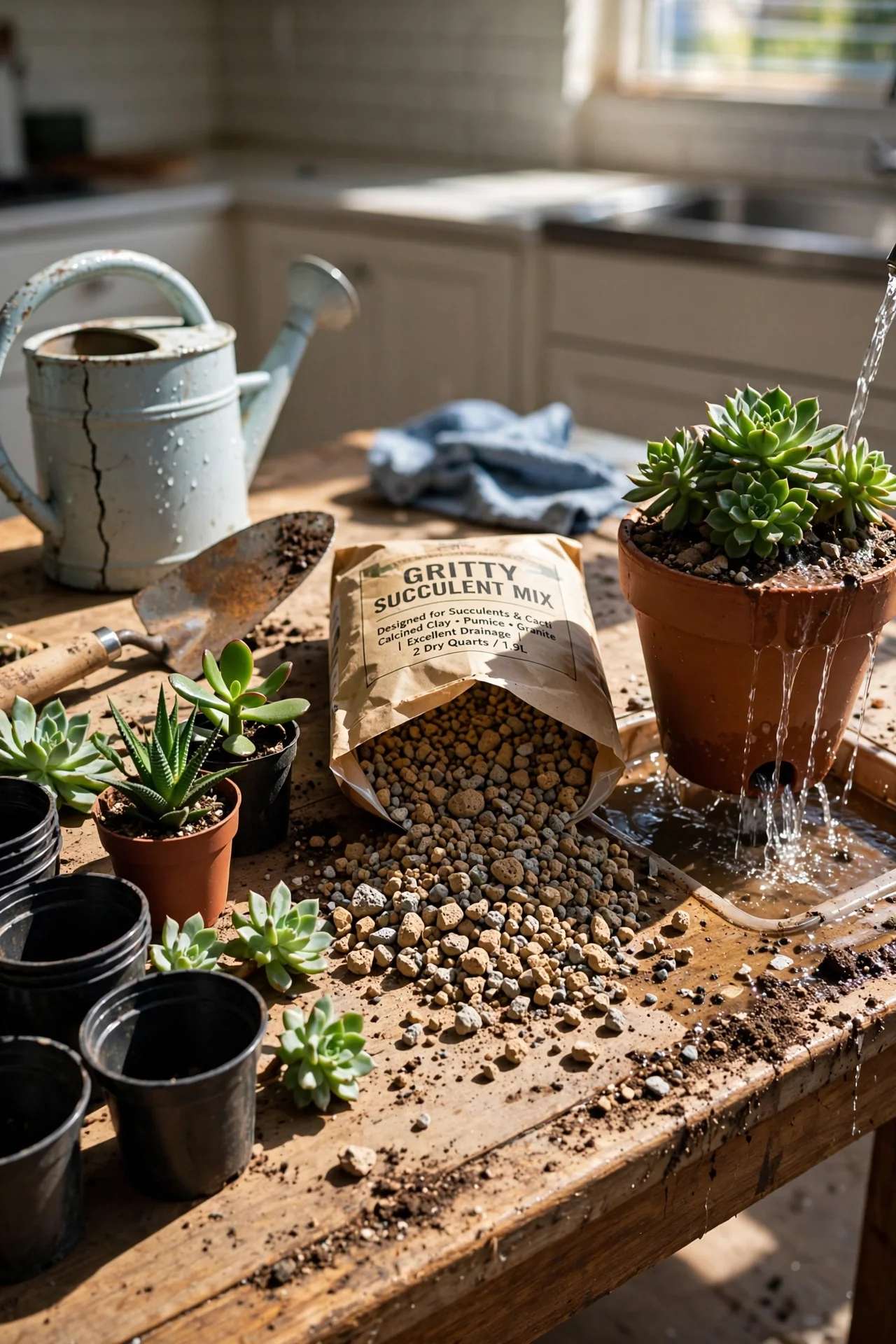
Best for: Branch 1
What it is: A ready-to-use blend of calcined clay, fine pine bark, and montmorillonite clay particles screened to a consistent 1/4-inch size. The uniformity is the feature that matters most. Because every particle is roughly the same size and shape, the mix resists compaction even after repeated top-watering.
Why it earns the top spot: Most bagged mixes include a range of particle sizes from fine dust up to small chunks. The dust settles into voids over time. Bonsai Jack eliminates that problem by removing fines before packaging. Water passes through in seconds, and the remaining moisture clings to the surface of each particle rather than pooling in cavities. This creates a root zone that cycles from wet to damp to dry predictably.
Constraint to know: The fast drainage means you must water more frequently than with organic-heavy mixes. In low-humidity winter indoor air (below 30% relative humidity), some soft-leaved succulents like Haworthia may need watering every 5 to 7 days rather than every 10 to 14 days. The mix also provides negligible nutrition, so a diluted succulent fertilizer at one-quarter strength during the growing season becomes necessary. For guidance on timing feedings with watering frequency, see the indoor succulent watering schedule.
DIY 1:1:1 Blend (Potting Soil, Coarse Sand, Pumice)
Best for: Branch 2
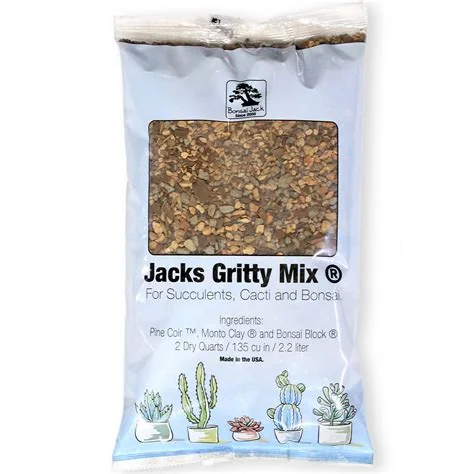
This is the easiest entry point for mixing your own soil. Use one part standard bagged potting mix (no added fertilizer or moisture crystals), one part horticultural coarse sand (not play sand or beach sand), and one part pumice (3/16-inch sifted). The total material cost per quart is roughly one-third of most premium bagged options. The risk of getting this wrong: using fine sand that fills air spaces rather than creating them. Always test a handful by dampening and squeezing: water should stream out, not seep.
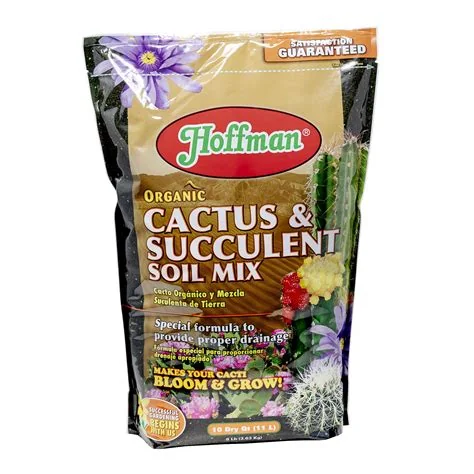
Hoffman Cactus and Succulent Mix
Best for: Branch 1
Hoffman is the most accessible bagged option in North American garden centers and online. The base blend of peat, perlite, and sand drains adequately out of the bag. However, the organic fraction (peat and forest products) begins breaking down after approximately 8 to 12 months, gradually slowing drainage. The practical upgrade: mix three parts Hoffman with one part additional pumice or perlite before potting. This single amendment extends the structural life of the mix by roughly another year by creating fresh air channels that persist as the peat fraction compresses. If you are repotting a plant that has been in the same container for over a year, the guide on how to repot succulents walks through root inspection and soil replacement steps.
Superfly Bonsai Succulent and Cactus Mix
Best for: Branch 3
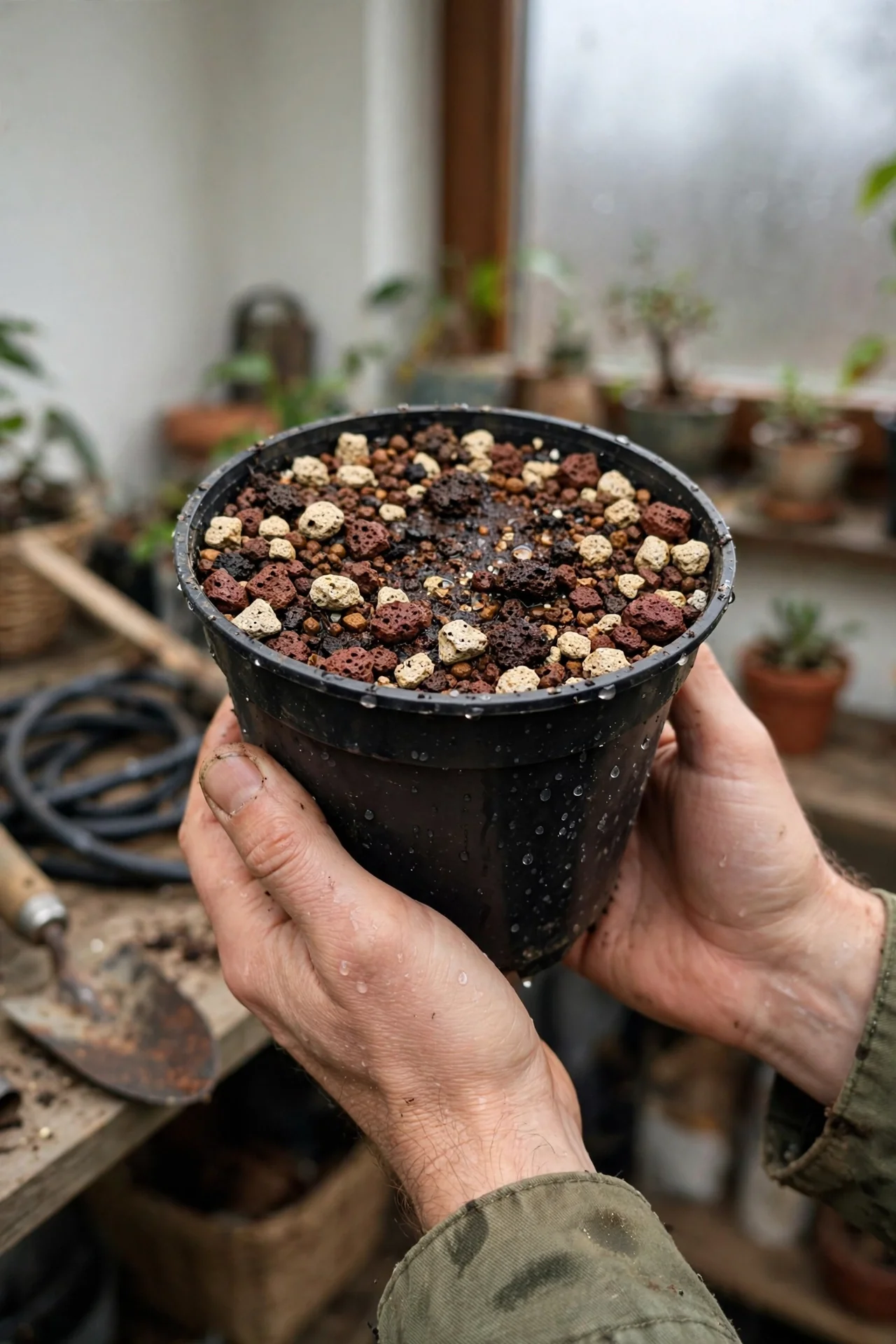
What it is: A pre-mixed blend of pumice, lava rock, and pine bark. Unlike the Bonsai Jack mix, Superfly uses pumice as the primary component rather than calcined clay. Pumice has a closed-porosity structure: it holds a small amount of water inside each granule while leaving the spaces between granules open for air. This dual behavior means roots access moisture without sitting in it.
Edge case where it shines: Indoor spaces with ambient humidity above 60% (common in coastal regions or bathrooms with plants). In these conditions, organic-heavy mixes can stay wet for 5 days or longer. Superfly dries within 36 to 48 hours in the same environment because lava rock and pumice do not absorb humidity from the air.
10-minute workflow: Fill the pot to the base of the root ball, position the plant, backfill with mix, and tap the pot sides gently to settle particles around roots. Do not press down or compact. Wait 24 hours before the first light watering to let any root damage from repotting callus. For plants that arrive bare-root by mail, the propagation guide covers handling rootless cuttings in a similar mineral substrate.
Pumice-Only Substrate (Sifted, 1/8 to 1/4 Inch)
Best for: Branch 2
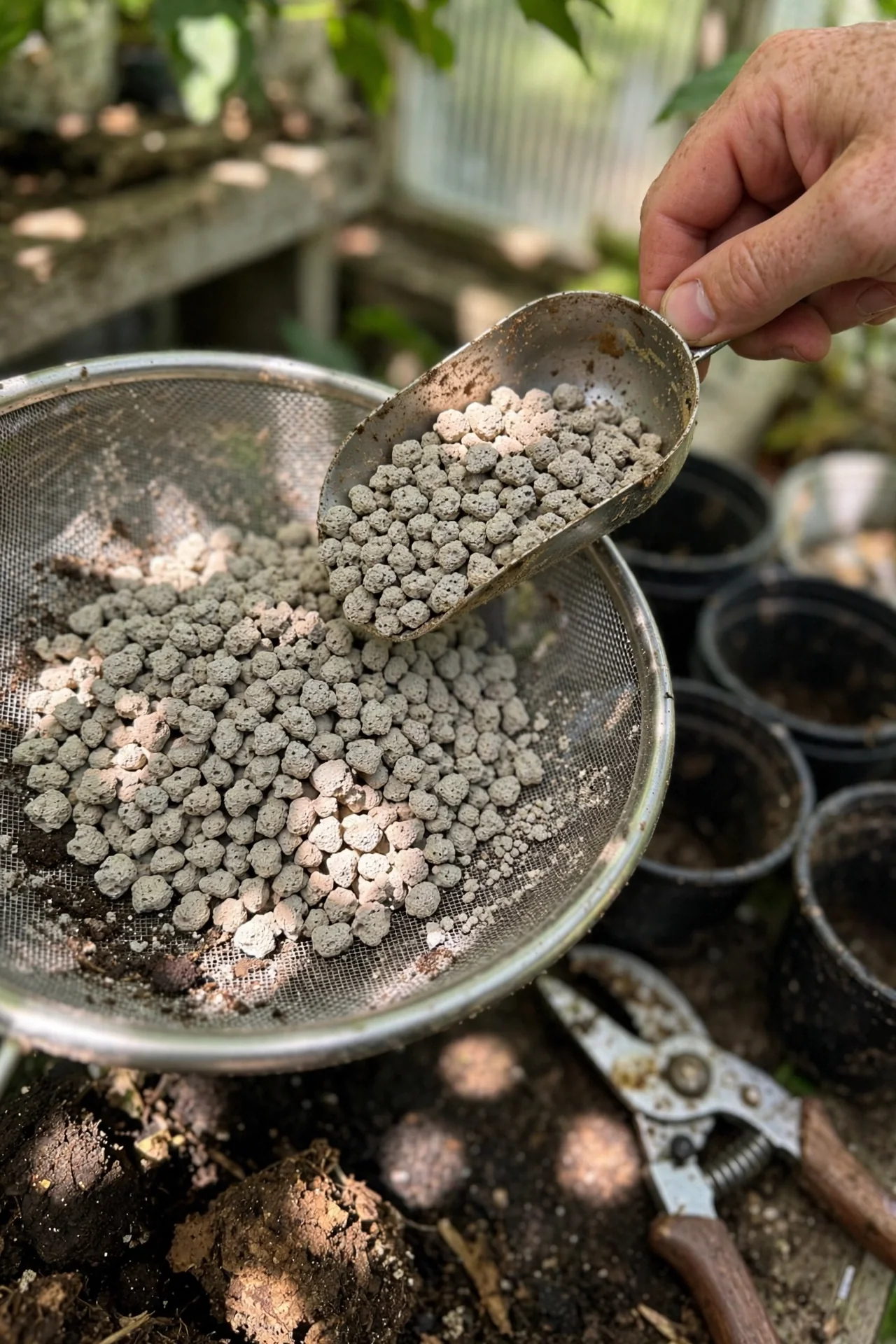
A pumice-only substrate removes organic material entirely. Each particle is a porous volcanic rock that holds water inside microscopic cavities while draining instantly between particles. The constraint is nutrient management: pumice contains no nitrogen, phosphorus, or potassium, so you must fertilize with every watering during the active growth months. This approach works particularly well for Lithops and other mesembs that rot if organic matter touches their roots for more than a day. Screen the pumice to remove particles smaller than 1/8 inch before using; fines defeat the purpose by clogging air channels.
Coconut Coir and Perlite Blend (70:30 by Volume)
Best for: Branch 3
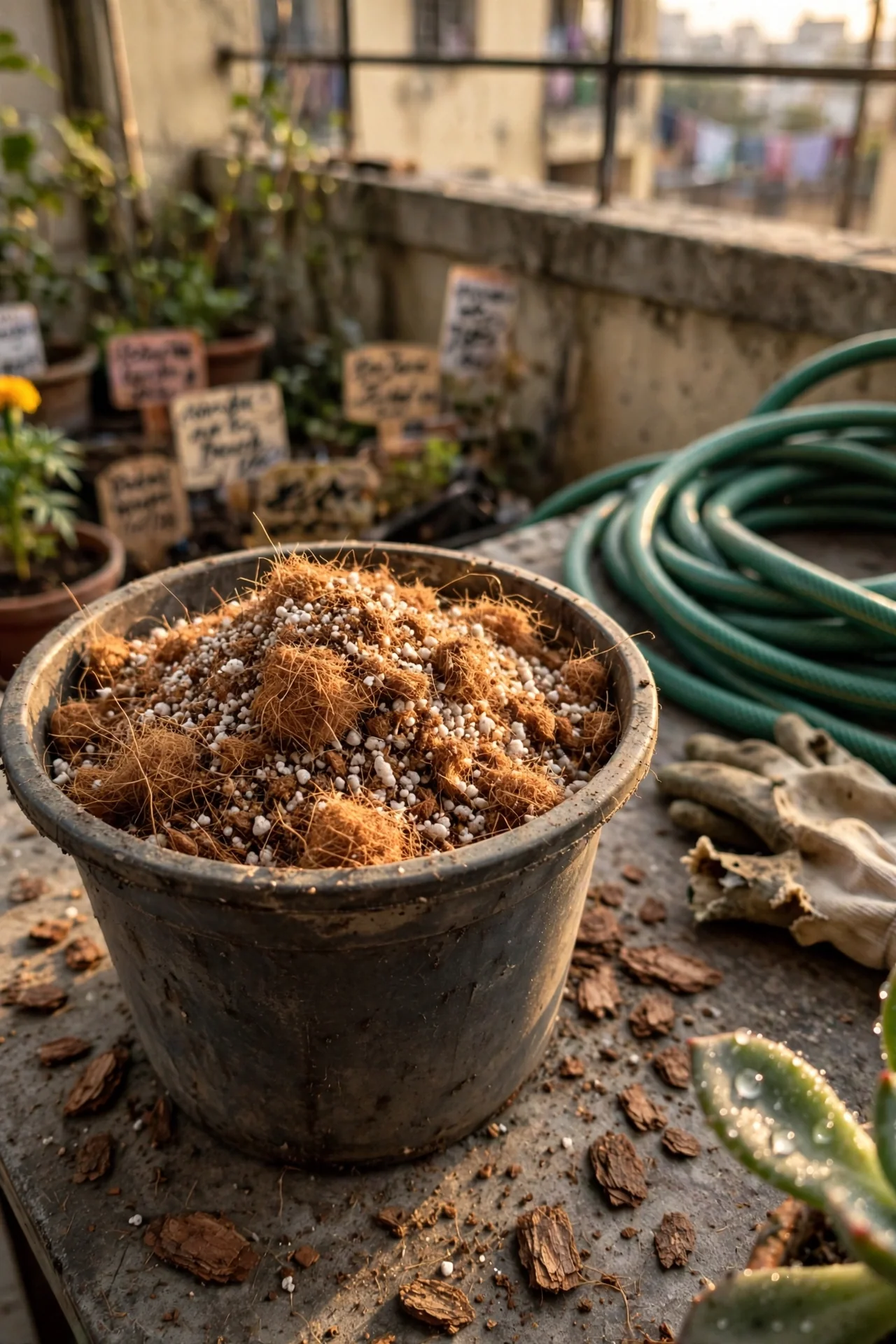
Coir replaces peat in this blend. Unlike peat, which becomes hydrophobic when fully dry and resists rewetting, coir rehydrates readily. The perlite fraction creates drainage channels through the coir matrix. This blend works for growers who struggle with fungus gnats because coir, while organic, decomposes more slowly than peat and supports fewer larvae when allowed to dry between waterings. If fungus gnats are already present, the fungus gnat management article explains non-chemical control methods compatible with a fast-drying substrate.
Miracle-Gro Succulent Potting Mix
Best for: Branch 1
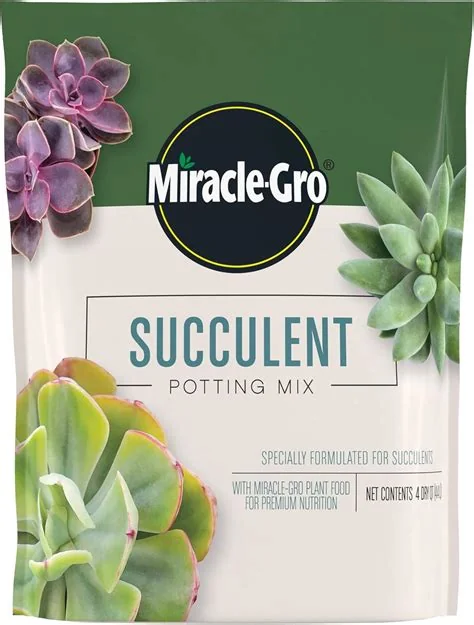
This is the most widely available commercial mix in the US, UK, and Canada. The peat-based blend includes perlite and a dose of slow-release fertilizer. In bright, dry indoor spots (south-facing windowsill in a heated home during winter), it can work straight from the bag. In lower-light rooms or humid conditions, the peat fraction holds moisture too long. The adjustment that costs nothing: remove any large bark chunks by hand before using, then mix in one additional cup of perlite per quart of Miracle-Gro soil. This simple step brings the drainage speed closer to that of the premium gritty mixes.
Turface and Granite Grit Mix (Equal Parts, Plus 10% Pine Bark)
Best for: Branch 2
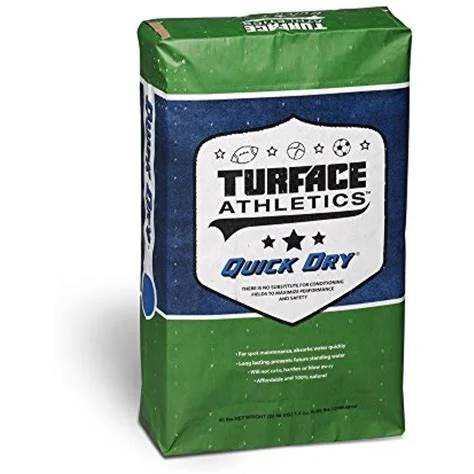
Turface is a high-fired calcined clay product originally developed for baseball infields. It absorbs water and releases it slowly without softening or breaking down over time. Combined with crushed granite grit (chicken grit from feed stores works as a budget alternative), the mix creates a near-permanent soil structure that can remain functional for 3 years or longer without repotting. The 10% pine bark addition provides a minimal organic nutrient source and slight acidity to offset the neutral pH of the mineral components. This mix is heavy; use lightweight plastic or fiberglass pots rather than ceramic or terracotta if you move plants frequently.
Akadama and Pumice Blend (60:40)
Best for: Branch 3
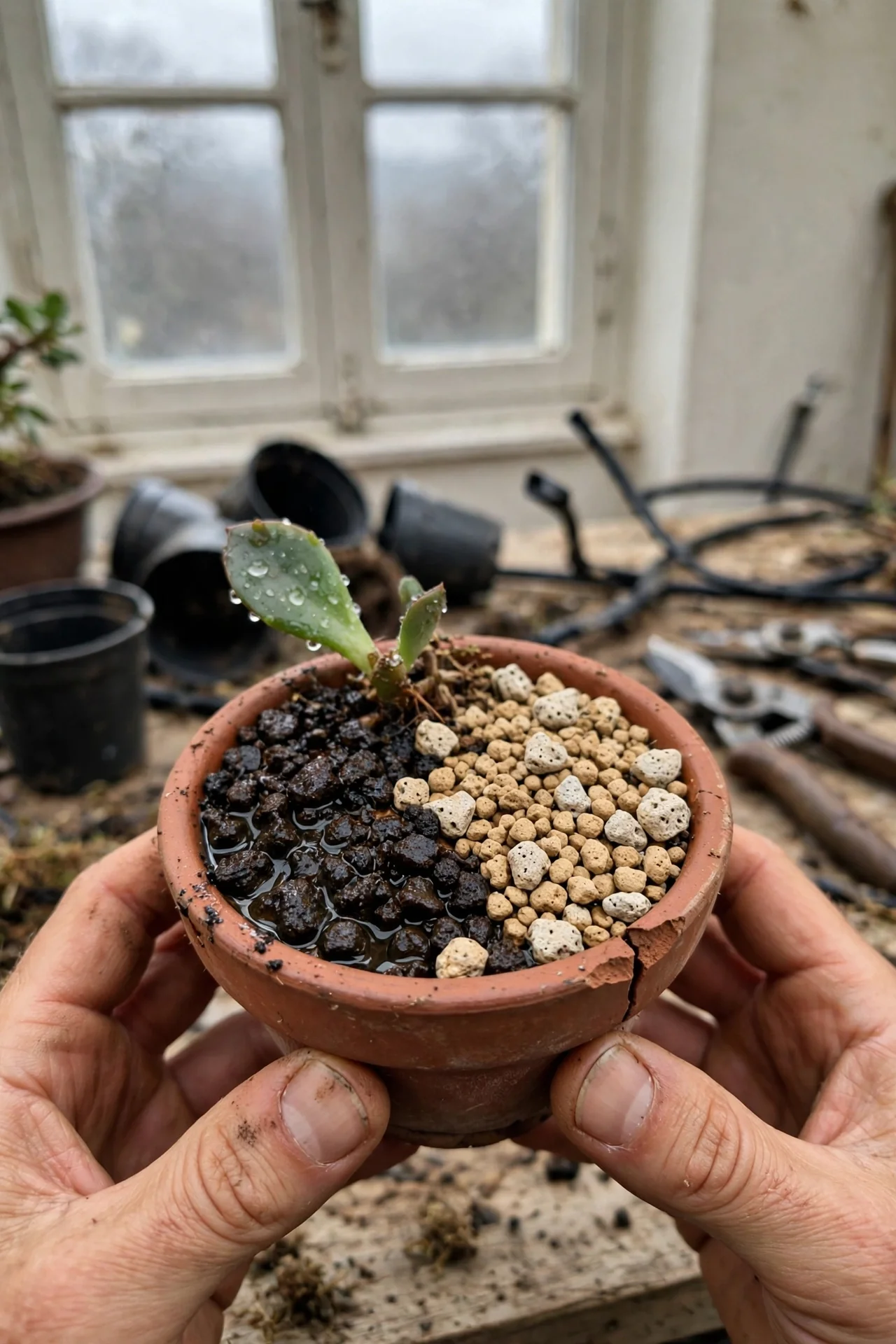
What it is: Akadama is a granular volcanic clay mined in Japan. It is sold in three hardness grades; for succulents, select the hard-fired variety labeled “double-red-line” or “triple-line” to avoid granules breaking down into sludge within a year. When combined with pumice, the blend provides a moisture indicator that no other substrate offers: akadama darkens visibly when wet and lightens as it dries.
Threshold rule: Water when the akadama surface returns to its dry, pale tan color. This visual cue removes the guesswork from the finger-test method. The constraint is availability and cost. Akadama is imported and priced higher per quart than domestic alternatives. In the US and Canada, a 13-liter bag costs between $35 and $50. For growers in Australia, a domestically produced alternative called “diatomite granules” (sold as Maidenwell or similar) provides comparable visual moisture indication at a lower local cost.
Use-vs-skip: Use this blend if you tend to overwater and want a substrate that tells you when it is dry. Skip it if you live in an arid climate with indoor humidity consistently below 25%, because the akadama will dry too quickly between watering sessions and require near-daily attention.
Lechuza Cactuspon
Best for: Branch 3
Cactuspon is a purely mineral substrate made from zeolite, pumice, and lava rock, ground to a fine consistency that supports even small-rooted succulents. Because it contains zero organic material, there is nothing to decompose, compact, or host fungus gnat larvae. This makes it the substrate of choice for semi-hydroponic setups where a water reservoir sits below the root zone. The zeolite component also buffers fertilizer salts, reducing the risk of root burn from overfeeding. If you grow succulents in a terrarium arrangement where drainage is limited, Cactuspon provides a safer root environment than any peat-based mix.
Starter Stack (What to Choose First)
Branch 1 Starter Stack: Bonsai Jack Gritty Mix and Miracle-Gro Succulent Mix
Start with one bag of Bonsai Jack for your most valuable or rot-prone plants (Echeveria, Lithops, Pachyphytum). Use Miracle-Gro amended with extra perlite for your larger, faster-growing plants (Aloe, Crassula ovata). Together, these two products cover the reliability end and the budget end of the ready-to-use spectrum. Total cost for both: approximately $25 to $35. Time investment: under 5 minutes per plant for potting.
Branch 2 Starter Stack: DIY 1:1:1 Blend and Turface-Granite Mix
Mix a small batch of the 1:1:1 blend for your current collection and test the Turface-granite mix on one plant you intend to keep in the same pot long-term. This gives you a low-cost daily driver and a long-term structural option side by side. Total material cost for both: approximately $30 to $45, yielding enough soil for 15 to 20 small pots. Batch mixing time: 15 to 20 minutes.
Branch 3 Starter Stack: Superfly Bonsai Mix and Cactuspon
Use Superfly for standard pots with drainage holes in humid rooms. Use Cactuspon for any container without drainage or for plants in cachepot systems where you cannot easily dump excess water. Together they eliminate organic decomposition as a variable. Combined cost: approximately $35 to $50. The learning curve involves adjusting your fertilizer routine since neither product contains nutrients.
When This Won’t Work
Condition one: you are using a pot that is more than 2 inches wider than the root ball. No soil, regardless of how well it drains, can compensate for a container that holds a large volume of unused, moisture-retaining medium around a small root system. The soil in the outer zone stays wet because roots never reach it, creating a zone of anaerobic breakdown that eventually spreads inward. The fix is straightforward: choose a pot that leaves no more than 1 inch of space between the root mass and the container wall on all sides.
Condition two: your indoor light levels are below 1,000 lux for more than 8 hours per day during the growing season. In dim conditions, succulents slow their water uptake dramatically. Even the fastest-draining gritty mix will stay wet too long if the plant is not actively transpiring. The alternative action is to address light first. A small full-spectrum LED grow light positioned 6 to 12 inches above the plants can bring light levels into the range where normal soil drying cycles resume. Once light is adequate, revisit the soil decision using the grid above. If you are unsure which succulents can handle lower light while you improve conditions, the list of low-light-tolerant succulents identifies species that forgive dimmer windowsills.
Choosing the Right Option for Your Situation
Budget Threshold
If your total soil budget is under $20, start with the DIY 1:1:1 blend or Miracle-Gro amended with perlite. Both deliver adequate drainage at the lowest cost per quart. Premium gritty mixes become cost-effective when you have fewer than 10 plants, because the price difference per plant is small in absolute terms.
Time Threshold
If you have less than 10 minutes per month to devote to soil management, stick with Branch 1 options (Bonsai Jack, Superfly, or amended Miracle-Gro). These require no batch mixing. If you can dedicate one 20-minute session every 6 to 8 months for soil preparation, Branch 2 options unlock lower costs and more customization.
Technical Constraint: Peat vs. Coir in Arid Indoor Climates
If your indoor relative humidity stays below 25% for weeks at a time (common in heated homes during winter in the US Midwest, Canadian prairies, or inland Australia), avoid peat-based mixes. Peat becomes hydrophobic when fully dry and resists rewetting, causing water to bead and run down the inside of the pot without reaching roots. Coir-based or pure-mineral substrates rehydrate reliably under these conditions.
Quick Yes/No Checklist:
Does your pot have a drainage hole? Yes / No
Can you see light through the soil particles when you hold a handful up? Yes / No
Does water exit the drainage hole within 10 seconds of pouring? Yes / No
Has the plant been in the same soil for more than 18 months? Yes / No
Expert Q&A
Why does bagged succulent soil sometimes repel water instead of absorbing it?
Peat-based mixes that have dried out completely develop a waxy coating on the peat particles. Water beads on the surface and runs down the container sides without wetting the root zone. The solution is bottom-watering: place the pot in a shallow tray of water for 20 to 30 minutes, allowing moisture to wick upward through the drainage hole until the surface darkens.
Can I reuse succulent soil after a plant dies, or should I discard it?
If the plant died from root rot caused by fungal or bacterial pathogens, discard the soil. These organisms can survive in dry conditions and infect the next plant. If the plant died from underwatering or physical damage, the soil can be reused after sifting out decomposed organic particles and mixing in fresh pumice or perlite to restore drainage structure.
Is perlite or pumice better for indoor succulent mixes?
Pumice is heavier and stays in place; perlite floats to the surface during watering and can blow away if you use a fan. Pumice also holds water inside its pores, releasing it slowly, whereas perlite primarily creates air channels. For indoor pots that stay in one place, either works. For plants you move frequently, pumice avoids the mess of perlite dust and surface migration.
Do terra cotta pots change the soil decision?
Yes. Terra cotta wicks moisture through the pot walls, accelerating drying. This means you can use a slightly more organic mix (two parts mineral to one part organic instead of three to one) without risking waterlogged roots. The tradeoff: terra cotta pots in arid indoor air may dry the soil so quickly that roots near the pot wall desiccate. Monitor those plants more frequently during the first month after repotting.
How do I know if my indoor succulent soil has gone bad without unpotting the plant?
Three signs: water pools on the surface for more than 15 seconds before draining, the soil surface develops a hard crust that cracks when dry, or the pot feels heavier than it should relative to its size a week after watering. Any of these indicates organic breakdown and compaction. The next step is removing the plant, inspecting roots, and replacing the soil entirely rather than trying to amend it in-place.
Conclusion
The soil decision that matters most is not which brand you buy but whether the substrate you choose can maintain its fast-draining structure through months of wet-dry cycling inside a container. Organic materials that look ideal on day one can degrade into the same compacted problem you were trying to avoid.
The most common mistake is selecting a bagged mix labeled “cactus and succulent” and assuming the formulation is complete. Most commercial mixes benefit from adding one extra scoop of pumice or perlite per quart before potting. If you take one action after reading this guide, make it that amendment. For the full soil-building picture, the succulent soil mix recipe guide walks through ingredient sourcing and batch mixing in detail.