
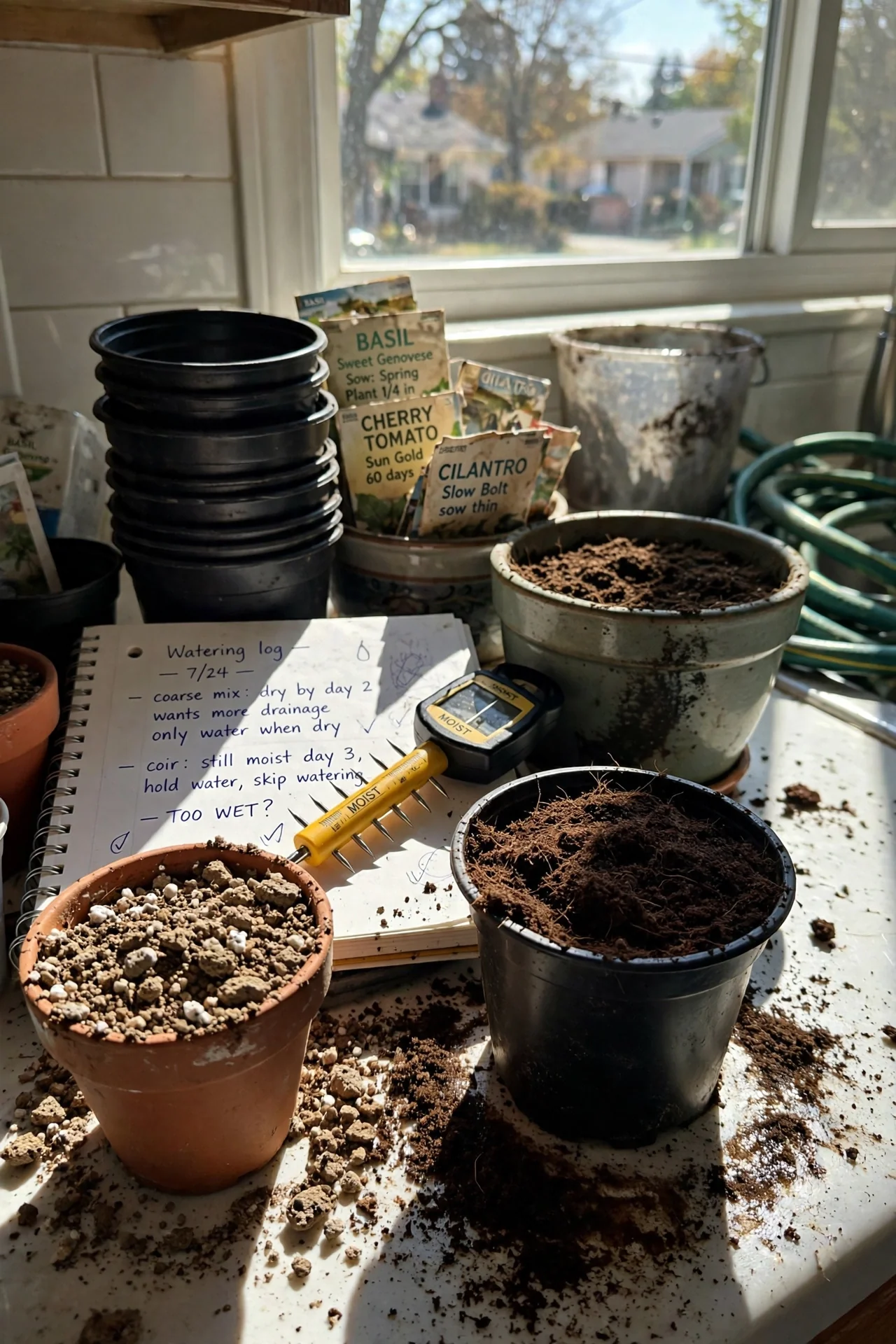
Most indoor herb soil advice focuses on whether a plant likes it “moist” or “dry.” That approach misses the real variable that kills herbs indoors: how often you, the gardener, actually water. This guide inverts the logic. Instead of hunting for a specific basil mix or a rosemary mix, you’ll choose a soil class based on your watering rhythm, indoor humidity, and container type. The result is a root environment that forgives your habits instead of punishing them.
We cover container-ready potting mixes, amendment blends, and inert aggregate mediums used in passive hydroponic setups. Garden soil, pure compost, and dedicated hydroponic nutrient solutions are excluded because they cause compaction, salt buildup, or require feeding regimens beyond the scope of this guide.
After reading, you’ll know exactly which of the 9 options below aligns with whether you check your plants daily or leave them for a week, whether your home is humid or arid, and whether you prefer a pre-bagged solution or a custom blend.
Bottom line: Pick the soil that buffers your watering pattern, and you eliminate the single biggest cause of indoor herb failure.
The Yield Grid Decision Grid
Use these three branches to filter the list. Each branch maps to a distinct watering profile, not a plant species.
- Branch 1: Frequent Waterer (more than 3 times per week) — You check soil moisture daily and tend to add water before the top inch dries. Your soil needs rapid drainage to prevent roots sitting in saturated conditions. Recommended: Items 3, 6, 8 below.
- Branch 2: Consistent Moderate Waterer (every 5–7 days) — You water when the top inch of soil feels dry to the touch, and the pot feels light. A balanced mix that holds moisture without staying soggy works best. Recommended: Items 1, 2, 4, 9 below.
- Branch 3: Infrequent Waterer (less than once a week) — You travel often, or your schedule makes regular watering difficult. Look for mixes with high water-holding capacity or compatibility with self-watering systems. Recommended: Items 5, 7 below.
For a deeper dive into setting up the right container environment, see our windowsill herb garden guide.
Quick Comparison Table
| Option | Key Mechanism | Best For | Decision Grid Branch | Effort Score (1–5) |
|---|---|---|---|---|
| 1. Coir-Based Indoor Potting Mix | High water retention, good aeration | Moisture-loving herbs, moderate waterers | Branch 2 | 2 |
| 2. Standard Peat-Perlite Blend | Lightweight, balanced drainage | All-purpose culinary herbs | Branch 2 | 1 |
| 3. Cactus & Succulent Mix | Fast drainage, low organic matter | Drought-tolerant herbs, overwaterers | Branch 1 | 1 |
| 4. Worm Castings-Enriched Organic Soil | Slow-release nutrition, microbial activity | Heavy feeders, moderate waterers | Branch 2 | 3 |
| 5. Self-Watering Planter Mix | Capillary wicking, moisture reservoir | Infrequent waterers, closed systems | Branch 3 | 1 |
| 6. Biochar-Infused Potting Soil | Long-term aeration, nutrient retention | Overwaterers, shallow containers | Branch 1 | 2 |
| 7. DIY Modular Blend | Customizable ratios of coir, perlite, compost | Gardeners who want full control | Branch 3 | 5 |
| 8. Hydroponic Aggregate Medium (LECA) | Inert, wicks water, reusable | Passive hydro setups, frequent waterers | Branch 1 | 4 |
| 9. All-Purpose Indoor Container Mix with Slow-Release Fertilizer | Pre-charged nutrients, moderate drainage | Forgiving maintenance, moderate waterers | Branch 2 | 1 |
1. Coir-Based Indoor Potting Mix
Best for: Branch 2
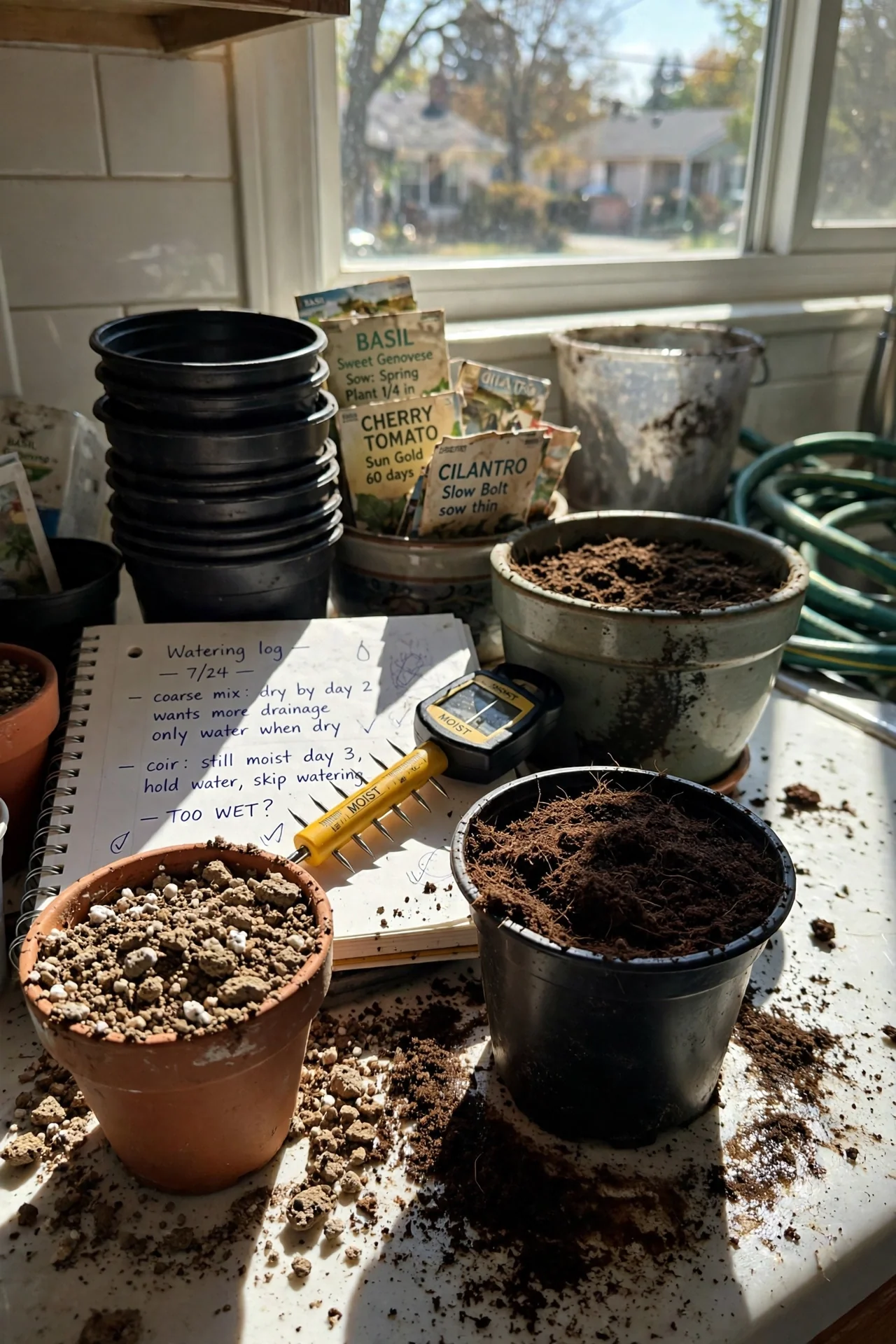
What it is: A soil-less blend where the primary base is coconut coir fiber, often buffered to remove excess salts. It retains roughly 8–10 times its weight in water while maintaining 20–30% air-filled porosity when properly amended. This mix suits leafy herbs like cilantro, basil, and parsley that thrive in consistently moist (but not wet) root zones.
For: Gardeners who water every 5–7 days and battle dry indoor air.
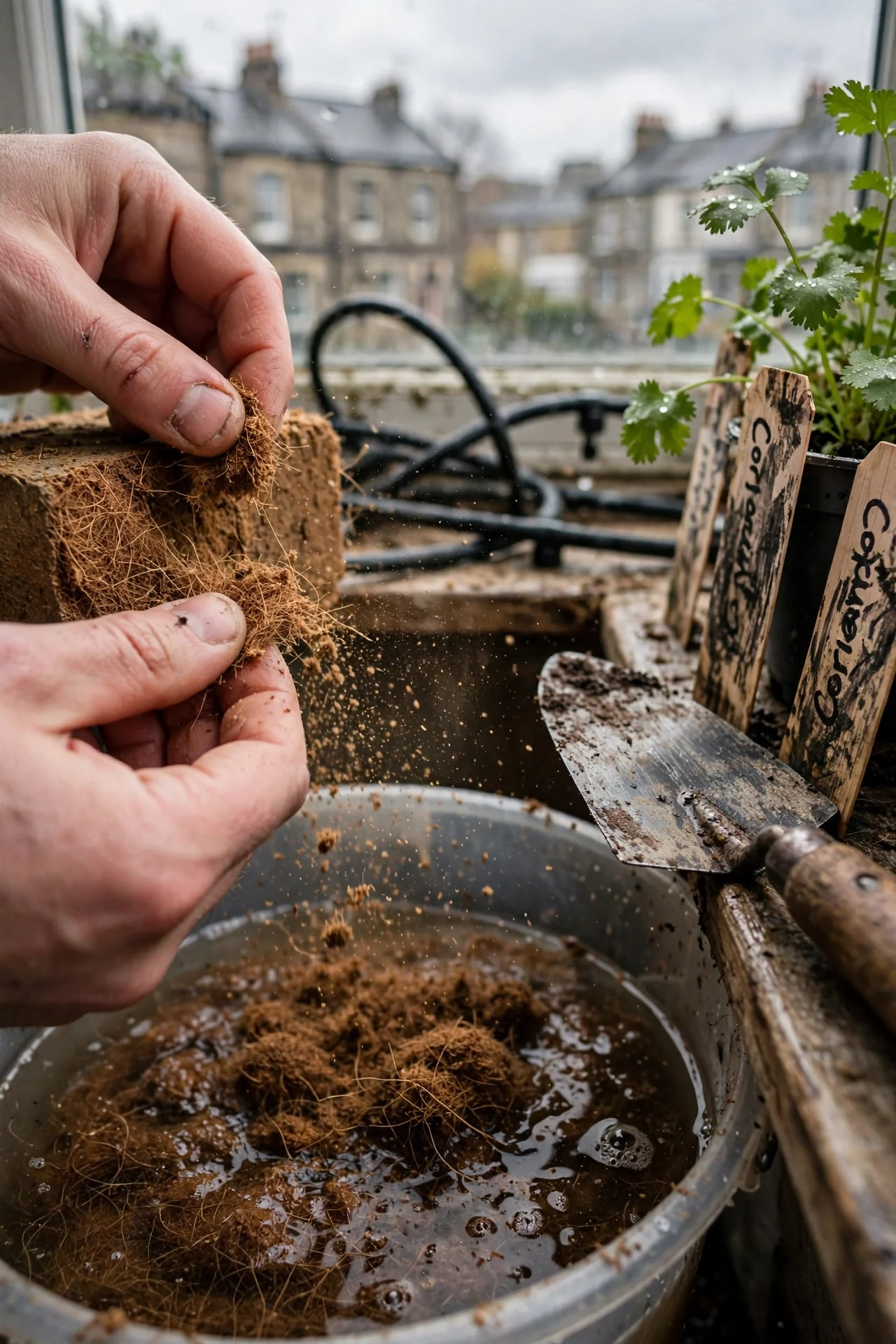
Steps to use: Buy a low-salt, pre-rinsed coir brick. Rehydrate it with warm water (3 parts water to 1 part coir by volume). Mix in 20% perlite by volume to lift aeration. Fill pots, sow or transplant, and water thoroughly. Top-dress with a balanced organic fertilizer every 4 weeks.
Common mistake: Assuming coir provides calcium. Coir naturally binds calcium and magnesium. If you use soft water or a calcium-poor fertilizer, herbs like cilantro can develop tip burn. Add 1 teaspoon of gypsum per gallon of mix as a preventative. For more on cilantro’s specific needs, check our indoor cilantro guide.
2. Standard Peat-Perlite Blend
Best for: Branch 2
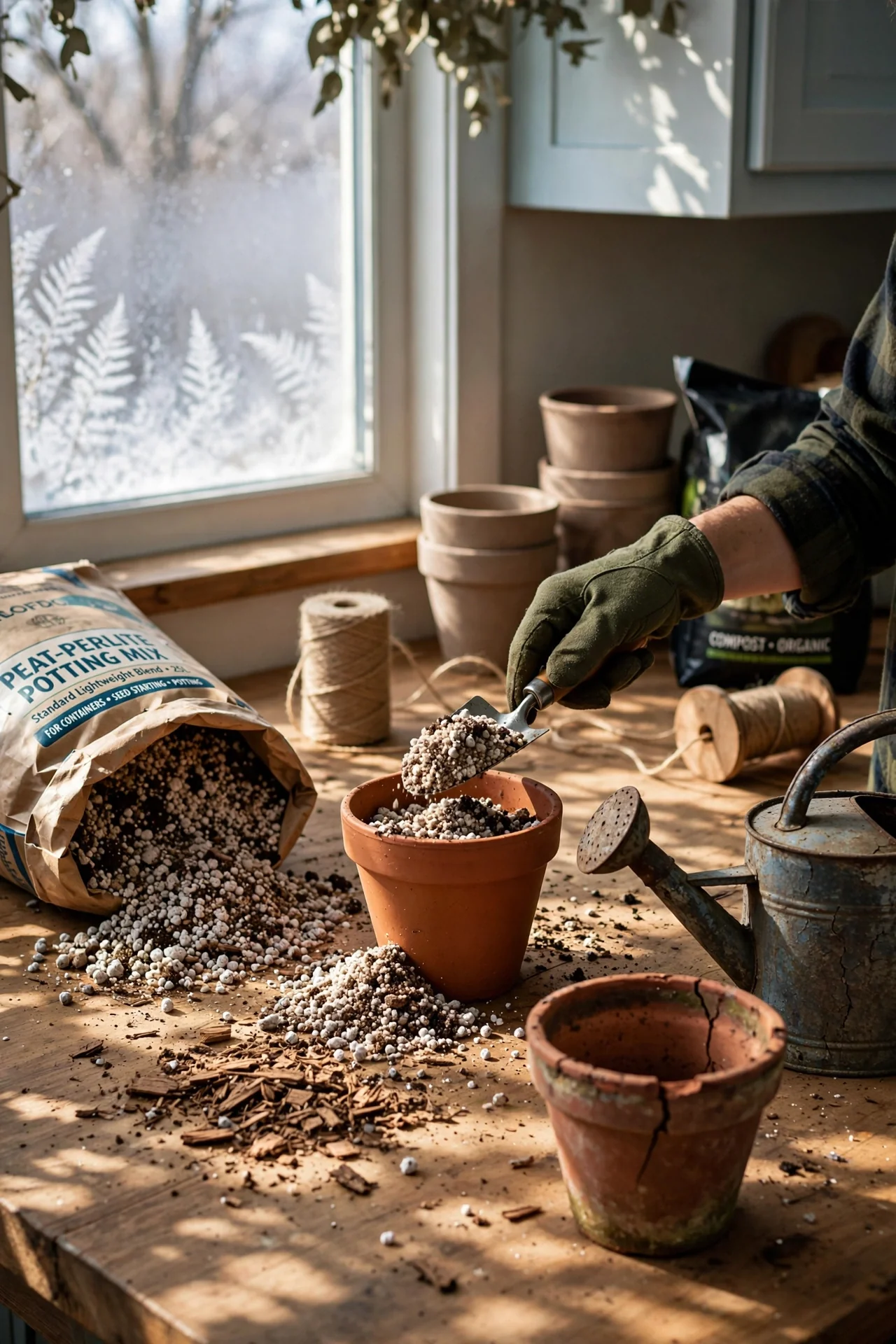
Use it if: you want a reliable, lightweight, budget mix for most culinary herbs and you keep a consistent watering schedule. It drains well enough to avoid sogginess yet holds adequate moisture for 5–7 day intervals. Skip it if: you’ve had recurrent fungus gnat issues, as decomposing peat can hold too much moisture in low-airflow indoor spaces. One edge case: dry peat becomes hydrophobic, so always pre-moisten the mix with warm water before planting.
3. Cactus & Succulent Mix
Best for: Branch 1
The threshold that matters: a properly formulated cactus mix should allow water to flow through a 4-inch pot of dry soil in under 10 seconds when you pour 1 cup of water. If it takes longer, the mix lacks enough coarse sand, pumice, or perlite. For overwaterers growing rosemary, thyme, or oregano, this rapid drainage prevents root rot. One limitation: these mixes contain very little organic nutrition. You must supplement with a dilute liquid feed (half-strength every 2–3 waterings) or the herbs will stall. For rosemary’s specific drainage requirements, see our grow rosemary indoors article.
4. Worm Castings-Enriched Organic Soil
Best for: Branch 2
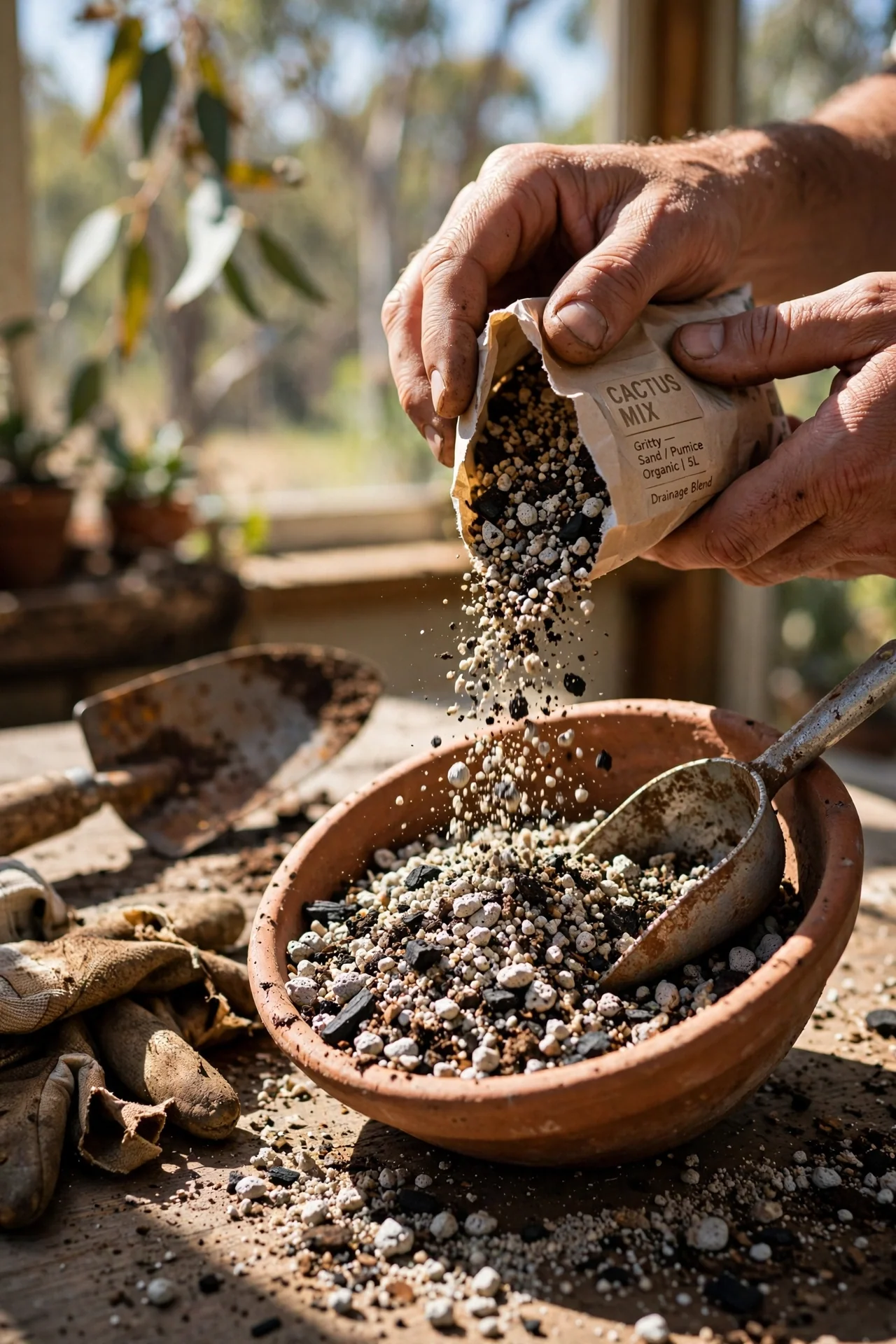
10-minute workflow: Start with a high-quality bagged potting mix (peat or coir based). In a bucket, combine 3 parts potting mix with 1 part pure worm castings by volume. Mix thoroughly, moisten lightly, and fill your containers. Plant herbs like mint, chives, or basil. Monthly maintenance: top-dress each pot with a 0.5-inch layer of fresh castings and water in. Upgrade option: blend in 2 tablespoons of granular mycorrhizal inoculant per gallon of soil at planting time to boost root surface area. What to avoid: using castings as more than 25% of total volume in pots deeper than 8 inches. Excess castings in tall pots compact over time, squeezing out oxygen at the root tips.
5. Self-Watering Planter Mix
Best for: Branch 3
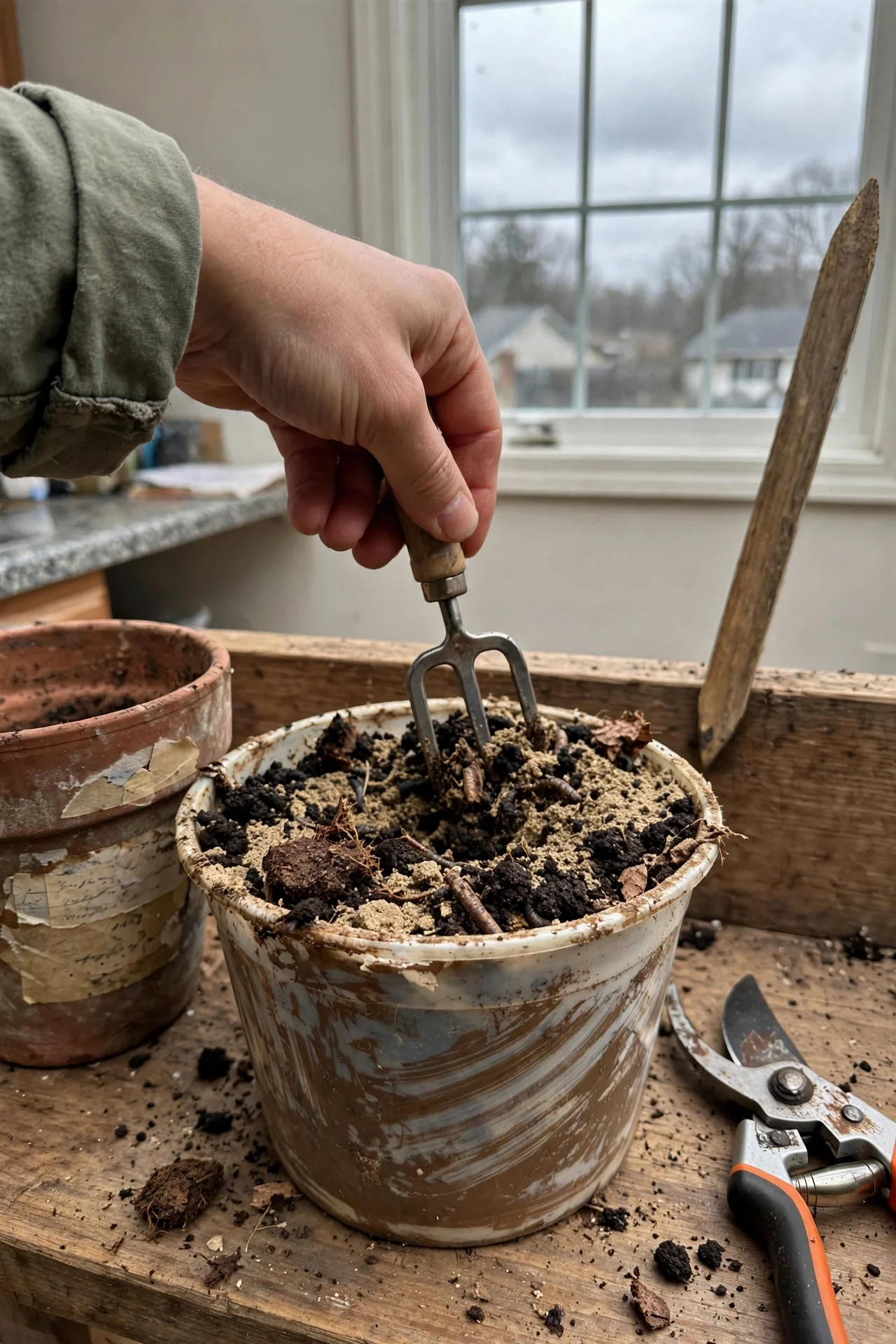
Use it if: your container has a built-in water reservoir and wicking system. These mixes are typically peat or coir based with high capillary action, pulling moisture upward. Skip it if: you use unglazed terra cotta pots, which wick moisture away from the mix and defeat the self-watering mechanism. A critical edge case: some wicking mixes contain water-storing polymer crystals that degrade after 6–12 months, leaving a sludgy layer at the bottom. Look for mixes that rely on natural fiber wicking instead. For planter selection help, read our self-watering planter guide.
6. Biochar-Infused Potting Soil
Best for: Branch 1
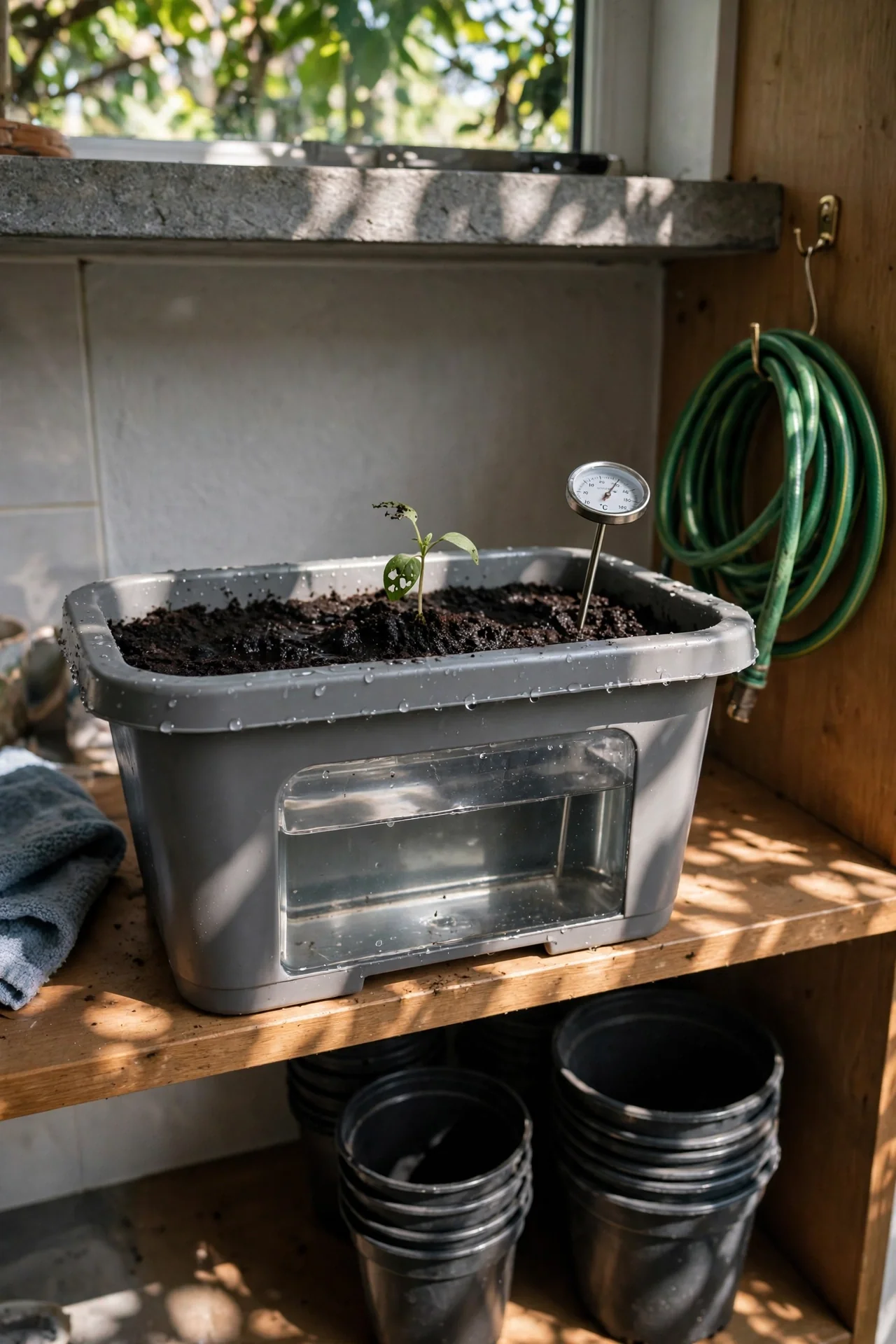
Biochar works as a permanent soil amendment that improves aeration and nutrient-holding capacity, but it must be used at the right ratio: 1 part charged biochar to 4 parts potting mix by volume. If you add uncharged biochar (fresh from the bag without soaking in compost tea or fertilizer), it will aggressively adsorb nitrogen for the first 2–4 weeks, starving your herbs. This makes it ideal for overwaterers using shallow containers like wall planters, where dense mixes quickly compact. To avoid nitrogen lock-up, charge the biochar by soaking it in a diluted organic liquid fertilizer (following label rates) for 24 hours before mixing. For wall setup inspiration, our herb wall planter ideas offer container-specific soil advice.
7. DIY Modular Blend
Best for: Branch 3
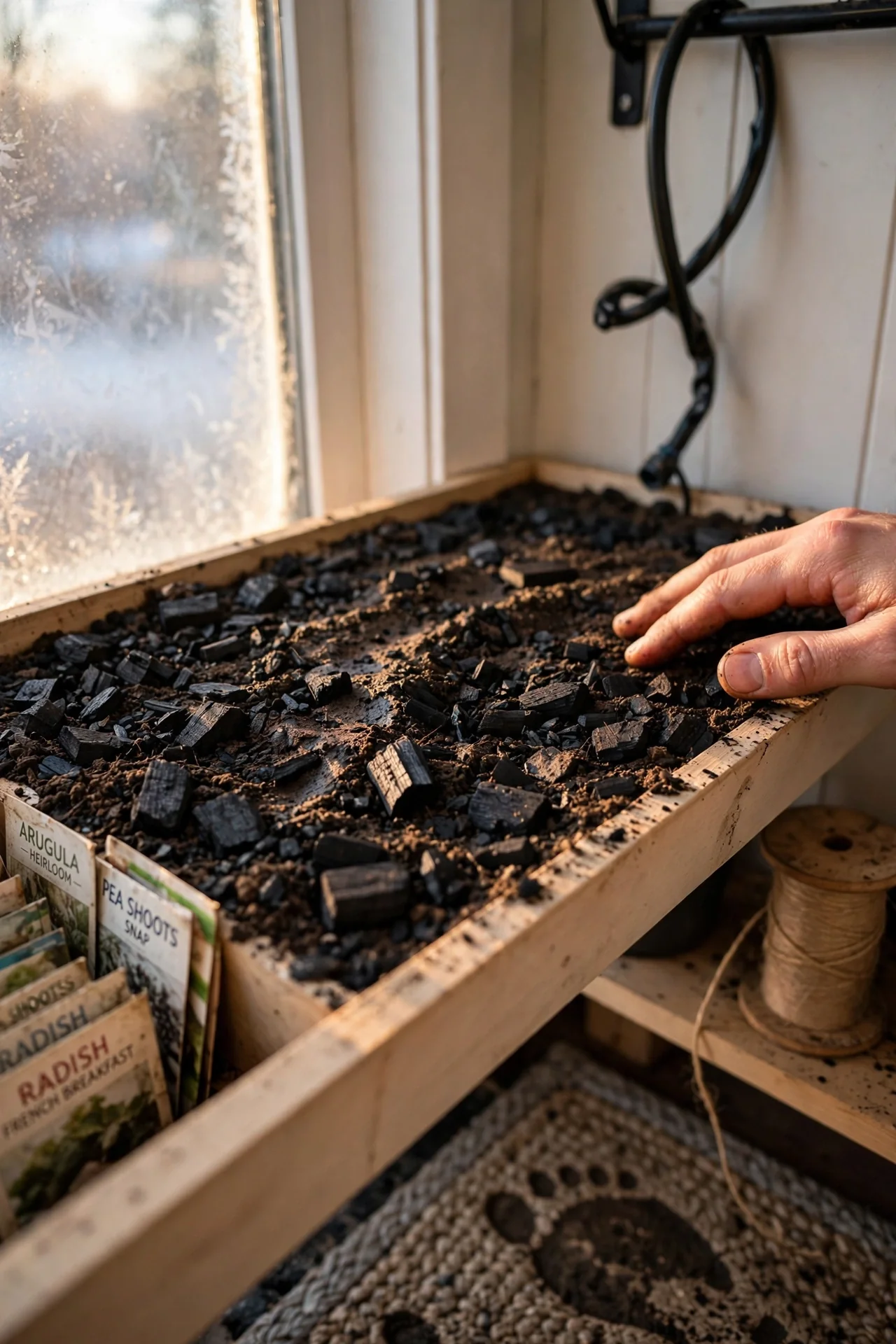
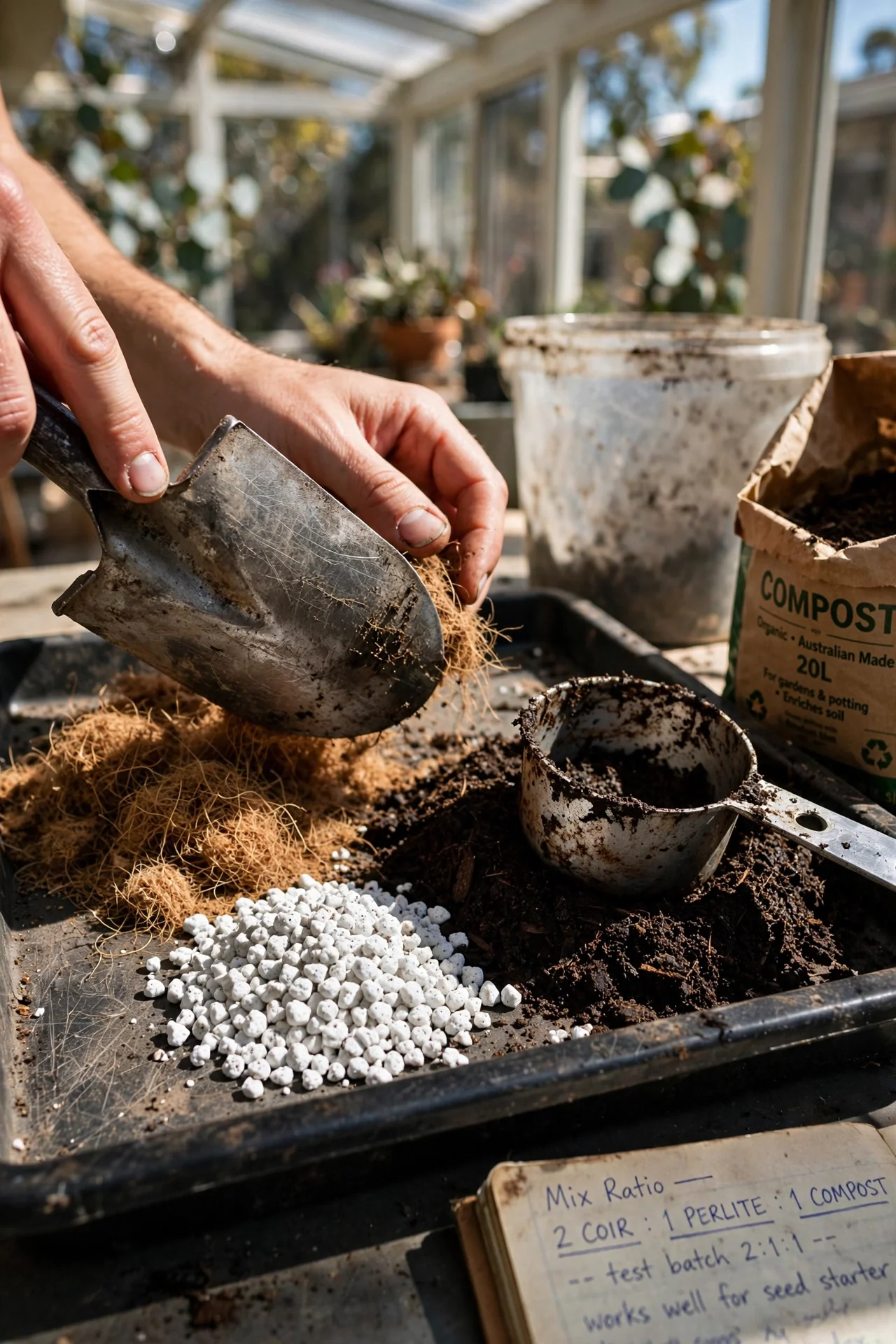
What it is: A baseline recipe of 2 parts coconut coir, 1 part perlite, 1 part screened compost, and 0.5 parts vermiculite. This base holds enough water for infrequent waterers while staying aerated. From here, you modify the ratios.
For travel-heavy gardeners: increase vermiculite to 1 part and reduce perlite to 0.5 parts. The flat vermiculite plates hold extra moisture that releases slowly. For arid homes: add an additional 0.5 parts coir. Mistake to avoid: substituting garden soil for compost. Outdoor soil introduces fungal gnats and compacts into a brick-like layer after a few waterings indoors. Always use pasteurized compost labeled for container use. See our DIY indoor herb garden guide for full system setup including lights and containers.
8. Hydroponic Aggregate Medium (LECA)
Best for: Branch 1
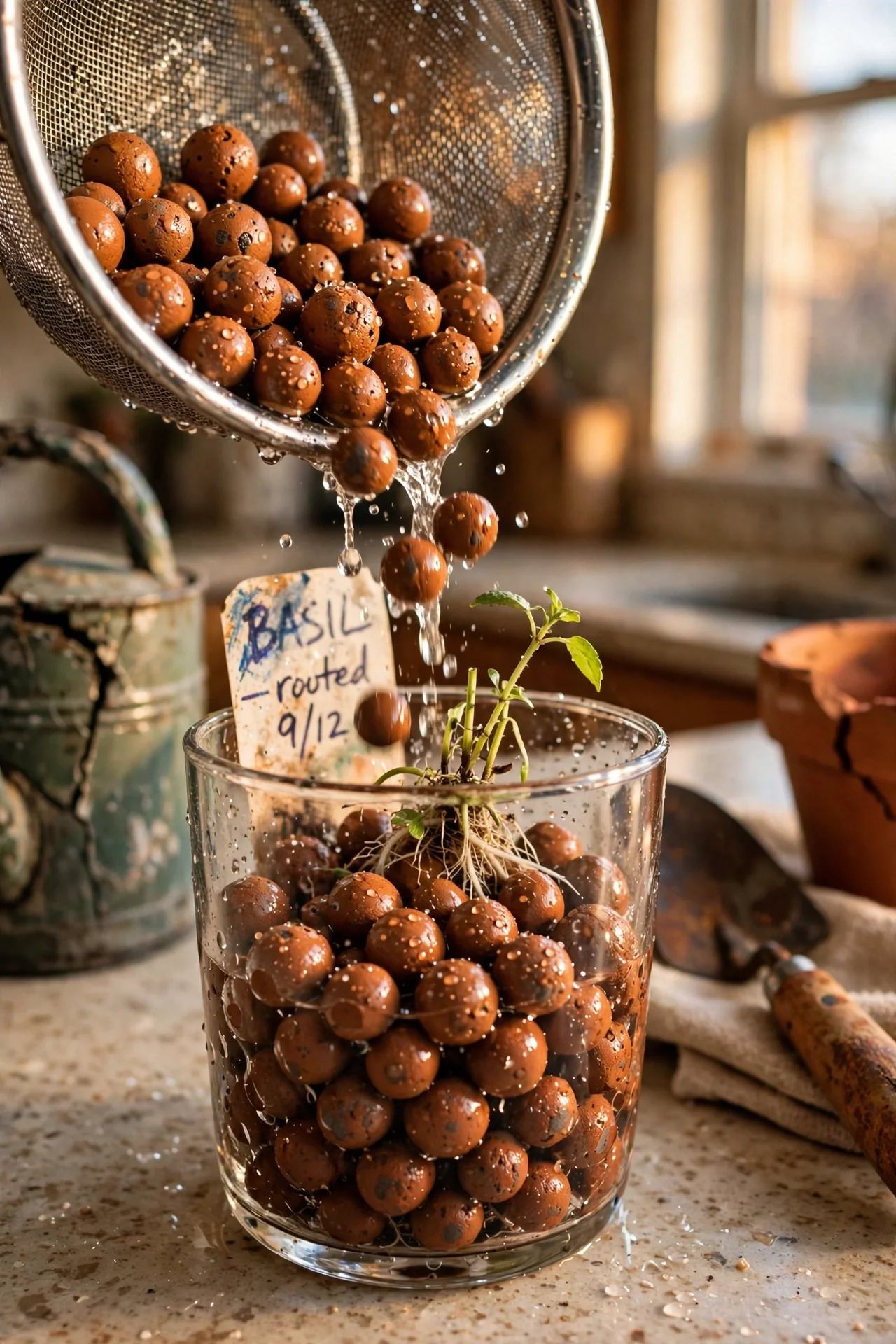
Use it if: you want to bottom-water or use a reservoir-based passive hydro setup. LECA (lightweight expanded clay aggregate) wicks water upward while leaving large air gaps, making it nearly impossible to overwater if the reservoir isn’t touching the roots. Skip it if: you intend to fertilize with organic teas or granular feeds; LECA is inert and requires a complete synthetic hydroponic nutrient solution. Essential edge case: you must maintain a pH of 5.5–6.5 in the reservoir, or nutrient lockout occurs. Rinse LECA thoroughly before first use to remove dust that can clog wicks.
9. All-Purpose Indoor Container Mix with Slow-Release Fertilizer
Best for: Branch 2
The key threshold is the nitrogen load from slow-release prills. Check the guaranteed analysis on the bag and avoid mixes that supply more than 0.10 lbs of nitrogen per cubic foot from coated fertilizers. Higher concentrations, when combined with the lower light of indoors, can cause spindly growth and salt buildup in the root zone. Also, be cautious if your indoor growing area regularly exceeds 90°F (32°C): the resin coating on slow-release prills can crack, dumping nutrients all at once. For spaces with wide temperature swings, consider switching to a compost-based mix like Item 4.
Starter Stack (What to Choose First)
For Branch 1 (Frequent Waterers)
Start with Item 3 (Cactus & Succulent Mix) and Item 6 (Biochar-Infused Potting Soil). The cactus mix delivers immediate fast drainage, while the charged biochar prevents long-term compaction and slowly releases nutrients that fast-draining mixes tend to leach. Together they create a root zone that handles daily water checks without staying waterlogged. Cost: $14–$22 for the two components. Mixing time: under 10 minutes.
For Branch 2 (Consistent Moderates)
Begin with Item 1 (Coir-Based Indoor Potting Mix) and Item 4 (Worm Castings-Enriched Organic Soil). The coir base provides stable, even moisture retention, and the 1:3 castings addition supplies a gentle, sustained nutrient release that matches a 5–7 day watering cycle. The combination works especially well in homes with average humidity (40–55%). Cost: $16–$28 for both. Mixing and potting time: about 10 minutes.
For Branch 3 (Infrequent Waterers)
Choose Item 5 (Self-Watering Planter Mix) and Item 9 (All-Purpose Indoor Container Mix with Slow-Release Fertilizer). Fill a self-watering container with Item 5 as the main wicking medium, then blend in Item 9 at a 1:1 ratio if your planter design allows a small dry zone at the surface. This pairing extends the time between refills and supplies nutrients without additional mixing. Cost: $18–$30 for the two bags. Setup time: about 15 minutes.
When This Won’t Work
No soil can compensate for extreme indoor humidity. If your growing area stays above 70% relative humidity for days at a time (common in bathrooms without exhaust fans), even a fast-draining cactus mix remains damp. This leads to persistent fungus gnats and slow root respiration. The fix is environmental: run a small dehumidifier nearby or move herbs to a room with better air circulation.
Similarly, when natural light falls below 1,000 lux for more than 10 hours a day, soil quality becomes secondary. Herbs stretch for light regardless of how perfectly the root zone is managed, weakening the plant and making it susceptible to pests. In low-light conditions, supplement with a full-spectrum grow light before investing in specialized soil. See our guide to the best grow lights for herbs to match a fixture to your space.
Choosing the Right Option for Your Situation
Budget Threshold
If you need to stay under $10 total, pick Item 2 (Standard Peat-Perlite Blend) or Item 3 (Cactus Mix), which are widely available in small bags. With $15–$30, you can step up to enriched options like Item 4 or pre-blended coir mixes. Spending above $30 makes sense only if you want a long-term reusable aggregate like LECA or a bulk DIY blend that fills multiple large planters.
Time Threshold
If you cannot commit to a monthly reapplication schedule, avoid Item 4 (Worm Castings) and Item 9 (slow-release mixes that still need monitoring). For those who travel frequently or simply want a set-and-forget system, Item 5 (Self-Watering Mix) inside a reservoir planter is the most hands-off choice.
Water Hardness Constraint
Tap water with a total hardness above 200 mg/L CaCO₃ (roughly 12 grains per gallon) can cause calcium and magnesium carbonates to accumulate in the root zone of self-watering mixes. Choose a coir-based blend (Item 1 or 7) which flushes soluble salts more effectively than peat, or water with a mix of tap and distilled water at a 1:1 ratio.
Quick Yes/No Checklist:
1. Do you water more than 3 times per week? → Branch 1
2. Is your indoor relative humidity consistently below 55%? → Moderate retention mixes work well (Branch 2)
3. Will you use a planter with a built-in reservoir? → Branch 3, prioritize Item 5
4. Are you comfortable measuring ingredients by volume and mixing your own? → Item 7
Expert Q&A
Can I pasteurize potting mix to prevent indoor pests?
Yes. Heating a moistened mix to 180°F (82°C) for 30 minutes will kill fungus gnat larvae and most pathogens. However, this also eliminates beneficial microbes that support root health. For indoor herbs, starting with a fresh, quality bagged mix and storing it sealed indoors is usually more practical. Reserve pasteurization for reused containers that previously showed pest problems.
Is perlite dust a breathing concern indoors?
Dry perlite can release fine crystalline silica dust, which is a respiratory irritant. In a small indoor space without ventilation, it’s wise to wear a simple dust mask when measuring perlite and to lightly mist the bag’s interior before scooping. Once perlite is mixed and moist, dust is eliminated, and the finished soil poses no airborne risk on the shelf.
Does soil temperature really matter on a windowsill?
It does. Most culinary herbs slow root growth noticeably when the root zone drops below 55°F (13°C), common on windowsills in winter. A soil mix rich in coir or vermiculite holds slightly more heat than a peat-heavy mix. If you measure root-zone temperatures consistently below that threshold, move pots a few inches back or place a thin cork mat underneath.
What’s the ideal pH range for indoor herb soil?
A pH of 6.0 to 7.0 suits nearly all common culinary herbs: basil, parsley, chives, thyme, oregano, and rosemary. Below 5.5, micronutrients become overly available and can cause toxicity. Above 7.5, iron and manganese lock up. Test your mix’s pH with a simple probe meter after mixing and before planting. Adjust with garden lime (to raise pH) or elemental sulfur (to lower) at rates indicated on the product.
Can I reuse last season’s indoor potting mix?
You can, but it requires refreshing. Old mix loses structure and accumulates salts. Remove old root debris, then amend with 25% fresh coir or peat and 10% perlite by volume. Flush the reconstituted mix with clean water until it runs clear to reduce salt levels. Even with this refresh, don’t reuse mix that previously grew plants showing signs of soil-borne disease; start fresh instead.
Conclusion
Matching your soil to your watering habits removes guesswork. The number one mistake indoor gardeners make is choosing a mix for the herb’s “preference” while ignoring their own schedule, which leads to persistent overwatering or underwatering. Once your soil and rhythm align, herbs become resilient to the fluctuations of indoor life.
If you want to skip the mixing and get growing immediately, a purpose-built kit that includes the right soil, containers, and seeds is the fastest path. Take a look at our herb garden starter kit recommendations to find a complete setup that fits your space and watering style.