
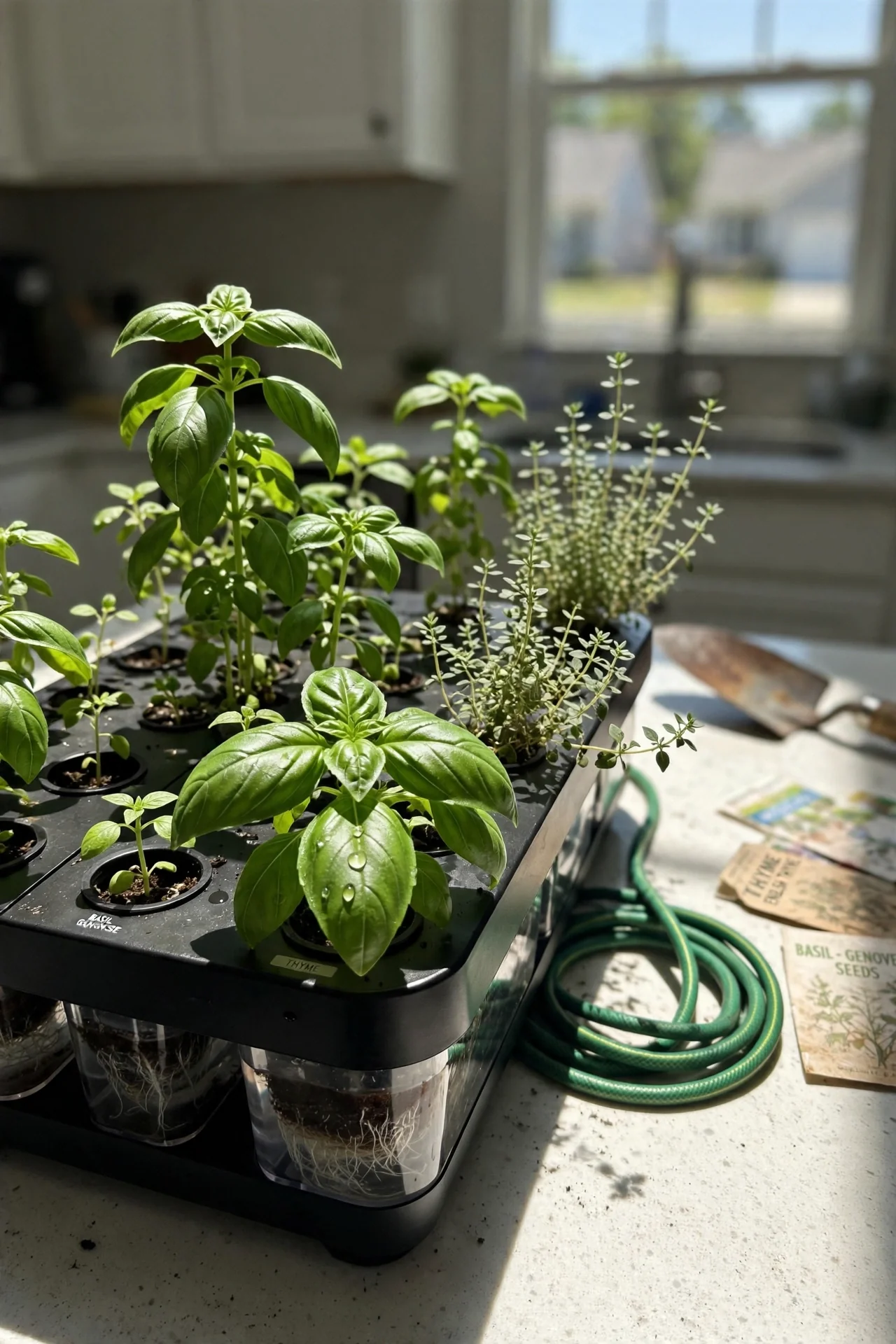
Every pod in an AeroGarden drinks from the same nutrient solution. Pairing herbs with mismatched growth rates or pH preferences causes one plant to dominate while others stall. This guide treats your AeroGarden as a tiny ecosystem, ranking herbs by their ability to coexist without chemical warfare.
We focus on 10 herbs that can complete a full growth cycle in standard AeroGarden models (Harvest, Bounty, Farm) when pods share water. Aggressive spreaders like lemon balm and dry-footed lavender are excluded unless you run separate units.
You will learn which herbs to plant together, how to prune for balance, and when to cull a bully plant. Each entry includes a compatibility branch and a maintenance effort score.
Bottom line: Match herbs from the same Decision Grid branch and harvest the fastest growers twice a week to keep all pods productive for months.
The Yield Grid Decision Grid
Select your branch based on how aggressively you are willing to prune and monitor nutrient strength.
Branch 1: Rapid Growers (Harvest Every Few Days)
These herbs reach 6 inches within 3–4 weeks and require pruning at least twice a week. Without frequent cutting, they shade or outcompete neighbors. Best for gardeners who enjoy daily interaction.
Recommended: Items 1, 2, 3, 4, 7 below.
Branch 2: Compact and Patient (Slow But Steady)
Maturation takes 5–7 weeks. These herbs tolerate moderate nutrient fluctuations and can sit next to Branch 1 plants if you keep the fast growers trimmed back. They rarely bolt and need less frequent feeding.
Recommended: Items 5, 6, 8, 9 below.
Branch 3: Drought-Tolerant Woody Herbs (Need Dry-Down Cycles)
These originate from Mediterranean climates and resent constantly wet roots. In a shared reservoir, they succeed only if you let the water level drop to near-empty between refills. Most AeroGarden pumps run continuously, so root rot risk is real. A separate unit or a self-watering planter with soil might be safer.
Recommended: Item 10 below.
For a deeper dive into hydroponic herb garden setup, see our hydroponic herb garden guide.
Quick Comparison Table
| Option | Key Mechanism | Best for | Decision Grid Branch | Effort Score |
|---|---|---|---|---|
| Genovese Basil | Rapid nutrient uptake, tall | Pesto, daily cooking | Branch 1 | 4 |
| Thai Basil | Compact but aggressive lateral growth | Asian dishes | Branch 1 | 4 |
| Dill | Fast vertical growth, bolts quickly | Pickles, fish | Branch 1 | 4 |
| Mint | Rampant runners, invasive roots | Teas, cocktails | Branch 1 | 4 |
| Parsley | Taproot, slow to establish | Garnish, tabbouleh | Branch 2 | 2 |
| Cilantro | Fast to bolt, short lifecycle | Salsas, curries | Branch 1 | 4 |
| Chives | Clumping, cut-and-come-again | Mild onion flavor | Branch 2 | 2 |
| Thyme | Woody, very slow, low nutrient demand | Roasts, soups | Branch 2 | 1 |
| Oregano | Spreading, moderate growth | Pizza, marinara | Branch 2 | 3 |
| Rosemary | Woody, piney, dislikes wet roots | Roasts, breads | Branch 3 | 3 |
1. Genovese Basil
Best for: Branch 1
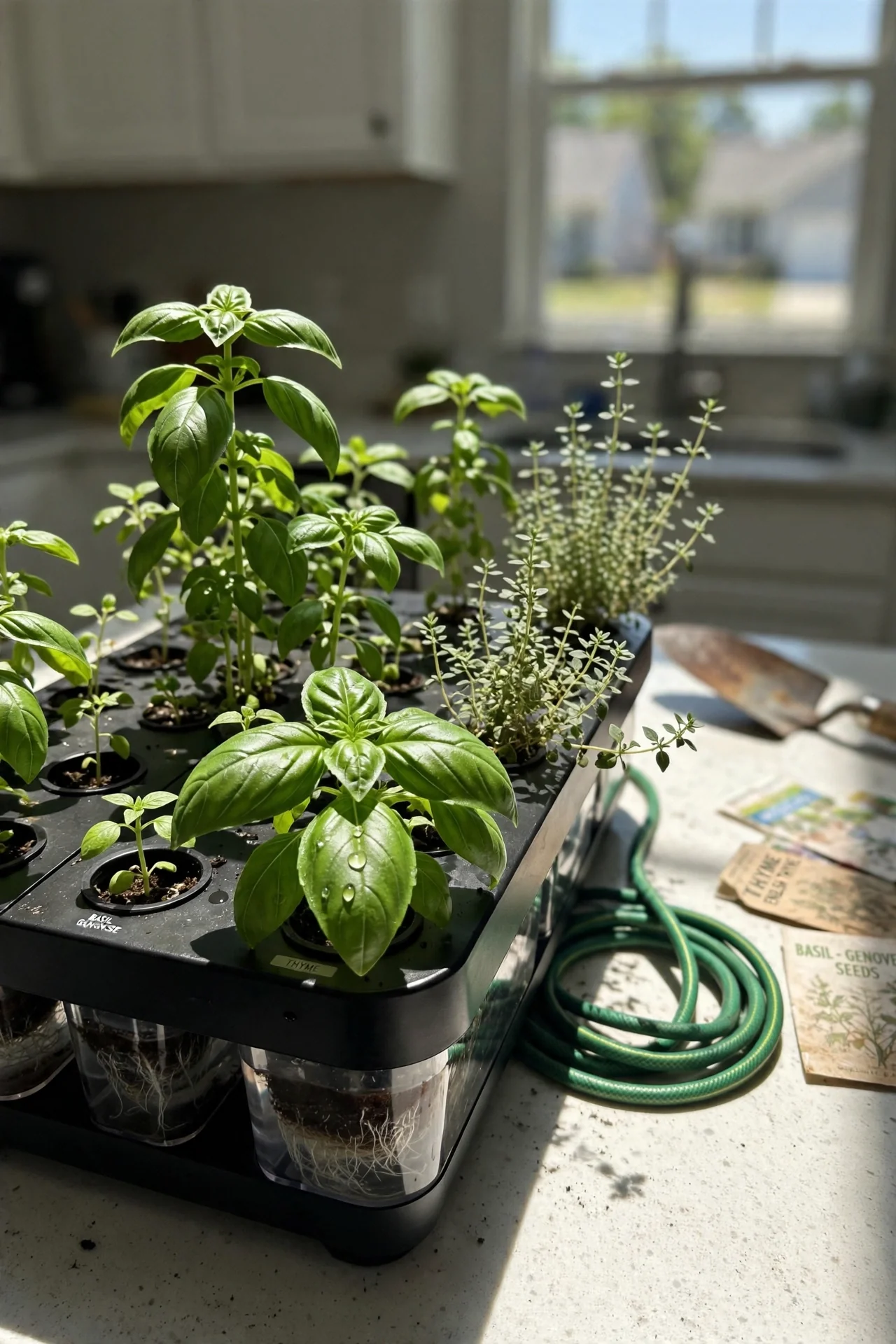
Genovese basil is the classic large-leaf variety that thrives in hydroponic systems. Because it’s a heavy feeder, it will quickly deplete nitrogen if not pruned. The blueprint for success: start with a pre-seeded pod and set the light hood 4 inches above. Once three pairs of true leaves appear, pinch the top set just above a leaf node every 4–5 days. This encourages lateral branching and delays flowering. A single mistake many make is allowing even one flower spike to mature; after that, leaf production drops and the plant turns woody. If you need to leave town, harvest all large leaves and lower the light cycle to 12 hours. For other resilient indoor varieties, consult our list of best herbs to grow indoors.
2. Thai Basil
Best for: Branch 1
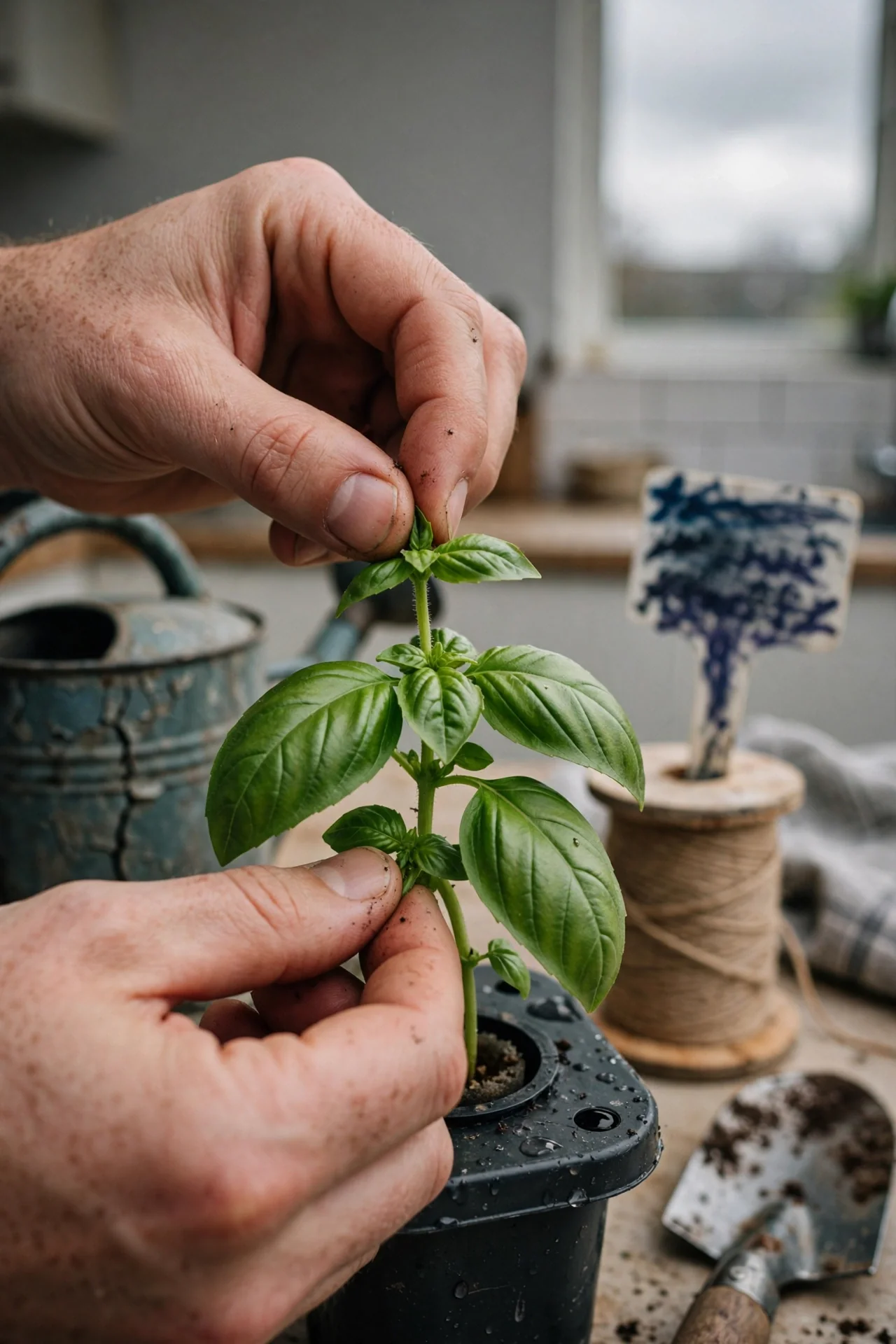
Use Thai basil if you cook Southeast Asian curries and stir-fries regularly and can handle twice-weekly pruning. Skip it if you want a set-and-forget herb or dislike its anise-licorice notes that clash with Mediterranean recipes. Its smaller leaves and purple stems make it an attractive companion, but it demands the same aggressive harvest schedule as Genovese basil to prevent shading.
3. Dill
Best for: Branch 1
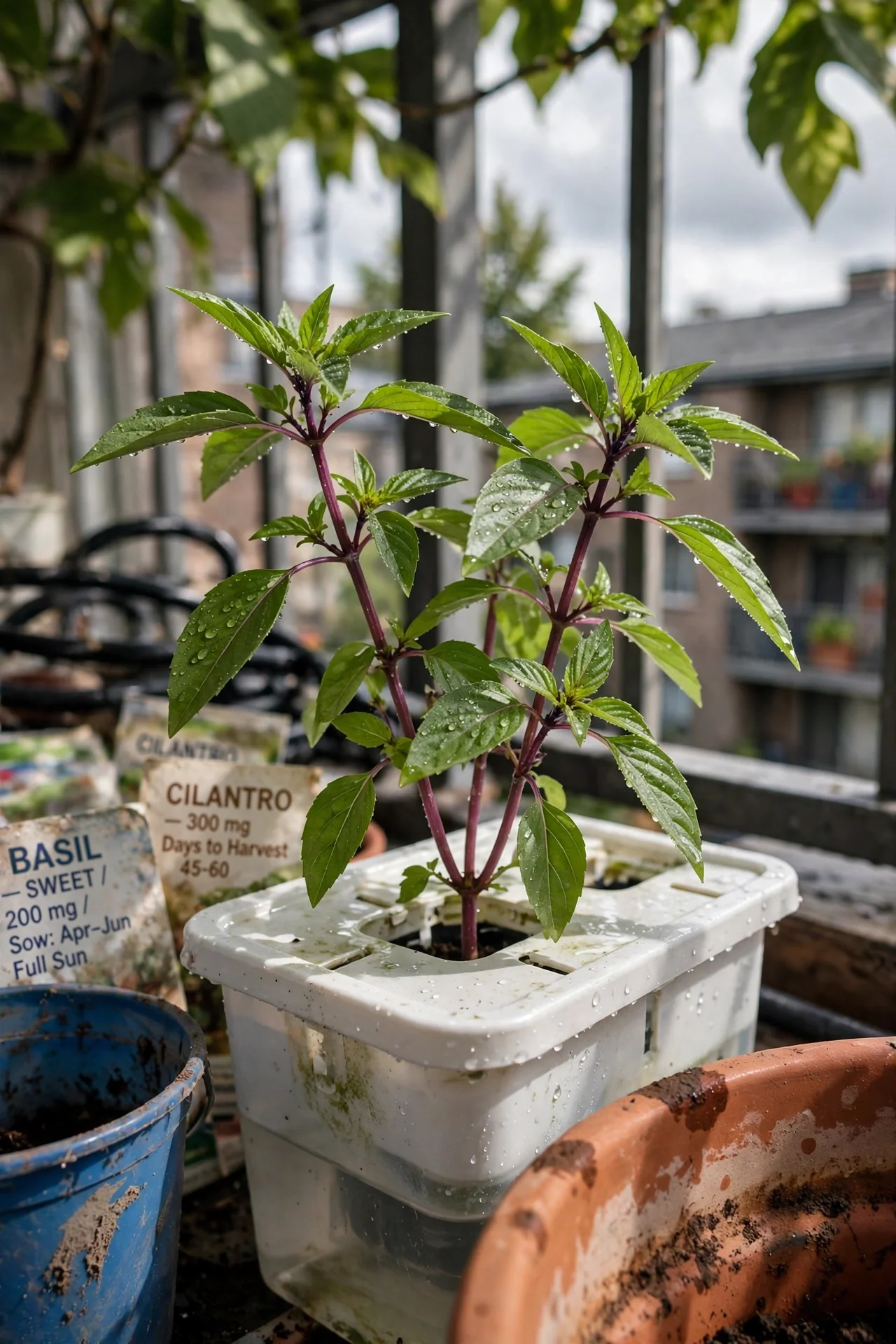
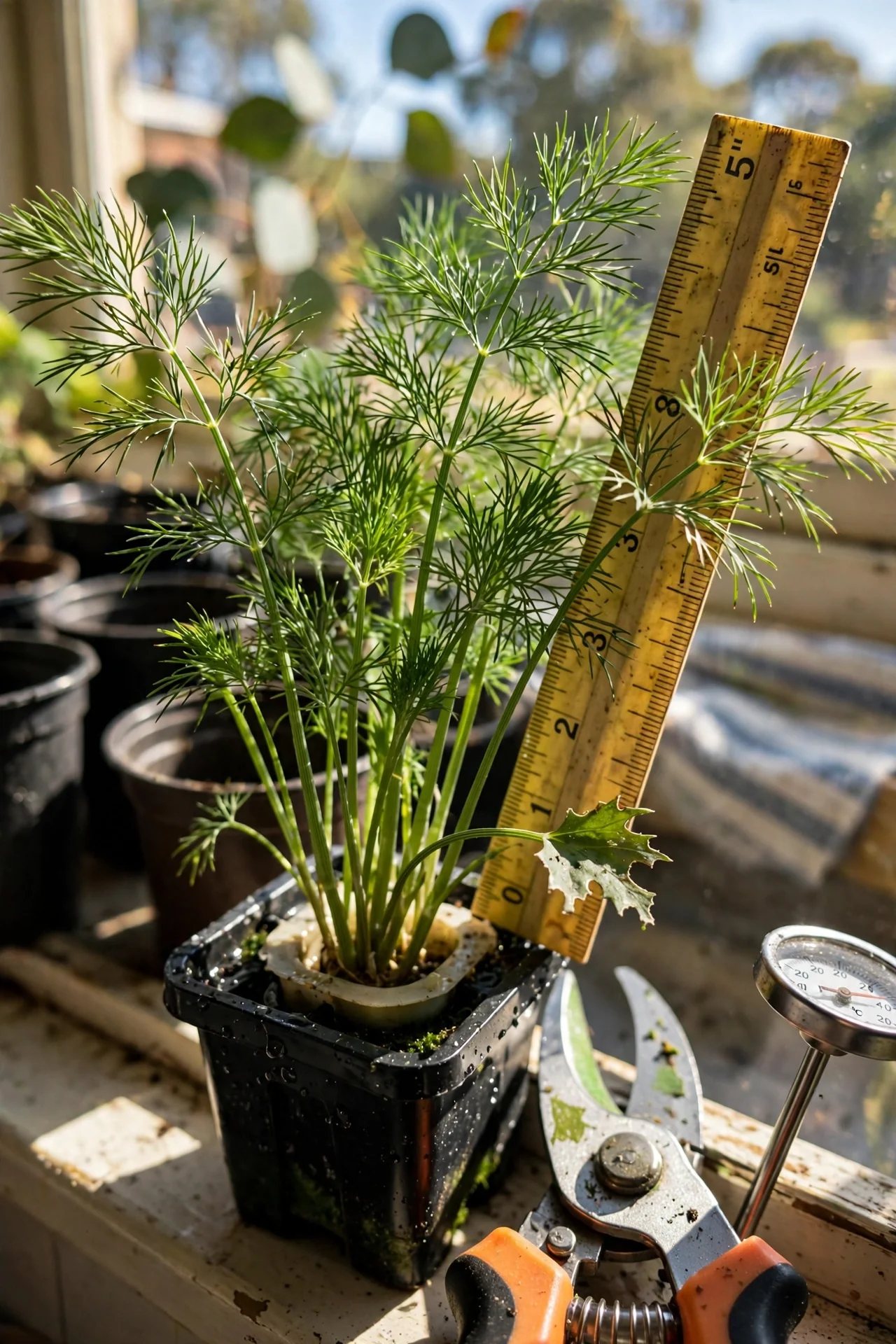
The threshold for sweet, usable dill is narrow: harvest when feathery fronds are 4–6 inches long. After the stem elongates beyond 12 inches, it becomes hollow, leaves turn bitter, and the plant races to flower. If you are growing pickling cucumbers, time your pod planting so dill is ready right when cucumbers set fruit. Keep the grow light close (3 inches) to slow vertical stretch, and never let the reservoir temperature exceed 75°F, as heat triggers premature bolting.
4. Mint
Best for: Branch 1
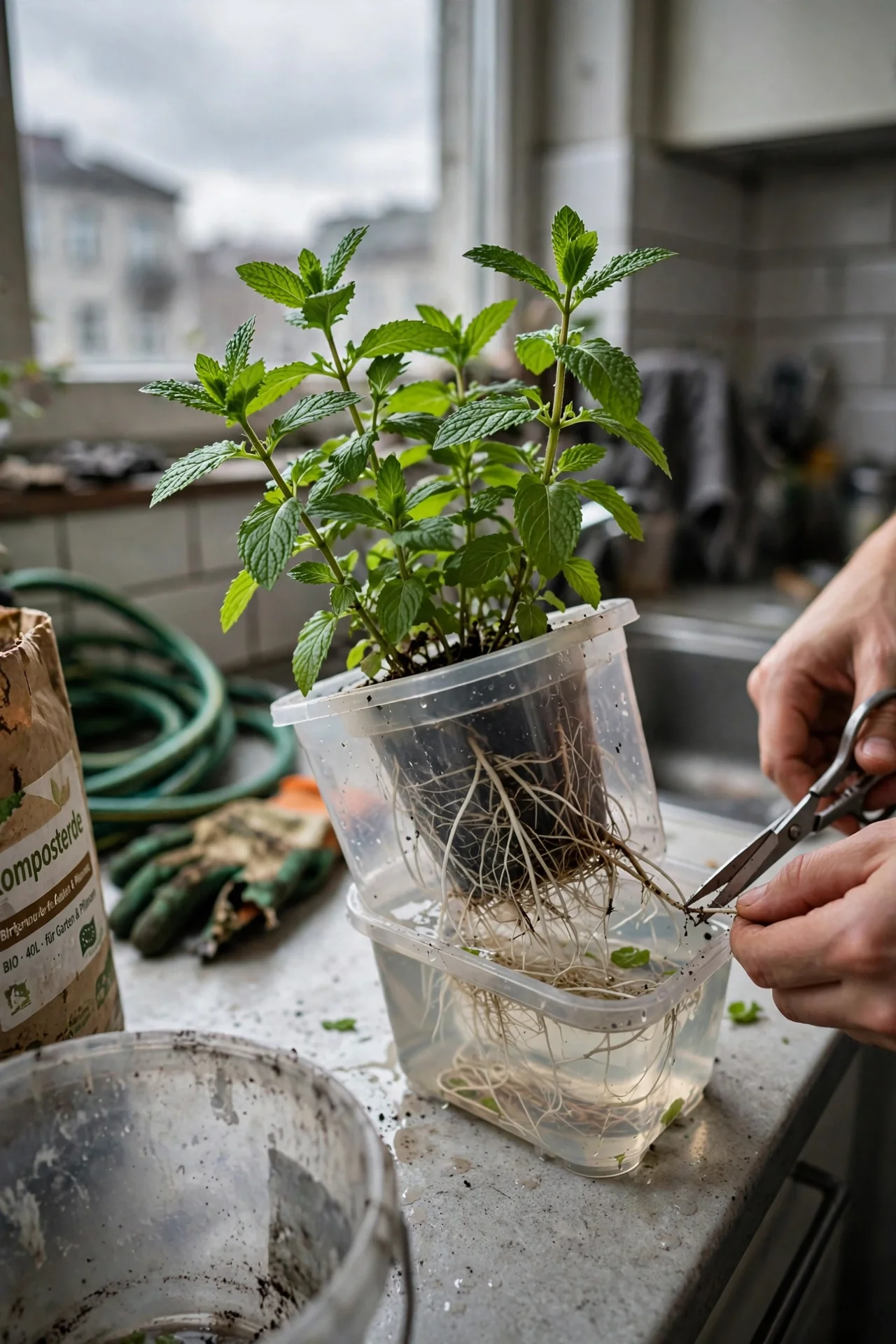
Mint is the most invasive herb in a shared reservoir. A 10-minute weekly workflow keeps it in check. First, lift the pod and trim any roots that have escaped through the grow sponge into the water chamber. Second, prune every runner that reaches toward a neighboring pod; mint will physically wrap around other plants. Third, replace the nutrient solution weekly if you notice a menthol scent, a sign of allelopathic compounds building up. For an upgrade, run mint in its own small container. Explore creative ways to use abundant mint with our indoor herb garden ideas.
5. Parsley
Best for: Branch 2
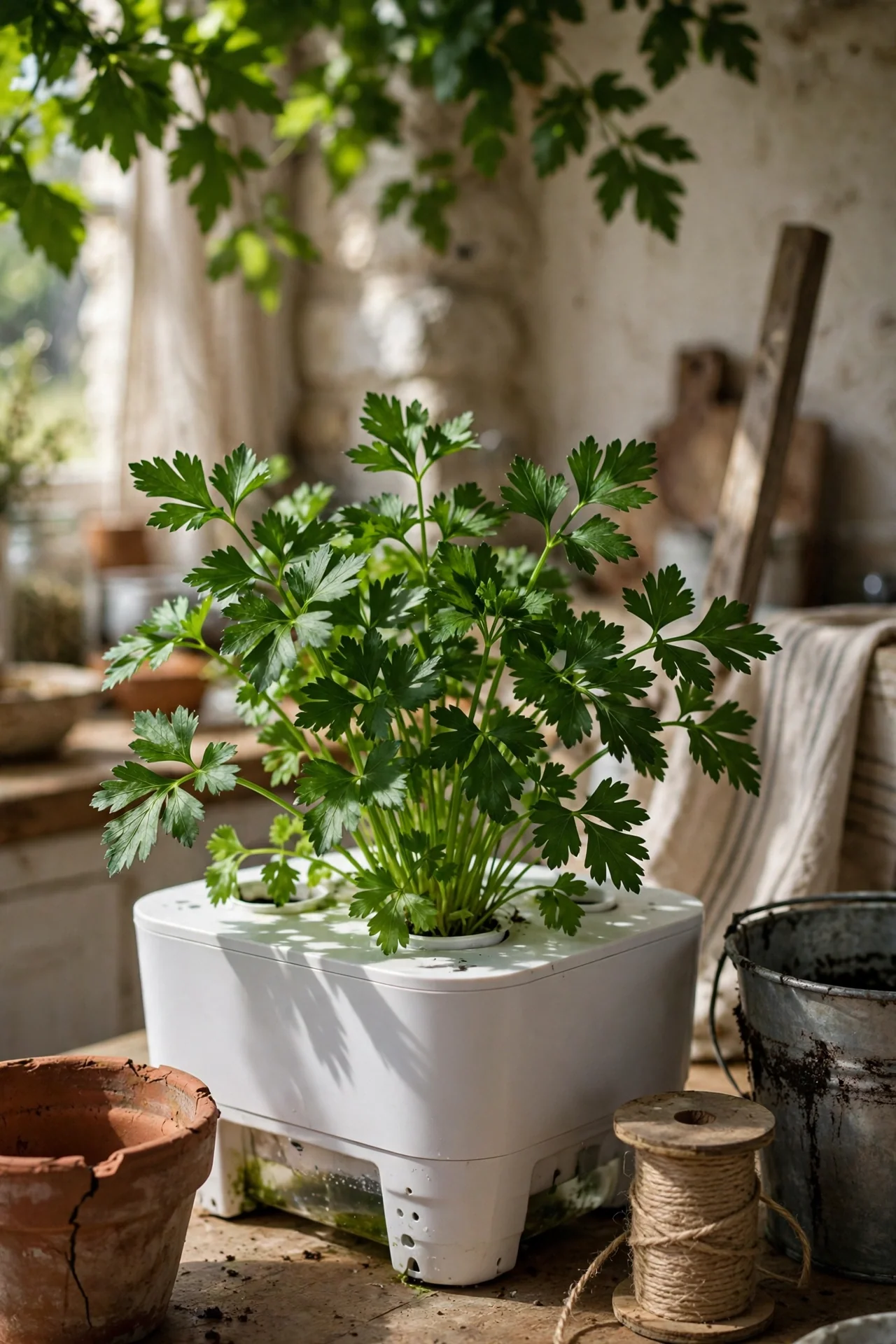
Parsley is a biennial that establishes slowly. The blueprint: after germination, allow 5–6 weeks before the first significant harvest. Pick outer stems only when they have three distinct leaf segments, and never cut the central crown. A classic error is overharvesting in the first month, which stunts the taproot permanently. Flat-leaf (Italian) varieties tolerate lower light better than curly types.
6. Cilantro
Best for: Branch 1
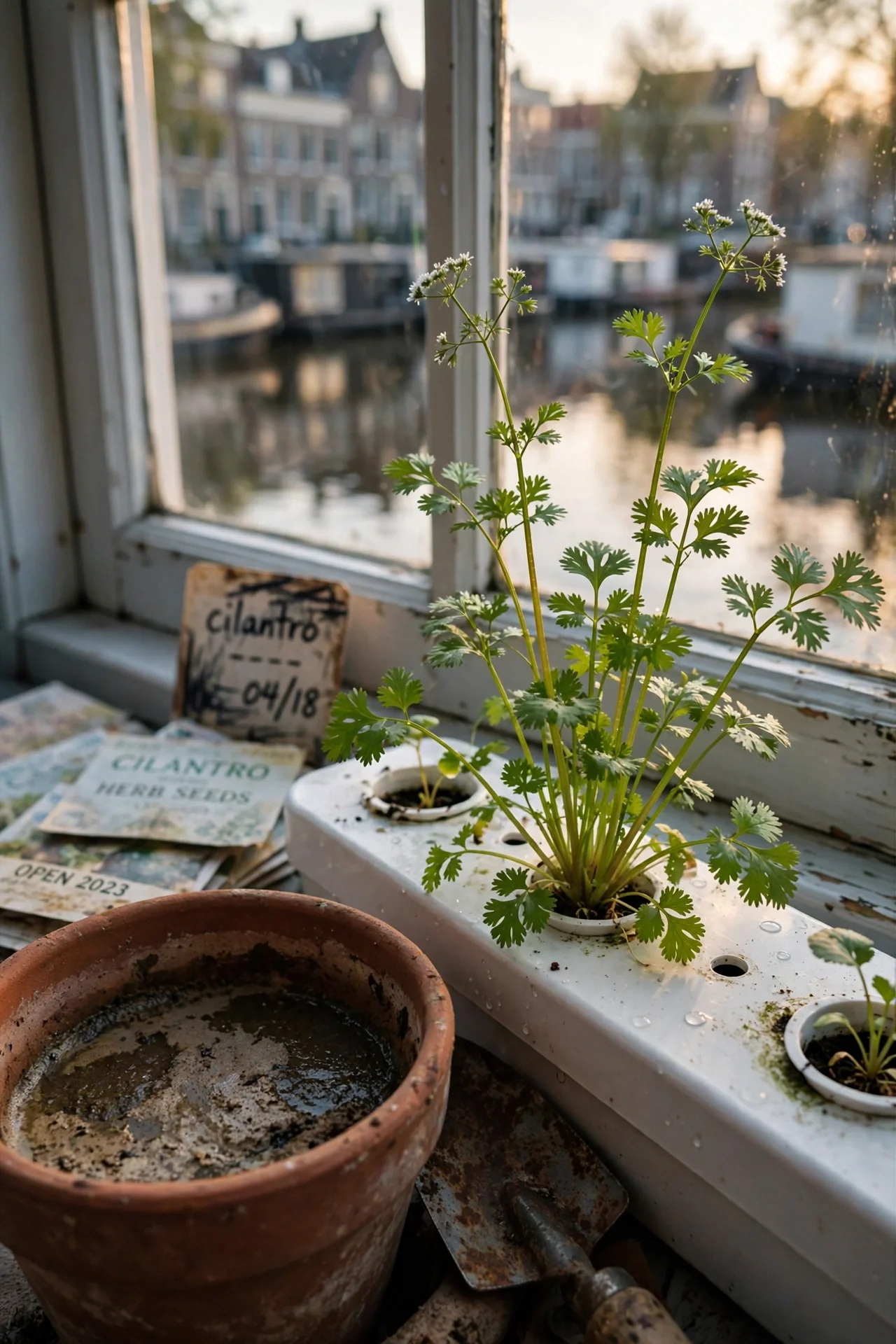
Use cilantro if you plan to succession-plant a new pod every 3 weeks; skip it if you expect one planting to provide leaves for months. It bolts as soon as root-zone temperature exceeds 75°F, turning leaves sparse and bitter. Grow it in the cooler microclimate at the edge of the light footprint, and harvest the entire plant when stems elongate. Detailed timing and troubleshooting are covered in our guide to growing cilantro indoors.
7. Chives
Best for: Branch 2
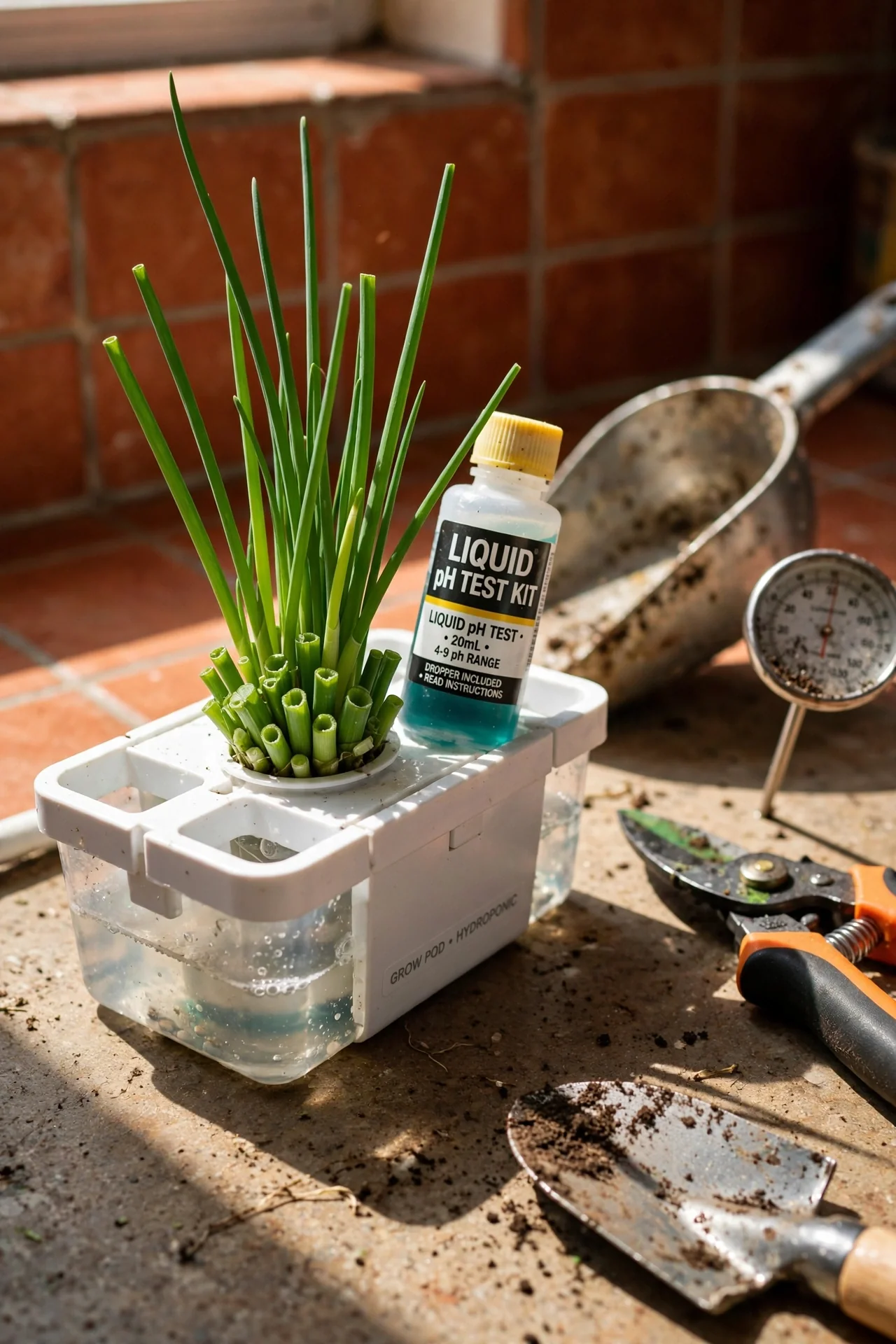
Chives are forgiving but have a specific pH comfort zone. Maintain nutrient solution pH between 6.0 and 7.0; if leaves show yellow tips, pH has likely dipped below 5.8, locking out iron. Use a liquid pH test kit weekly, not just indicator strips. Snipping leaves to 2 inches above the crown stimulates fresh growth. Clumps can stay productive for over a year in an AeroGarden, making chives one of the best long-term investments among hydroponic herbs.
8. Thyme
Best for: Branch 2
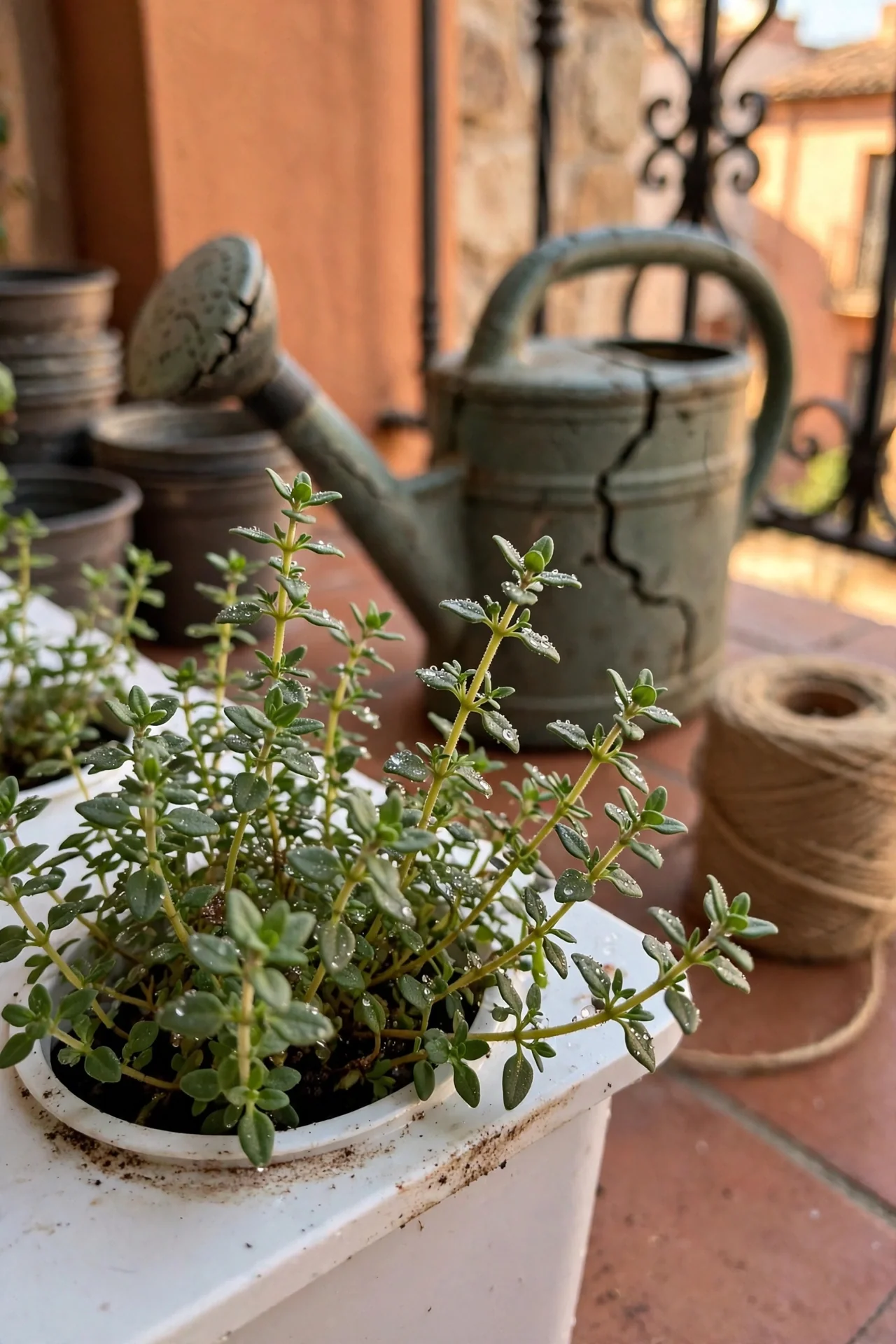
Thyme demands patience. Germination takes 7–10 days, and useful growth appears only after week 6. Once established, it is the lowest-maintenance herb: water when the reservoir is half empty, and skip extra nutrients for 2-week intervals. Overfertilizing causes leggy, flavorless stems. Common thyme (English) is more compact than lemon thyme, making it easier to fit beside faster herbs.
9. Oregano
Best for: Branch 2
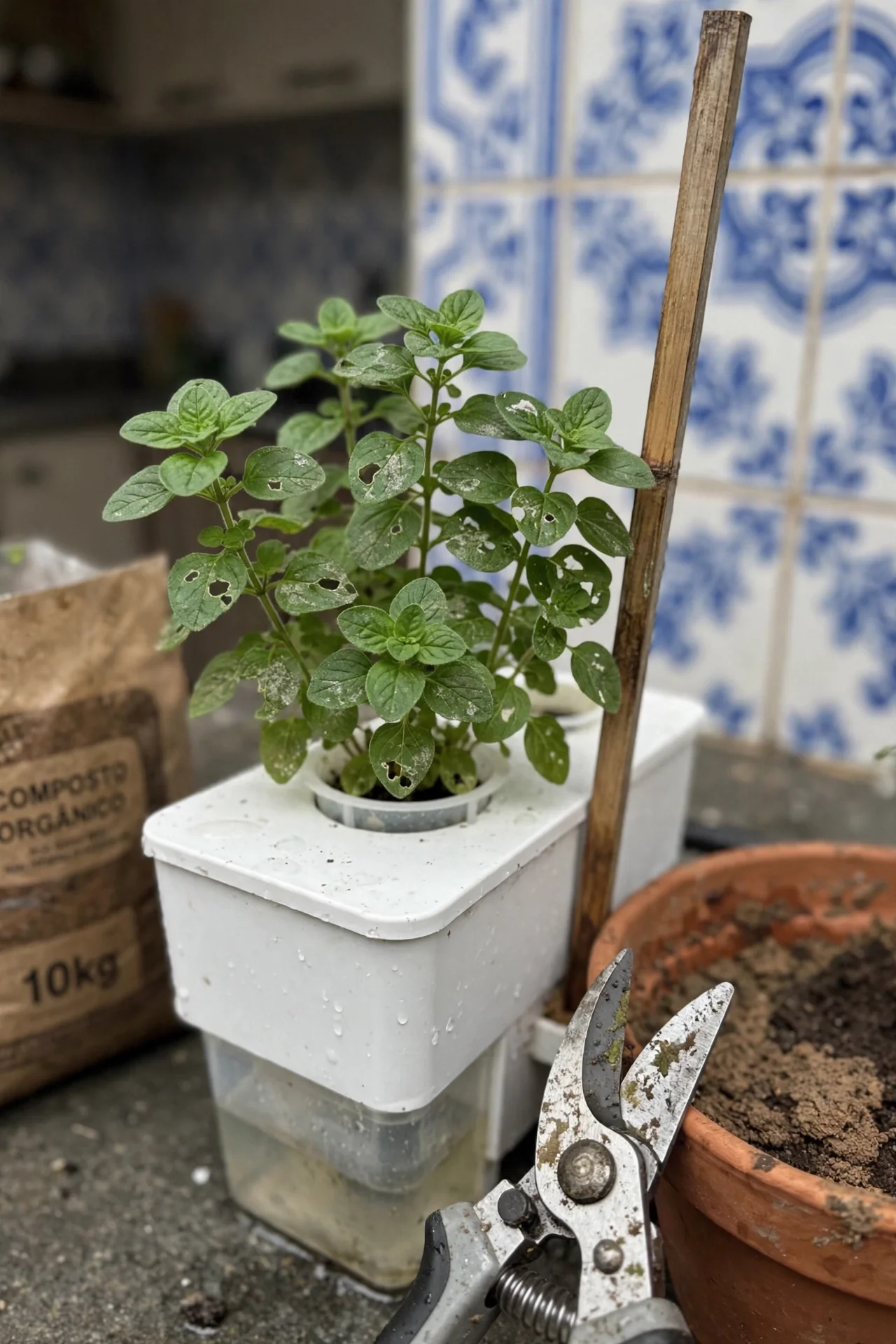
Use oregano if you want a low-maintenance filler that can handle some competition from larger plants. Skip it if you need high leaf yields quickly—it grows slowly in the first two months. A hidden constraint is humidity: oregano develops powdery mildew if the surrounding air stays above 60% relative humidity. Place it near the front of the AeroGarden where air circulation is best, and avoid overcrowding.
10. Rosemary
Best for: Branch 3
Rosemary struggles in constantly wet roots. A 10-minute weekly routine prevents root rot: lift the pod and inspect roots for browning; if present, lower the water level so only the bottom third of roots are submerged. Use a nutrient solution with an EC below 1.5 mS/cm. For an upgrade, move the rosemary pod to a standalone Kratky jar after 4 weeks, where you can control dry-down cycles precisely. All the details for thriving indoor plants are in our rosemary indoor growing guide.
Starter Stack (What to Choose First)
Branch 1 High-Energy Pair: Genovese Basil + Dill
These two are compatible because both tolerate aggressive cutting and high nutrient concentrations. Harvest basil tops and dill fronds on the same schedule. Expect to replenish nutrients every 10 days. Seed pod cost: $9–$14 for a two-pod kit. First usable harvest: 25–30 days.
Branch 2 Steady Producer Pair: Parsley + Chives
Both are slow and non-competitive. Parsley provides bulk, chives add height without shading. They share a similar pH preference (6.0–6.5) and need pruning only once a week. Pod cost: $10–$13. First meaningful cut: 40–50 days.
Branch 3 Dry-Loving Pair: Rosemary + Thyme
Though thyme is technically Branch 2, it thrives with rosemary when you manage watering carefully. Let the reservoir drop to 1 inch before topping off, mimicking a Mediterranean dry spell. Both benefit from an EC of 1.2–1.4. Pod cost: $12–$16. Harvest-ready: 8–10 weeks.
When This Won’t Work
The first measurable failure condition is root-zone temperature consistently above 78°F. At that threshold, cool-season herbs like cilantro bolt and nutrient uptake in basil and mint becomes erratic. If your room lacks air conditioning, consider a heat-tolerant alternative or position a small fan to lower the water temperature by 3–5°F.
The second condition is attempting to grow woody Mediterranean herbs in a constantly wet system without a dry-down routine. Rosemary, sage, and lavender roots turn brown and slimy within two weeks of full immersion. If you cannot commit to manual water-level management, switch to a soil-based setup where drainage is intrinsic. Our guide to the best soil for indoor herbs outlines low-risk alternatives.
Choosing the Right Option for Your Situation
Budget Threshold
A basic two-pod setup costs $9–$16. If you want to run all 10 herbs at once, a Bounty or Farm model is required, pushing the initial cost above $200. For under $50, stick to Branch 2 herbs that stay productive with minimal replacement pods.
Time Threshold
Branch 1 herbs demand 15 minutes of pruning twice a week. If your schedule allows only a weekly check, restrict your garden to Branch 2 selections. Branch 3 requires an extra weekly root inspection.
Technical Constraint (pH and EC)
Shared reservoirs drift. If you cannot measure pH at least monthly with a liquid kit, choose only Thyme and Chives, which tolerate a broader range (5.5–7.5). Invest in a basic EC meter if mixing your own nutrients; pre-formulated AeroGarden nutrients simplify this.
Yes/No Decision Checklist
- Do you have at least 6 hours of bright grow light daily? Yes / No
- Can you dedicate 15 minutes twice a week to pruning? Yes / No
- Is your ambient temperature consistently below 78°F? Yes / No
- Are you willing to test pH at least once a month? Yes / No
Expert Q&A
Can I grow cilantro and basil together in the same AeroGarden?
Yes, but both are Branch 1 fast growers. Basil will eventually shade cilantro unless you prune basil vigorously and harvest cilantro early. To extend cilantro’s life, keep water temperature below 72°F and succession-plant a new pod every three weeks.
Why is my mint turning yellow even though I add nutrients?
Yellow mint leaves often signal nitrogen lockout from pH imbalance. Test the reservoir; mint prefers pH 6.0–6.5. Also check for root binding—mint roots can clog the pump filter, restricting flow. Trim roots and replace the solution every 7–10 days.
How long do AeroGarden herb pods last before needing replacement?
Basil and cilantro pods decline after 3–4 months of heavy harvest. Chives and thyme can remain productive for 12–14 months if roots are pruned occasionally. Replace pods when leaf size shrinks or stems become woody, even with adequate nutrients.
Do I need to adjust pH when growing mixed herbs?
Yes. Different herbs pull nutrients at different rates, causing pH drift. A mixed garden often drifts below 5.5 within two weeks. Use a pH Down or Up solution to maintain 5.8–6.2, the compromise range where most culinary herbs absorb nutrients efficiently.
What is the best nutrient schedule for a multi-herb AeroGarden?
Feed at the full recommended dose every 14 days, but monitor EC weekly. If EC climbs above 2.0 mS/cm, dilute with fresh water. For Branch 3 herbs like rosemary, halve the dose and feed every 21 days to avoid salt buildup that damages sensitive roots.
Conclusion
Success with AeroGarden herbs comes down to picking a compatibility branch and sticking to its maintenance rhythm. The most common mistake is ignoring the shared root zone: one aggressive mint or basil can choke a whole garden in two weeks. Start with a matched pair from the same branch, prune proactively, and test your water.
Ready to use your harvest? Plan a dedicated cocktail herb garden with your freshest cuttings. Our cocktail herb garden ideas will help you shake up something memorable.