
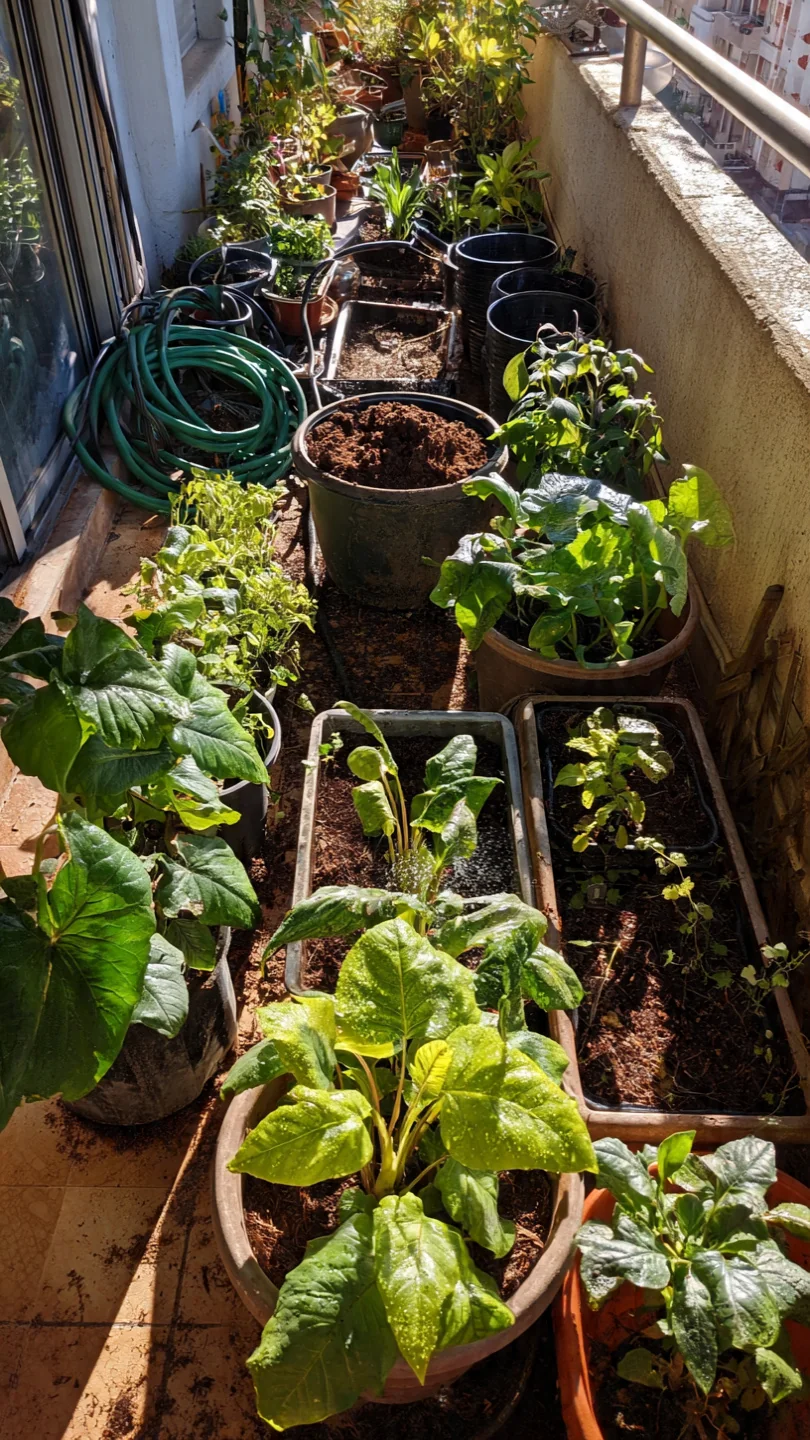
Container gardening tools succeed or fail based on how well they handle confined soil volumes, awkward vertical angles, and rapid moisture swings unique to pots. Generic yard tools scaled down create spills, root damage, and wasted time that most lists never address. This grid reframes the choice around three measurable setup sizes instead of vague versatility claims.
The scope covers 10 core hand tools for planting, soil management, pruning, watering, and monitoring in urban balconies, patios, or decks. It excludes power equipment, full-size ground tools, decorative gadgets, and large raised-bed systems. Each tool includes one container-specific mechanism or edge case that changes real-world performance.
By the end you will know which three tools to buy first, how they pair for your exact setup, and when to skip or upgrade based on clear thresholds. The comparisons and workflows eliminate trial-and-error purchases.
Bottom line: Match your container count to one of the three branches below and buy only the recommended items to start harvesting faster with less daily effort.
The Yield Grid Decision Grid
Branch 1: 5 or fewer containers on balconies or windowsills under 40 square feet. Limited surface area demands compact tools that minimize spills and allow one-handed operation around railings or tight corners. Recommended: Items 2, 5, 8 below. For more ways to arrange your containers, see our container gardening ideas.
Branch 2: 6 to 15 containers on standard patios or decks. Moderate volume requires tools that speed soil work and maintain even moisture without constant bending. Recommended: Items 1, 3, 6, 9 below.
Branch 3: 16 or more containers or any vertical systems. Higher density and reach needs durable tools built for repeated deep access and aeration across many pots. Recommended: Items 4, 7, 10 below.
Quick Comparison Table
| Option | Key mechanism | Best for | Decision Grid Branch | Effort Score |
|---|---|---|---|---|
| Potting Soil Scoop | Curved lip and extended handle direct mix straight into pot centers | Filling without rim spills in narrow openings | Branch 2 | 2 |
| Narrow-Blade Transplant Trowel | Slender pointed blade creates precise holes in established root balls | Adding plants to crowded pots without disturbing neighbors | Branch 1 | 3 |
| Hand Cultivator | Three curved tines break surface crust at 1 to 2 inch depth | Aerating top layers between waterings | Branch 2 | 3 |
| Hori Hori Knife | Dual serrated edge and measurement markings on blade | Cutting roots or harvesting in one motion | Branch 3 | 2 |
| Bypass Pruners | Curved blade passes one side past the other for clean cuts | Shaping herbs and flowers at stem joints | Branch 1 | 4 |
| Long-Spout Watering Can | 12 to 18 inch angled spout reaches inner pot edges | Targeted watering at soil line without leaf splash | Branch 2 | 4 |
| Soil Moisture Meter | Probe measures at 2 to 6 inch depths with analog dial | Checking dry zones in larger or grouped pots | Branch 3 | 3 |
| Lightweight Nitrile Gloves | Thin textured palm allows full finger dexterity | Handling soil and seedlings without bulk | Branch 1 | 1 |
| Seedling Dibble | Tapered wood or metal point creates uniform 1 inch holes | Sowing seeds or setting transplants at exact depth | Branch 2 | 2 |
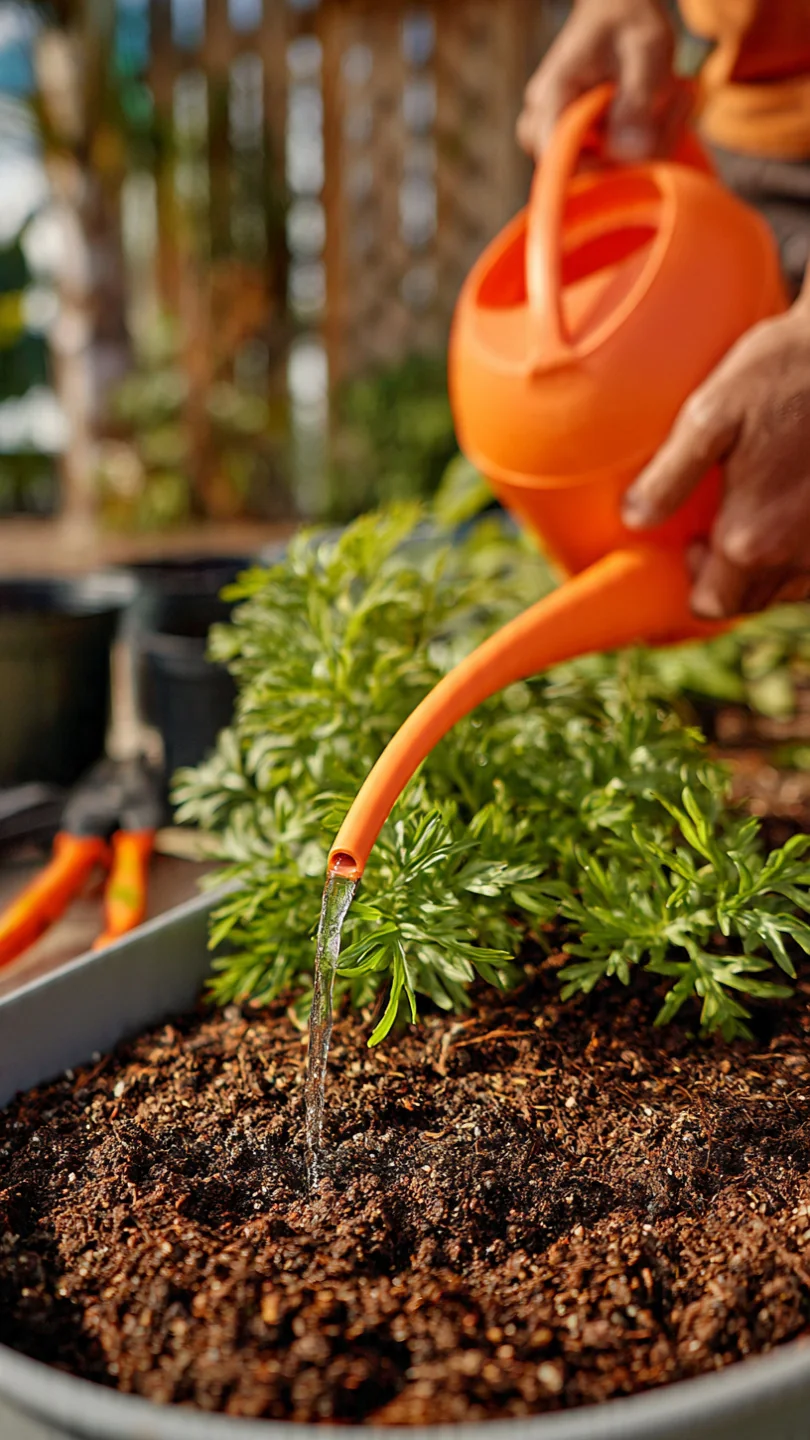
| Compact Hand Fork | Short sturdy tines loosen compacted zones around pot walls | Refreshing soil in established large containers | Branch 3 | 3 |
Potting Soil Scoop
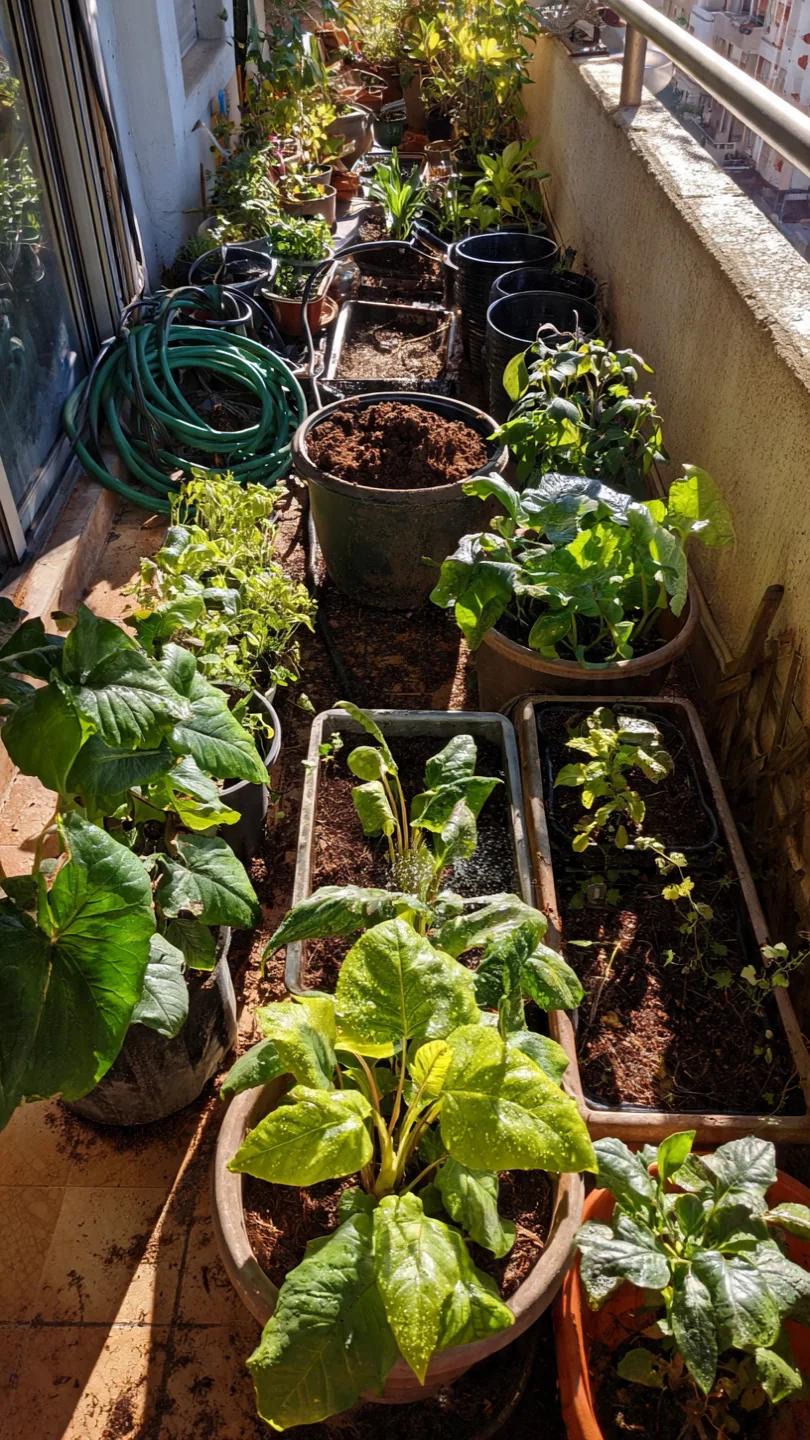
Best for: Branch 2
Use this scoop when filling or topping off 6 to 15 containers. The blueprint starts with the curved lip that channels potting mix directly downward so none lands outside the pot rim even when working from a standing position on a crowded patio. For each 5 gallon container pour in layers of 2 inches then firm lightly with the flat back of the scoop to eliminate air pockets at the sides. Follow with a light surface scrape to level before watering. The most common mistake is using a flat shovel instead, which forces sideways dumping and wastes mix over railings or deck boards. Pair it with the hand cultivator from the same branch for immediate aeration after filling and you finish a full set of containers in under 30 minutes.
Narrow-Blade Transplant Trowel
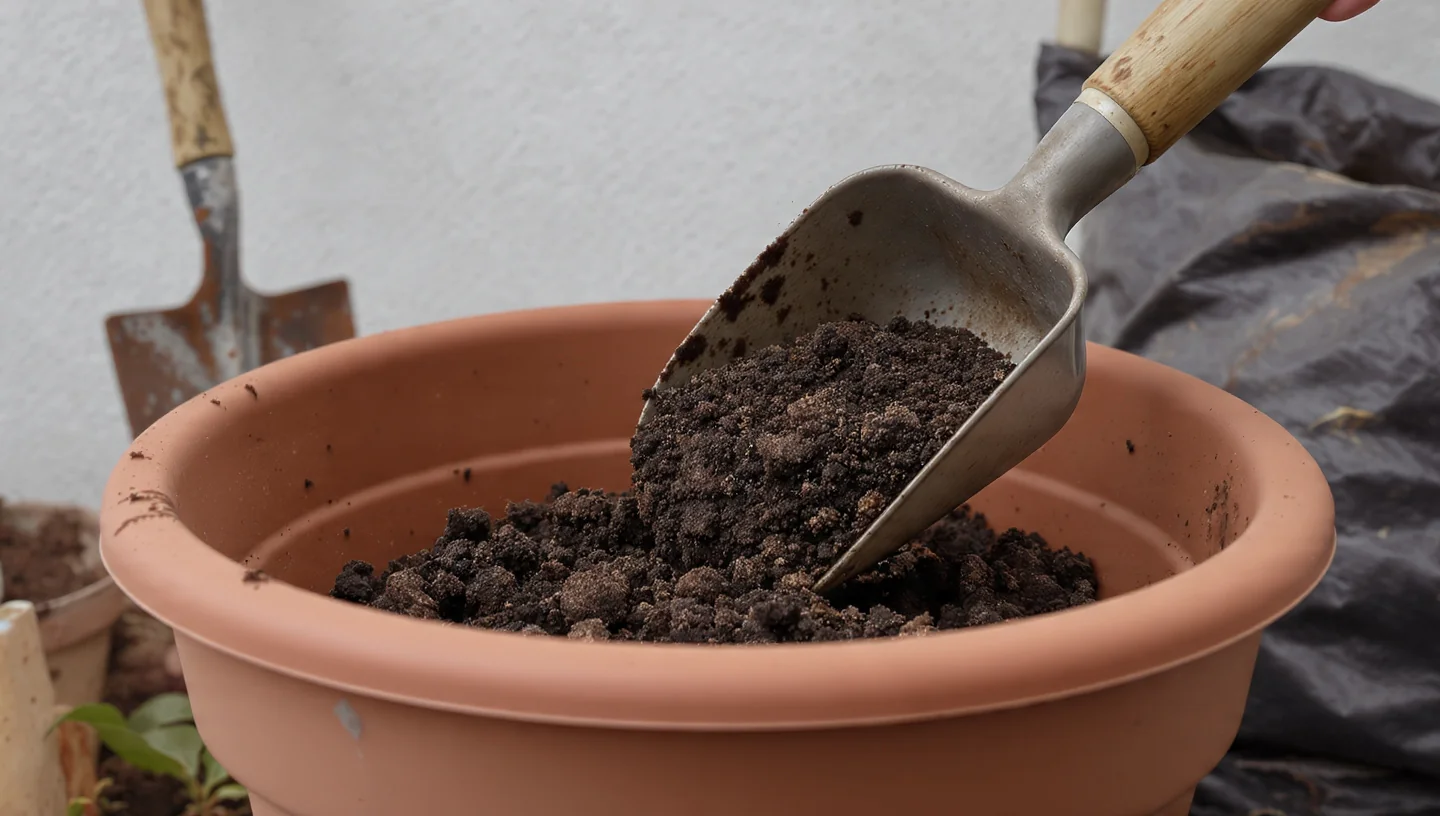
Best for: Branch 1
Use it when: adding one or two new plants to existing pots on small balconies where space limits full arm movement. The slender blade slides between root balls without tearing established plants. Skip it if your pots are under 8 inches wide because even the narrowest trowel risks cracking thin plastic walls. Edge case: it also lifts out spent annuals at season end by slicing roots cleanly at the base.
Hand Cultivator
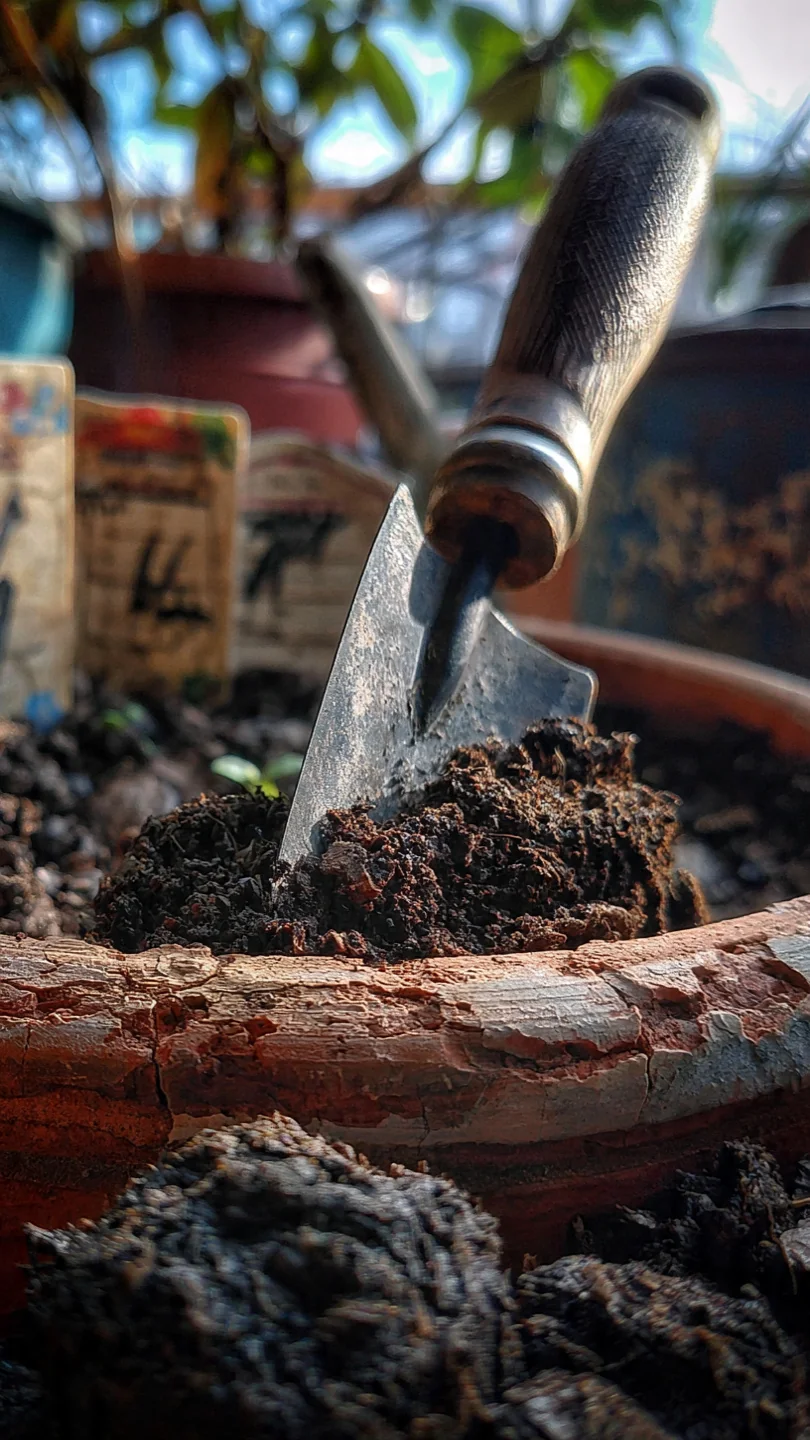
Best for: Branch 2
Apply the threshold rule: use the three-prong hand cultivator whenever the top 1 to 2 inches of soil in any container feels crusty to the touch after 7 days without rain. Insert tines at a 30 degree angle and gently lift to break compaction without reaching deeper than 2 inches to avoid root damage. Adjust frequency upward to every 5 days in temperatures above 85 degrees Fahrenheit because containers lose surface moisture faster then. This single step prevents the sealed crust that blocks water penetration in moderate patio setups.
Hori Hori Knife
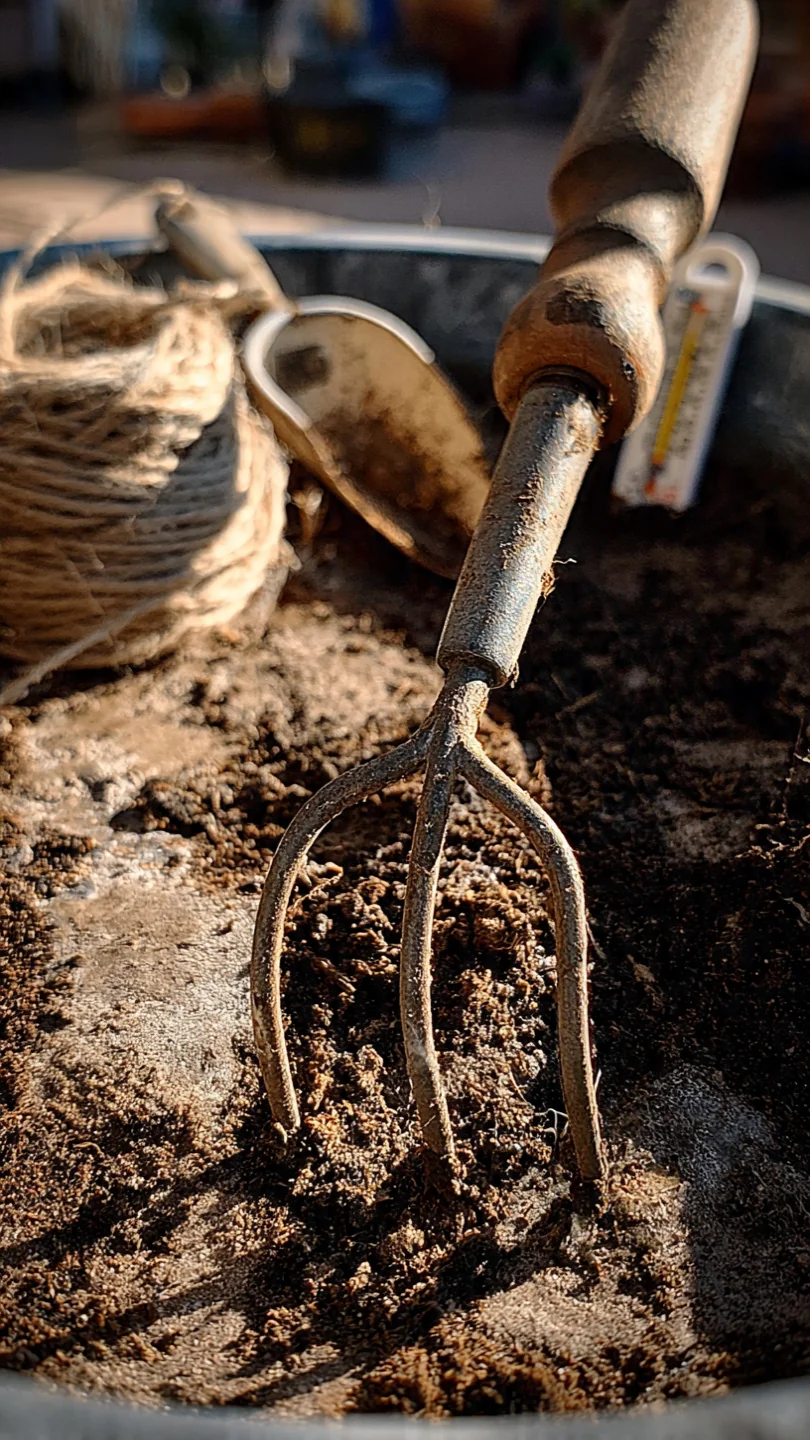
Best for: Branch 3
10-minute workflow: For vertical or high-density setups begin by marking the blade at the desired planting depth. Step one: slice a narrow slit into the existing soil at the pot wall. Step two: insert the serrated edge to cut circling roots or harvest root crops in one upward pull. Step three: use the flat side to firm new soil around the addition. Upgrade option: choose the version with a wooden handle over plastic for better grip when working overhead on tiered systems. Complete the full cycle on 16 or more containers in under 10 minutes once the motion becomes familiar.
Bypass Pruners
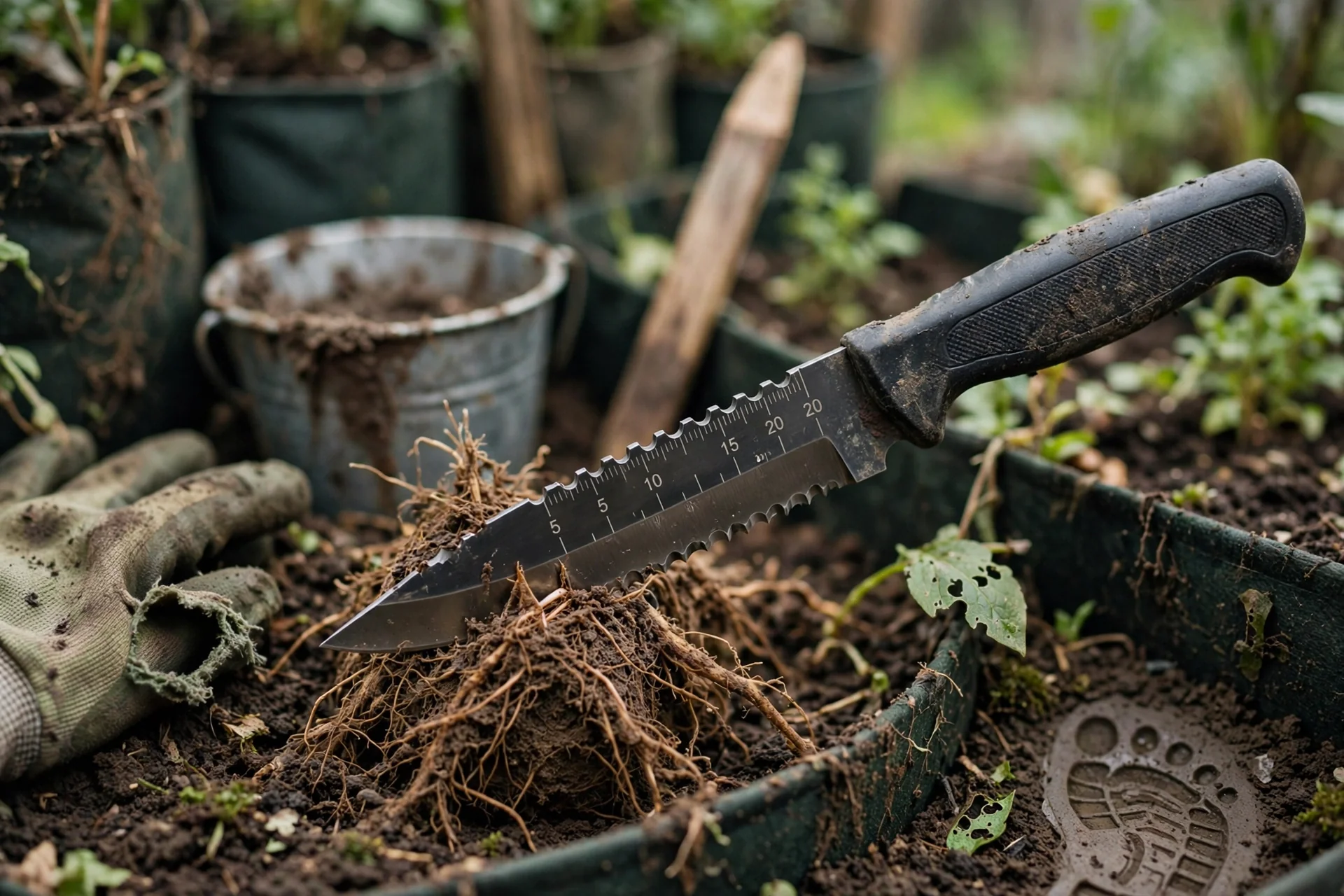
Best for: Branch 1
Keep bypass pruners sharp for clean cuts on herbs and compact flowers in tight spaces. The curved blade passes one side past the other instead of crushing stems. Clean the blades with alcohol after each session to stop disease transfer between pots on the same balcony rail.
Long-Spout Watering Can
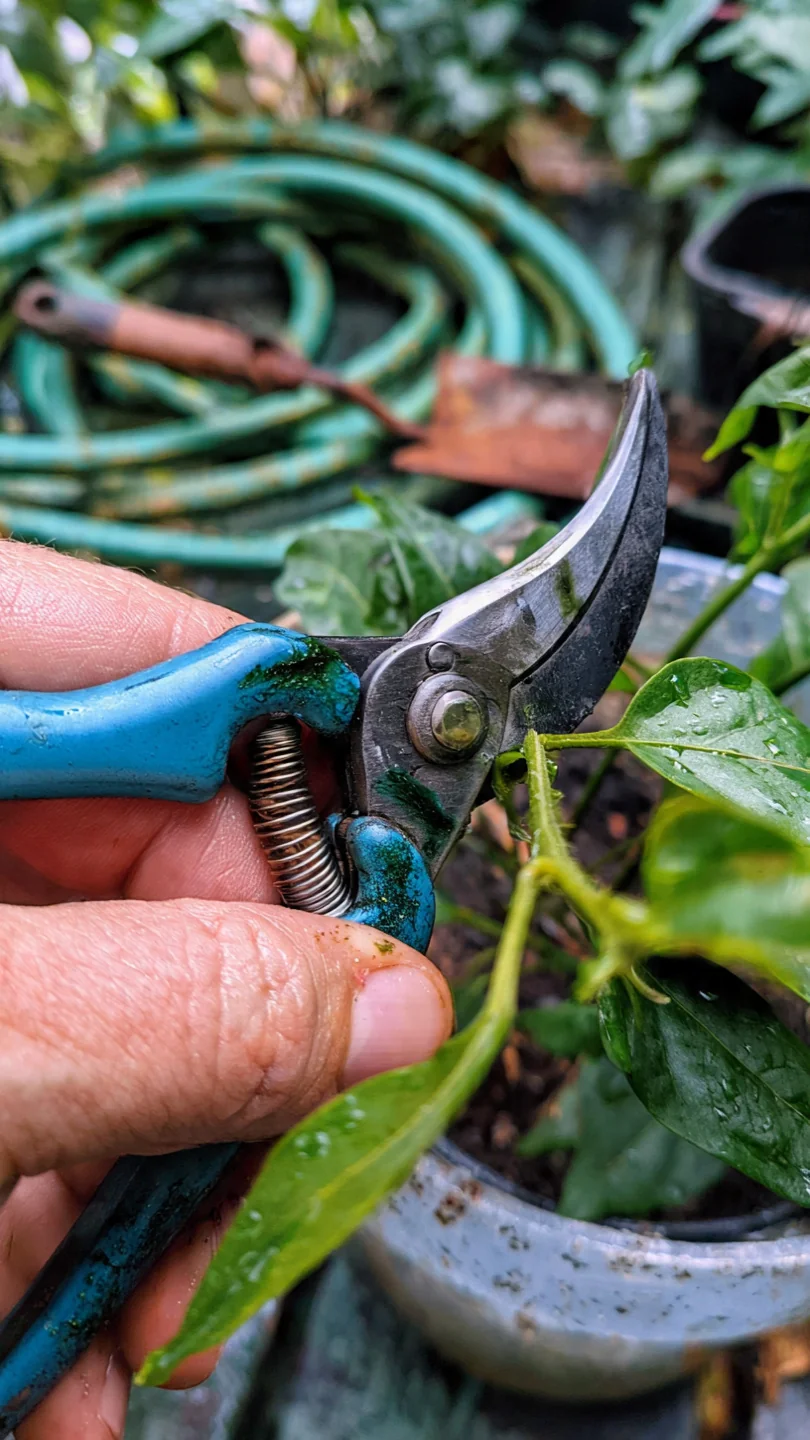
Best for: Branch 2
Use versus skip: Reach for the long-spout version on patios with 6 to 15 containers because the 12 to 18 inch angled spout delivers water exactly at soil level and avoids wetting leaves that invite mildew. Skip short-spout models entirely because they force awkward tilting that splashes onto deck boards or neighboring pots. Edge case: it also works well for slow drip feeding of liquid nutrients when the spout is held steady at the rim.
Soil Moisture Meter
Best for: Branch 3
Insert the probe to the exact depth needed based on pot size: 4 inches for 10 gallon containers and 6 inches for anything larger. The threshold rule is simple: water only when the dial drops below the halfway mark on the analog scale. In vertical systems check two pots per tier because upper containers dry faster than lower ones. This prevents both underwatering that stunts growth and overwatering that leads to root rot in high-density setups.
Lightweight Nitrile Gloves
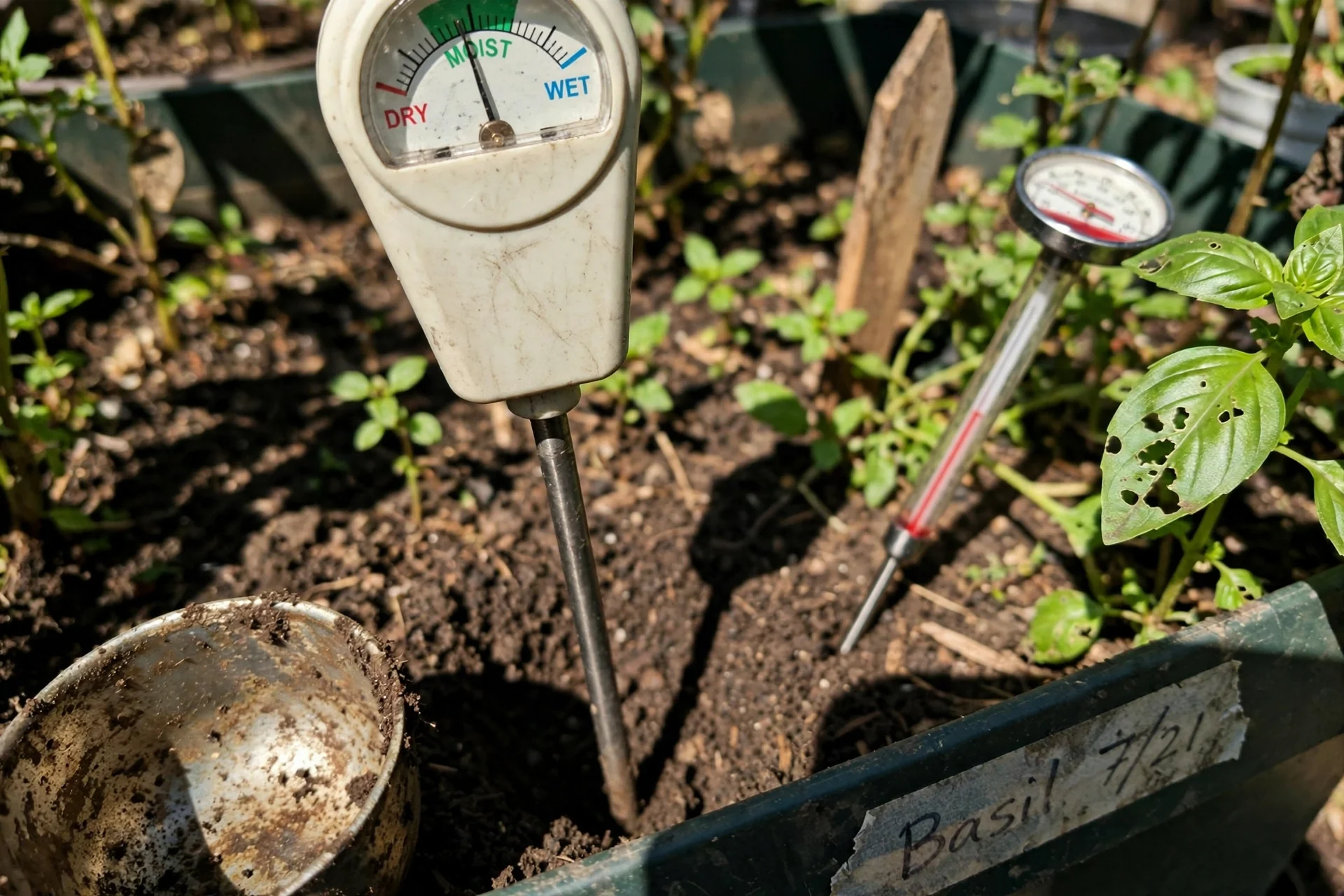
Best for: Branch 1
Slip on lightweight nitrile gloves before every session in Branch 1 setups. The thin textured palm gives full finger control for pressing soil around seedlings or removing spent blooms without bulk that knocks over small pots. Wash and reuse up to 10 times before replacement.
Seedling Dibble
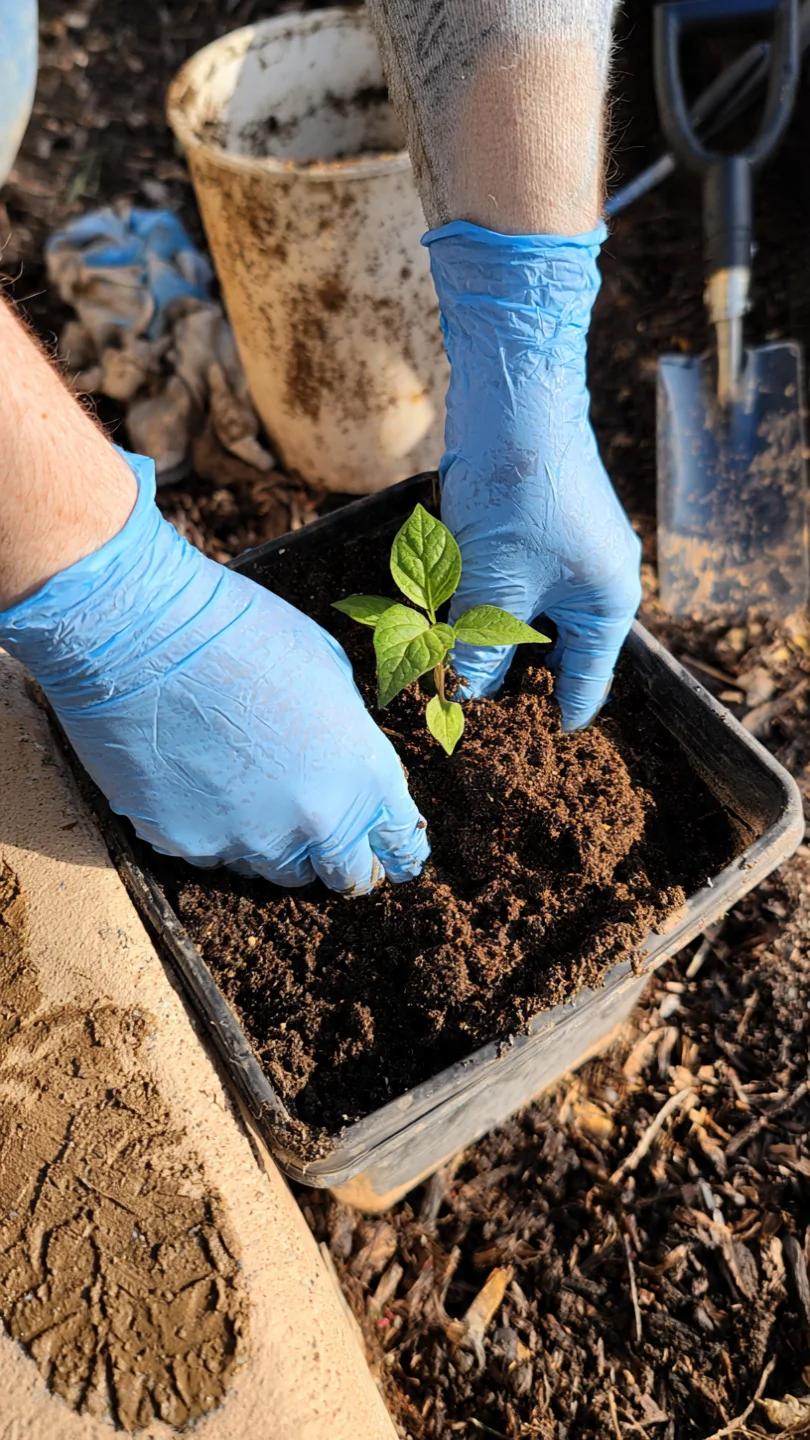
Best for: Branch 2
The tapered point creates uniform holes at 1 inch depth for direct sowing or transplanting into 6 to 15 containers. Press straight down then twist slightly to loosen the sides before dropping in the seedling. This avoids the air gaps common when fingers alone push soil aside in medium patio groups.
Compact Hand Fork
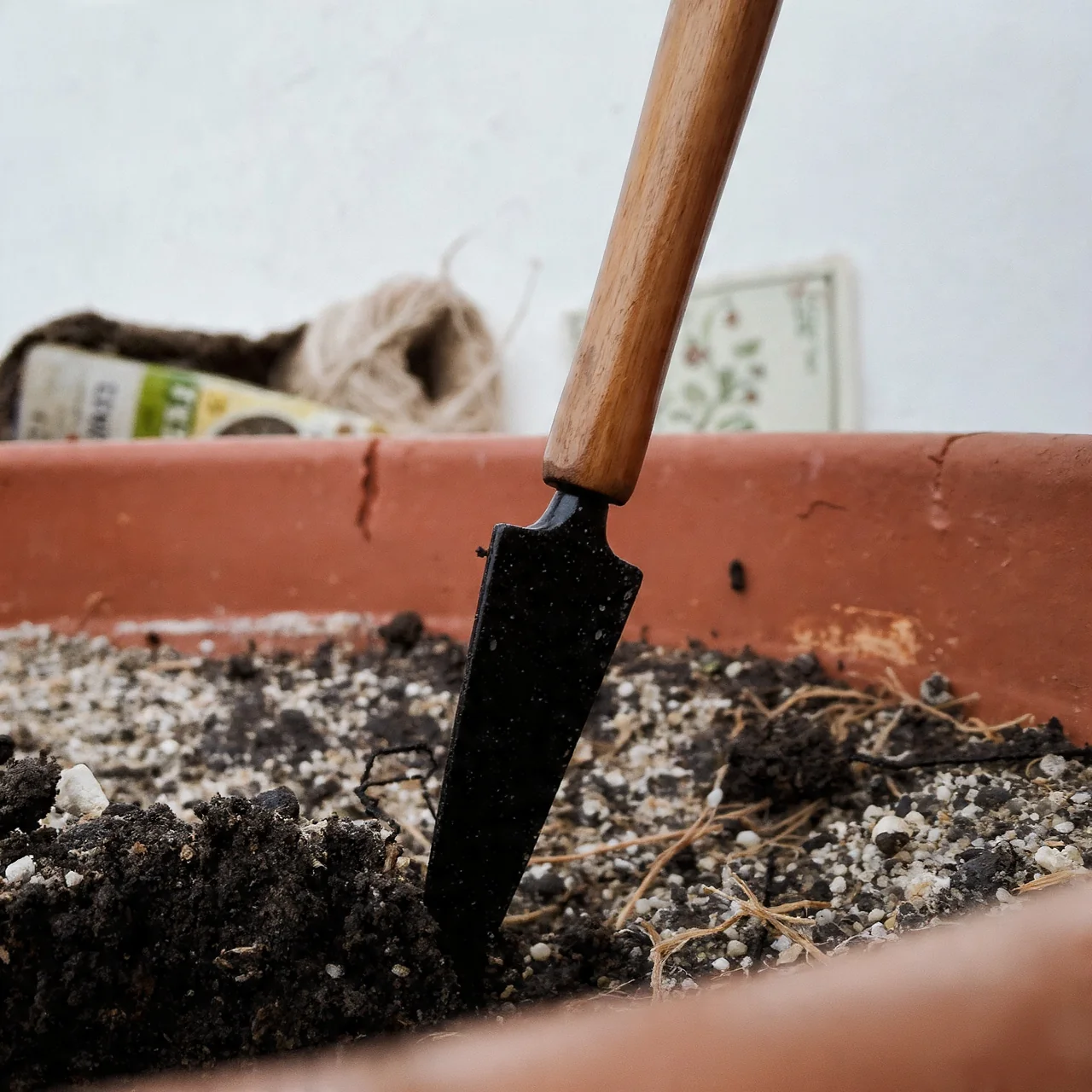
Best for: Branch 3
Use the compact hand fork when soil in large or vertical containers compacts against the inner walls after repeated watering cycles. The short sturdy tines reach down 4 to 6 inches along the pot perimeter to lift and loosen without lifting the entire root ball. Perform the task every 4 to 6 weeks in active growing seasons to maintain drainage pathways in high-volume systems.
Starter Stack (What to Choose First)
Branch 1: Tight Spaces
Start with the narrow-blade transplant trowel and bypass pruners. The trowel creates precise planting holes while the pruners keep plants shaped without disturbing neighbors. Synergy comes from using them in the same 10 to 15 minute session per balcony. Estimated time per session: 10 to 15 minutes. Estimated cost range: low.
Branch 2: Medium Patios
Begin with the potting soil scoop and long-spout watering can. The scoop fills efficiently and the can waters without splash so soil stays in place. Together they cut filling and maintenance time in half for 6 to 15 containers. Estimated time per session: 15 to 25 minutes. Estimated cost range: low to medium.
Branch 3: Vertical or High Density
Choose the hori hori knife and soil moisture meter first. The knife handles root work and harvesting while the meter prevents moisture extremes across many pots. Synergy keeps soil healthy at scale. Estimated time per session: 20 to 30 minutes. Estimated cost range: medium.
When This Won’t Work
Standard container gardening tools fail when individual pots exceed 15 gallons of soil volume because hand tools lack the leverage to reach deep compaction zones near the bottom. Switch instead to long-handled cultivators or consider moving to larger permanent planters.
They also fall short if your setup uses fabric grow bags because rigid scoop edges or fork tines can tear the material during aeration or refilling. In that case select softer silicone or plastic alternatives designed for flexible containers.
Choosing the Right Option for Your Situation
Budget Threshold
Keep total spend under 60 dollars for the first three tools if you fall into Branch 1 or 2. Prioritize the scoop or trowel as the single highest-use item before adding monitoring tools.
Time Threshold
If you can spend only 15 minutes per session choose items with effort scores of 1 to 3. Reserve higher-effort tools like daily pruners for setups you visit every other day.
Technical Constraint: Soil Compaction Risk
When pots sit in full sun or windy spots compaction happens faster. Select the hand cultivator or compact hand fork early regardless of branch to maintain drainage.
Yes/No checklist:
Do you have 5 or fewer containers? Yes leads to Branch 1.
Do you manage 6 to 15 containers? Yes leads to Branch 2.
Do you run vertical systems or 16 plus containers? Yes leads to Branch 3.
Can you check soil moisture weekly? Yes means add a meter sooner.
Expert Q&A
How deep should I insert a moisture meter probe in different pot sizes?
Push to 4 inches in 5 to 10 gallon pots and 6 inches in anything larger. This reaches the active root zone where most water uptake occurs. Check two separate spots per pot because moisture varies near walls versus the center.
Do I need different tools for starting seeds versus transplanting established plants in containers?
Yes. A dibble creates uniform shallow holes for seeds while a narrow trowel or hori hori handles deeper root ball placement. Keep both clean between uses to avoid spreading soil-borne issues.
What makes a watering can spout effective for hanging baskets or elevated pots?
The spout must angle upward and reach at least 12 inches so you can water from below eye level without climbing. Shorter spouts force overhead pouring that drips onto leaves and decks.
Can the same hand cultivator work on both soil and light amendments in containers?
It can if you use only the top 2 inches. Deeper insertion risks cutting feeder roots. Reserve it for surface aeration and use a dibble for mixing slow-release amendments at planting time.
How often should I clean or sharpen pruners used exclusively on container plants?
Wipe blades with alcohol after every session and sharpen monthly during active growth. Container plants stay closer together so disease spreads faster if tools carry pathogens between pots.
Conclusion
The decision grid simplifies container gardening tools to three branches based on container count and space so you buy only what matches your setup. The number one mistake is treating every tool as equally useful across all pot sizes and densities.
Your next step is to count your current containers then read the matching branch recommendations and starter stack. Head to our small patio garden ideas for layout inspiration that pairs perfectly with these tools.